La Compétition: Bravo!

Les jeux olympiques have changed over time, but la compétition hasn’t.

This year’s summer olympics took place right after my trip to France; as we were leaving Europe, tout le monde was arriving. Watching the olympics on television, I was amazed by the athletes’ physical abilities, their strength, courage and determination — and their sheer competitiveness.

I’m not competitive by nature, though my husband might disagree. In fact, my recurring statement, “If I can’t win, I’m not playing,” has become a sort of household inside joke, since it really means I am competitive.

I want to win — just like all the athletes who competed in London this summer. But I suspect they all believed that they could win in their sport. They wanted to win. Otherwise, why train? Why even compete? Though I exercise, I don’t try to beat others in races or sports. I’m not a big game- or card-player either, but I like to compete in some mental matchups. I’ve gotten very good at Scrabble, for example, thanks to a desire to beat a certain sister-in-law, and no one in my house will even play me in Mastermind (see above quote).

I want my teams to win, too. Since I’m a Tar Heel, I love to watch UNC win at play basketball, especially against arch-rival Duke (though I’ve developed a soft spot in my heart for the Duke Medical Center). I’m also a big UGA Bulldawg fan, and I love the Atlanta Falcons.
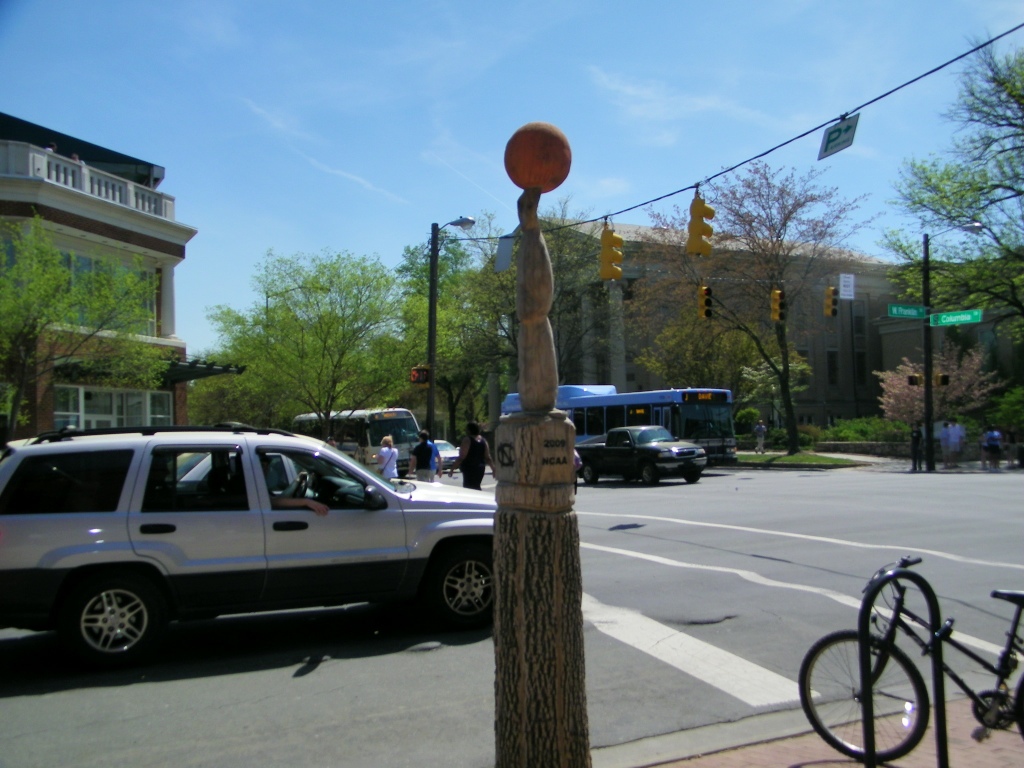
UNC 2009 Basketball Championship sculpture, until recently located in front of Spanky’s restaurant on Franklin Street in Chapel Hill, North Carolina

But back to personal bests and achievements. In this age of social media, I find it a bit troubling weird that so many people post not just those, but all their personal (only good) news, big and small.  Many also share updates about their fabulous trips* as part of a carefully shaped and managed narrative. What are friends and followers to think but “Good for you?” Or, Bravo!

A recent WSJ article by Elizabeth Bernstein titled Are We All Braggarts Now? examined this fairly new phenomenon. Though I’m active on Twitter and (finally) about to create a Facebook page, aside from writerly and the odd motivational (and sometimes cryptic) tweets, I’m endeavoring to keep personal business personal. But that’s just me.*  And, well, marketing is…marketing.

The protagonist of my novel, coming out soon, gets to watch an historic and exciting olympic game, and, though she’s only twenty, reflects on its significance.

But she quickly reverts her attention back to her own life, as any normal twenty-year-old would.

*Oops, I guess I’ve been doing that whole look-at-the-photos-from-my-fab-vacay-in-France thing in recent blog posts. Desolee!
Aix (and adventures) en Provence

Peter Mayle’s autobiographical novel A Year in Provence was published in 1989, ten years after I arrived in France to spend a year of college in Languedoc-Roussillon, the region à côté to the west.

During school holidays, carrying a backpack, my Eurail pass, little money and no credit cards, I traveled with friends to Spain, Italy, Greece, Switzerland, Holland and England. But aside from Paris, I didn’t travel much in France. I did visit Carcassonne and the beach villages of Carnon-Plage, La Grande Motte and Sête, but I never made it to nearby Avignon, Aix-en-Provence or the Luberon valley.

So when I read Mayle’s book (and later, the rest of his books) set in Provence, I was enthralled. Like so many others, and because I love the south of France anyway, I wanted to visit Provence. Someday.

That day turned out to be Thursday, July 5, 2012.

My husband and I arrived in Aix the evening of July 4th, after driving* west from Nice. That morning, I thought it would be fun to take the coastal route through Antibes, Cannes and St. Tropez. We would stop in some quaint spot for lunch, perhaps not until Hyères, and then drive on to Aix and arrive at our hotel in the centre ville in plenty of time to relax and have a cocktail. Then we would go to nearby Venelles for a dégustation (wine-tasting) and tour of a vignoble (vineyard)  to be conducted in French at Château l’Evesque. We would dine at La Flambée du Luberon, the Château’s restaurant.

We made it to Cannes on the congested coastal road, then decided to take the autoroute instead. We did have a wonderful lunch at a café in Hyères, then continued west and north to Aix. We arrived at Hotel Saint Christophe with no directions or help from our car’s GPS *, found the parking garage after two tries, wedged backed our car in a parking space in the garage and checked in. I called the Château to confirm our reservations for the evening and get directions (en français) from Jean Michel Escoffier (I had previously emailed Nathalie, his wife.) Then we decided to have that drink and take a taxi.

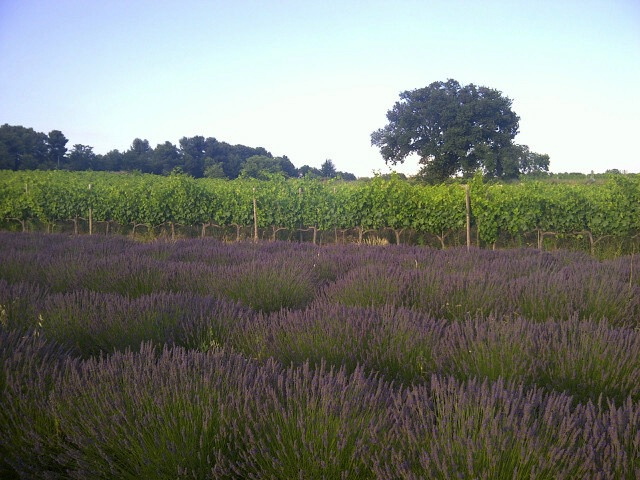
It was the right decision. We arrived on time and joined un petit groupe of ten French people for a tour of the vineyard and lavendar field, led by Jean Michel –speaking in rapid French and (fortunately for us) talking with his hands. Then it was time for the dégustation with Nathalie, who described the wines speaking almost as fast as her husband had. So far in France, I’d understood about 90% of what I heard, and had held my own communicating in the language that I’d been (re-)studying for a year. But comprehending the Escoffiers was a major challenge — and a highlight of mon voyage.

The following morning, on July 5th, we left Aix and ventured into the Luberon valley just to the north. We exited the autoroute at Cavaillon and drove to Apt, then followed a winding road through some beautiful petits villages médiévals made famous by Mayle (and that Madame Marie-Hélène**  had advised me not to miss): Bonnieux, Lacoste, Ménerbes and Oppède. There, we stopped for a leisurely lunch before heading to Avignon for the rest of the day and to Montpellier that night.

It was hard to leave the Luberon, and I kept thinking about Peter Mayle and his writing. A few years ago, when I was just beginning as a writer but after I had finished the first batch of revisions on my upcoming novel, I wrote a letter to Mayle asking for advice. I sent it to his publisher in New York, hoping that it would find its way to him somehow.

Mayle’s books and interviews reveal him to be a wonderful and kind man. In the spring of 2008, he wrote me back a three paragraph letter, typed on his personal stationery and signed in ink. His last line was:

“All I can say is courage, and don’t give up.”

* For more explanation about our adventures en voiture, see the post Le Tour de (Montpellier) France.

** mon prof de français

Les écharpes, le fromage et café crème (scarves, cheese and espresso with cream)


It’s the little things.

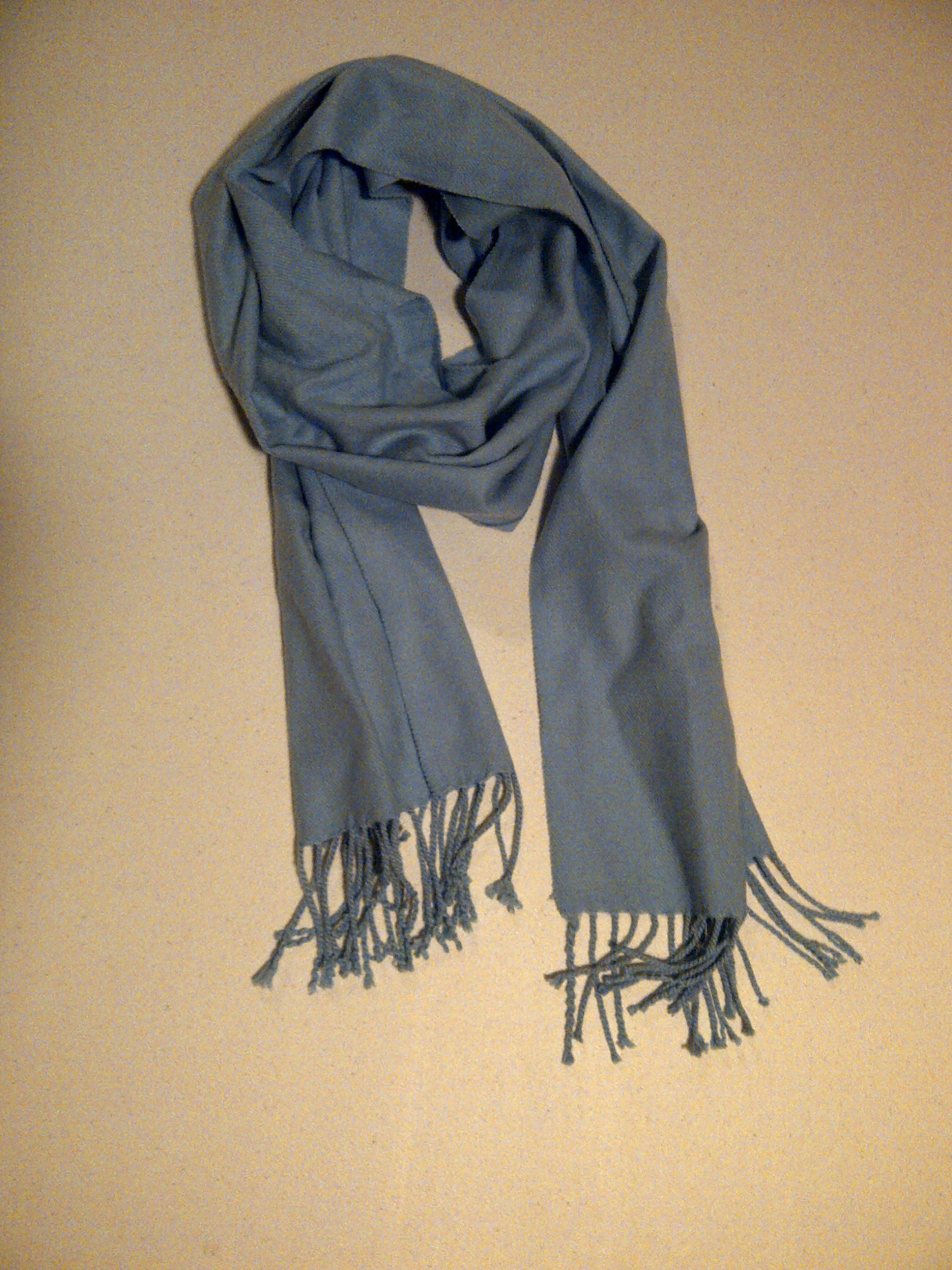
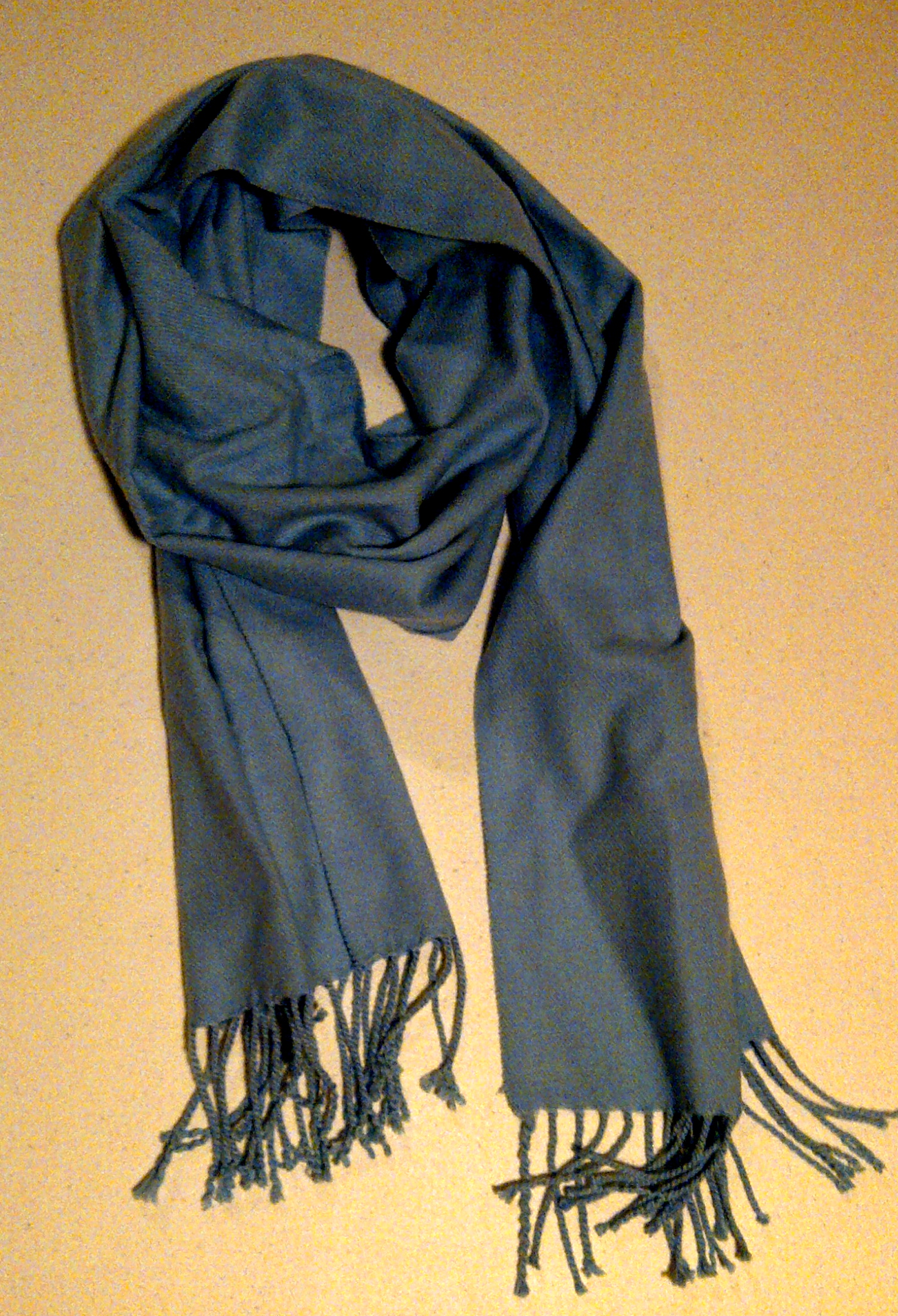
I noticed trois choses très français during my trip to France this summer. Number one: les écharpes. Everywhere I went with my husband, despite the warm temperatures of l’été, women (and men) of all ages and sizes wore them without effort and with no fuss, looking natural, cool and oh so French.

While the most common are a simple gray or brown, I saw a variety of colors, textures, and patterns. Here in the USA, Madame Marie-Helene, mon prof de français, has a collection. All are very pretty and look perfect on her. I have a collection, too, but rarely wear them, though I did when I was younger. Pourquoi? Je ne sais pas.

Number two: le fromage. One day, as guests of a family in Lyon, we visited Les Halles de Lyon, a huge indoor food market offering meats, poultry (with heads on), fish, foie gras, many prepared dishes and of course, incredible desserts like tarts, cakes and macarons. Also available are a zillion varieties of cheese, a staple in the French diet that is served after the main meal.

On our last evening in France, we were dinner guests in a Parisian home. After the appetizer, fish and salad, our hosts, a married couple, served a cheese plate and urged us to try a bit of everything. The cheeses were delicious and unlike any I had ever tasted in America. When we finished, they politely offered to pass the plate again; my husband and I thanked them but declined. Then Madame explained with satisfaction that we had passed the test: according to French etiquette, if one takes a second helping from the cheese plate, it means one has not been well fed at the meal (and we had been very well fed).

Number Three: café crème. Unlike café au lait, cream is used instead of milk. A must for petit déjeuner, along with yogurt or fruit and a croissant or pain au chocolat. C’est bon.

The protagonist of my novel (coming out soon) adapts well to France. She drinks café au lait instead of café crème, eats le fromage and wears écharpes.

Three little things that haven’t changed much in decades, and that make une grande différence.

The French Riviera: La Côte d’Azur


Doesn’t it just sound cooler in French?

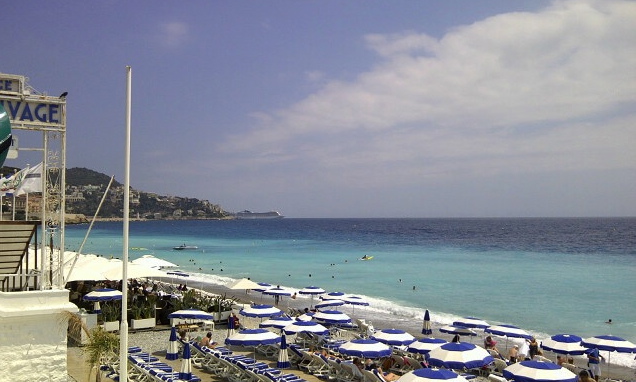
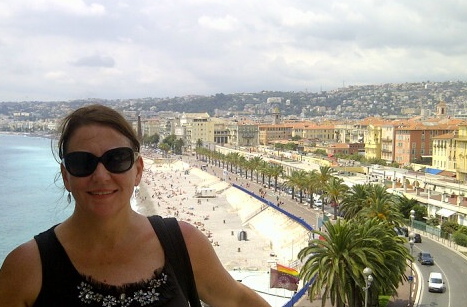
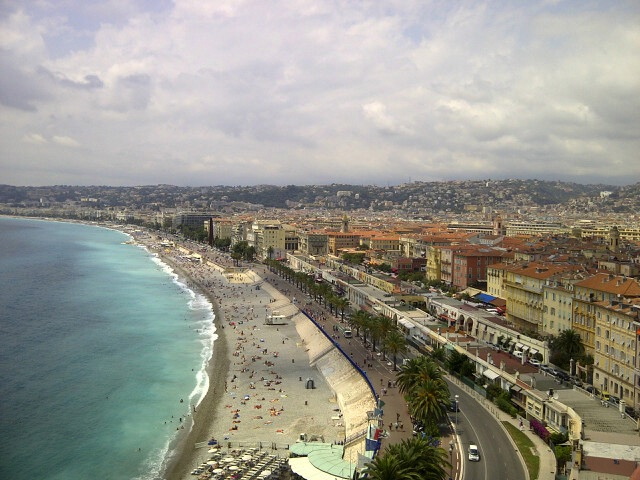
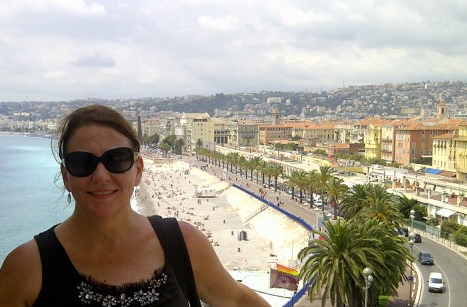
My husband and I began our recent vacation in France here, in Nice. I’d never visited this beautiful spot, though I lived on a Mediterranean beach a few hours to the west many years ago, in Languedoc, à côté de the more famous Provence. Shortly after we arrived in Nice, we strolled down the palm tree lined Promenade des Anglais and climbed the Colline du Château (Castle Hill), where I took the above photo. Afterward, we wandered through Vieux Nice, the old part of the city (recognizable by the sienna-tiled roofs) on our way back to our hotel, across from the pebbled beach about a mile further down.

Like all of France, Nice is full of history. Much has changed here over the centuries, and even within the last thirty years. But its beauty is timeless and enduring.

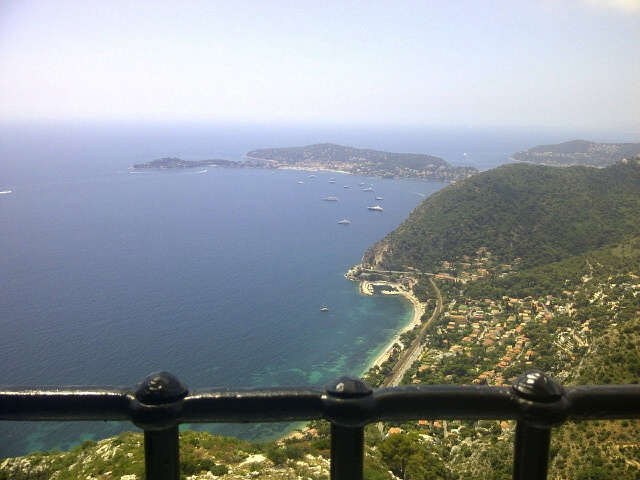
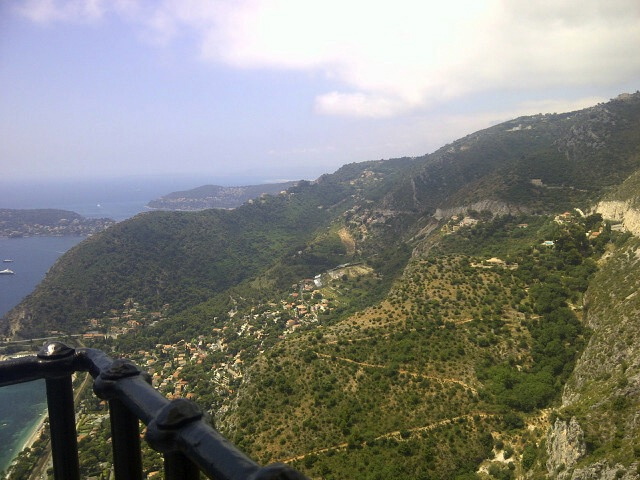
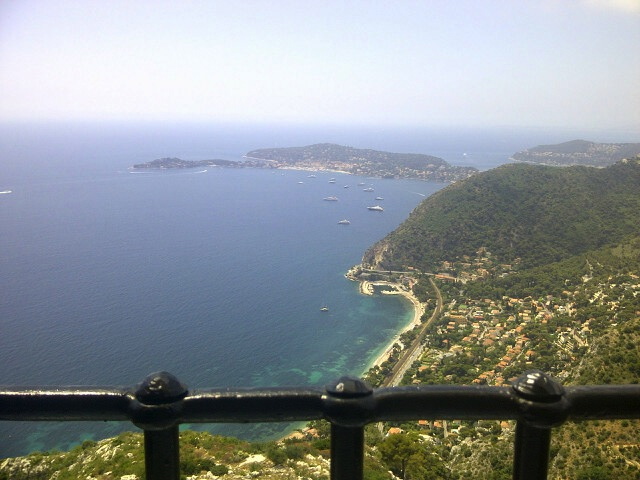
The following day, after picking up our rental car* at la gare (the train station, where a taxi dropped us), we made our way east out of the city and over the side of a mountain toward Monaco. On the way, we stopped for a marvelous four course lunch at Chateau Eza (we both selected the Menu Prince) in Eze-le-Village, a gorgeous place I’d never known about until recently. Our table was on a private terrace jutting out from the Chateau, high over the sea, rocks and beaches below. Déjeuner began with an aperitif: champagne, of course. We shared a bottle of wine as we savored each of the small delicious dishes and practiced our French.

The view was breathtaking. Like “Elle” (what we’ll call the main character in my upcoming novel, for now), I have a fear of heights. I don’t know how I managed to enjoy such a leisurely lunch on a balcony perched high above land and water. Maybe it was the vin.


“Elle” doesn’t deal as well with her acrophobia (though, I dare say, if she had thought of handling it with wine, it may not have been an issue). Perhaps she doesn’t think of doing that because usually, when she has to face her fear, no alcohol is available, except for that time in Amsterdam — but I’m jumping ahead.

Back to Nice, Eze and the Côte d’Azur: another very romantic spot in the world, one I would love to visit again, and spend more time in, someday.

* For more about our adventures en voiture, see prior post, Le Tour de (Montpellier) France.

Américaine in Paris

A mon avis, it’s the most beautiful, most romantic city in the world.

Earlier this month, I marveled at la Tour Eiffel but didn’t climb to the top of it (though I did ascend the spiral stairs inside the Arc de Triomphe and the steps at Montmartre). Like the main character in my upcoming novel, I drank café crème ( café au lait) at petit déjeuner and, at times, beaucoup de vin at déjeuner andner. But unlike her, I only gazed at the pâtisseries.

If you follow me on Twitter (@MakeThatJulie), you may have seen other photos from my recent vacation in France, an anniversary trip for my husband and me. It was fun speaking français and teaching him some helpful phrases such as L’addition, s’il vous plaît  (Check, please). 

Though we enjoyed several lieux touristiques — monuments, museums and palaces — our most memorable moments occurred unexpectedly. Cocktails at the bar at Hotel Negresco in Nice. Lunch at a café in a petite village in the Luberon valley. Wine-tasting, explanations in French and a private dinner at a winery near Aix-en-Provence. Breakfast on the terrace at our hotel in the old section of Montpellier (and a nostalgic visit to the nearest beach). Exploring Lyon and nearby Beaujolais with French friends who hosted us for the weekend at their home. Laughing together as we figured out the Paris metro system (not that hard), and dinner at a tiny restaurant in Montparnasse that serves everyone the same (delicious) menu.

Our experiences were so different from those that I had as an exchange student in France, part of a small group from the University of North Carolina. I was on a tight budget and traveled by train all over western Europe (but not much in France) using my Eurail pass. Since then, university abroad programs have exploded – just about everyone goes somewhere to party study and experience life in another culture. My novel, to be released soon, is about a girl who spends a year of college in the south of France, her life filled with adventure, romance, and many unpredictable and memorable moments. Her story takes place in an earlier time, but her experiences are much like those of many of today’s young women.

And she dreams of going to Paris with the man she loves.

When it’s out there, reader – le jugement


Now that I’m back from les vacances en France, it’s time to travailler – work – again. As the French say, Faire et refaire, c’est toujours travailler. 

The suitcases are unpacked, the clothes washed, the photos sorted, and the memories treasured. Talk of another future visit – someday – is happening, with a slightly different plan, and preferably, not during l’été – the summer. But it was a fabulous trip, a welcome break from routine and a wonderful time to share with the love of my life. We spent a lot of time together, spoke French (well, I did, and he did un peu), and saw sights both famous and little-known, the latter just as impressive.

We started in Nice and ended in Paris, visiting many other villes, villages and a chateau in between. With sporadic access to wi-fi (in French, it rhymes with leafy), we stayed “dark” for the most part – only a little frustrating, and actuellement quite liberating. And neither of us “worked.”

At the end of week one, we traveled to a city in the south, Montpellier, and had lunch at a nearby Mediterranean plage – beach – in a town called Palavas-les-flots. It was a nostalgic stop on our journey – the place where I spent a year as a college student, where my boyfriend (now my husband) sent me letters and flowers. Visiting it with him after so many years together was indescribably romantic. Since my novel takes place there in an earlier time, our voyage to Montpellier and Palavas doubled as research; when we got home, I did a final fact-check review of the story and tweaked just a few lines, as necessary. But even though much has changed there since 1979, much is also the same.

Now, chez nous, it’s time to blog again, tweet and work on my next book, as I prepare au meme temps to release the first. Which brings me to the subject of today’s post: the fact that once “it’s out there,” my novel will no longer really be my own. It will belong to the reader, who will judge it and its characters. Much of the story is based on true events, but much is not. Memories from my time in France long ago are imprecise in some ways, but clear in others. But it’s not the specifics or any incongruities that worry me.

It’s le jugement.

Because even though it’s popular to claim that we don’t judge – and even say, “don’t judge me,” in truth, we do make judgments all the time. We form opinions and justify our positions. When we read fiction, I think we almost feel we own it; we decide what’s good, bad and neutral; we judge the plot, the writing and the ending. All of this is fine and well, and it’s what we as authors know as we write.

But now when I read someone else’s work, I read not so much as a reader but as another writer. I think about what led the author to write the book. I think about the travaille, the brainstorming and the planning, the edits and revisions. I think about the author choosing the title. Having grown as a writer, I’ve changed as a reader. When my book is “out there,” of course I hope that judgments are good and reviews, positive.

A bientôt.

[Note: above photo is of The Conciergerie in Paris: once a palace, it was converted into a prison during the Revolution and became a symbol of terror. This was where Marie Antionette was imprisoned  before her execution.]

Les Ados vs. Young (independent) Adults


The French word for teenagers is les adolescents. For short, les ados. No matter what country you live in, Plus ça change, plus c’est la même chose.

The years between childhood and adulthood can be difficult, not only for les ados, but also for les parents. (Make that, ARE difficult. Sans doute.)

But they can also be rewarding, and even fun. And then one day they’re over. No more moodiness, drama, or driving lessons. C’est fini.

While my four kids were teenagers (and one still is), I read books about raising teens, novels about teens, and even the books my own teens were reading. Just recently I read Generation iY: Our Last Chance to Save Their Future by Tim Elmore and Dan Cathy. I found it enlightening if troubling. And then I worried — some more.

But back to my topic: teens vs. Young (independent) Adults, or YiAs, I’ll call them. (A small “i” seems appropriate, and trendy.) YiAs ARE adults, even if young and inexperienced independent. They’re not teens wishing to be adults, with all the independence that adults enjoy. So why do teens read “Young Adult” novels? More important, given that real young adults (and old ones) read them as well, why must the protagonists of YA novels be teens (in high school)?

I wrote my first novel (to be released later this year) not specifically for the “Young Adult” audience, but for readers of any age — it was a story that was “in me” to write. Like Jessica Park, author of Flat-Out Love, I was told by publishing industry professionals that the (college) age of my protagonist (19) was too old for YA, and therefore my book wouldn’t sell. [See her recent terrific blog post, How Amazon Changed My Life]. Well, the professionals were wrong about Jessica’s book. I hope the same will be true for mine.

Ironically, my best beta-reader was a true young, independent adult. In her early twenties, she had spent a year of college in Europe; she related to my characters and gave me a ton of wonderful feedback. She has a “real” job, and though she is close to them, she lives far away from her parents. I’m old enough to be her mom (!), but it’s amazing how much she and I have in common.

If you’re a young adult, you can be independent, but if you’re an ado, alas, you can’t be, yet. (However, at age eighteen you can — almost. But that’s another topic.) Over two years ago, on my son’s nineteenth birthday, I stood by his side at the hospital as a doctor explained that he had a brain tumor. Treated as a legal adult by the medical staff, my son signed the paperwork for emergency surgery that was necessary to save his sight. Later that summer, he had to sign papers authorizing brain surgery at Duke. He survived cancer, something a great many adults never have to face.

That son of mine has changed a lot. I’m grateful he can read whatever he wants to read.

L’université: College costs

I just read the recent Wall Street Journal article New Course in College Costs and was struck by how much things have changed.

With college costs increasing so much since 1990 (150%) and federal aid rising even more (242%), it’s hard to believe there’s no connection. Whether costs have skyrocketed due to market demand only (as some say), or whether it’s because the government has gotten so deeply involved, one thing is sure: college debt has risen dramatically.

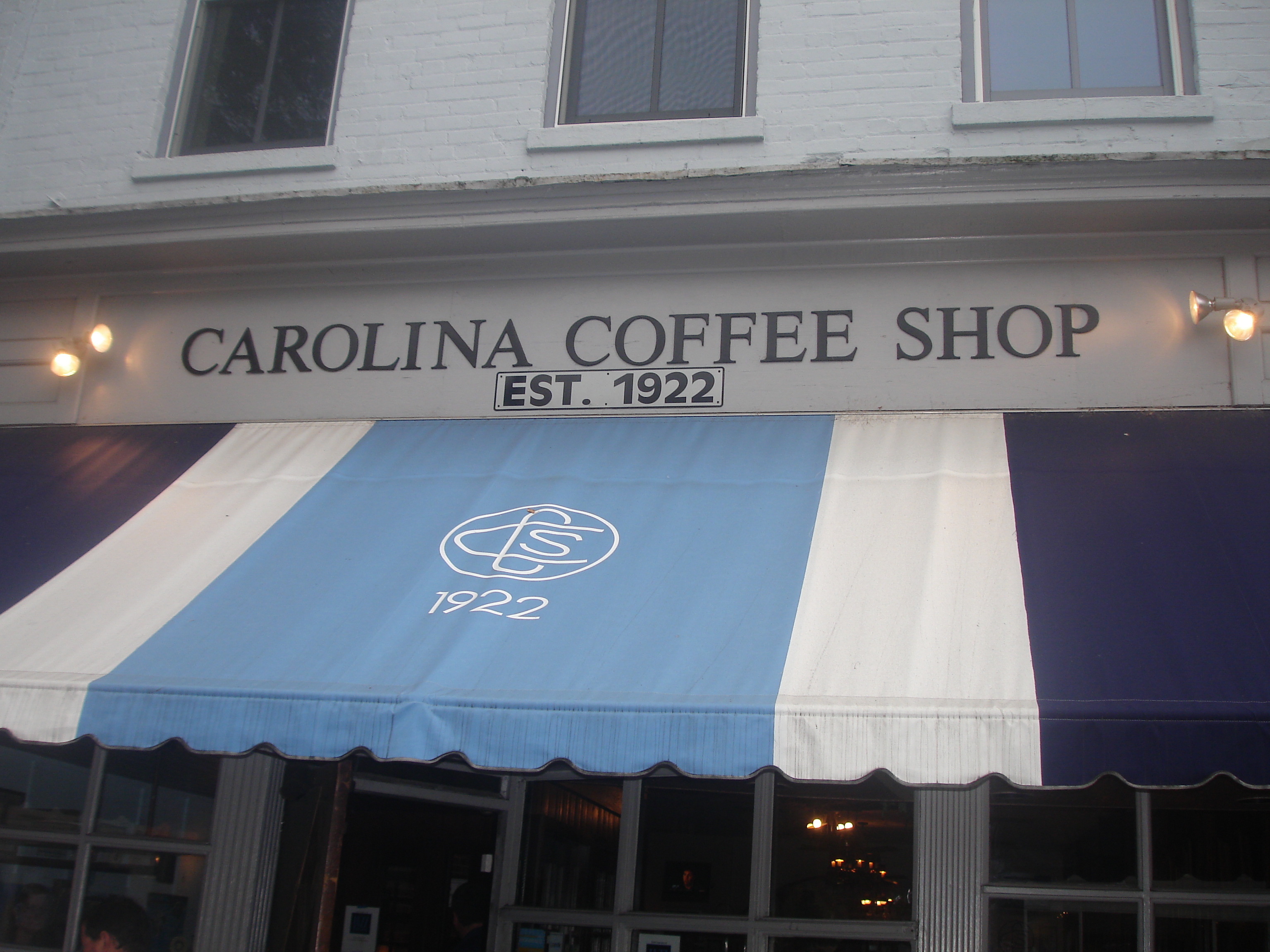
When my husband and I attended the university where we met, he was from in-state and I was from out-of-state. Compared to today, the price of tuition was a bargain for both of us, but to help pay for our expenses, we had to work during the school year and of course the summer. We got no federal aid — grants or loans. He was a sandwich maker at Sadlack’s Deli, located near Hector’s Restaurant on the corner of Henderson St. and Franklin St. I worked at Spanky’s, on the corner of Franklin and Columbia, and at the Carolina Coffee Shop, a Chapel Hill landmark and institution. Both restaurants are still open and neither have changed that much.

I was a waitress at the CCS in the late seventies while Byron Freeman owned it, and I’ve read that writer David Sedaris was also one of his employees a few years earlier. Serving breakfast, lunch and dinner as classical music played in the background, the Carolina Coffee Shop was a coffee shop before coffee shops were cool. Graduate students hung out there in groups or alone; couples went there on dates, and all kinds of students and families waited in line for a table on weekend mornings. I worked twenty hours or so a week and once served Chapel Hill visitor Alan Alda and some of his friends.

For a time, I juggled shifts at the CCS and Spanky’s to make as much money as I could while a full-time student at the university. Before we graduated, both my husband and I also worked (at different times) at another restaurant, the Country Squire, a steakhouse located between Chapel Hill and Durham; it was closed and torn down when I-40 was built where it stood.

I was able to go to France for my junior year and attend Université Paul Valéry because I was charged North Carolina, in-state tuition. Though I traveled throughout that year, I did it cheaply and watched my expenses. I never even considered going into debt to go to college, and I didn’t know many students who did.

Now, graduating with a college loan to pay off is almost ordinaire. I find that very troubling and wonder how people deal with it. When my husband and I graduated in the early 80s, we had little money but no debt. We got jobs, lived on a shoestring, and got married young, happy to be together and independent. With college costs so high today, who can work through college, pay for most of it themselves and graduate in four years with no debt? There just doesn’t seem to be a good raison why things have to be the way they are.*

When I was a student, few UNC dorms had air conditioning, not everyone owned a typewriter (I didn’t), and Michael Jordan played in Carmichael Auditorium. Professors were paid less and worked more, and fewer administrators filled offices. I suppose things have really changed.

One thing that hasn’t changed, though: you still have to pay back what you owe.

*Earlier this year, I read Higher Education?: How Colleges Are Wasting Our Money and Failing Our Kids—and What We Can Do About It by Andrew Hacker. The author examines the system and makes some very good recommendations. I hope things change.

Le verre est a moitié vide

I’m a glass-half-empty person, so no wonder I like the French.

France is a nation of pessimists, deux amies françaises averred to me this week. I asked both of them (who don’t know each other) just after I read the recent NYT piece by Jane E. Brody, A Richer Life by Seeing the Glass Half Full.

My husband, however, is a glass-half-full person– not surprising, since in many cases, opposites attract. I’ve always admired his persistence and motivation, two qualities Brody says that optimists usually exhibit. He tackles problems with a focus on solutions, looks for the good in stressful situations, and believes that somehow, everything will work out. Over the years we’ve been together, some of his positive attitudes have rubbed off on me — but not all.

I’m not always “No-we-can’t,” but of the two of us, he’s the idealist and I’m the realist (and, being me, I don’t mean that I’m a realist in a good way). I’m a worrier and always have been. Unlike Brody, I haven’t fretted over the social, political and societal issues that I couldn’t do very much about. I have fretted about family issues that I could do little or nothing to solve, plus all those other things that I could change or fix. And yes, rather than looking on the bright side, I have focused on the worst that can happen.

After reading the article, though, I decided to evaluate whether I’ve evolved from my natural negative tendencies — whether I’ve fait de progrès. As my children grow into adulthood, I think I have, at least as a mom. As a writer, I believe that I have, as well. It’s still sometimes a struggle. I’m not always inspired, but I keep trying, keep writing and keep reading. Developing habits and a routine has helped, which I’ll explain in a future post. Watching and trying to emulate my husband’s work ethic and attitudes has helped a lot, and so has stepping back to focus and re-focus on my goals.

Can I change into a glass-half-full person? I’m working on it. Optimistically, I googled the phrase and discovered a new restaurant to try the next time I’m visiting Chapel Hill: Glasshalfull located in Carrboro, N.C., the town next door. What a nice surprise — and maybe a way to pursue that richer life.

Les lettres

In my novel, the protagonist and her boyfriend (for now, I’ll call them by les pronoms français, Elle and Il*) exchange a lot of letters.

Elle has to wait weeks before she receives her first letter from Il — even though he writes to her the day she leaves the U.S. for France, his letter takes that long to arrive. She answers it, but the two don’t wait for the next letter from the other in order to write. In fact, during the year, Il writes to Elle at least once a week, and she writes to him almost as often. They talk on the telephone less than once a month, because phone calls are very expensive, and difficult to make.

How things have changed!

Neither Elle nor Il could imagine writing letters (emails), texts, tweets or updates (let alone posting photos) that the other would be able to view immediately. And if they were able to Skype or Facetime, I dare say their story might have turned out quite a bit differently. Might have.

But they don’t even imagine doing those things. The fact that their handwritten letters have to travel over an ocean by U.S. airmail makes each piece of mail from the other treasured and special. That’s why Elle, at least, keeps all of Il’s letters. That, and also because Elle is the more sentimental.

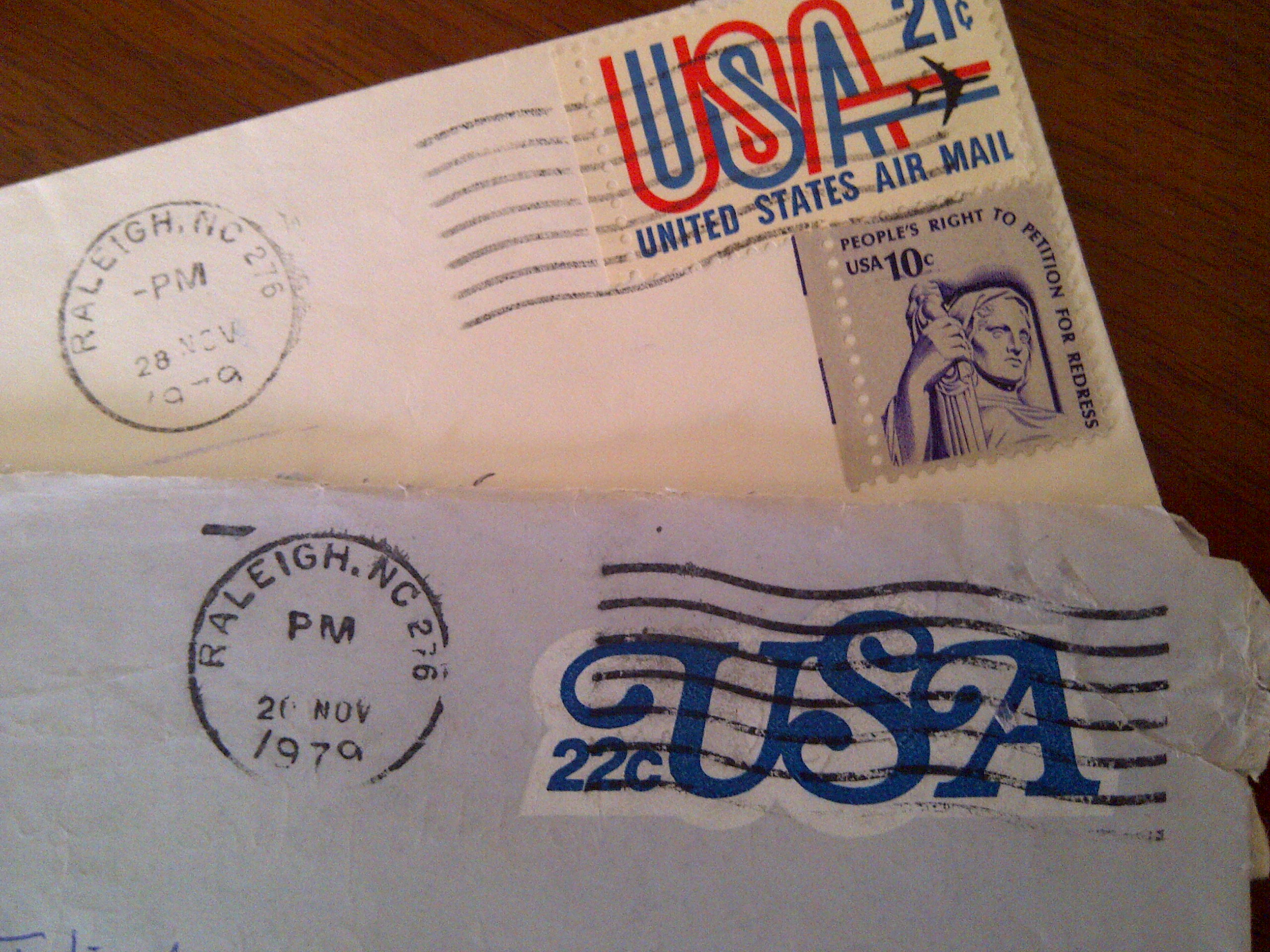
The fact is (or, the story is), Elle and Il deal with being apart while in love without the ease and speed of today’s communication methods. They wait, hope, and long to hear from each other. They think about what they write down on paper, in ink — especially when using those blue 22 cent aerogrammes. They read between the lines. They (at least, Elle) analyze. They pour their hearts out to each other. Their letters are private.

They do talk on the telephone occasionally: when drama arises, and on Christmas, of course. But their letters continue.

Today, most of us don’t write letters like theirs. We still send cards (though I believe that’s declining) and sometimes we write “formal” handwritten notes. When we write on a device or a computer, do we write differently? I think we do. When responding to an email, we may still read between the lines, but we almost have TMI — we even know the time it was written. We know our messages can be forwarded and shared and therefore, public. We are careful in what we say as a result.

Remember the letter that Elizabeth receives from Mr. Darcy in Pride and Prejudice, the one that he hand-delivers? Maybe the methods lovers use to express themselves in writing have changed. But I’m not sure that what they say has. . .

* names will be revealed later this year when the novel is released.

Create a website or blog at WordPress.com

Up ↑