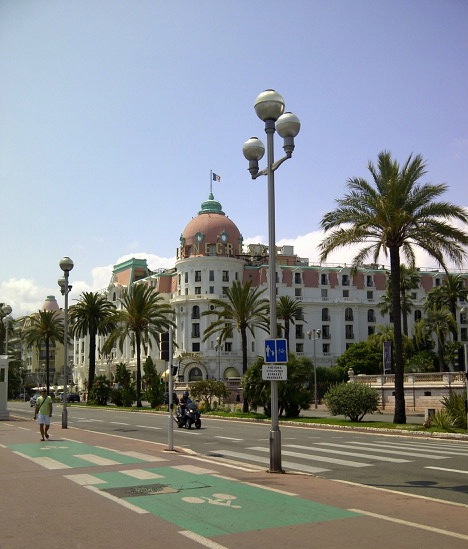
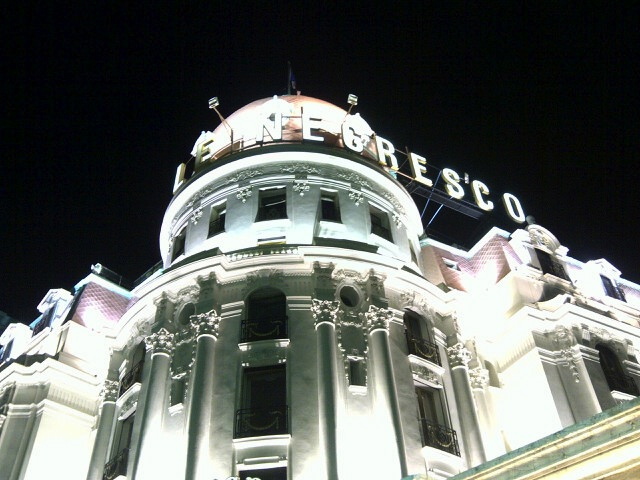
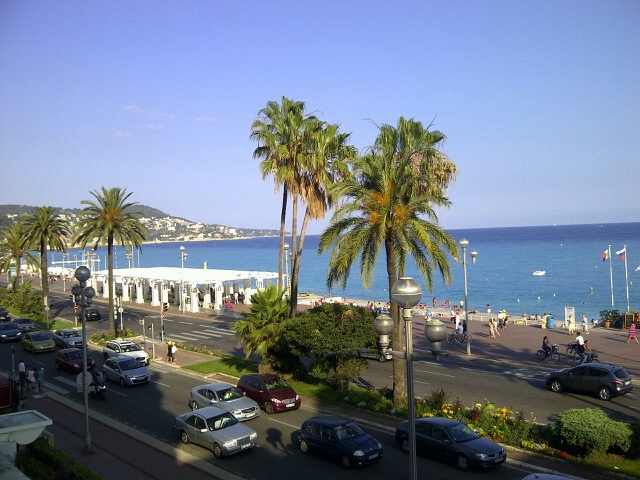
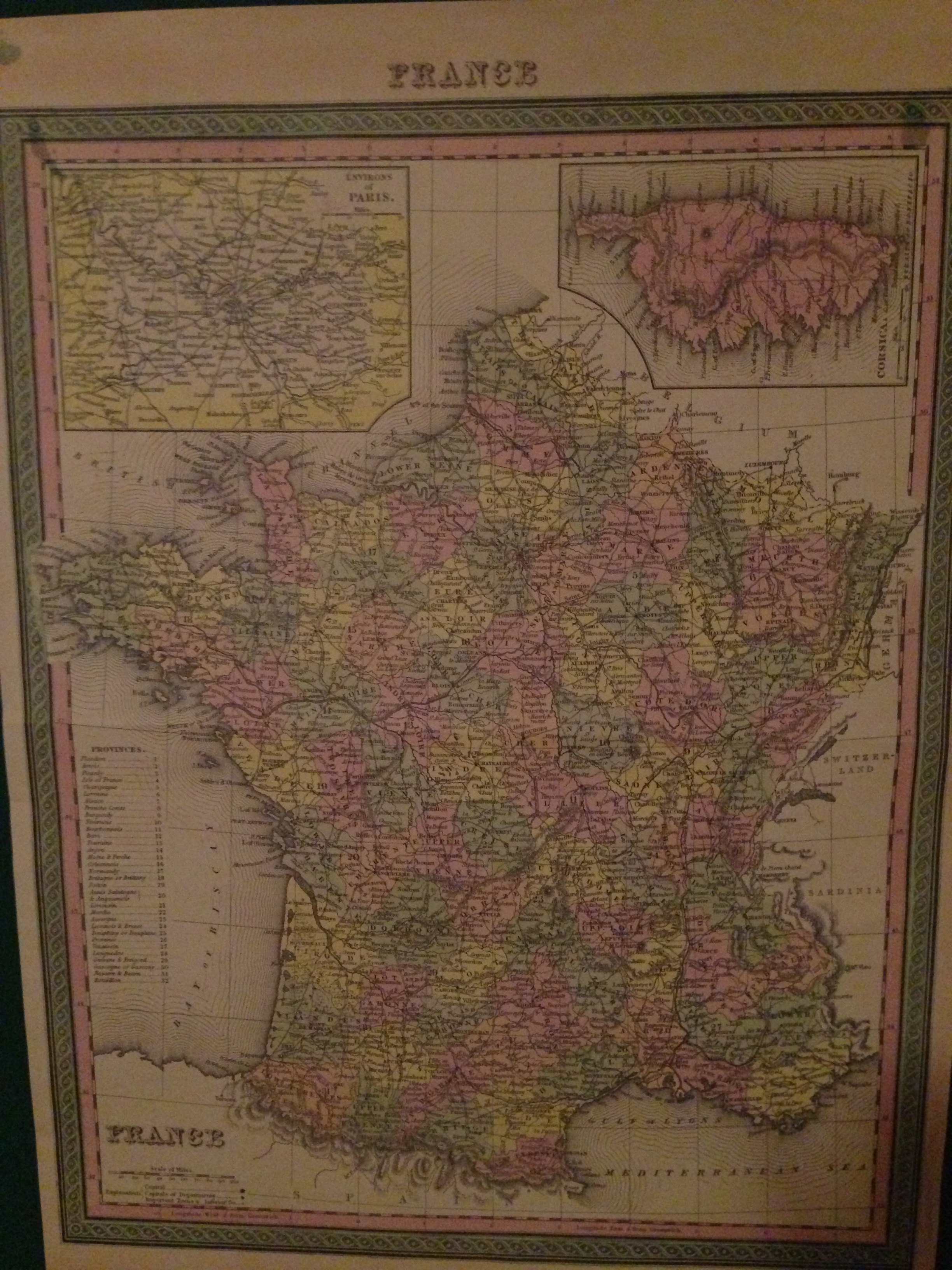
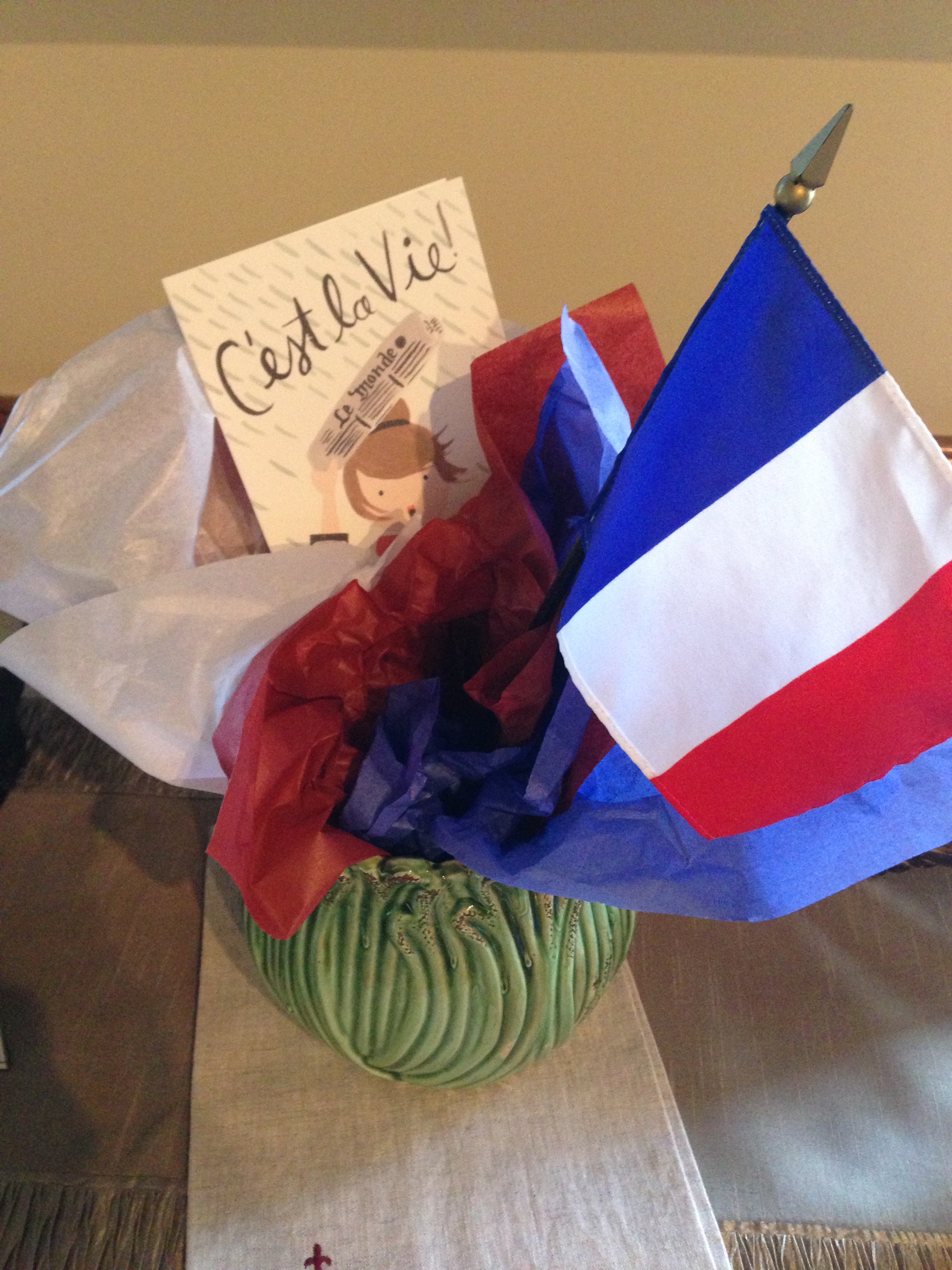
Letter to France

Dear France,

As someone tells Jenny in my new novel MAKE THAT DEUX,

“you ‘ave captured my heart.”

I’m not sure exactly when you did it. The first time I saw you, I was a little bleary-eyed, and I felt a little awkward. I had been looking forward to meeting you for so long — years — and I had started to believe it would never happen.

You were just so, well, distant.

When I started to feel comfortable with you (and you know it took weeks), it was almost like I’d always known you. I was so at home with you. It was like déjà vu. Sort of.

I didn’t know everything about your past…but what I did know, intrigued me. What I didn’t know didn’t seem to matter.

You understood me, even when I struggled to express myself. You encouraged me and seemed happy to have me. You shattered the stereotypes about les français — your people — when they politely welcomed me with a “Bonjour, Mademoiselle!”

They listened patiently as I spoke your language, learned its expressions and worked on my accent. They charmed me with their own accents when they practiced their anglais, particulièrement when your (good-looking) young men said “ze” for “the” and “zat” for “that.”

I know you had greeted millions of girls before me who studied traveled had a blast abroad for a year. Some of them loved you as much as I did, but, I dare say, not all. Some of them were just playing with you. Some just wanted to shop and drink wine, discovering but later forgetting about your certain, well,  je ne sais quoi.

Mais pour moi, c’était impossible.

I never forgot you, even as my French vocabulary dwindled and my memories of our time together faded. I kept my few pictures of you, not knowing that (or how) I would use them someday. For years, I dreamed I would come back to visit you with the man I love.

Then, un jour in the summer of 2012, I did.

I had spent months getting ready to see you again, studying your language —  listening, reading and practicing it weekly. I had written my novel (set in your south) and was getting ready to release it this fall. I had planned an itinerary for our visit en juillet, but our emploi du temps was flexible and open to spontaneity.

Which was fortunate, because our unplanned moments with you were the best ones.

I loved seeing my husband discover you: the Côte d’Azur, Provence, Languedoc, Beaujolais… Paris. I loved hearing him try out the French phrases he had learned. I loved going with him to see parts of you that I had never seen. I loved taking him to see other places that had once been very familiar to me, that I had been while thinking of him.

He already knew me well, but now he knows me  — and my heart — even better.

A la prochaine,

Julie


Fitting into un grille-pain (toaster), and Thanksgiving

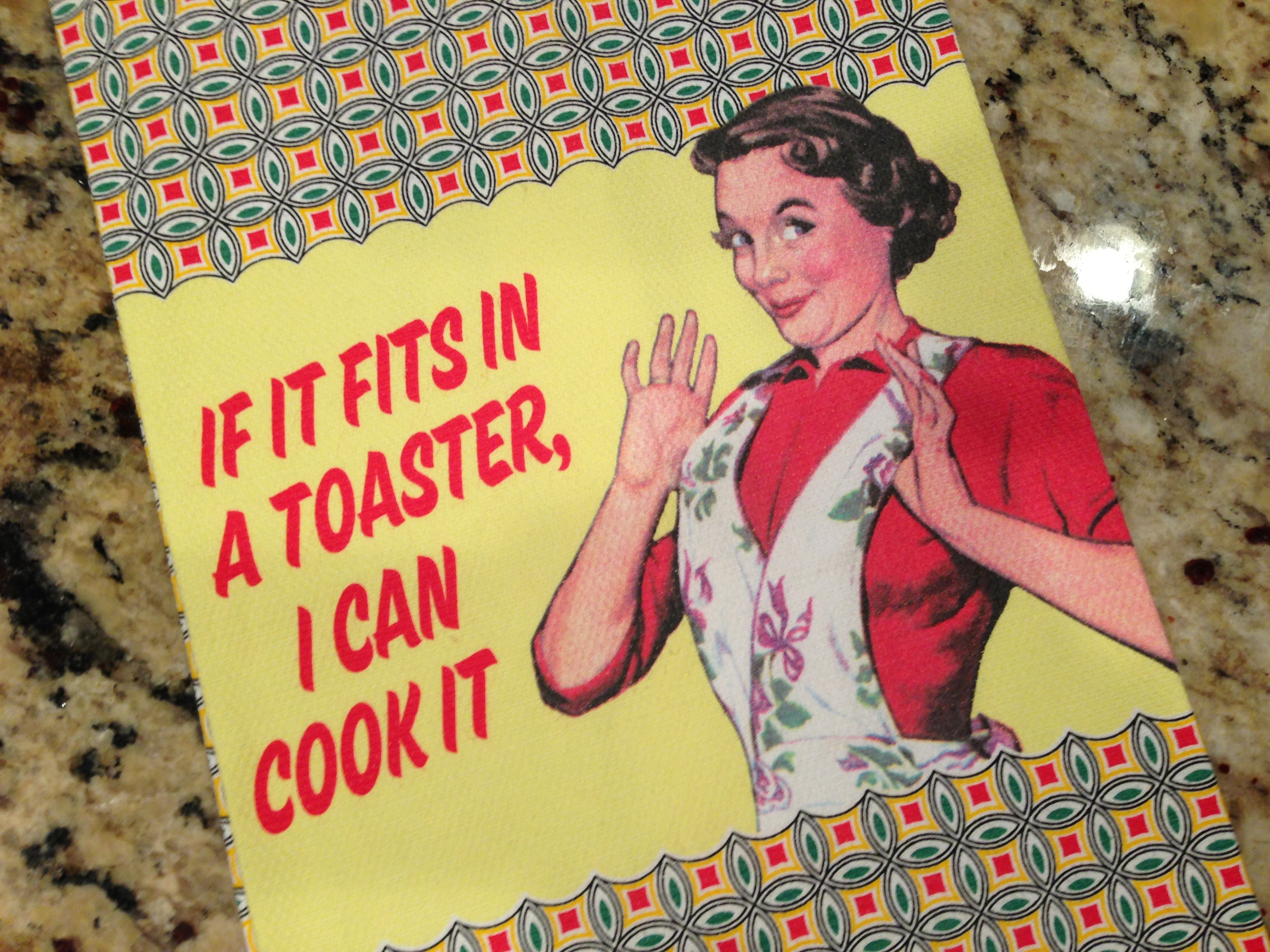
Not long ago, a dear friend (let’s call her “Lisa”) sent me a kitchen/tea towel that fits me perfectly.

Lisa’s birthday is tomorrow, and I messed up and didn’t send her a gift (or even a card). So I wanted to wish her a bon anniversaire here…and tell her I miss her and am thinking of her this Thanksgiving.

We live thousands of miles apart, but many years ago, we were roommates in college. Back then, she didn’t cook either, but she does now. I discovered this a few years ago when she came to visit us and helped my husband with the cooking for our annual Christmas fête. I wasn’t amazed — many women people can, and do, cook. But Lisa went above and beyond the call of a special weekend guest, chopping, stirring, baking and assembling — and loving it. She also complimented my husband’s cooking abilities and asked him for recipes.

Which made him feel très apprécié.

Perhaps because he is such a great cook, early in our marriage he and I lived for many years without a toaster, or un grille-pain (but we did own a funky gadget that produced croque-monsieurs.) I guess we weren’t much into toasted bread or bagels back then (and I try to stay away from them now). We finally bought un grille-pain when frozen waffles became a preferred (and easy) breakfast item for our kids.

(Let me just stop here and say that, though the word grille-pain looks  painful — and I suppose it is, to the bread/pain — it sounds très cool en français.)

Last summer, when we were weekend guests in a French home in Lyon,* we noticed their grille-pain: it was so différent from any we had seen back in America. Made to toast pieces of French bread (baguettes) that have been sliced through the middle, not from the top, it was an interesting appliance, with its long shape and wide, long slots. My husband added it to the list of French cuisine products, ingredients, and customs (like a cheese plate after dinner) that he admired and wanted to acquire.

Unfortunately, we haven’t been able to find one yet, but I may cherche (look for) one as a Christmas gift.

Back to cooking…

Since our wonderful American holiday Thanksgiving is just days away, mon mari et moi (well, more him than me) are planning the menu for Thursday. We will only have seven people at the table, but he will prepare plusieurs plats traditionnels. I will contribute two simple dishes: a sweet potato casserole and fresh cooked cranberries. I’ve done them almost every year for decades, but making them will still be a challenge.

Since they don’t fit into a toaster!

[In my new novel MAKE THAT DEUX, Jenny and her roommates are a little lonely at Thanksgiving. I won’t say what they do about it, but I will say that their solution isn’t ideal….and it doesn’t fit into un grille-pain…]

* for more, see my post Lyon and Beaujolais, with the French and a faux pas, 11-6-12

Dinner parties, fêtes, et la politique

In my novel MAKE THAT DEUX, Jenny and her friends — like most other college students —  go to a lot of  fêtes (parties), and to at least one French picnic. But they don’t go to any dinner parties.

And they hardly ever discuss politics — or the events going on in the world  — during their year en France.

For the French,plus ça change, plus c’est la même chose” is a favorite reference to politics. For Americans, it’s often one, and I think it applies to last week’s election very well, no matter what your feeling about the result.

J’aime bien les fêtes et les dîners, and so do the French. My  husband and I have hosted (and attended) quite a few of both during our years together. And, comme tout le monde, normalement we politely avoid the subjects of politics and religion.

But we’re also members of a dinner-party group in which those topics, though not our primary discussion, are not exactly taboo.

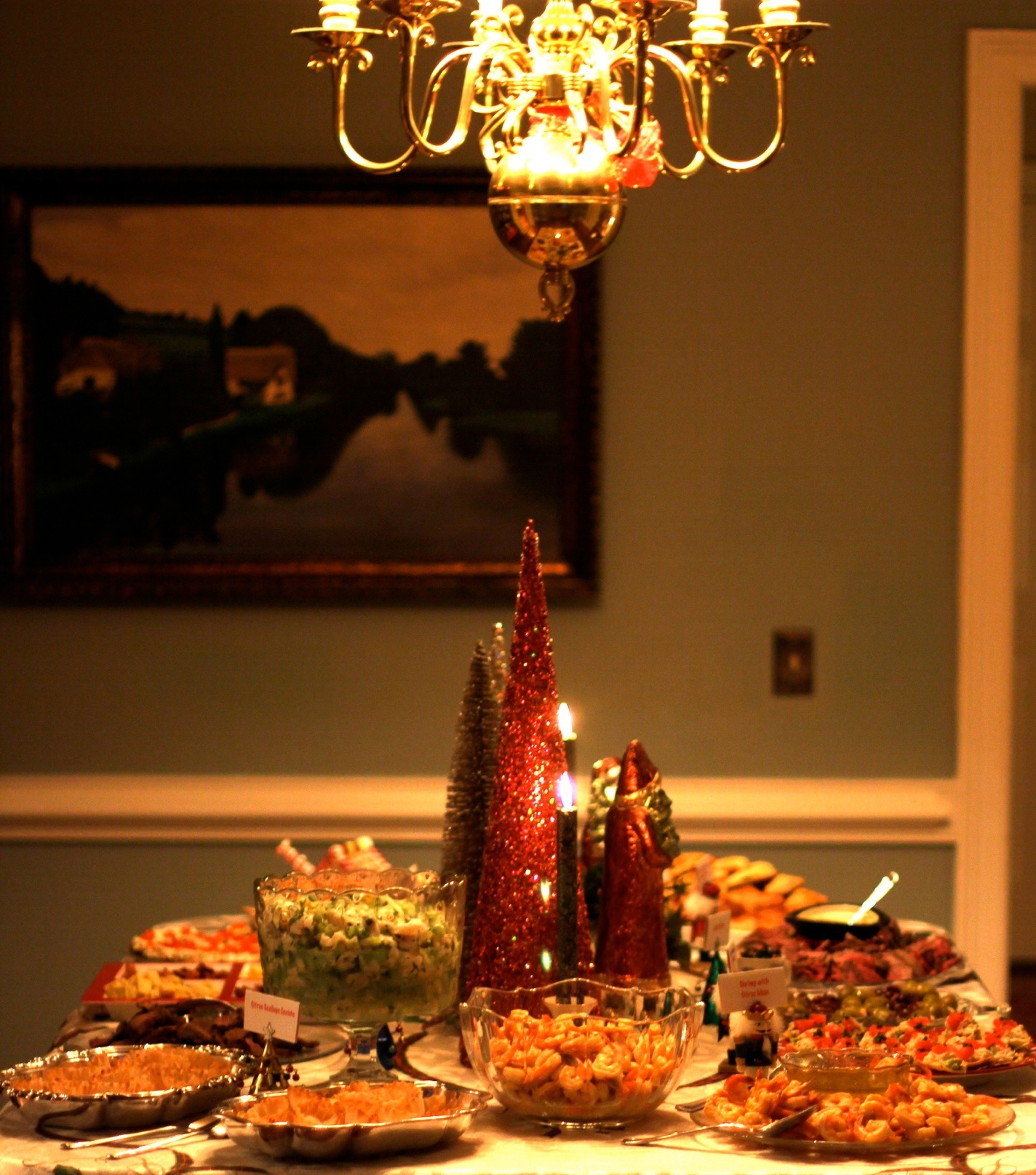
Our friends’ table before a recent dinner party

We four couples meet for dinner three or four times a year, and we’ve been doing it for over a decade. In the American fashion, we each bring a course to share and some wine; the host couple provides the entree. We’re all about the same age and have been together for about as long, and — I guess because we know each other so well — we feel comfortable bringing up our differences, and discussing our ideas.

We begin with cocktails around 7:30, and almost always stay at the table long after dessert, til the wee hours of the morning. We talk about typical dinner-party subjects, like movies, books and sports, but almost inevitably, current events come up, and that leads to politics….and to differing opinions. And sometimes, bets are made on the outcome of elections.

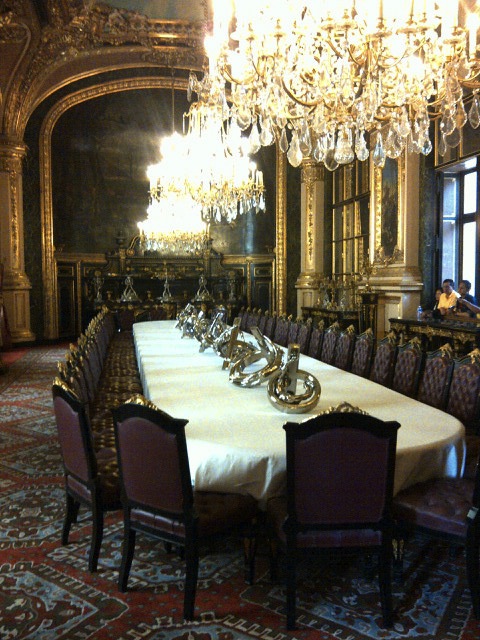
But we always end the evening as friends who respect each other, and each other’s different views. Last summer, when my husband and I visited Versailles,* I found myself thinking about 18th century French nobility, and how they handled their differences, when I took this photo in the King’s apartments:

Back to our own group. Besides discussing politics, we catch up on each other’s lives and families, we eat good food and we share a lot of laughter. Over the years, we’ve had so many memorable evenings, that I wish I’d recorded what happened.

Because truth is stranger than fiction.

Our next evening together probably won’t occur until 2013. However, next month, we will invite these friends and many others to our annual Christmas fête.* At the party, politics never rarely comes up in conversation. People typically chat about the holidays, their families and their recent activities, and share funny stories.

 Our table at last year’s gathering

In MAKE THAT DEUX, Jenny is away from home for Noel. I won’t say if she goes to any parties, but she has a memorable Christmas in the Alps.

Avec les émotions et les amis, et sans la politique!  

*more on Versailles — and Noel — in upcoming posts…

Lyon and Beaujolais, with the French and a faux pas

In my novel MAKE THAT DEUX, Jenny sees a lot of western Europe, but only a little of France itself. On school breaks, she travels mostly with Americans, staying in youth hostels and seeing the sights without the aide of les français.

Which is a shame. But that may keep her from committing too many faux pas in front of the French. Goodness knows she experiences enough embarrassing moments as it is…

Par contre, one of the highlights of our trip to France last summer was the weekend my husband and I spent with a French couple in Lyon. My faux pas (and I hope it was just the one) happened on Sunday…

Luc and Juliette met us at the train station on Saturday morning. Earlier, we had exchanged letters and emails – en français et en anglais – about our visit, a stop on the way from Montpellier to Paris. Near our age but with twice the number of children, they were très agréable, insisting that we stay at their belle maison rather than pay for un hôtel.

Luc doesn’t speak much English (though he made un effort) and my husband knows little French, but Juliette’s anglais is very good. She and Luc were surprised at my ability to speak French, very encouraging and complimentary.

(The men’s language barrier wasn’t a problem, since Juliette and I could talk to each other — and translate for our husbands — and since, well, men are men.)

For two days, she and Luc entertained us, showing us around Lyon and the surrounding area like only the French can do.


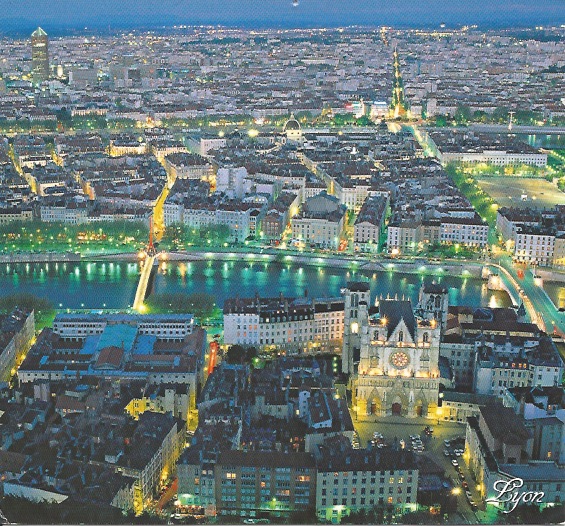
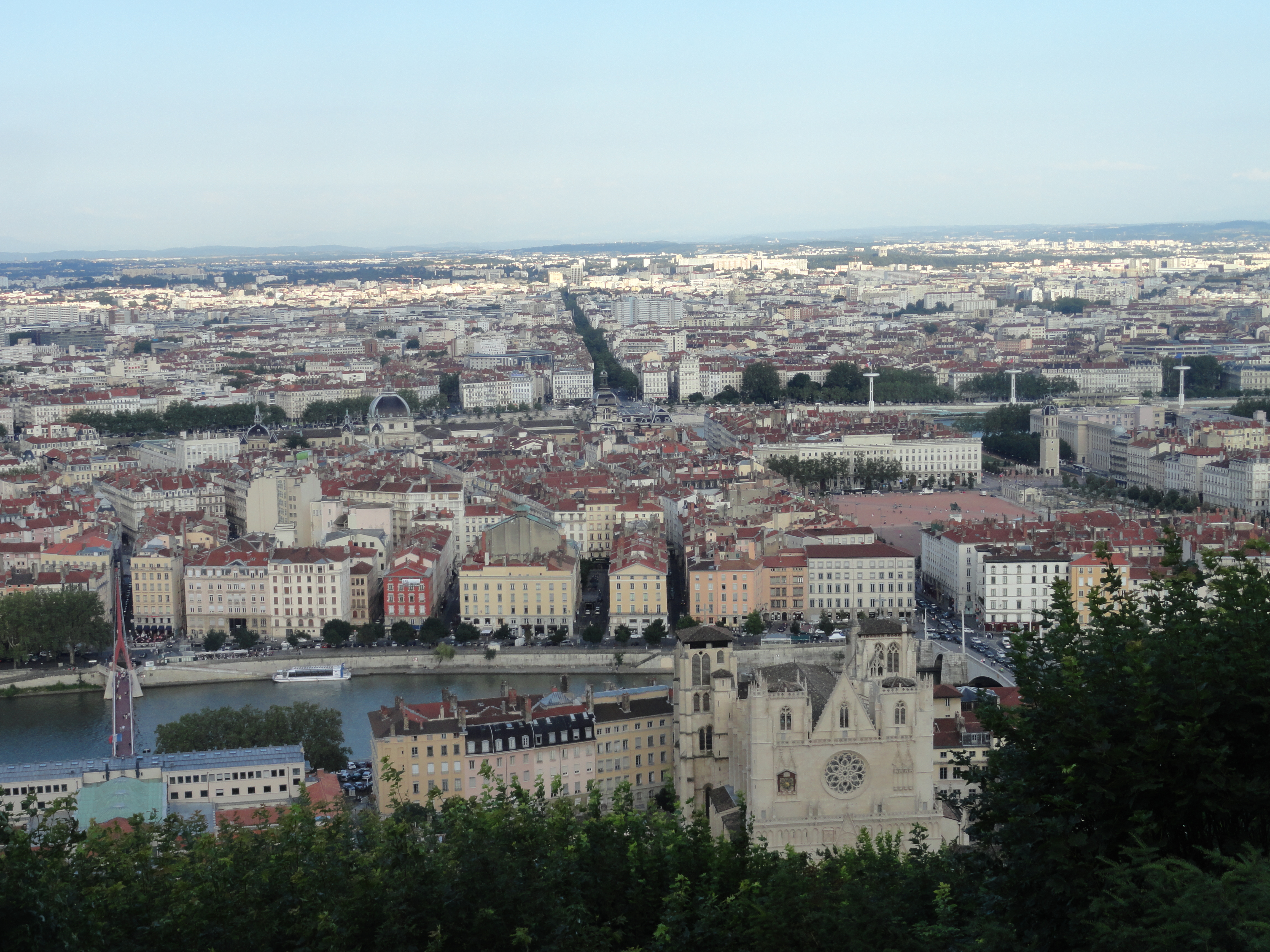
Above is a postcard they sent us one Noel. That Saturday, I took this photo of a similar view:

On the Presqui’île  — a peninsula between the Rhône and the Saône Rivers — we toured the Musée des Tissus et des Arts Décoratifs and the Musée des Beaux-Arts, then stopped for une boisson at a café off the famous Place des Terreaux. 

Refreshed, we crossed un pont (bridge) and explored vieux Lyon.


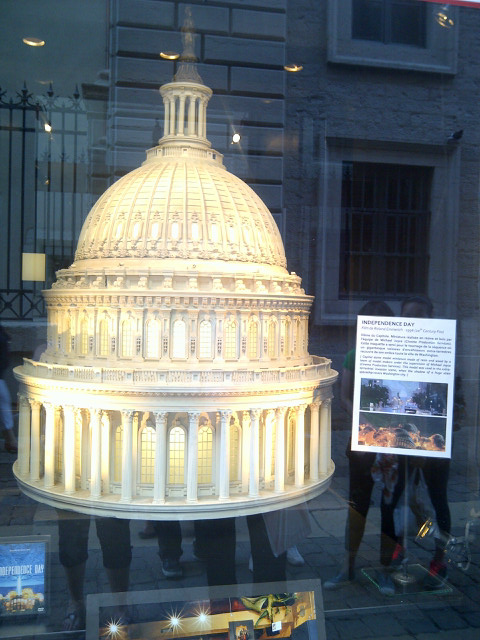
We stopped to look in the window at the famous Musée Miniature et Cinéma and then wandered into a traboule between two main streets.

A window display of the Musée Miniature et Cinéma

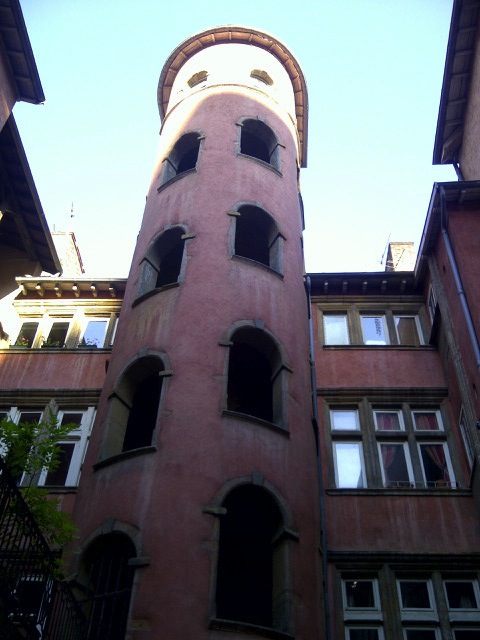
Luc explained that these hidden passageways came in handy during World War II for the French to hide from — and fool — the Germans, and that people still live in the apartments which share covered spiral staircases:

Luc and Juliette were wonderful hosts, even helping us navigate the Versailles site web on their ordinateur (computer) on Sunday, in preparation for our visit to the palace the following week.

That afternoon, they decided we should explore the nearby region known as Beaujolais. We happened upon a vrai (real) French Renaissance Festival in the medieval village of Ternand just in time to watch a play (complete with horses and jousting) performed en français.

But earlier that day, after mass at their church just down the street, and during our visit to Les Halles in Lyon,* I made an erreur.

As we walked through the vast indoor market, Juliette made a few purchases, and I noticed poultry, fish, meat and cheese displayed in ways I had never imagined. Then Luc suggested we sit down at a café for a glass of vin and some raw huîtres — oysters. He ordered for us.

I listened and thought he had requested 3 oysters for each of us. Since I love oysters (and didn’t realize that Juliette already had un repas waiting for us at home), I interrupted en français and asked that he double it.

Oops.

Luc had actually ordered 24 oysters, not 12. But being a polite Frenchman (and perhaps assuming that Americans like more of everything), he changed the order to 48. Which I didn’t understand  hear  catch, until they arrived.

Good thing oysters are so low calorie. They were delicious, I was embarrassed, and later, we all ate a very light dejeuner et dîner! 

*for more, see my post “Les écharpes, le fromage et café crème (scarves, cheese and espresso with cream)”

From “Unwritten” to Published, with confidence (la confiance)

A few years ago, I told a close friend en toute confiance (confidentially) about my dream of writing a novel and my plan to begin that fall. Rather than looking at me like I was crazy, she was excited for me, and very encouraging.  A short time later, she gave me a song to play for inspiration, a few lines of which I quote:

“I’m just beginning, the pen’s in my hand, ending unplanned. Staring at the blank page before you. Open up the dirty window. Let the sun illuminate the words that you could not find.”

– Natasha Bedingfield, “Unwritten” 

I didn’t have a lot of confidence in myself as a writer, but I believed in my idea. I had a finished outline, and I had the time to work. And I had a passion for my story.

So I sat down and stared at the blank page —  on my computer screen — and began.

I also confided in another friend who knows me well. She said: “Don’t ever let anyone tell you that you can’t do it.” Believing in myself — la confiance en soi — has been always been difficult, no matter what my accomplishments or abilities. I’m usually quick to listen to those who say I can’t, and slow to prove to myself that I can.

But like Jenny, the main character in my recently published novel MAKE THAT DEUX, I like to challenge myself. I wrote the first draft that school year. Later, as I worked on revisions (and on my next novel, a Thriller), I decided to re-learn to speak French.

Even though I had once spoken it fluently, I had just moved to a place where few people spoke French. With lack of use, my French-confidence started to wane. Others’ lack of impression with my ability to speak French translated into my lack of belief in it and myself. As the years passed, I lost much of my ability and knowledge of the language as I got (and stayed) busy, with life.

Malheureusement.

De toute façon — anyway —  over a year ago, I let a French friend know of my wish to study the language, and he recommended a small weekly class. I met with Madame, and soon I was doing devoirs — homework — organized in a binder. I started using French language apps on my iPad. I met and began a friendship with Zeina, my mother’s Lebanese neighbor; because she is so agréable, we speak French when we rendez-vous.

And last summer, when my husband and I spent ten days in France, I tried my French at every opportunity…and I had many.

Le résultat: Though I still (at times) struggle with the simplest phrases, I’ve increased mon vocabulaire considerably. And although I continue to say (even en français) that “I don’t speak it well,” mon prof de français (and Zeina) insist that I do. It’s a question of confidence, not one of ability. But I continue to study, speak, read and learn.

And write.

“Today is where your book begins.” 

La séduction et l’élégance: summing it up

Just after my new novel MAKE THAT DEUX was released* last week, a friend sent me this recent feature in the (UK) Telegraph Travel  titled

“36 Hours in…Montpellier” France. Its first line:

“Montpellier, the most seductive city in the French south at any time, is elegant and cultured, with an autumn sun warm enough to sit out on its squares.”

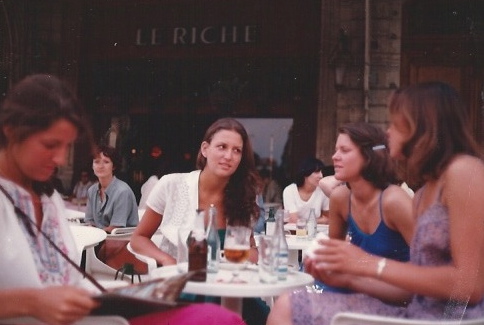
And, long ago, I did that with friends…

Then

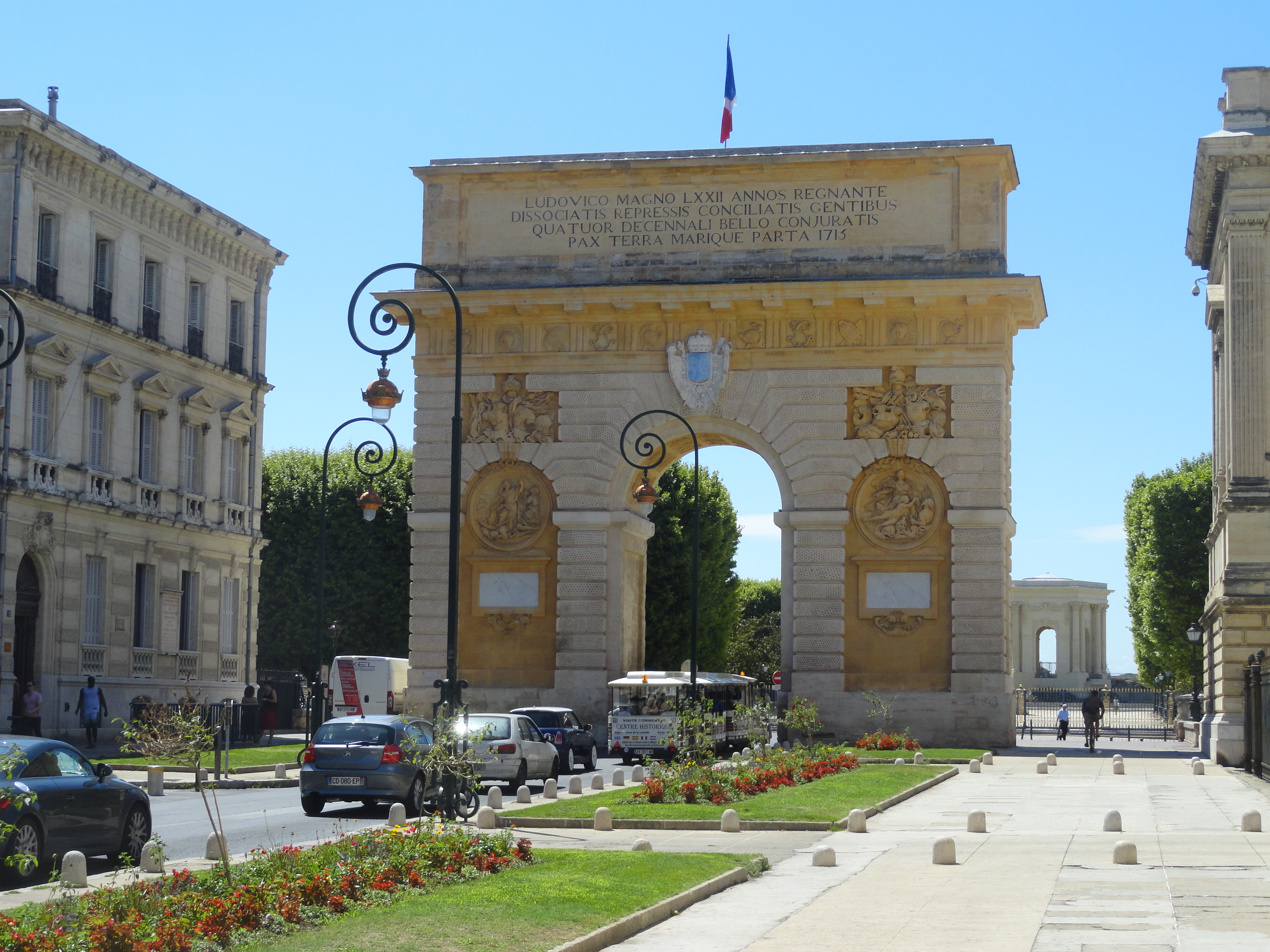
Just over three months ago, I returned to Montpellier for the first time in many years. I spent 36 hours in the city and at the closest beach (in nearby Palavas-les-flots) with mon mari during our vacation. We walked by Le Riche – the café in the above photo in Place de la Comédie — but didn’t stop, because we found it crowded with summer touristes. We chose instead a quieter spot to have a drink, nearer to the city’s own Arc de Triomphe and close to Place de la Canourgue. Later, we had dinner at a tiny, elegant restaurant in the area. For so many reasons, it was the perfect place to relax and celebrate a milestone anniversary.

MAKE THAT DEUX is set in Montpellier and Palavas, and the girls in MAKE THAT DEUX explore the Montpellier of an earlier time.

Has very much changed over the years? I think this sums it up:

Oui, et non.

In their époque, unlike today, studying abroad for a year or semester was not something that many people did. A university degree was (relatively) expensive, but not ridiculous. Moving back in with your parents after college was uncommon. College kids age 18 and over could drink legally in the U.S., not just in Europe. Cigarette smoking wasn’t restricted, nor was it even unacceptable. People — including lovers — wrote letters to each other on paper, and sent them through the mail.

What hasn’t changed? Back then, like today, terrorism was a major issue, and events gripped the world stage. A democrat was in the White House. College graduates had a very hard time finding a job. But while IN college, in addition to studying, students went to parties, met new people and went out on dates. Sometimes they even fell in love.

And — like today — they didn’t tell their parents anything everything about what they were doing, especially when it involved la séduction…

Now

* See my HOME page for how to order MAKE THAT DEUX! Merci!


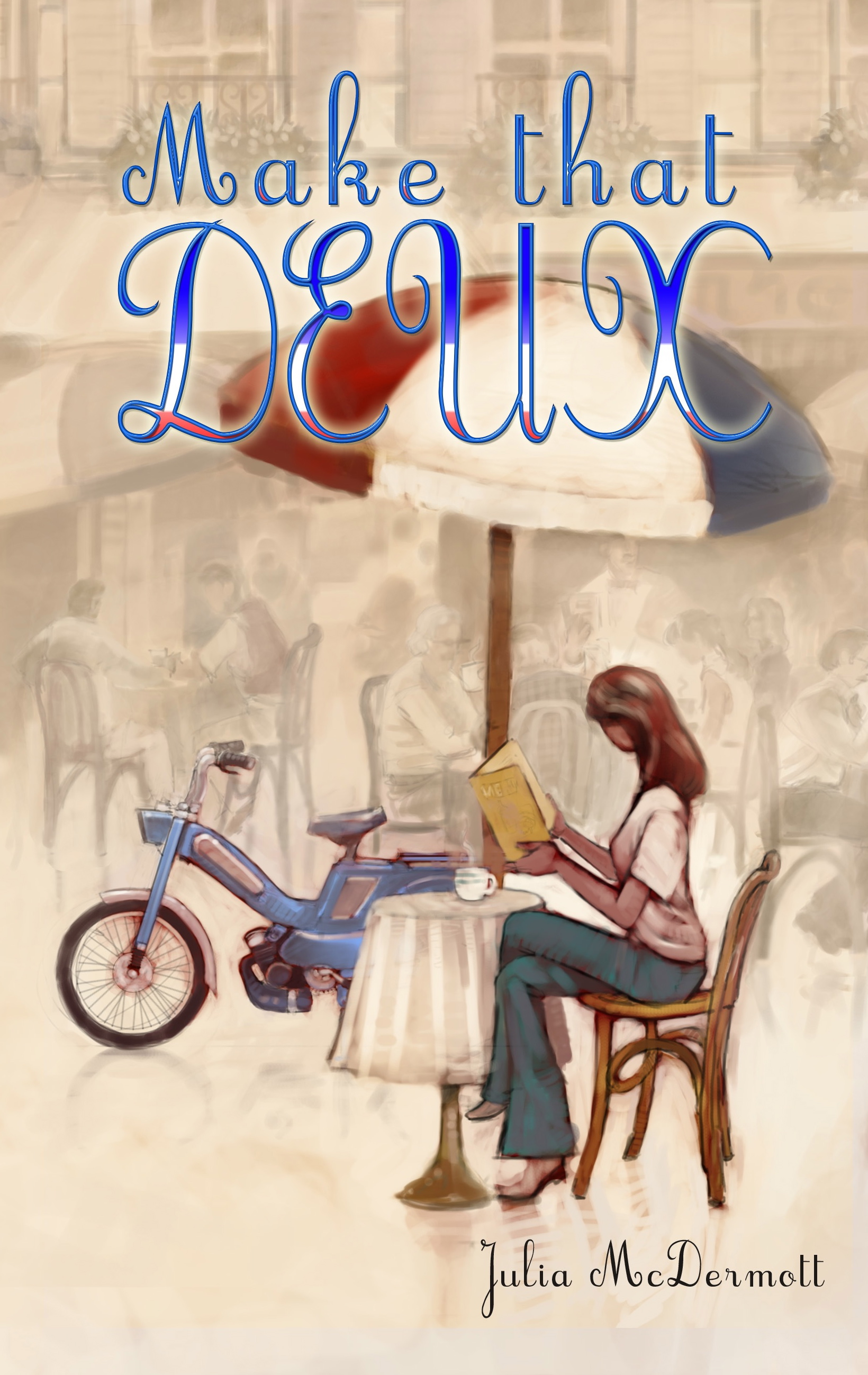
Make that…my book cover! — et son histoire

As promised…

Because the French are very good at mathématiques, here’s the story of the creation of my book cover, in an equation (une équation):

La serendipité L’artiste  *  [l’inspiration + le talent + la technologie]

MY BOOK COVER (La couverture de mon livre!):

Les détails:

Serendipity: Last spring — at long last — I finished the final edit of MAKE THAT DEUX, and began planning its publication. A top item on my to-d0 list was to find a cover artist. Then, just before Easter, my daughter and I visited beautiful Sarasota, Florida for several days during her spring break. “Kim” lives in Sarasota and she invited us to spend one afternoon with her and her husband at their beach cabana.

I told “Kim” about my plans for publication, and she mentioned a friend and cabana-neighbor, writer Peter McKenzie, author of THE PARAGON GANG. “Kim” suggested I look up Peter’s book on Amazon and give him a call. I found the book, downloaded it on my iPad, and called Peter. When I  complimented him on his book cover, he recommended the artist, Michael Faron of Sarasota. Back in Atlanta, I read through Michael’s website www.msfaron.com and sent him an email…

Et voilà! I had found my cover artist.

The Artist: First, Michael read MAKE THAT DEUX. Then we began discussing ideas and sketches that he sent me. We narrowed them down to one… and, aided by inspiration, talent and technology, Michael did the rest!*

As an added bonus, here’s the book description for MAKE THAT DEUX  that you will soon see on Amazon:

Three American college girls living in an apartment on the Mediterranean. Two boyfriends back home. “The One” (and only), if it’s “meant to be” — whatever that means! 
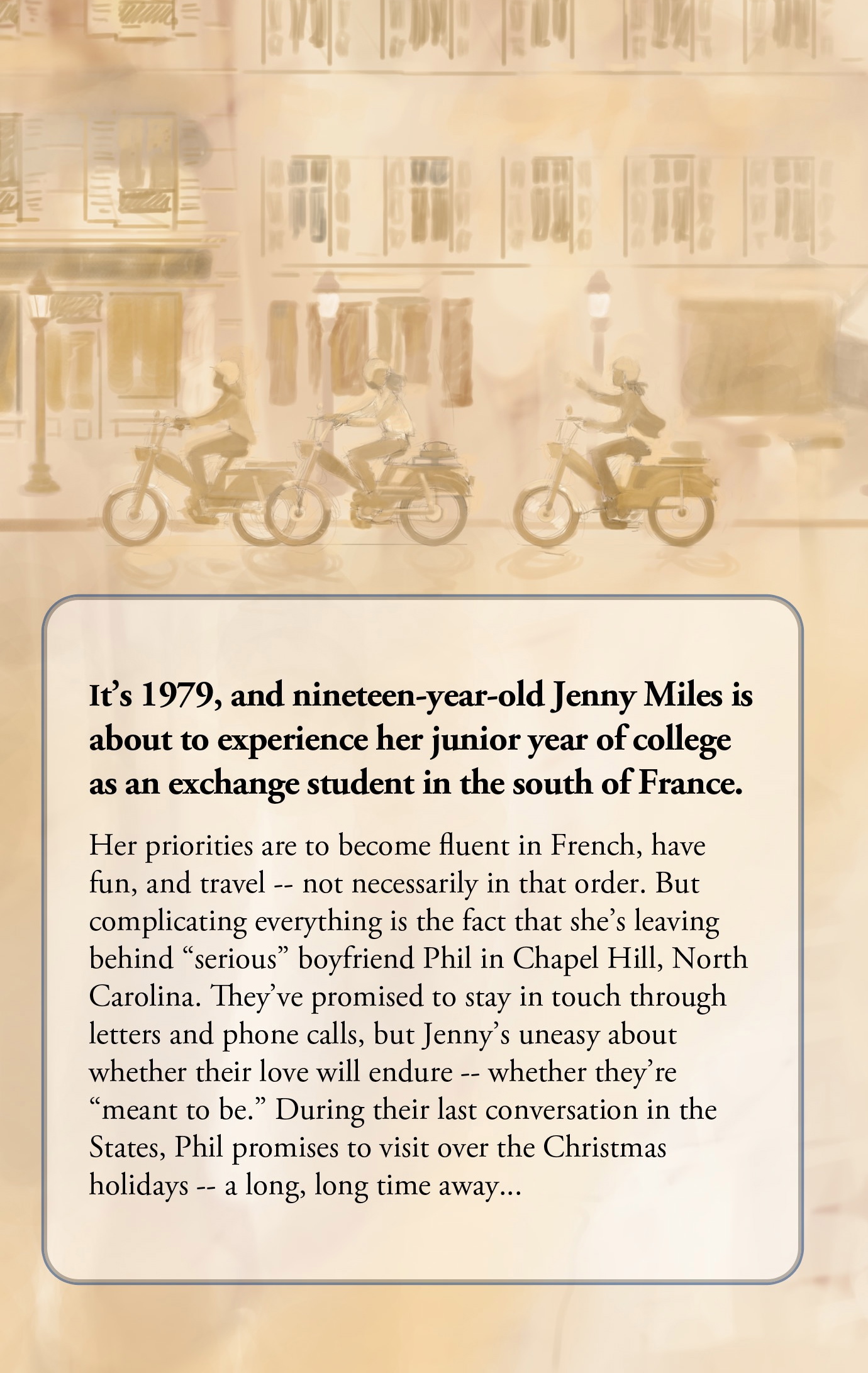
Jenny Miles has three goals: to speak French like a native, to travel all over Europe, and to have a blast. Meanwhile, two men compete for her attention and amour, ici et là. C’est compliqué! 
Take 10 months. Add 2 (surprise) transatlantic flights, 2 Greek isles, 1 moped (une mobylette) and beaucoup de lettres! Subtract 1 phone, 1 promise to be faithful, and 1 bikini top. La solution?  
Make that…a year that Jenny will never forget.

In the cover art that Michael created (and in the book description above), somehow I’m reminded that the more things change, the more they stay the same…

* Including the back cover, which I may reveal in the future…


Le menu, and making a choice

“Vous avez choisi?”  (Have you decided?)

— a French waiter

Choices can be difficult, and many of them haven’t changed (but they may have evolved over time):

Café américain or café au lait? Prix fixe or a la carte? Wine or cocktail? Skirt or pants? Flats or heels? One-piece or bikini? iPhone or BlackBerry? Paperback or e-book?

The list goes on, and making the right selection can sometimes be a daunting task — or at least, pretty stressful. Especially when it’s not possible to choose both alternatives, like buying two pair of the same shoes (or pants) in different colors. Something I’ve been known to do…

But back to restaurants and cafés. When one must make a choice, sometimes it’s best to study the menu (en français, “la carte”), and sometimes it’s better just to glance at it and look for something  appealing. The same could be true for art, and for fiction…and some people judge a book by its cover.

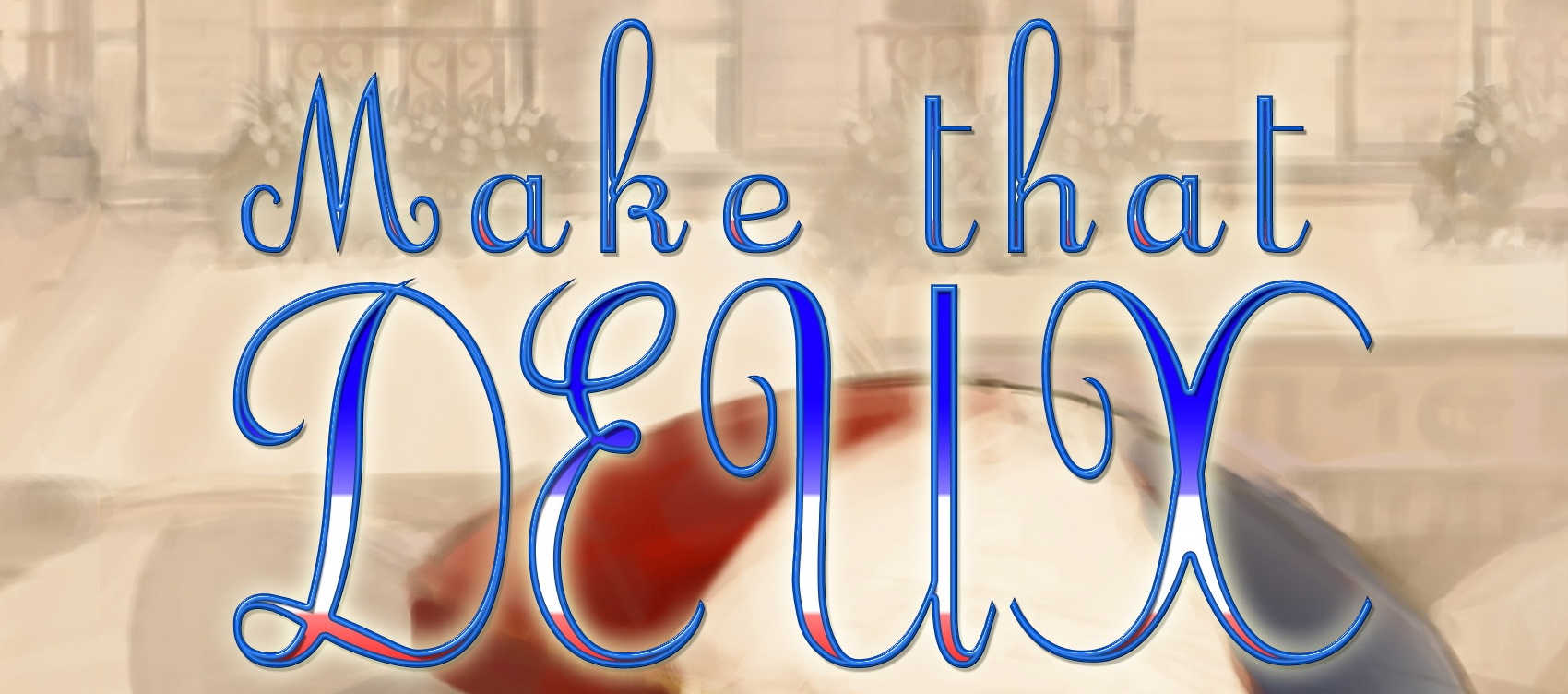
Which brings me to the image below: a small bit of of the cover of my novel, MAKE THAT DEUX. The full cover will be revealed next week…

What’s on the menu?

Beaucoup de choix:

Classes. Beaches. Museums. Wine, and pastis. Baguettes, croissants and mille feuilles. Windsurfers. The Alps. Love.

Bon appétit!

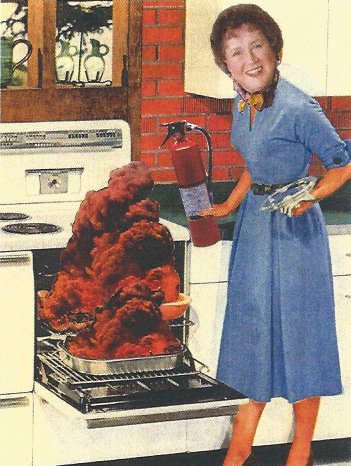
What would Julia do? Faire la cuisine française

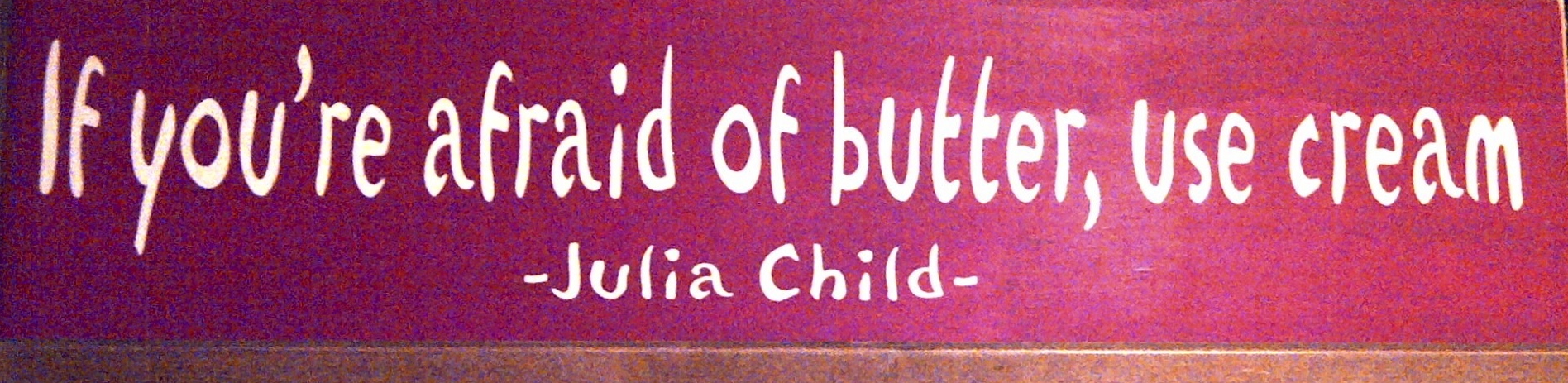
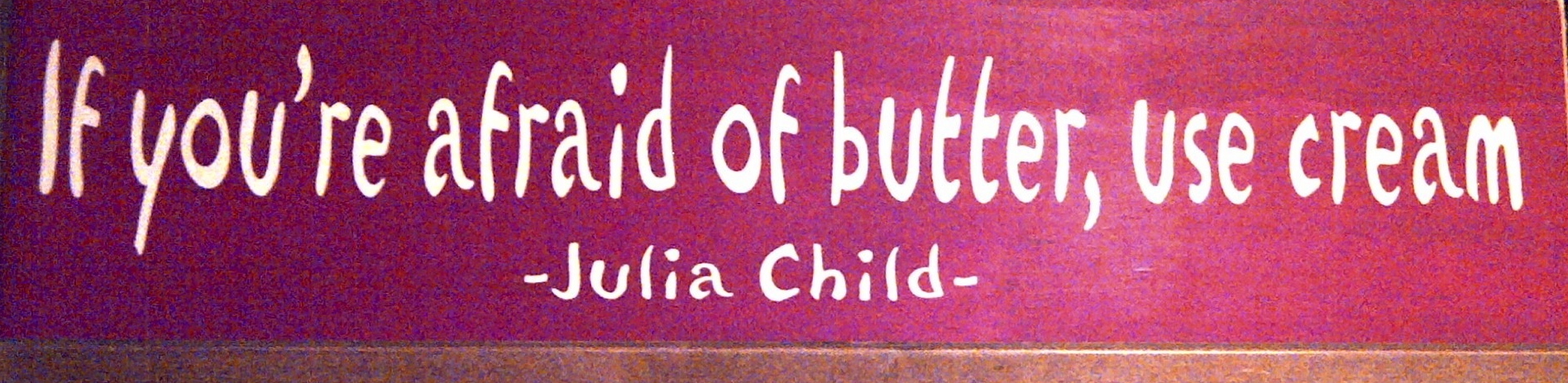
Anyone can cook, with butter.

– Anonymous

My husband and I heard that offhand comment a few years ago at a fête — and a new (ironic) family motto was born.

Because, not anyone (such as, well, me) can cook, even with butter — an ingredient that my husband doesn’t fear.* En fait, because he enjoys faire la cuisine (and since I don’t know how), he does the cooking in our home, toujours — every day — an arrangement that works for us, and one that’s never changed. 

(If he doesn’t feel like cooking, we order a pizza, eat leftovers, or go out.)

As you might imagine, some of our his favorite recipes are found in cookbooks written by Julia Child.

If I were Julia Child

So, whenever he tries a new and complicated recipe (which is often) — if it calls for butter (which is quite often) — someone in our family might remark to him that, well, “anyone” can cook with it.

Then, he laughs…and concocts something délicieux. 

I blame my inability to cook on my family growing up: my father did the cooking, so I thought that was normal. Evidemment, it was one of the qualities I looked for in a husband. That, and a sense of humor, patience, and optimism, among others.

But from what I’ve observed, cooking almost requires those three — at a minimum.

In my soon-to-be-available novel, the main character, Jenny, is a girl in college, and in one of my favorite scenes, her date cooks dinner for the two of them at his apartment. I’m not saying whether butter is involved, but wine is — c’est certain. But c’est la France, so c’est necessaire. The evening is a memorable one, but not because of the food. I won’t describe it further here, except in these words: guitar, bathroom, and (full) disclosure.

Jenny has her own list of qualities that the ideal man should possess, and I’m not sure they match my own. Let’s just say, she’s open to persuasion.

I don’t know what Julia would do. But – what will Jenny do? Il faut acheter le roman! (You have to buy the book!)

*


Le football américain, and good calls

“Je sais que tu adores ce sport…”

        — mon prof de français

Football. Fundamentally, I don’t think it’s changed all that much. But many of the rules have changed over time, adapting to better technology, increased risks and just smarter ways to play the game. Two other ingredients of what makes up the NFL have also changed, in my girl-opinion: uniforms, and the players’ personal styles. I’m not sure they’re better, but let’s just say I’ve noticed.

But what makes up a good call (and a bad one)  by the referees —  les arbitreshasn’t changed, no matter how much experience they lack have.

The Falcons are my team, and they’re undefeated right now. They’ve got a great quarterback, a talented offense and a strong defense. There are other good teams in the league, including the Green Bay Packers. I’m not really a Packers fan, and I was asleep last Monday night when the controversial touchdown call was made that resulted in a win for the opposing team. But like many other people, I watched the replay and I couldn’t believe the call. So on Thursday, I was ecstatic when the real experienced refs were back.

Yesterday, in an incredible match de foot between Atlanta and the Carolina Panthers, the Falcons won by two points after a final minute of terrific plays. Another close game followed: Green Bay against New Orleans. That game wasn’t without controversial calls, but despite that, the Packers won by a point.

Phew.

I just don’t think I could have handled them not winning again. I should probably like the Saints, I guess, with their French heritage and fleur de lis, but I just don’t — with their issues.

But hey, that could change.

I’ve changed about football. Mistakenly, I used to think (and I’m embarrassed to admit) that it was just a bunch of guys knocking each other down. But because:

1. a son of mine played it in high school

2. being a reader, I read How Football Explains America by Sal Paolantonio, The Blind Side by Michael Lewis and saw the movie (and because of Michael Oher, I love the Ravens)

3. and, we got a high-definition big-screen TV

my football conversion was born. I learned the rules and started to understand the game: Runners dodge, carry, break tackles and get yards. Passes are thrown and caught, sometimes by the opposing team. Kickers kick — and they have to do it well. Players protect the quarterback, who fakes, hands off or passes to a receiver. I’ve learned (most of) the penalty calls, though I still don’t always get what “holding” is, why “illegal motion” is bad and why we can’t have “forward laterals,” at least, occasionally.

Just kidding. I don’t really like any lateral passes.

Anything can happen in football, as the last sixty seconds of the Falcons-Panthers game demonstrated yesterday. In my view, each play is an un-choreographed dance (though I’m sure the coaches and players would say each one is quite well choreographed). But the truth is, it’s unpredictable.

Unfortunately, there’s no football in my novel (coming soon), but there is a very important hockey game. The French don’t have le foot, and I think they’re missing out.

Since I think they just might adore it. That would be a good call, n’est-ce pas?

Create a website or blog at WordPress.com

Up ↑