Two, Dos, Deux: as easy as 1, 2, 3

Most people know how to say “two” in Spanish: “dos.” Rhymes with “close,” as in, “Close to You.”

Since my novel MAKE THAT DEUX was published, however, I’ve only heard a few who know how to say “two” in French: “deux.” Rhymes with…hmm.

I can’t think of a rhyme in English that doesn’t have a consonant ending, like “could,” “look,” or “put.” But you can pronounce“deux” – even if you took didn’t take French in high school. N’ayez pas peur (don’t be afraid): make it rhyme with one of the above, leave off that consonant sound, and you’ve got it.
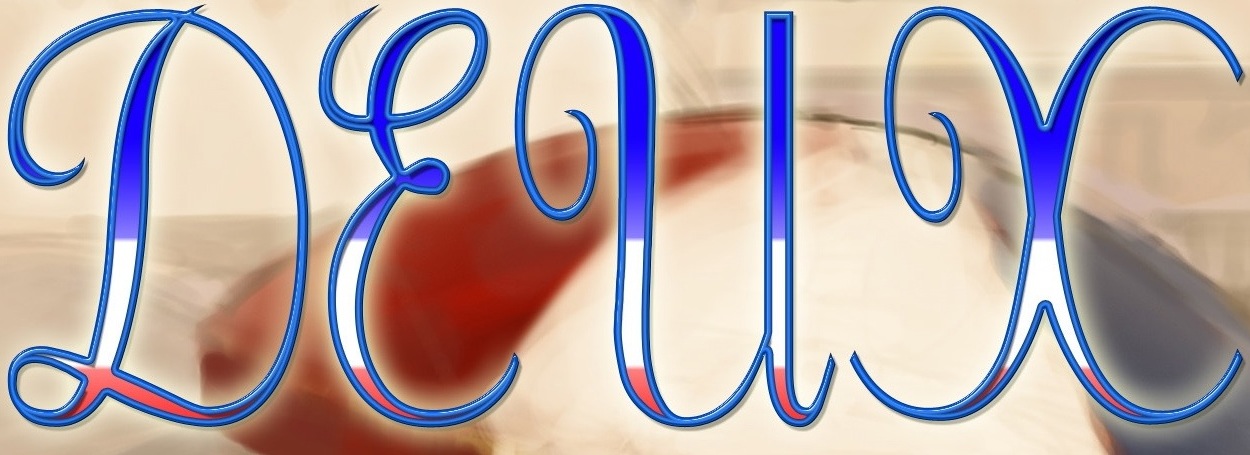
photo

The third word of my novel’s title, taken from the Cover

For a writer, choosing a title for your book is kind of like naming your baby: usually, you give it some serious thought, and it’s not always facile (easy). When you’re writing a novel and you tell others (prematurely) what you’ve decided to name your  baby book, you want to hear them say, “That’s great!” not “Really?”

But once you’ve published your book, the baby’s been born and a name title given. People do in fact say “That’s great!” or even “I love it!” – no matter what they think. They don’t feel as free to tell you their opinion; if they can’t say something nice, they don’t say anything. Plus, like baby names, I believe that titles grow on people, and they come to fit the baby novel. At least, people look for reasons why names titles fit. As a writer, I love it when they find them.

But when people aren’t sure how to pronounce your book’s title (perhaps because you’ve chosen a word from another language?), there could be a problem.

I’ve heard the troisième word of my novel’s title (mis)pronounced as “do” most often. But “Make That Do” suggests something totally different than what I had in mind with “Make That Deux” when I was brainstorming for titles, back whenever-it-was.

I’ve only told a few friends the (English) one-word [working] title of my work-in-progress, a Suspense/Thriller, and so far, reception has been lukewarm. But it hasn’t bothered me because, well, I don’t know why. Perhaps it’s because this book isn’t my first;  I’m not a new parent anymore, I’ve got my own way of doing things now (what works for me), and I’ve got a bit of a thicker skin.

Back to MAKE THAT DEUX:  My book is set in the south of France. If One is the Loneliest Number, and Three‘s a Crowd, Two just seems, well, parfait (perfect). How does the title fit the novel? You’ll have to buy it, and read it, to find out!
“The Funny,” part deux (two)

I’ve never lived in New York, and I’ve never been a nanny – though I had a friend at UNC who was an au pair in France the summer after we both spent our junior year of college there.

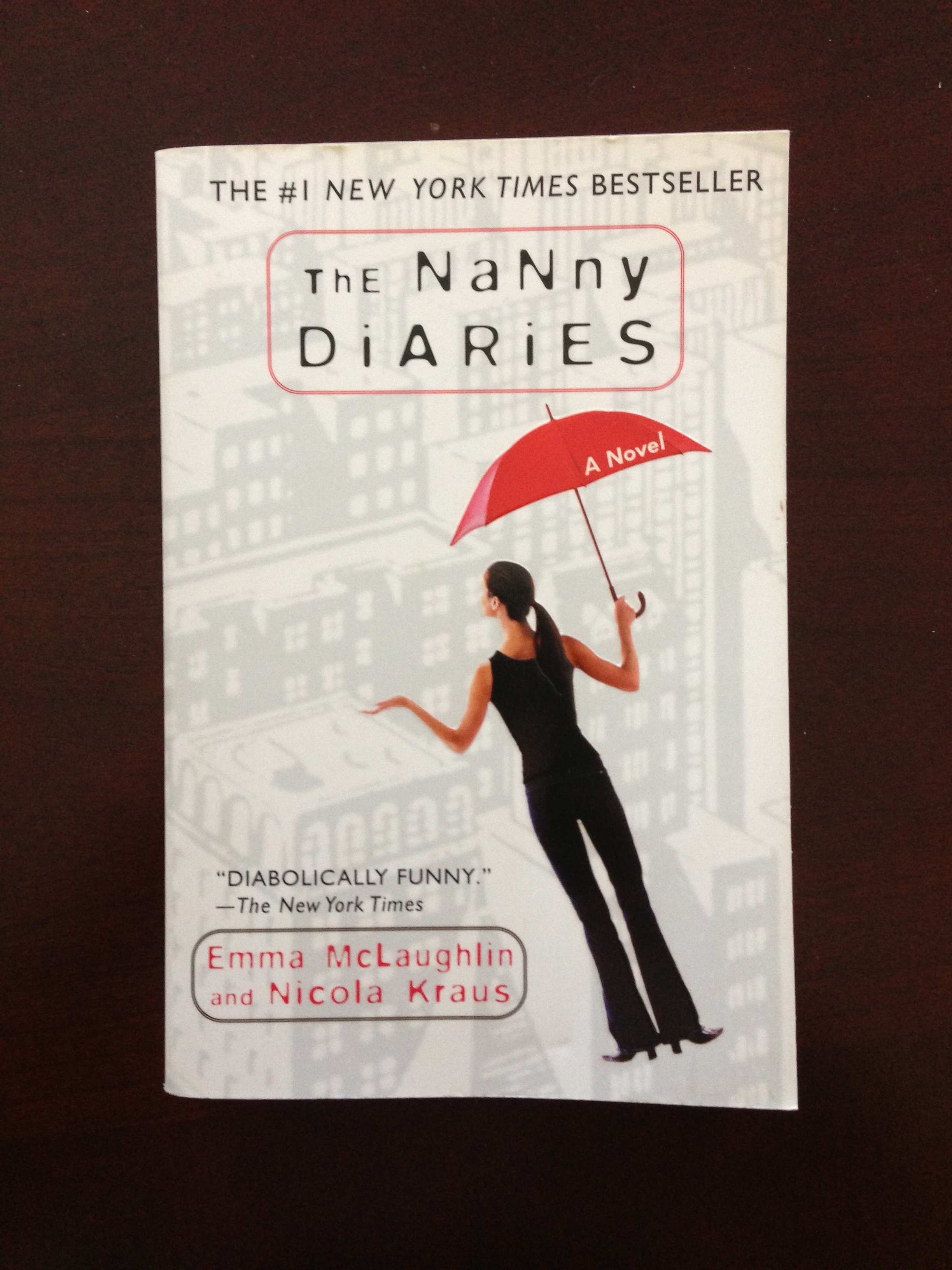
But I did raise four children of my own, sans nanny or day care. So when the book THE NANNY DIARIES by Emma Mclaughlin and Nicola Kraus came out 10 years ago, I loved it, not because it was about bringing up someone else’s a child, but because it’s hilarious!

photo

My copy of THE NANNY DIARIES 

I love to read anything that makes me laugh, and I don’t know why others wouldn’t. I call it “the funny;” it’s a necessary ingredient in some types of fiction and non-fiction. (But not all: the book I’m currently writing is a Thriller, sans badinage, mais c’est une autre histoire…)

Some people have a different sense of humor than mine, and some don’t have one at all. C’est dommage (that’s a shame), à mon avis. For me, being able to laugh with others has been essential, especially during life’s trials.

In my novel MAKE THAT DEUX, Jenny (the protagonist) is 19 turning 20, just a few years younger than Nanny, the au pair in TND.  Like Nanny, she’s dealing with a world very different from the one she’s known: une culture étrangère. Jenny does the best she can, under the circumstances, and (I hope) with a sense of humor. Her story is quite different from Nanny’s, but in a way, Nanny’s story influenced the way I tried to tell Jenny’s: through the eyes of a 20-something young woman who tries to keep her sense of humor while dealing with stress.

Stress isn’t easy, and we all face it now and then, or maybe, continually. Il vaut mieux en rire – it’s better to laugh about it than cry – even if we don’t feel like laughing. But I’ve found that a little levity helps, even in the worst of times.

One of my sons is a brain cancer survivor. He was diagnosed almost 3 years ago, on his 19th birthday. The next 6 months was the most difficult period in our family’s life – and we’ve been through some other serious trials. He underwent two surgeries, one them incredibly scary, and five weeks of radiation therapy. His first “clear” MRI was done that fall, two days before his grandfather, my dad, passed away peacefully at the age of 83.

My son has been cancer-free since then, and when he and I look back at that time, we don’t just remember the shock and fear that we both felt, the tears that we shed. We also recall – and still talk about – the funny things that happened in the midst of it. We thank God – and the talented doctors at Duke – that he survived, and we remember being afraid that he wouldn’t, that he might lose his young life. We weren’t looking for “the funny” then, but somehow we recognized it when we saw it: some of the things that happened made us laugh – out loud. And they still do, today.

Life is precious. Laughter is necessary. My father made me realize that when I was young. His quirky sense of humor was terrific, and he was a great joke-teller.

And he could always find “the funny.”

Why is that funny? and why le rire (laughter) est important

Impropriety is the soul of wit.

– W. Somerset Maugham

I always thought it was brevity…at least, that’s the saying in our house. But this version put a new twist on how to be witty, something I like my literary characters* to be, even if when I’m not.

4176632

images

W. Somerset Maugham

William Shakespeare

We all know that humor is important in life: Laughing makes us happy, and even provides health benefits. Being quick-witted is admired, though we don’t have to be quick  – or really smart – to be witty, or witty, to be smart. But looking for humor in life (and finding it) seems necessary and very important. Through it, “joy happens,” I dare say.

Inside jokes aside, I like laughing about things that others laugh about, and I don’t find it fun to laugh at another’s expense. Maybe because I’m a mom, sarcasm is out, too. I prefer the positive side of humor, not the negative. I love it when something unexpected and silly – maybe just a phrase or a word – makes me laugh uncontrollably (and may even bring tears)..and I love it when others join in. Typically, after several minutes – afraid that I’m going off the deep end – one of my kids brings me back to reality (“Okay, Mom, it’s not that funny.”)

So – why is “that” funny? Different people might have different views: some like slapstick humor, and some prefer the sophisticated kind. But there’s a lot in between. Take Carol Burnett, my favorite comedienne: watching her television show in the 1970s, I knew I would always find her funny, and some synonyms of the word “impropriety” remind me of her humor (goof, gaffe, inelegance and faux pas).

When I started dating (later),  if a guy couldn’t make me laugh, I couldn’t stay interested. It wasn’t that he had to crack jokes or never be serious. But he had to not take himself (or life) too seriously – especially since I had have a tendency to do so. Eventually, I found a partner whose sense of humor was the one for me, and it’s been a vital part of our relationship: I don’t know how we could have gotten this far in life together, without it. Fortunately, he doesn’t need me to make him laugh (though I do, at times, which is a bonus), but he still likes to make me laugh.

And usually without too much impropriety…

* for example, Lisa, one of Jenny’s roommates in my new novel MAKE THAT DEUX.

7 ways Football helps (me) avoid Writer’s Block

The Super Bowl is hours away, and although my beloved Atlanta Falcons aren’t in it (despite coming pretty close, after a FANTASTIC season), I can’t wait to watch le match (and, of course, les publicités – the ads). I haven’t decided whether I want the Ravens or the 49ers to win, and I’m sure both teams have been working very hard – physically and mentally – to prepare. I was also working hard – mentally – last week, adding over 3,000 words (about 12 pages), to my work-in-progress, a Suspense novel.

images

Writing a novel is nothing like playing football, but there are certain parallels. For example, as a writer, there are times when you might get stuck  not know what to write next  wonder if you should just toss the whole thing out  experience writer’s block. In football, I imagine, there are times when you aren’t sure what to do next  can’t get into the end zone  want to give up  are so far behind, coming back seems impossible.

I started to understand love the game of football about the same time I started writing my Romance novel, MAKE THAT DEUX. Though sometimes I’ve struggled to keep going as a writer, I don’t believe in writer’s block. At least, I try my best to avoid it. I think what I’ve learned about football has helped.

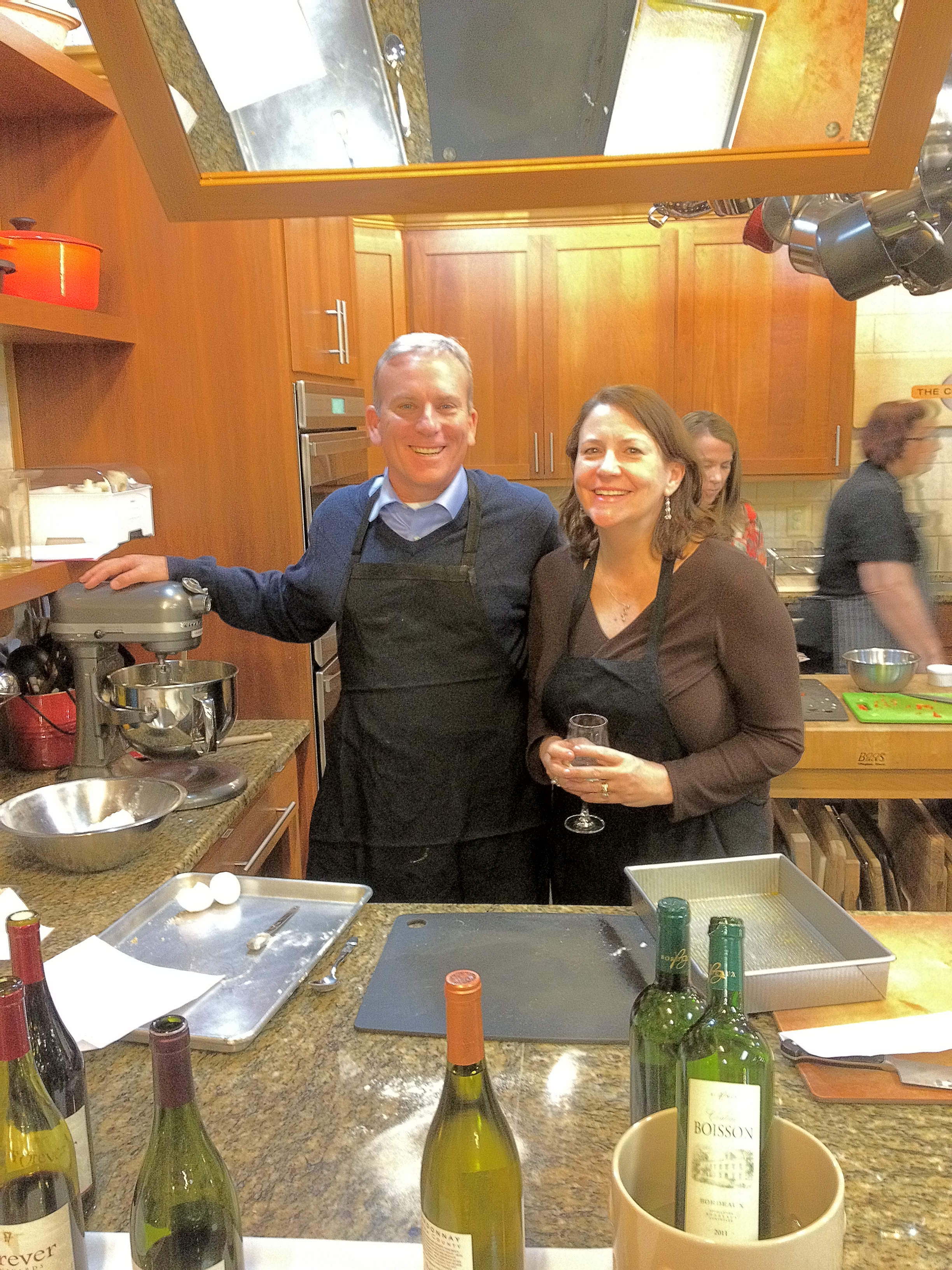
But before I tell you why, a (necessary) backstory. About a week ago, my husband and I were guests at a “hands-on” dinner party: The kind where each couple has gets to help with the cooking. As the evening began, five couples sat at the table drinking wine while Professional Chef Rosemary described the recipes and the process ahead. Each couple would choose a dish to prepare, and with the help of an assistant chef (and pre-measured ingredients), create a contribution to the meal.

Mon mari, being a wonderful cook and très intelligent, listened carefully. When the signal was given, he bolted over to the dessert station, pulling me along with whispered assurances that it would be the easiest dish. He also explained that it had the extra benefit of allowing the two of us time to relax and have another glass of vin while our his creation*  was in the oven.

photo

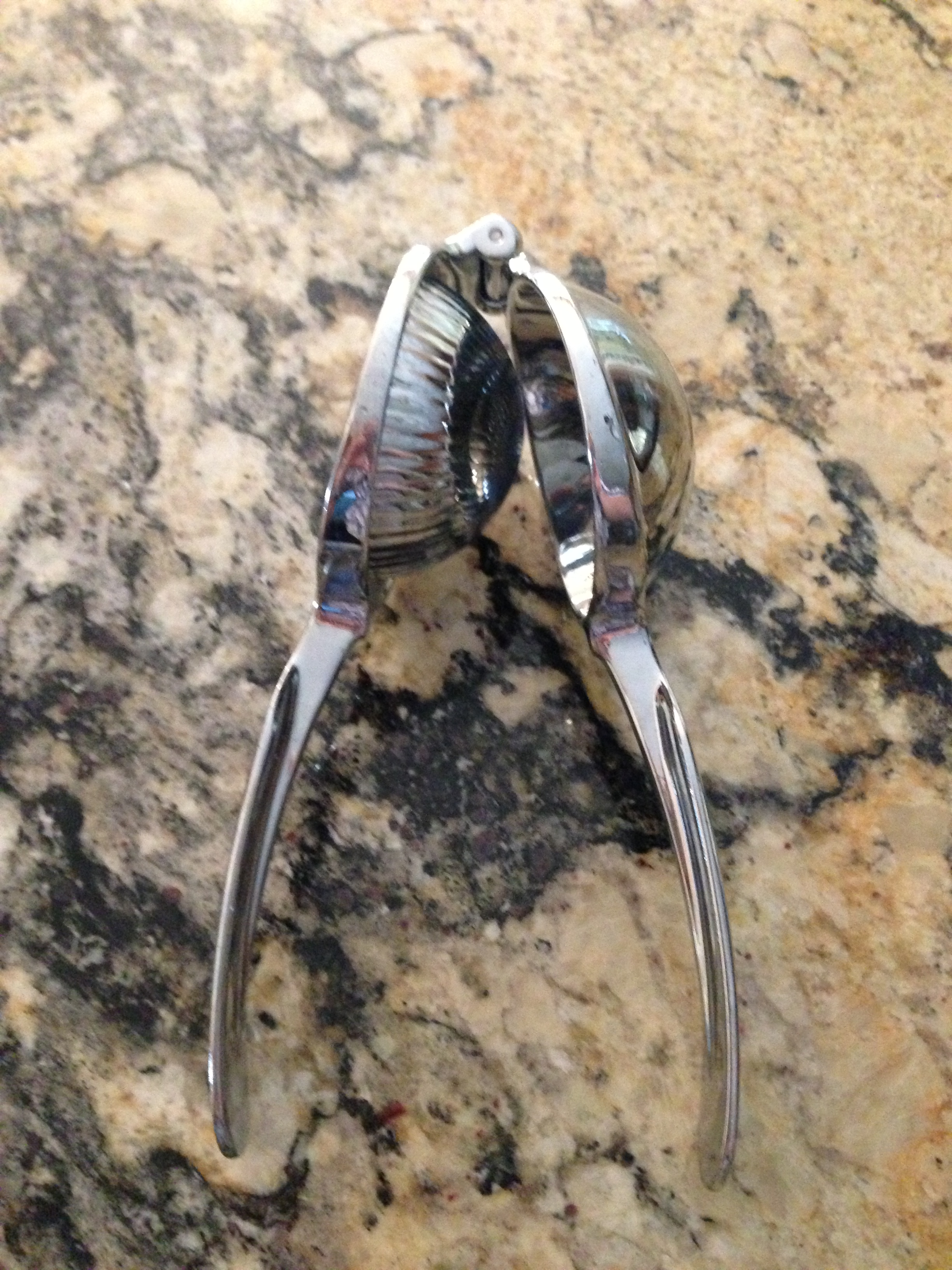
Initially, I helped hovered stressfully around him, and soon our assistant realized it was him that she would be teaching  guiding standing by to watch. As they were discussing the pros and cons of metal versus plastic lemon juicers (she liked plastic), I slipped away. Relieved of duty, I hung out closeby, talking to the other husbands as their wives stirred and sautéed.

photo copy

The metal lemon juicer we have à la maison

We talked a little about football, and then one of the men told the others I was an author and had published a novel. We chatted about my book and then about the one I’m currently working on. When dinner was ready, we all sat down together to a delicious meal.

Afterward, I was asked to speak to the group for a few minutes about writing and answer some questions. One person said he would like to write a book too, and asked me how I overcome writer’s block. I said that if when I come to a point where I can’t continue a project, I work on something else: research, a blog post, marketing MAKE THAT DEUX, or just rereading (and revising) what I’ve written. Then, after a time (hopefully short), I know exactly what comes next in my novel.

Which brings me to football, and my list of ways that it helps me avoid writer’s block:

1. The objective is to advance the ball (or story). Sometimes you don’t get it very far, but if you can just keep making first downs, you’ll get there – and you don’t have to make a first down on every play. But if you give up, or if you’re three-and-out, you’ll have to punt. Not fun.

2. If you’re confused, take a time-out. Then get your head together and come back with a plan.

3. Be open to changing your strategy. Be flexible. What you thought would work may not. If something you’re doing doesn’t help advance the  ball  story, change it. There’s no reason to hold on to a plan that won’t work.

4. You have to work hard, and you can’t let up. You have to work at it, every day (and every play). Well, almost every day. You need some rest days.

5. Be ready to take advantage of opportunities. The unanticipated can happen. When it does, you have to be ready. If you work hard (see #4), you will be.

6. Be patient. Serendipity will find you. Sometimes you get an unexpected break. If you fumble, pick yourself up and keep trying.

7. Never lose sight of the goal. You want to succeed, no matter what is thrown at you (or away from you). Keep working, and it will happen. “Never, never, never give up!”

Go Falcons!

* “Gingerbread with Lemon Curd Cream” – it tasted much better than it sounds!

La Musique

“J’aime bien écouter de la musique quand je travaille.” – anonyme

(I love to listen to music while I work. — anonymous)

My teenage daughter could have said this; I certainly couldn’t have. No, when I write, I need prefer uninterrupted silence. (Or, at least, few distractions.)

However, many songs came to my mind when I was writing MAKE THAT DEUX, and one of them in particular. It was recorded in the 1970s, of course, and one of its lines is the name of Part 3 in my novel. But it’s a classic, a song that you should know; if you don’t, je me sens désolée pour vous (I feel sorry for you).

It’s the answer to the Monday one-question-interview question I did with the wonderful Susan Gottfried a few days ago. Click on this link for her Featured New Book to satisfy your curiosity and find out more about MAKE THAT DEUX.

For today’s blog posts: make that deux.

C’est tout!

Traditions: My Charlie Brown Christmas tree, en français

It’s been almost a month since les fêtes de Noël, and as we settle into the new year, the holiday season — and its traditions — are now memories.

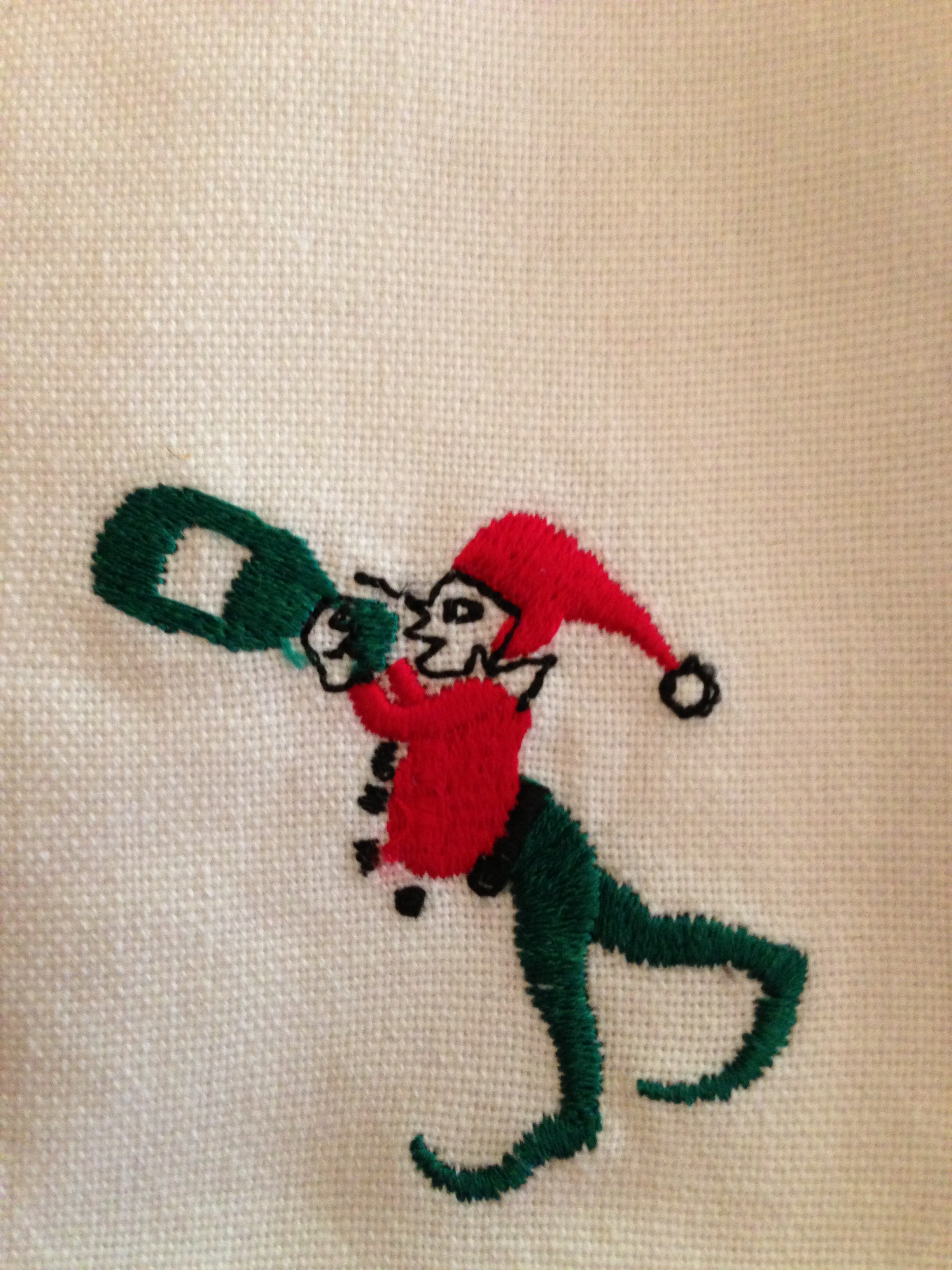
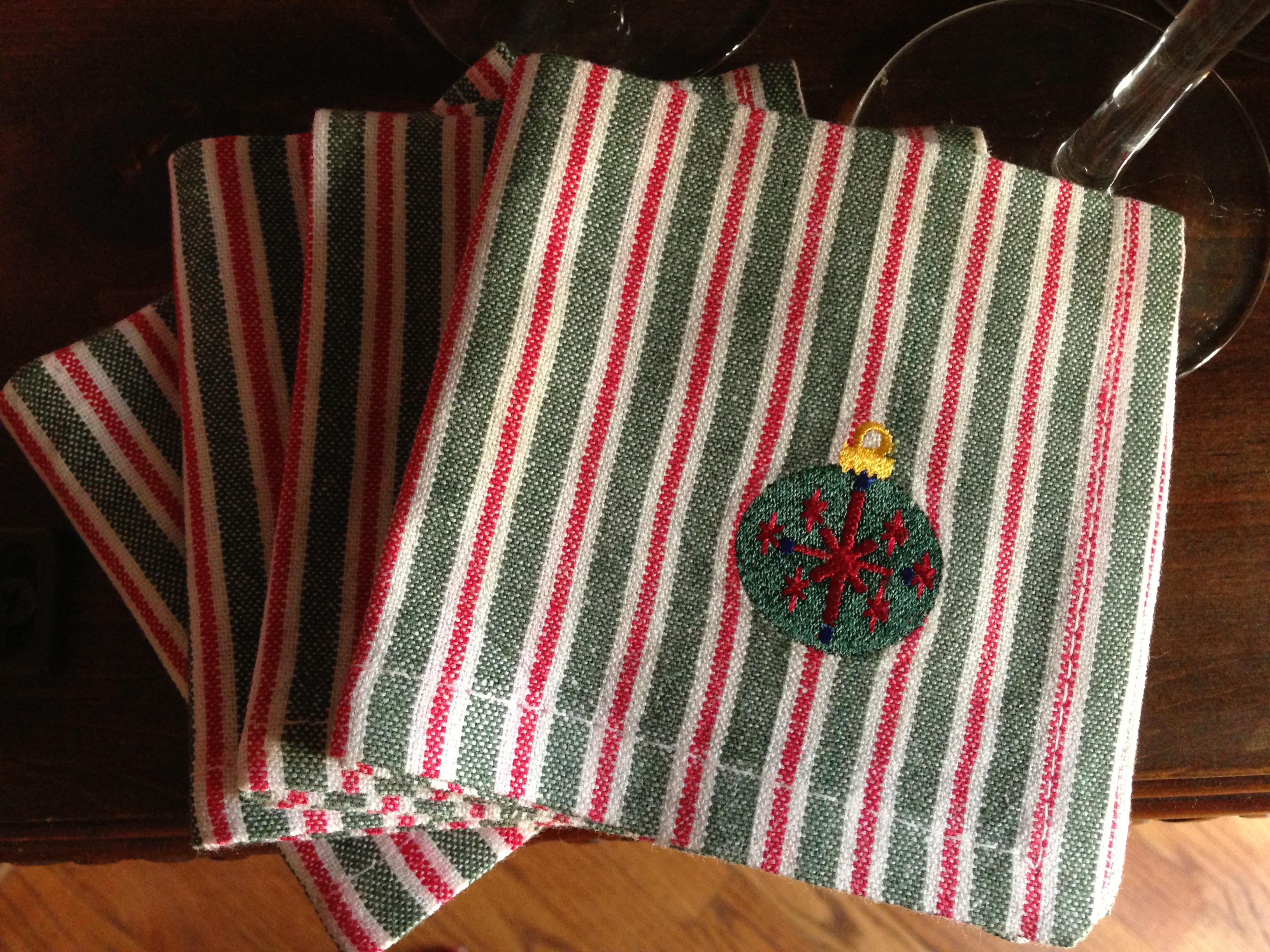
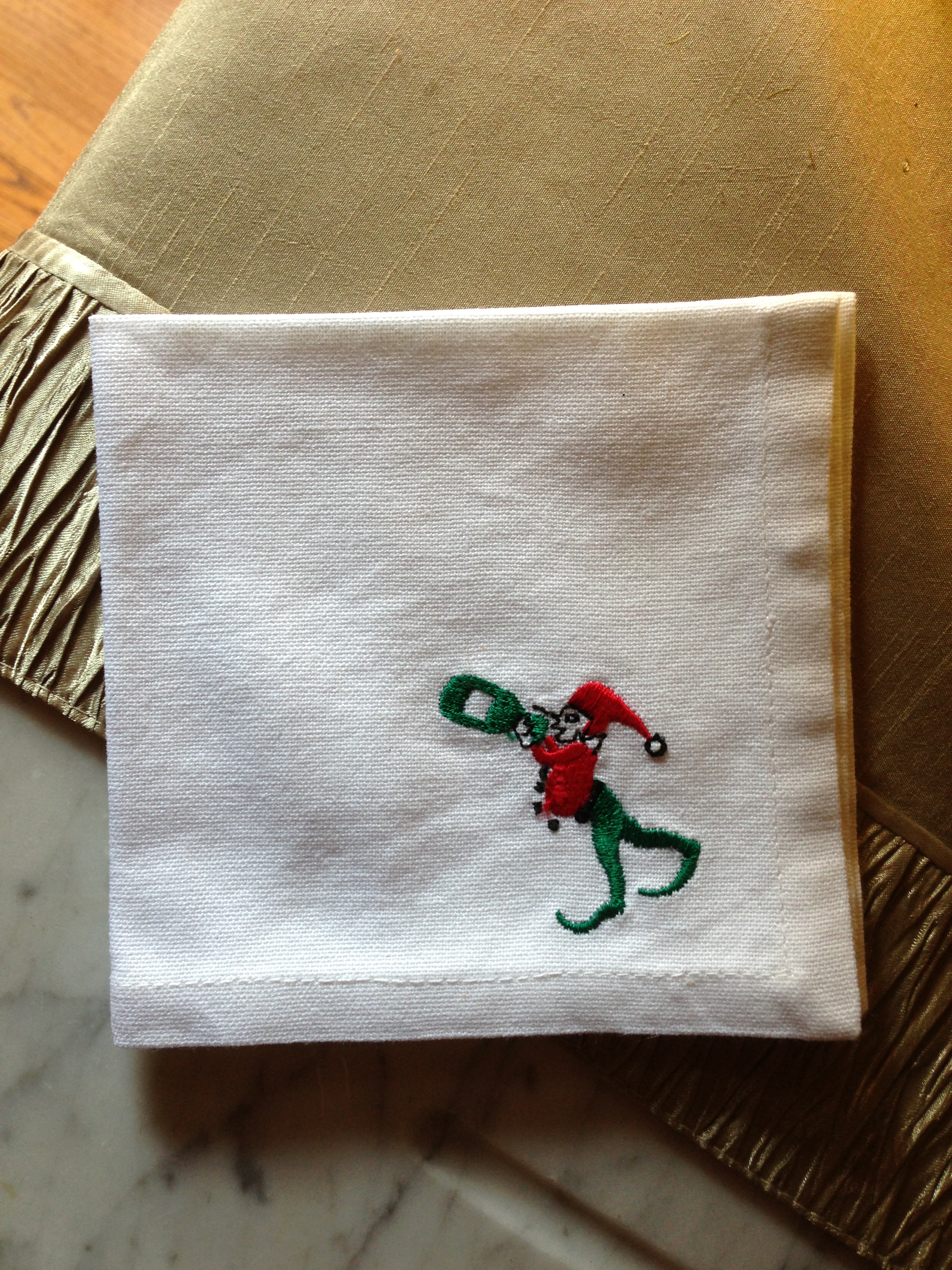
One of my holiday traditions — at least, for the last few years — is to keep something Christmas-y out and on display all year ’round. I try to select a small and unobtrusive item, like an interesting new ornament that I judge shouldn’t be hidden in a box for eleven months. So, as I was packing up our Christmas decorations a few weeks ago, I left two sets of holiday cloth cocktail napkins on view in our china cabinet. One set is decorated with red and green Christmas ball ornaments; the other features a tiny elf drinking from a large green flask.

photo copy

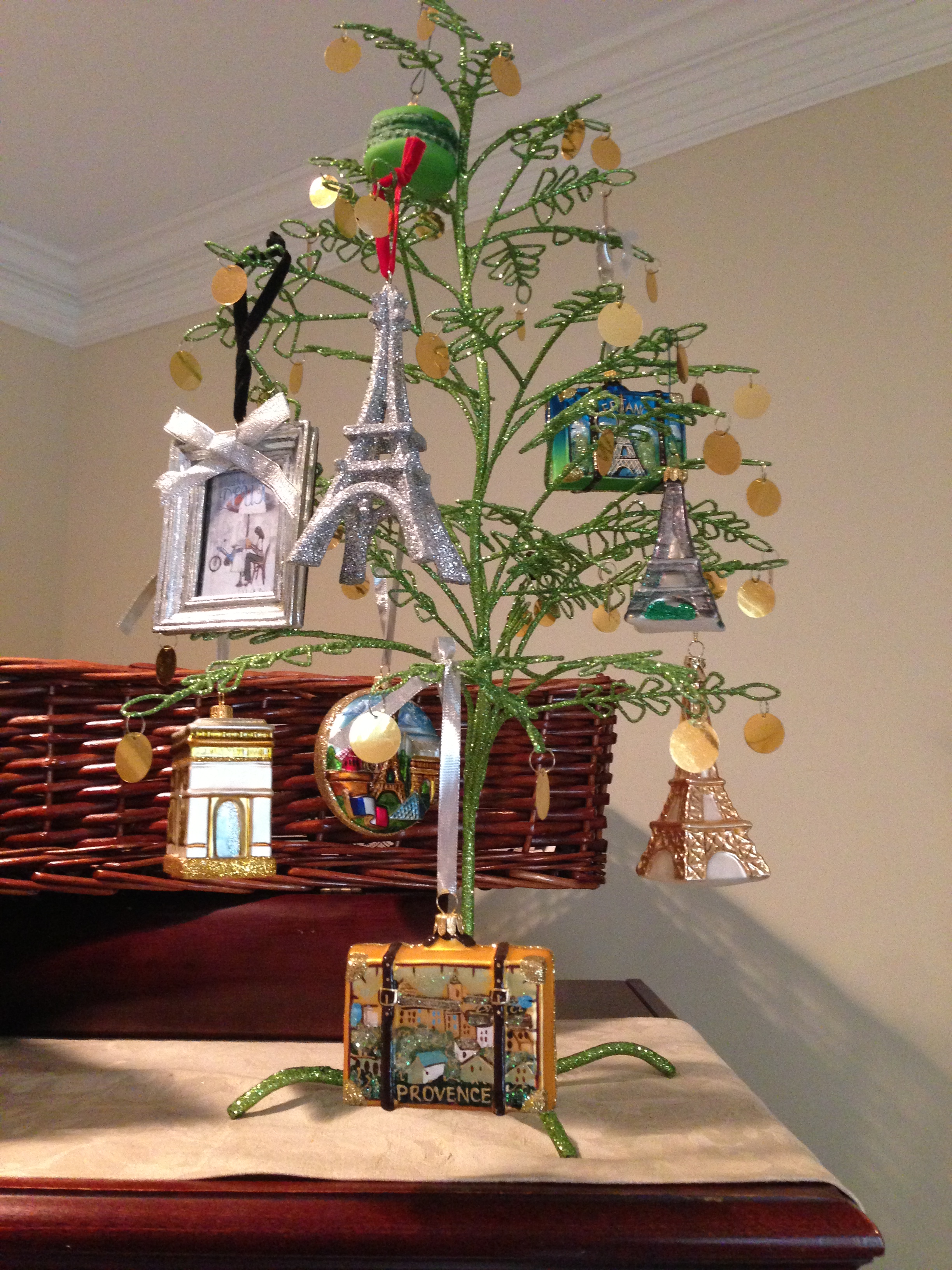
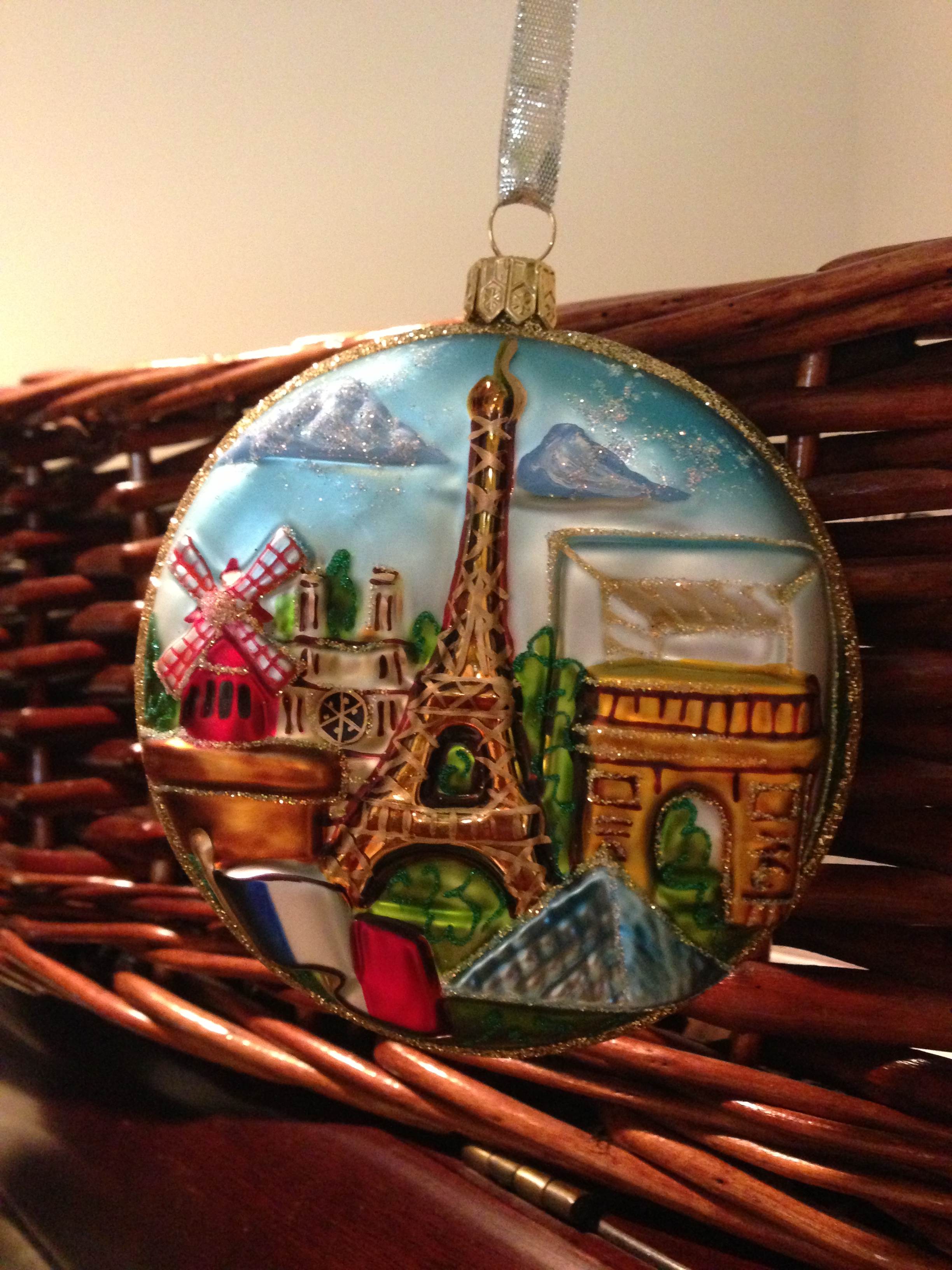
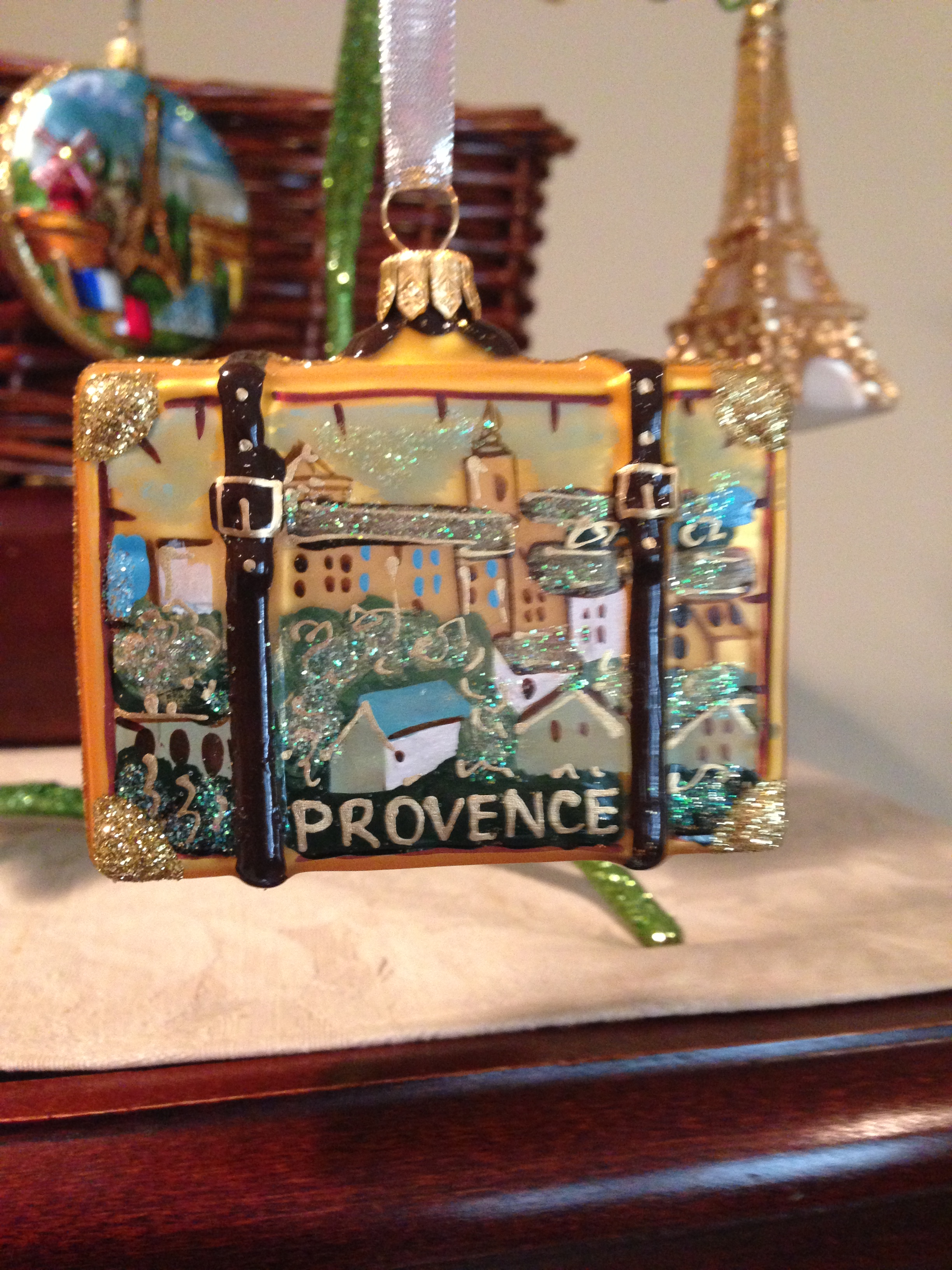
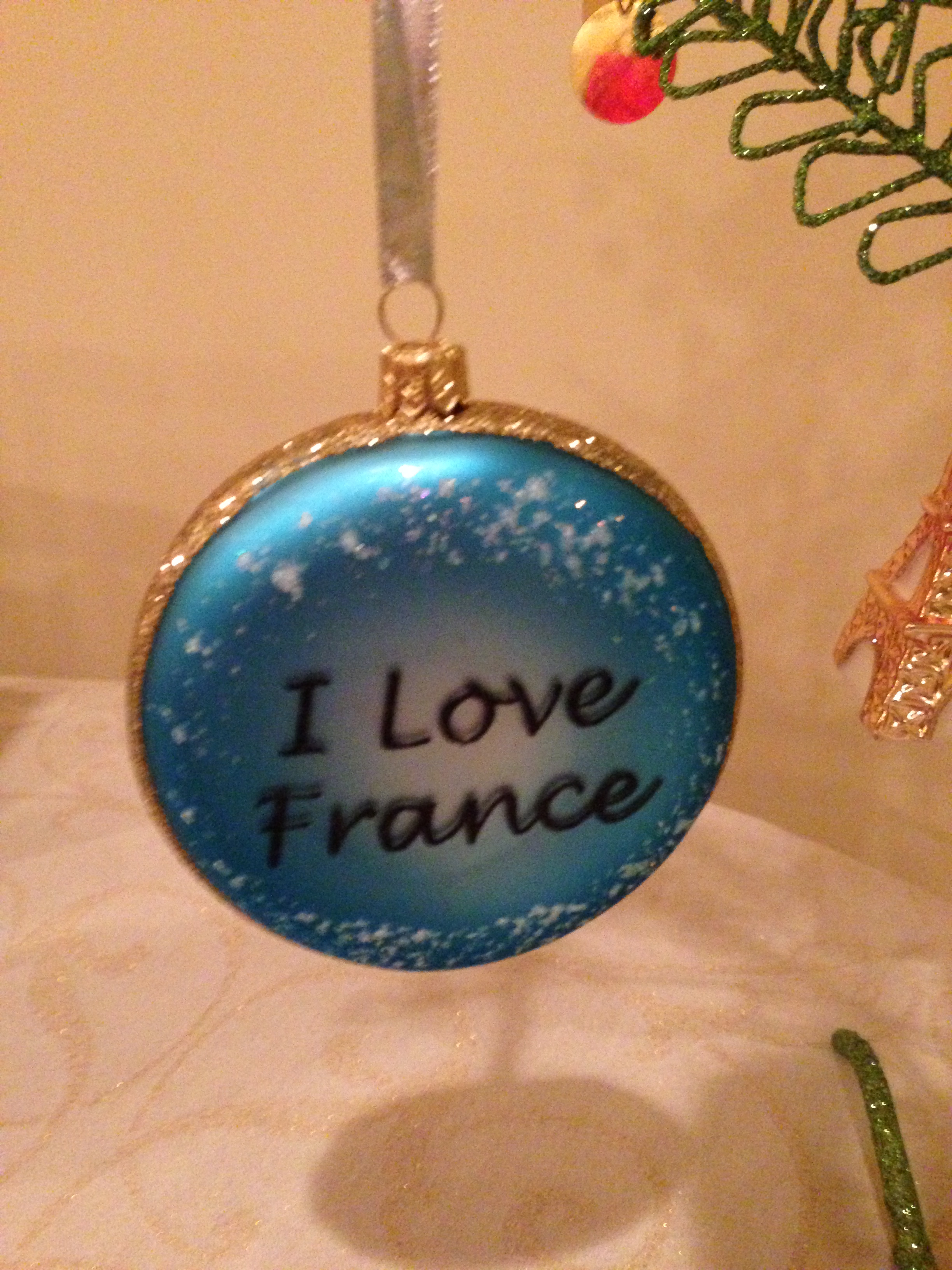
This Noël, I celebrated the fall publication of my novel MAKE THAT DEUX with its own special Christmas tree, complete with “French” ornaments, some of which I didn’t find ’til the 26th:

photo copy

It’s not really a “Charlie Brown” Christmas tree (alas, something unfamiliar to my teenager) — it’s sturdier, prettier, and fake, of course. But it reminds me of one, in a way. Inspired by growing my girls blog post of late January 2012, I decided not to pack it away, but to keep it out and decorated throughout the year.

photo copy 3

Aren’t these lovely? Merci, Nordstrom’s after-Christmas sale!

photo copy 2

I love Christmas and hate to see it go, and I also aime tout ce qui est français…all things French, as you can see in my “auteur bio” on amazon.fr. Like Jenny, the main character in MAKE THAT DEUX, I spent a year in the South of France, in Languedoc, a côté de Provence. Jenny doesn’t see much of Provence, but last summer, I saw a little of it with mon mari between our stays in Nice and Montpellier, and before we traveled north to Lyon and Paris on our own tour de France. Until we return for another one, someday* — or at least, until next Christmas — I’ll display my French Charlie Brown Christmas tree.

Traditions can change over time; some continue year after year, some spring up from a new idea and evolve (“From now on, we’ll…”), and some traditions come to an end, or prennent fin. When I was growing up, I looked forward to our family tradition of watching “A Charlie Brown Christmas” once a year (and it was once a year). One of the Christmas traditions my own family has adopted is watching Christmas movies and television shows together during the holidays. “A Charlie Brown Christmas” isn’t in our DVD library, but I think I will have to cherche (search) for it in about ten months. (I wonder if I can find it en français…)

photo copy 2

Cocktail, anyone?

photo copy

* Sometime in the future, we hope to visit our son in Italy, and then jaunt over to Nice and Aix-en-Provence (and stay a little longer this time…)

photo

Books, Movies and Les Misérables

The movie Les Misérables (Les Mis, or “Lay-MIZ”) won ‘Best Comedy or Musical’ at last night’s Golden Globe Awards, a fact which made me très contente.

The ‘Best Drama’ award went to my other favorite movie of 2012: Argo.

I didn’t watch the Golden Globes — I was just too tired after watching the Atlanta Falcons come back to beat the Seattle Seahawks in the last 34 seconds of the NFL playoff game yesterday afternoon, but that’s another post. I love to know who wins the Globes (and the Oscars), but malheureusement, I don’t always hardly ever stay up to watch the award shows; pour moi, seeing the highlights (and the outfits) the next morning suffit.

I’d only seen 2 or 3 of the other films being considered (I just saw Les Mis last week), though I plan to watch most of the rest. Pourquoi? Parce que I LOVE movies, almost as much as I love books.

Les Mis has a special place in my heart and mind for many reasons. One reason, of course, is that the story is adapted from the French novel by Victor Hugo. Another reason is that it’s a musical, an opera really, and the songs are fantastique; I grew up in a household where musicals weren’t admired, so maybe that’s why my rebellious self loves them that much more.

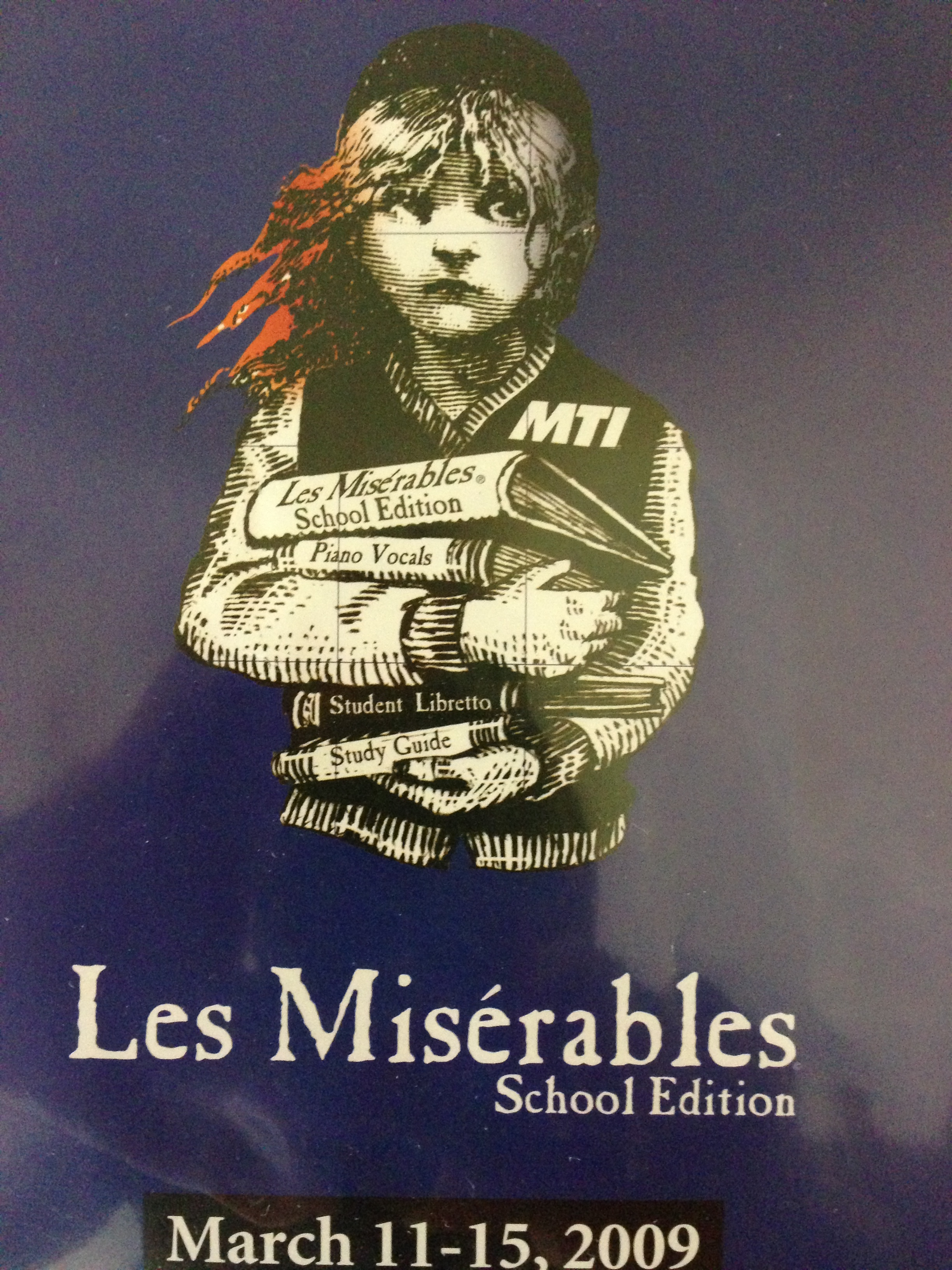
But the third reason I love Les Mis is that one of my sons acted in the play in high school a few years ago, playing the role of the innkeeper Thénardier, and he was amazing, funny, and terrific.

The Playbill

lesmis

This son (who had played basketball, baseball, soccer, football and had run cross country) began acting and singing in high school plays at the age of fifteen. Two years later he joined a wonderful cast to sold-out crowds; the production, now a legend at his school, was marvelous, and standing ovations were standard. It was a high school play, like unlike any other.

I saw the film Argo not long ago, and found it intriguing and fascinating. Based on real events,* it takes place in 1979-1980, the time setting of my new novel MAKE THAT DEUX. I was captivated not just by the story or the actors, but their clothes and hairstyles, since Jenny and her friends in MAKE THAT DEUX were in college during that era.

So it was a bit like seeing the Golden Globe “casual” outfits of my novel.

Which brings me to books. I love them, more than movies, and the best movies are those that are adapted from books: novels, non-fiction, even children’s books.

My favorite children’s books are those written by Dr. Seuss, and I believe one of them was made into a very entertaining movie a few years ago (“A Person’s a Person, no matter how small.”)

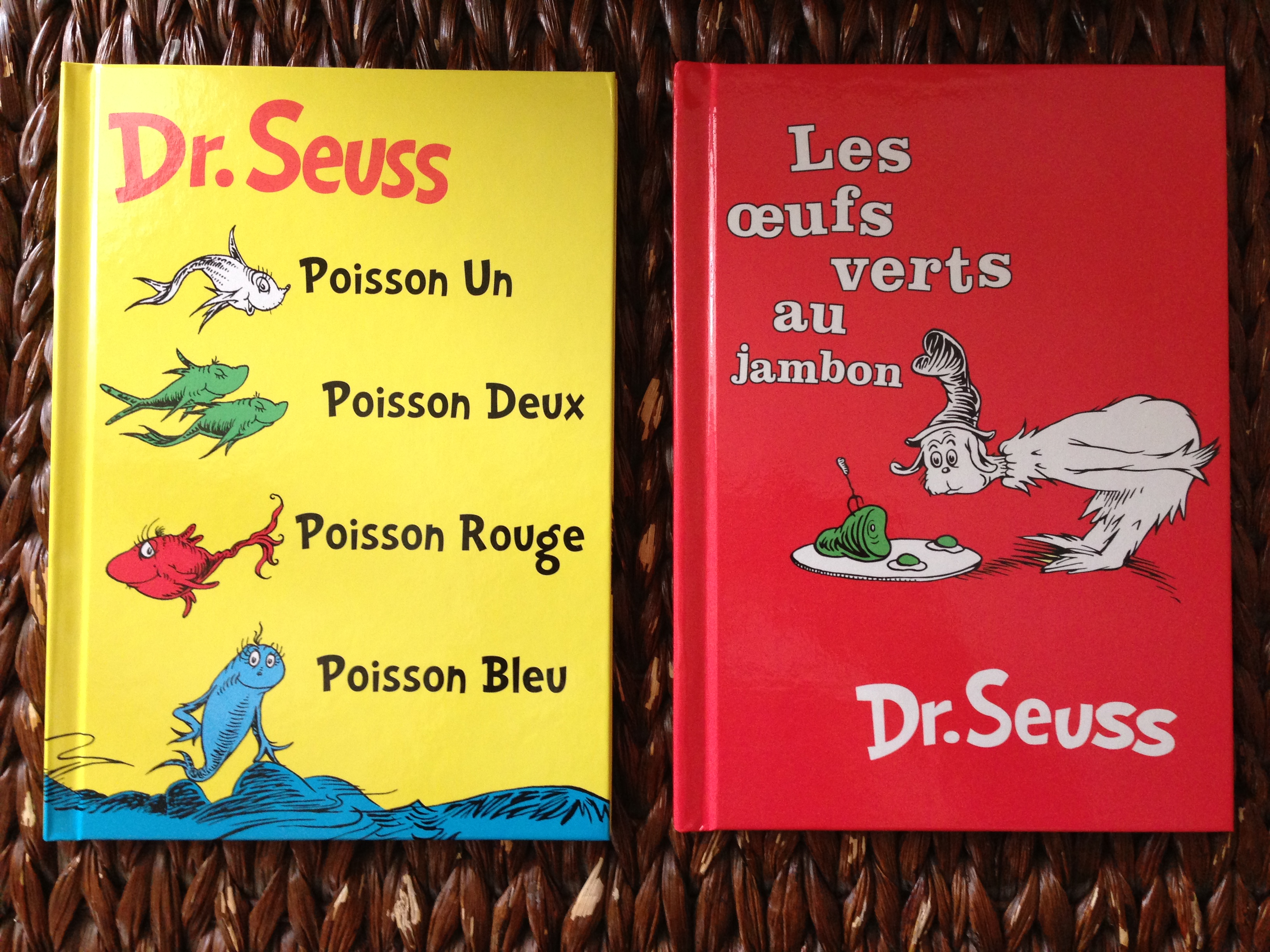
While browsing in a shop today, I came across these 2 Dr. Seuss editions that I just had to purchase (guess why?)

photo

Hmm…if only I’d had these when my kids were little. Then, they would might have learned to speak français as well as English…

* A captivating and compelling book about the Iranian Hostage Crisis of 1979 is Mark Bowden’s Guests of the Ayatollah. I highly recommend it.

La Sensibilité et la Thérapie

 The French word sensible means sensitive, not sensible; sensible/sensible and sensibilité/sensibility are examples of faux-amis (literally, “false friends”) — they look alike but mean very different things. On the other hand, thérapie/therapy are vrais-amis (“true friends”), or words spelled alike with the same or similar meanings.* As the year draws to a close, il est naturel to look back, to look ahead, and to reflect…a process that causes my own sensibilité (and my need for la thérapie) to surface.

First, la sensibilitéWhile others seldom accuse me of being too sensible, many feel the need to point out my (over-)sensitive nature. Through the years, I’ve worked hard to reduce the “over-” part, at the same time not wishing to lose the “sensible/sensitive” part, or to slide into insensitivity. I’m an emotional person, and while some in my family are, too, some aren’t. They’re the tough ones, the ones who find it easy easier to compartmentalize, to bypass the drama, to keep cool. To move on, confidently — or at least, to seem to.

By contrast, I’m more likely to live by these words in a song by Joan Armatrading**:

Show some emotion

Put expression in your life

Light up, if you’re feeling happy

But if it’s bad then let those tears roll down

Does emotion, and la sensibilité reside in the heart or the head? Jenny, le personnage principal in my new novel MAKE THAT DEUX, considers this question, and I won’t say what she decides. But two years ago, after an extremely talented neurosurgeon at Duke skillfully removed a tumor in the center of my son’s brain, I read that some doctors believe the area is connected with our ability to make decisions and experience feelings. Miraculously, my son survived his cancer and thrives in college, feeling, thinking and learning (I trust) every day.

Back to my sensitive nature. I take the kindness — and the unkindness — of others to heart (or maybe, head). With loss and tragedy happening all around in this world, perhaps it’s good not to focus on “the little things,” but to be tougher, stronger, more reserved. But sometimes it is the little things: if we really dislike someone, then every little thing they do is annoying. Maybe that’s when it’s time for sensitivity toward others, empathy and understanding.

Which brings me to la thérapie. No, not the kind you’re thinking; other than a massage therapist, a paid professional doesn’t work for me. Reading does, and talking to a close friend (ideally, my best friend, mon mari) works even better. But I find the best therapy to be (creative) writing. I don’t know why it works, but it does, heureusement.

Now back to my Work In Progress (WIP), my second novel…and la thérapie!

Bonne année 2013!

Un puzzle 3D de la Tour Eiffel: la thérapie pour quelqu’un d’autre dans la famille (pas moi; je n’aime pas les puzzles!):

skinny photo copy 3

* For more on faux-amis, see my post “L’esprit de l’escalier, spiral staircases and faux-amis”

** Another Joan Armatrading song is the title of Part 3 of MAKE THAT DEUX. Savez-vous pourquoi?

Joyeux Noël, Elno

The cartes de Noël have been sent (and many received), the tree has been trimmed, the decorations — and lights — carefully placed, and the stockings hung…

but I’m not quite ready for Christmas.

It’s my favorite holiday, with Thanksgiving a close second. I love l’automne (the fall) best of all the seasons, and here in Atlanta, l’hiver (winter) feels like autumn (and sometimes almost like summer). Earlier this month, when my daughter and I visited New York City for a special birthday weekend trip, le temps was very, very cold and windy…

But we still walked down 5th and 6th Avenues, Madison Avenue, Broadway, Canal Street, through Central Park and the World Trade Center Memorial (but not in that order). Other than a few taxi rides, we saw Manhattan à pied (on foot), during the day and at night, with its spectacular illuminations de Noël:

beltphoto

On 5th Avenue

bendelphoto

There were plenty of other touristes in New York, and we did a lot there in less than 72 hours — more than I dare to write about in this space. Because what happened in Manhattan…well, you know.

But both of us were ready to come back home that Sunday, where more most people are very polite and friendly, and speak a little more slowly. And we were happy to toss our heavy warm  not-warm-enough-for-the-north coats back in the closet.

But it was worth every freezing moment.

treephoto

Back home, we’ve done a lot in the last three weeks, though I made a serious effort (again) not to go overboard with decorations. I think I succeeded without being too Grinchy: I forced myself to leave left a couple of boxes of holiday “stuff” that had seen better years in the storage room; I (almost always) resisted the urge to buy new “stuff”; and, because I hurt my back somehow (it’s just finally feeling better now, phew), I took things a little slower. And if they didn’t get done, oh well.

Because those things aren’t what Christmas is about, anyway.

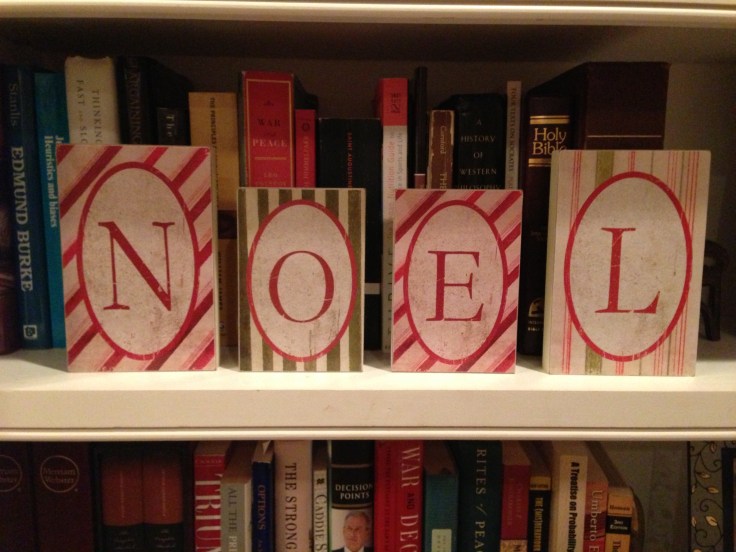
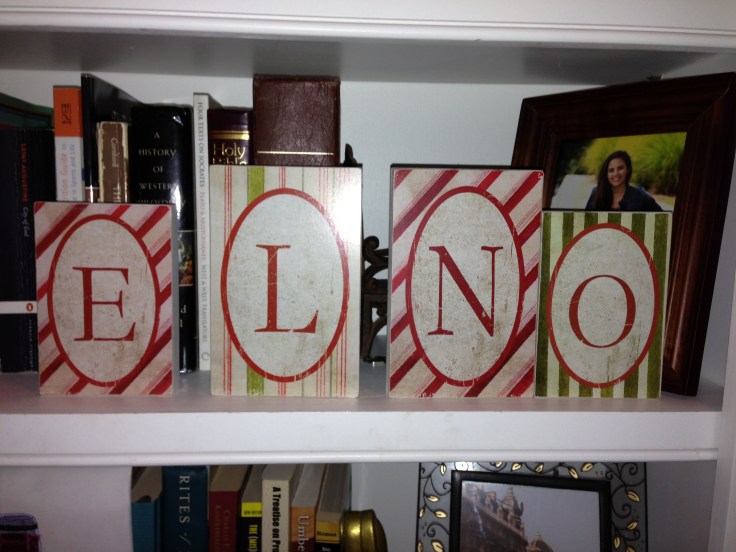
When we were first married, my husband and I couldn’t afford to buy Christmas decorations, but we had a few that that my parents had given us because they didn’t want them anymore. One such item was two matching tacky adorable elves holding signs that said “NO” and “EL.”

My husband, always the joker, used to reverse their order on the shelf, so that “EL” was before “NO.” All it was missing was an apostrophe before the “E” and maybe one more “L,” and it would have been, well, a little bit French.*

After five moves, four kids and three decades, we don’t know what happened to “EL” and “NO” — they got lost, sadly. So this year, while shopping one day I spotted a replacement (sort of), and decided we had to have it (plus, it wasn’t expensive):

photo copy

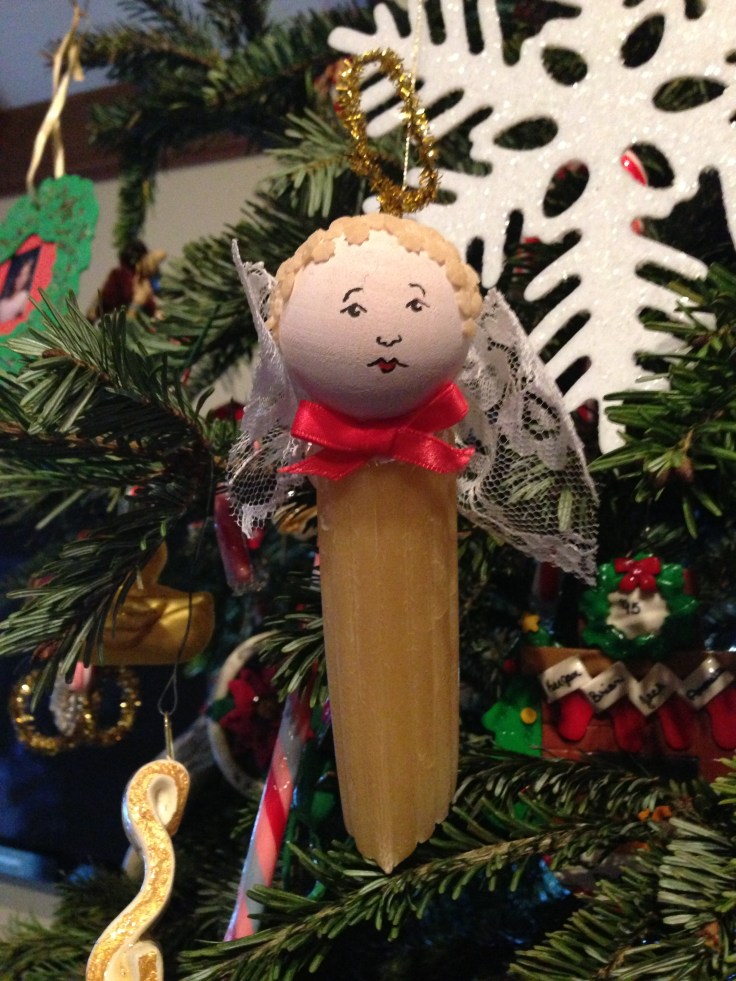
Finally, here’s a photo of one the ornaments hanging on our Christmas tree. It’s very old (also inexpensive), kid-hand-made, and was recently repaired by a dear friend who doesn’t judge me for my phobia of super-glue:

image

Are you ready for Christmas? I’ve still got a few gifts to buy and a party to host, but other than that, I’m close, and I’ll keep the following lines from Dr. Suess (and from my favorite card received so far this year) in mind, as the 25th approaches:

It came without ribbons. It came without tags. 

It came without packages, boxes or bags. 

And he puzzled and puzzled ’till his puzzler was sore.

Then the Grinch thought of something he hadn’t before.

What if Christmas, he thought, doesn’t come from a store?

What if Christmas, perhaps, means a little bit more?

Merry Christmas!

*Or Spanish. In my new novel MAKE THAT DEUX, there’s a character called “El.” Read and find out who!

photo copy 2

Create a website or blog at WordPress.com

Up ↑