Words, my friends

Somehow, July came and went – in a word, that was fast!

Independence Day, The World Cup, Bastille Day, the Tour de France, the milestone birthday fête of a friend (a few weeks late)…there was so much going on!

14-juillet-feu-artifice-Tour-Eiffel-tricolore-|-630x405-|-©-Groupe-F-Thierry-Nava_block_media_very_big

[VIDEO of fireworks (feu d’artifice) at the Eiffel Tower in Paris, July 14, 2014]

But during juillet, I was chez moi – I wasn’t en vacances. I was working, and I didn’t write a single blog post…

Cependant, I wrote fiction.*

I’m approaching the 10k (words) mark on Book 4, a suspense novel which is not a sequel to UNDERWATER, but which does tie into it…how, I won’t reveal yet.

I’ve also been working with the team at Thomas & Mercer to get UNDERWATER ready for its rerelease in November! It will be available not only in print and on Kindle, but as an audio book too.

While working on both of those projects, I’ve been steeped in words – coming up with them, changing them, cutting them, rewriting them, considering them, looking them up – and even using them when I play Words With Friends on my phone with, well, friends.

As I said to a friend (but not a WWF friend) at the birthday fête, I’ve learned a lot since writing my first novel, MAKE THAT DEUX. Just like anyone – including him, il y a longtemps – in any new job  trade  endeavor  métier  career  occupation  well, job, you don’t know everything when you start. It takes time, and commitment.

De toute façon, while working to revise what I write, I’ve noticed a few things:

1. I tend to use these words too much (and so they get cut a lot):

just 
yet
at least
down
now
right now
okay
huge 
well


2. I really try not to use these words:

really
truly
finally
suddenly
and anything -ly (adverbs)
 

3. I try to do the following (with the help of my writers’ group):

minimize -ing words (put in action, instead; i.e. -ed if in past tense)
put action BEFORE dialogue, minimizing tags
insert narrative in dialogue scenes, but don’t overdo
alternate narrative scenes with dialogue-driven scenes
paint pictures with descriptions, and try to be vivid
avoid clichés (should be obvious, but I have to remember it)
minimize the use of italics – only use when necessary
 

For me, it’s fun to work with words…after beaucoup de travail, eventuellement, they turn into BOOKS!

• My 3rd book, ALL THE ABOVE, is creative nonfiction (a true story) and is finished! I’ll be choosing its cover this fall and planning its release for early 2015!


The end, the beginning, and the half-way point

The first day of summer – with the longest period of daylight – was the (northern hemisphere’s) summer solstice, just the other day, and the end of June – halfway through the calendar year – is just around the corner. But today is June 25, exactly 6 months before (and after) Christmas! What?!?

IMG-20111230-00026

No, I’m not in a panic – I don’t shop early for the holidays anymore, and I never used to, this early. I do (and already have, for this year) order a family Christmas ornament, and write design get a great idea for come up with a “custom” invitation to our annual holiday bash very early, say, in January (but this year, it wasn’t until April…) for the following year’s party.

But I do marvel at how time has gone by, so fast, since December 25. Remember that ice and snow, Atlanta? (and all of you, up north?)

Luckily, that’s long gone. It’s warm, it’s humid, and often downright hot; it’s thunderstorm weather here in Georgia. And I know it isn’t really, but to me, today is kind of the half-way point of the year.

So it’s kind of fitting that yesterday, I finished one big project, and today, I’m starting another one. Wait – I’ve already started the new one – at least, I got some words down on a page  (about 3500 words, that is). For now, it’s called Book 4. But [I’ll say] I’m really starting it today, because it’s now number one on my agenda: if I don’t do it, it won’t happen. I’m on the beginning right now: Chapter One is done (though it needs revisiting) and Chapter Two is underway. (I’ve also got the end of the story mapped out.)

The project I just finished is the revision of ALL THE ABOVE, the book I’ve been working on for more than a year, after my editor Laura Ownbey’s overview edit*. The book won’t be 100% ready for release until after the line edit** (and my subsequent changes), but it still feels like the end – even if it isn’t, exactly.

As the days get shorter, I’ll get the i’s dotted and the t’s crossed on ALL THE ABOVE (and fix the transitions, flow, dialogue, and all that other stuff – see below) – the fine-tuning. During the next 6 months, I’ll also be working with my (other) editor, Anh Schluep, at Thomas & Mercer to prepare UNDERWATER for rerelease this fall.

So, I’ve got a lot to do before December 25, which, I’m guessing, will be here before I know it…

IMG-20111230-00026 - Version 2

Above: The poinsettia tree at the Atlanta Botanical Garden Christmas Exhibit a few years ago

* an analysis of plot points, characterization, pacing, overall flow, and similar broad issues
** grammar and punctuation issues, problems with flow, stiff dialogue, formatting problems, rough transitions, and anything else that sticks out… from the layout of furniture in a room changing to a misplaced apostrophe
 

My turn on “The Writing Process” Blog Tour

This post is part of a blog tour on the writing process. Thanks to Kathryn Gray-White, a fellow Atlanta author for tagging me to take my turn.

I met Kathryn at a combined book signing event that we participated in last month called “Books in the Garden” at Specialty Ornamentals in Watkinsville, Georgia; the other authors were Rona Simmons, Valerie Connors and Linda Hughes. Kathryn was signing her book, ATLANTA’S REAL WOMEN, and we chatted with each other and with readers who came to the event. We finished the day with a one hour appearance at Avid Bookshop in nearby Athens.  Prior to meeting Kathryn, we connected on Linkedin. She is a historian and an assistant professor at Georgia Gwinnett College.

MY WRITING PROCESS….

What am I working on?

I’ve just started writing my fourth book (and third novel), a Suspense/Thriller so far unnamed. Book 4 borrows a few minor characters from my novel of the same genre, Underwater, and it turns one of them into a major character. Underwater is the story of a successful businesswoman whose brother guilts her into funding a luxury home just before the housing market drops, plunging the family into a downward spiral of deceit and violence. Book 4 is about another family in conflict over a house, this time a two million dollar beach home that three siblings will inherit upon the death of their wealthy stepmother.

When her sizable liquid assets are stolen by a crooked investor, the stepmother considers selling the beach home to fund her lifestyle in a luxury retirement community. Two of the siblings suggest that she obtain a reverse mortgage on it instead, to keep it in the family and protect their inheritance. But the middle child is secretly grappling with huge debts and unwilling to downsize or compromise. When an unforeseen event occurs, her income drops drastically and her demands multiply. Soon, her hostility toward the woman who took her mother’s place decades ago turns from anger to hatred. How far will she go to get her way, and to get her hands on the money she believes is rightfully hers?

While writing Book 4, I’m also working with my freelance editor, Laura Ownbey, to revise and prepare my third book for release. A work of creative nonfiction titled All the Above, it chronicles my nineteen-year-old son’s battle with brain cancer.

In addition, I’m working with my editor and team at Thomas & Mercer, an imprint of Amazon Publishing, who recently picked up Underwater for re-release this fall.

How does my work differ from others of its genre?

My first book, a French Travel/Romance novel titled Make That Deux, is a semi-autobiographical tale based on my year as a junior exchange student in the late 1970s. So many books are set in France, but I could find none quite like mine, which also falls into the new New Adult genre, where the protagonist is in college, not high school like in Young Adult (YA). All the Above is a personal account of my emotional struggle when the unthinkable happened to my son. Underwater and Book 4 are about adult family members caught up in conflicts over money; the stories pose questions about generosity, enabling, guilt, and duty. Tension builds to a boiling point, and then…

Why do I write what I do?

I write what I like to read, and I like to read a variety (the only types of fiction I dislike are Fantasy, Science Fiction, and anything Paranormal). We expose what we value by how we spend our time and our money, and I’m drawn to fiction about families in conflict over the latter, with fragile relationships to complicate matters. I enjoy writing from different characters’ perspectives because I like showing that individuals can have goals, feelings and personalities that clash. It’s interesting to look at how family members can view the same events and issues in vastly different ways, and can have opposing memories, desires and fears – and keep them secret from each other.

How does your writing process work?

My writing process has evolved over time, and I’m constantly open to learning. I write full-time and have a routine, but one in which flexibility is important; you’ll sometimes find me writing during slow weekend afternoons and up at 3 a.m. when an idea won’t go away. Normally, though, I write for four to five hours on weekday mornings, then two or three more in the afternoons.*

I pay close attention to pacing, and I start with notes, a plot outline and characters that I can get my head around. I ask myself what I’m trying to say in the story and figure out how my characters will show it. I massage my notes as I go and decide when to end chapters based on intuition. I keep track of multiple POVs in a separate place and continually ask myself (and answer) who should speak next in the story.

My writers’ critique group, an offshoot of the Atlanta Writers Club, provides feedback and gives me suggestions and encouragement. I learn a lot from listening to others read their work. I shoot for writing 5000 words or more a week. I write, cut, revise, write, cut, revise…etc. Eventually, the book gets written, and then my editor does her thing. Then, I break down her edit and work on revising once again. After a copy/line edit, it’s finished, and I start on my next project!

I hope you’ve enjoyed this entry in The Writing Process Blog Tour.  Please don’t hesitate to contact me with questions, follow this blog, or connect with me on Twitter (@MakeThatJulie), and Like me on Facebook (JuliaC.mcdermott).


*That’s what I aim for, and what I do, most of the time..Of course, I also take breaks, and get up to do lots of household chores, and exercise!


New publishing contract for UNDERWATER!

A lot has happened since April 7, 2014.

One evening, about a week after my blog post titled Playing to Win – quoting Seahawks QB Russell Wilson, who led his team to win Super Bowl XLVIII (“Why not you, Russ?”) – I received a Facebook message from Anh Schluep, Senior Acquisitions Editor at Amazon Publishing in Seattle. She had read UNDERWATER and enjoyed it: “What a thrill ride!”

She wanted to talk about acquiring it for the Amazon imprint Thomas & Mercer (which publishes Mystery, Thriller and Suspense) and putting their forces to work to give it “the chance to reach more readers.”

This happened right before my husband and I were scheduled to fly to Austin, Texas to attend a nephew’s wedding, then to Napa Valley for the week. I love getting Facebook messages, and this was a very intriguing one. So, I spent half the night awake doing research, responded to Anh (pronounced “On”) the next morning, and we scheduled a conference call for the day before my travels began.

Then, in football terms, it was time for me to revisit the Playbook.

Three weeks later, after a lot of discussion with Amazon, my lawyer’s counsel, and some great California wine, the contract has been signed. Tentative release date for the new edition of UNDERWATER with Thomas & Mercer is November 2014!

Now, I don’t know if Anh (or anyone at Amazon Publishing) is a fan of Russell Wilson, or if they read my April 7 post, but serendipity comes to mind.

“Why not you, Russ Julie?”


Character vs. plot: comme vous voulez

“Before I began writing my suspense novel UNDERWATER, I knew the basic plot and the conflict that my characters would face (I didn’t know how to start without it). I had identified the plot points and story arc, though I also had “unplanned complications” along the way. When I began writing the story, though, I started with my characters. I had to know them well (especially the heroine and the villain), so that I could describe their behavior and write their dialogue – so that I knew how they would engage.

However…I realized that another character needed to be different from what I originally planned…I made some changes, and she became more vital to the story, and a stronger, much more interesting character. Problem solved!”

– a Comment I made on writer Deanna Raybourn’s blog post of March 13, 2014. (I met her earlier this month at the Dahlonega Literary Festival when we were both a panelists discussing suspense in fiction.)

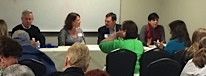
IMG_0145About half the panel: Deanna’s on the far right, wearing a reddish-pink scarf, and I’m wearing gray.

The question was about plot versus character, and Deanna and I responded to it differently. For her, it was all about plot – she starts with that, then thinks up and creates her characters. For me – and for the other panelists – characters came first.

We all agreed that either way works – it’s all about writing a compelling story, no matter what your approach. But I didn’t fully understand Deanna’s (or realize how much it and my own have in common) until I read her blog post.

The character that I had to change in UNDERWATER – who became more vital to the story – was someone who developed as I wrote the book. I realized that her personality, her backstory, even her demons were integral to the plot. I knew she would play an important role, but originally, I didn’t know how important.

Hopefully, neither does the reader.

In any case, for me it’s important to imaginer les personnages – imagine the characters – before crafting a story’s plot. That doesn’t mean I don’t have the plot in my head, or even on paper on a computer file (I prefer a blank screen over a clean sheet of paper; typing flows better for me than handwriting).

La réponse to the question? Comme vous voulez – as you wish. Either can work, but flexibility seems key. That way, you’re open to “unplanned complications” (and other elements) that can solve pose problems!

Vive la différence!

Suspense, from a worrier

As I declared to the audience at a panel on Suspense during last weekend’s Dahlonega Literary Festival, I’m a worrier by nature.

Just before the panel discussion:
“On the Edge of Our Seats: The Element of Suspense in Fiction” 
I’m wearing gray, seated between two gentlemen authors.
IMG_0144

The panel took place on Saturday at 4:00. All day, I had greeted and met readers who stopped by my table to ask about and buy my suspense novel, UNDERWATER. I’d also met many of the other authors. It was a beautiful day in Dahlonega, which only added to the cheerful mood of just about everyone.

The panel’s format was different from what I’d expected. I had imagined that (primarily) audience members would ask questions (“this question is for so-and-so author:” etc.). Instead, the moderator asked almost all of the (very good) questions, and each of us seven panelists then had the opportunity to respond. I hadn’t been able to attend any of the day’s earlier panels (if I had, I’d have known about the format). Néanmoins – nevertheless – I wasn’t too disconcerted.

First, we introduced ourselves individually. Then the moderator posed a question and asked the person on one end of the table to start the responses. Though each of us had authored a book(s) containing the element of suspense, our works represented a variety of genres, none overlapping (much), so we had different perspectives, and styles. No one’s book was similar to my novel, and I was excited to have the chance to talk about it.

As I said during one of my responses, since I’m a worrier, writing suspense seems natural. I pay careful attention to pacing. I start with the characters and the issues they face (the conflict). As I write, I strive to keep the reader on the edge of his/her seat, worrying about what will happen next. I plan for the tension to rise as the story unfolds, as things go from bad to worse. I want the reader to be a worrier about my characters. 

It takes some work, and I worry about focus on it. But if you’re a worrier by nature, it’s really not that complicated.

From Typing to Skyping…

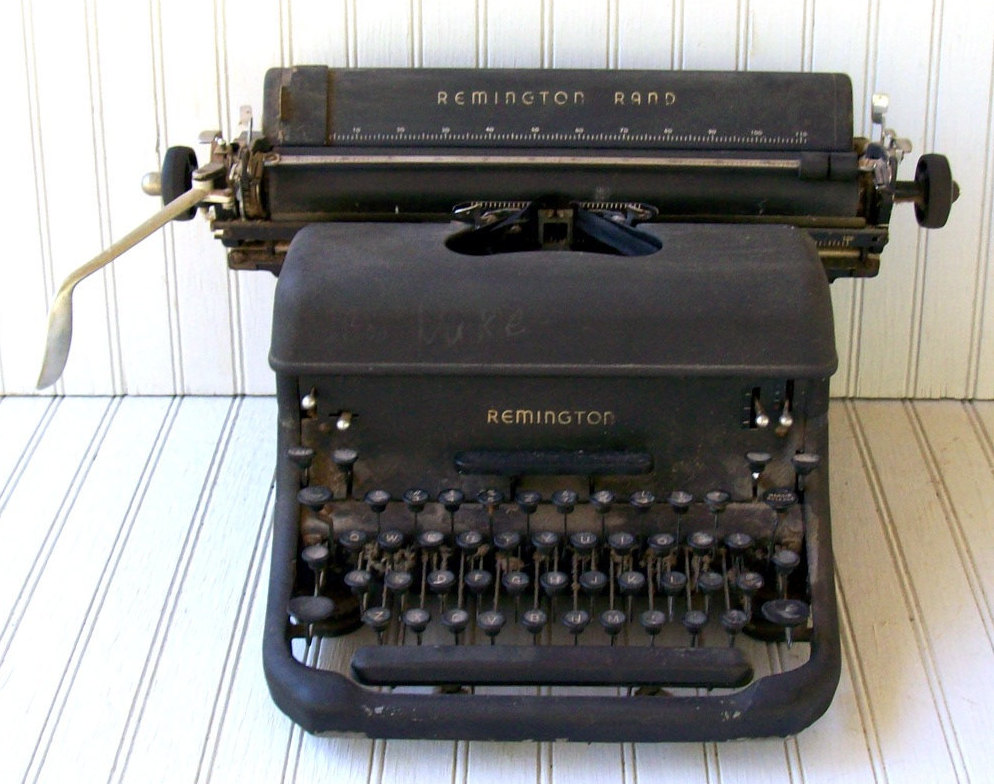
Last summer, I went to a local antiques store with my daughter. She saw an old typewriter for sale and walked over to it.  A piece of paper had been inserted, and she tapped one of the keys.

“It doesn’t work,” she said. I walked over and typed my name on the paper. “You have to hit the keys,” I told her. “You don’t just touch or tap lightly!”

il_fullxfull.370660531_tuyf

  I took typing in high school for one quarter, and learned to type at a decent (but not very fast) rate. Mistakes counted against your grade, and I let speed suffer in my effort to avoid typos. In college, I remember having to carefully retype entire papers (before Liquid Paper came out).

Luckily, my French professors didn’t require typewritten papers – with so many accents, it was nearly impossible. So they had us turn in handwritten papers.  A bit less of a hassle…but still.

How things have changed! Liquid Paper was a blessing in my first job at a downtown Dallas bank. Though I wasn’t a secretary, I typed a memo or two…

Liquid_paper

Fast forward to today. Though we still “type” on computer keyboards, things are different now. Communication has evolved. Writing business (and personal) letters is done via email and social media messages. People read books on their phones and tablets. To sum up a recent blog post by writer J.A. Konrath, ebooks are here, and there’s no turning back.

And people visit with each other on Skype.

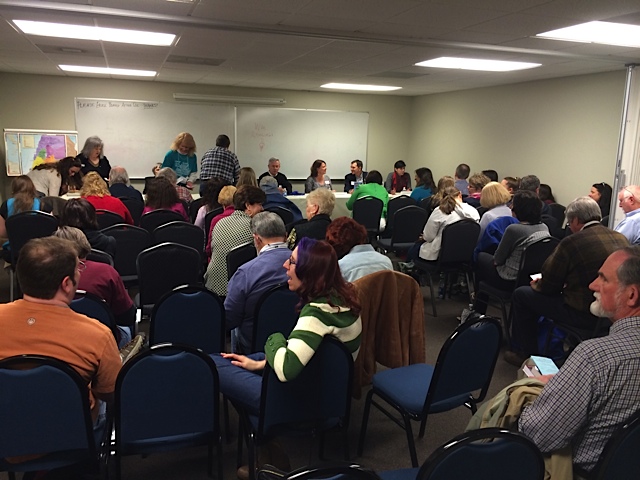
That’s how I appeared at a Book Club meeting last night that had chosen to read my suspense novel UNDERWATER.* My contact there – far from my home – had invited me to Skype with the group to discuss the book and my writing. I was thrilled to have the opportunity, to meet such a great group of readers, and to answer their questions over a glass of wine.

Unknown-1

Before our scheduled call, I set up my iPad to Skype in my home office and wanted to test it. But now I was the one saying to my daughter, “It doesn’t work!”

I texted her at her North Carolina university, and a few minutes later she had downloaded the app on her laptop. Then she called my Skype name…

photo 4 copy

photo 41 copy

Between “So pick up” and “Just finished and it went great!” (over 3 hours later), she helped me make sure my device was ready and that I was happy with how I looked onscreen.

She’s minoring in French, and sometimes (though rarement), that’s how we communicate.

Merci, ma fille! Tout s’est bien passé!

* If your Book Club chooses UNDERWATER and would like me to appear at your meeting via Skype, please let me know! 

Getting yesterday back

Yesterday’s gone on down the river and you can’t get it back.
– Larry McMurtry, Lonesome Dove
 

As a writer of fiction, I draw from my own experiences. But I also tell stories that I make up, out of my imagination. I don’t tell a story the way it happened, but the way I thought it should have. *

So “yesterday” is a good place to look for ideas, even though in life, you can’t get yesterday back.

Lots of things that happen in my novel MAKE THAT DEUX really happened (or a version of them did), but lots of other things didn’t. I did spend a year in France when I was young, and I missed my boyfriend back home. When I wrote the novel, I got to tell the ending of our story, not as it really happened, but as I wished it had.

My latest novel, UNDERWATER, isn’t based on an experience. But some of the characters’ internal conflicts are drawn from my own struggles. The water “down the river” isn’t always calm. Even if it looks okay, in my characters’ lives, there’s a lot lurking below the surface: Guilt. Lies. Jealousy. Hurt. Bitterness. Regret.

The tension builds, and as an author of suspense, I know that

worry = suspense.

As I wrote UNDERWATER, I knew that its “yesterday” had to be problematic at best. I wanted to keep you, the reader, worried about what was going to happen next.

And since by nature, I’m a worrier, I just had to let the river flow.

* to paraphrase Betty Smith, author of A Tree Grows in Brooklyn: “A story was something you made up out of something that might have happened. Only you didn’t tell it like it was, you told it like you thought it should have been.”


Coffee + writing = a good read

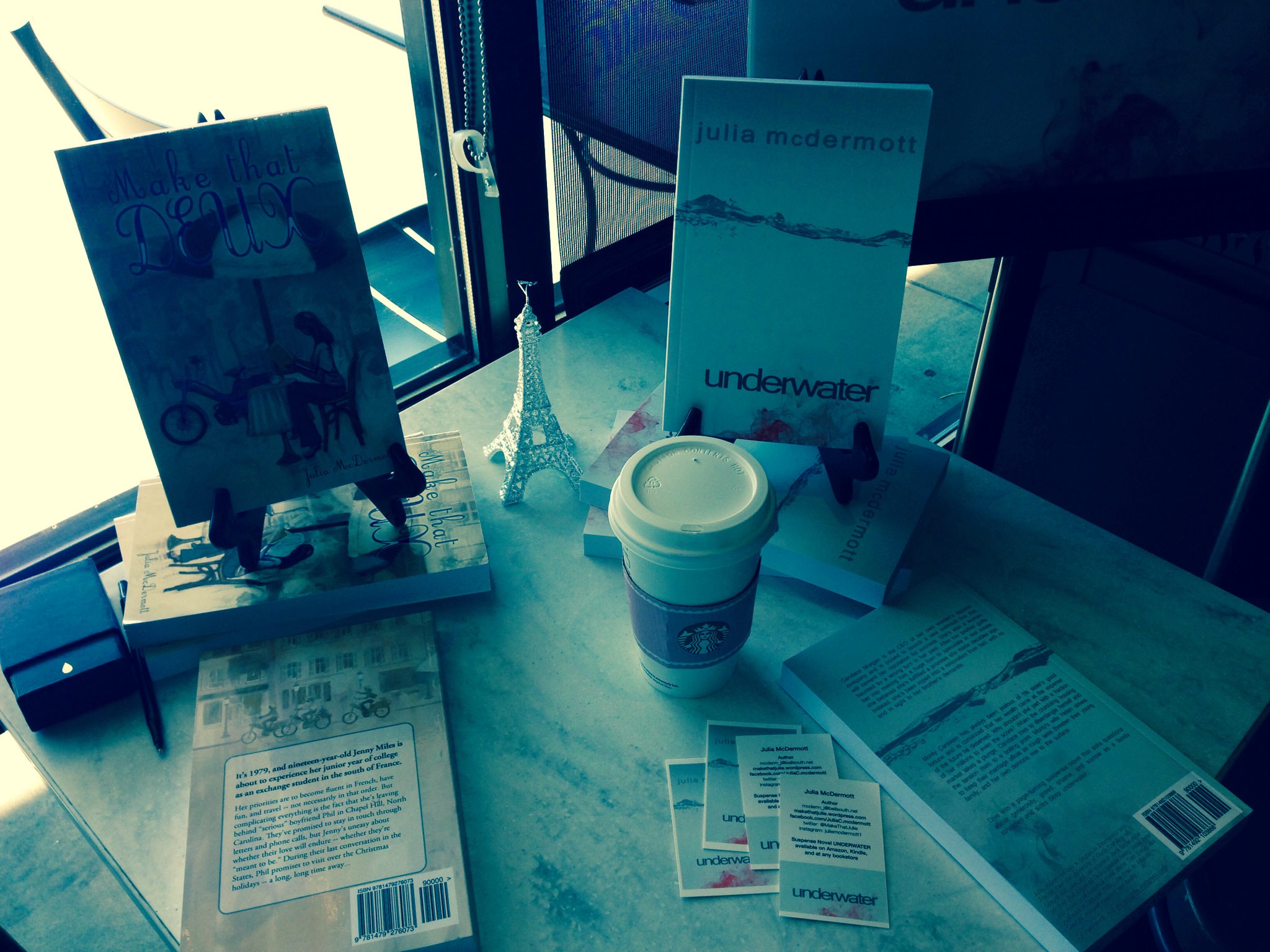
Today I’m at my neighborhood Starbucks signing copies of my Suspense novel, UNDERWATER and my romance novel MAKE THAT DEUX !

photo 3

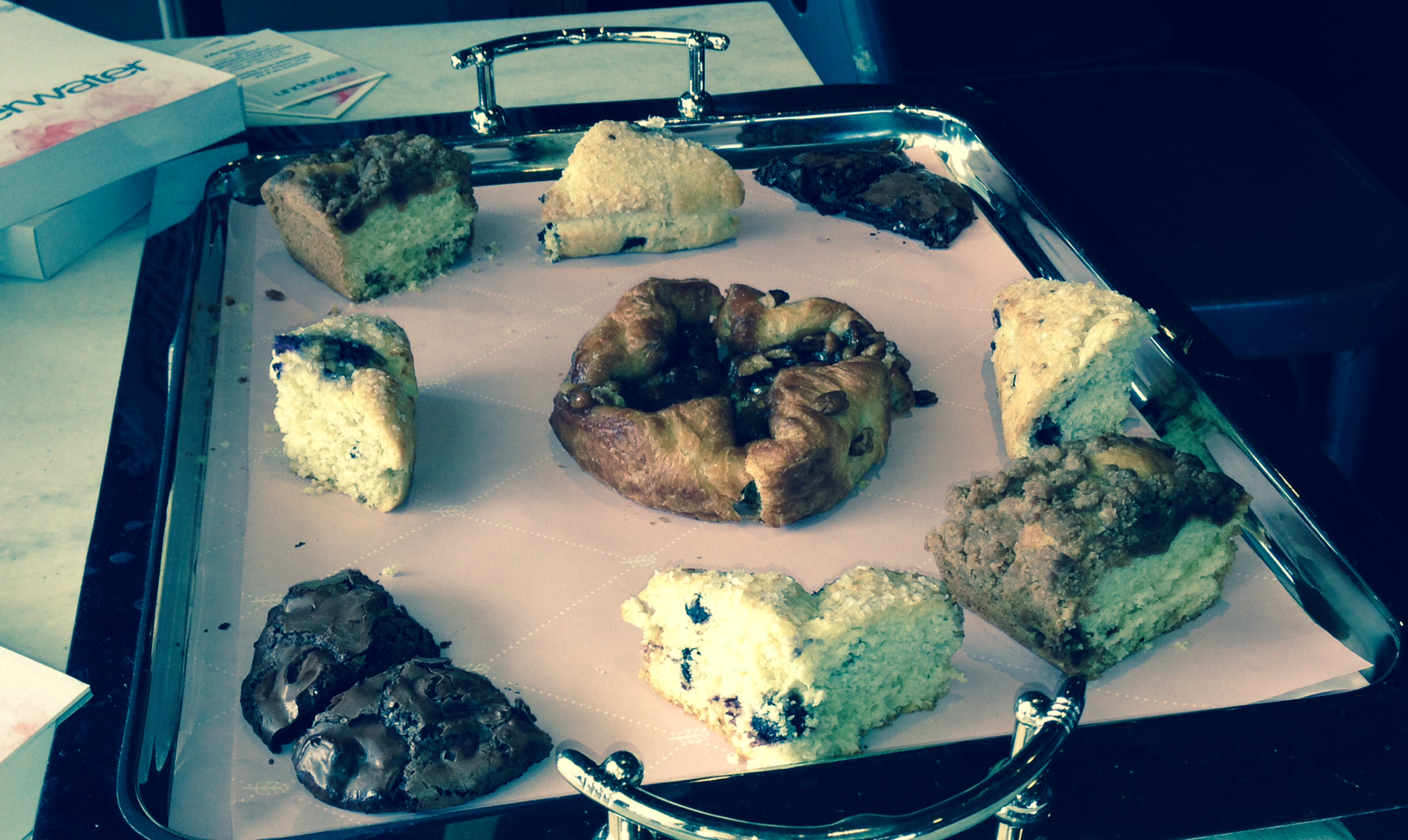
Come sample the new pastries, have a cup of coffee or tea and pick up your signed copy! Valentine’s Day is only 5 days away!

photo

The Road Not Taken: Part One

“Two roads diverged in a wood, and I –
I took the one less traveled by..”
– Robert Frost, The Road Not Taken
 

As the rest of the country – make that, world – knows, snow fell here in Atlanta on Tuesday, and we didn’t deal with it very well. A lot has already been written about why, including the following:

1. We don’t have enough equipment to clear snow and lay down salt on the roads. But snow- and ice-storms are rare down here, so that makes economic sense, even if it’s sometimes maddening.

2. Schools weren’t closed ahead of time for the day (though usually, this is done at the hint of a snowflake, tiny patch of ice, or even just very cold weather). When classes were finally canceled, parents (and buses) got on the road.

3. Everybody panicked, and left work at the same time to go home.

Normally, I would have been at home writing, able to watch the snow fall outside my window. But that morning, I was in a town twenty miles away, signing copies of my novel, UNDERWATER. At noon, I headed home as flurries began, [luckily] stopping for gas first.

I didn’t panic, but I drove cautiously as the flurries turned into flakes, the roads became treacherous, and more and more cars appeared. I wound my way using surface streets I know well, instead of highways often congested in the best of conditions.

(Side note: I survived six winters up north, all of them while driving my kids around: one in Michigan and five in Kansas – where it’s flat. But Atlanta is a city built within a forest, at the foothills of the Appalachian Mountains; it’s hilly here.)

De toute façon, I did pretty well until I was 3 miles from la maison. The streets weren’t yet icy, and though traffic was becoming heavy, cars were moving. Then I got caught in a bottleneck of vehicles at a light, almost all of us turning right. After a frustrating period (I don’t know how long), I ducked into a neighborhood and came out of it a mile further along my journey.

Then, I came to a fork in the road, and had a decision to make. Both routes were equidistant from home, and both were hilly. My usual choice was the road on the left. I could see nothing but stationary red taillights on the right. I saw some on the left, too, but my iPad’s traffic app assured me that it was only for a short distance. So I took that road.

It looked like the road less traveled by.

Wrong. It was gridlock all the way, but as I inched along – literally – down a big hill, and then up the other side, I kept thinking, “It’ll get better!” *

At a certain point, I considered abandoning my car and walking. But that point was after I’d passed all side streets into which I could have turned to park. There was nowhere to ditch my car now (other than a real ditch), and I didn’t want to walk uphill in the cold, carrying my heavy bags. Inside the car was warm. I was making progress toward home at a turtle’s pace, but I was still making progress. And it wasn’t dark – yet – though it was getting colder.

My husband, who had taken the train home from his office hours earlier, kept checking on me. I knew he was considering walking over to rescue me, but what could he do? What I needed was for him to somehow remove the cars in front of me – or at least, get the one right in front of me to move forward. But where could that car go?

Nowhere, because the one ahead of him was barely moving. But that was better than nothing, and as I approached the turnoff for my neighborhood, I braced myself for its snow-caked and potentially icy streets. Without sliding, I made it up and down the steep hills and arrived at my destination just before six p.m.

I was grateful to be home, even though I’d taken a road well heavily traveled.

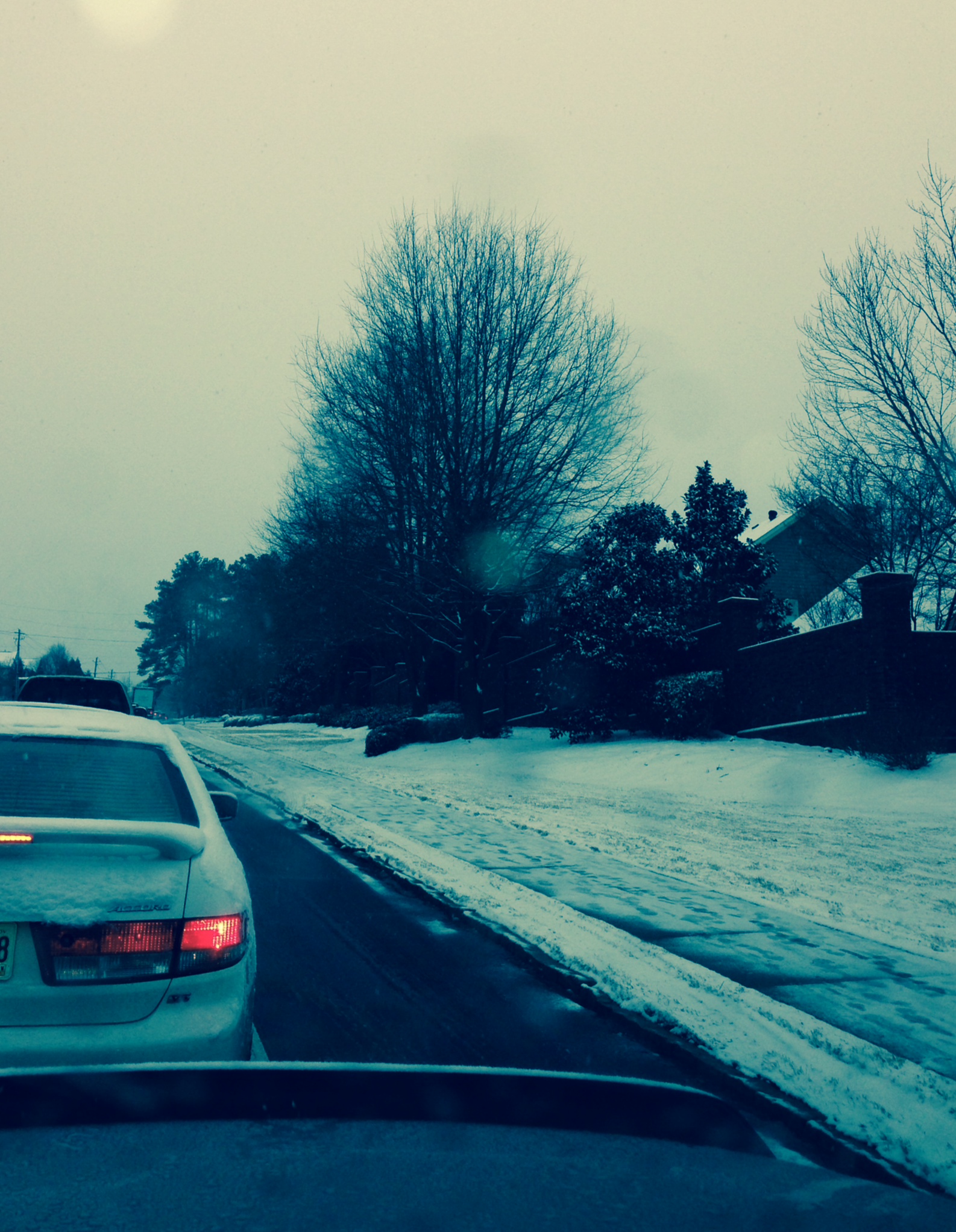
My view on Tuesday, for quite some time:

photo 5

Next Post: The Road Not Taken, Part Two (A different kind of road, but honestly, the one less traveled.)

* Indeed, my iPad app (incorrectly) showed that it would.

Create a website or blog at WordPress.com

Up ↑