Suspense, from a worrier

As I declared to the audience at a panel on Suspense during last weekend’s Dahlonega Literary Festival, I’m a worrier by nature.

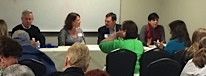
Just before the panel discussion:
“On the Edge of Our Seats: The Element of Suspense in Fiction” 
I’m wearing gray, seated between two gentlemen authors.
IMG_0144

The panel took place on Saturday at 4:00. All day, I had greeted and met readers who stopped by my table to ask about and buy my suspense novel, UNDERWATER. I’d also met many of the other authors. It was a beautiful day in Dahlonega, which only added to the cheerful mood of just about everyone.

The panel’s format was different from what I’d expected. I had imagined that (primarily) audience members would ask questions (“this question is for so-and-so author:” etc.). Instead, the moderator asked almost all of the (very good) questions, and each of us seven panelists then had the opportunity to respond. I hadn’t been able to attend any of the day’s earlier panels (if I had, I’d have known about the format). Néanmoins – nevertheless – I wasn’t too disconcerted.

First, we introduced ourselves individually. Then the moderator posed a question and asked the person on one end of the table to start the responses. Though each of us had authored a book(s) containing the element of suspense, our works represented a variety of genres, none overlapping (much), so we had different perspectives, and styles. No one’s book was similar to my novel, and I was excited to have the chance to talk about it.

As I said during one of my responses, since I’m a worrier, writing suspense seems natural. I pay careful attention to pacing. I start with the characters and the issues they face (the conflict). As I write, I strive to keep the reader on the edge of his/her seat, worrying about what will happen next. I plan for the tension to rise as the story unfolds, as things go from bad to worse. I want the reader to be a worrier about my characters. 

It takes some work, and I worry about focus on it. But if you’re a worrier by nature, it’s really not that complicated.

From Typing to Skyping…

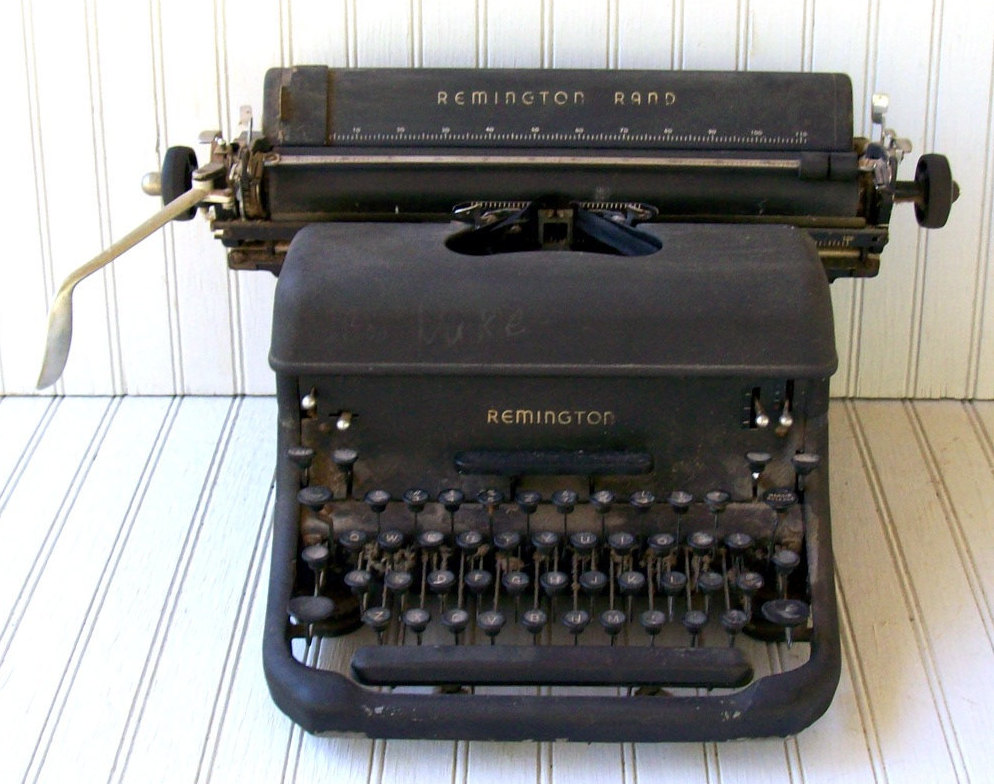
Last summer, I went to a local antiques store with my daughter. She saw an old typewriter for sale and walked over to it.  A piece of paper had been inserted, and she tapped one of the keys.

“It doesn’t work,” she said. I walked over and typed my name on the paper. “You have to hit the keys,” I told her. “You don’t just touch or tap lightly!”

il_fullxfull.370660531_tuyf

  I took typing in high school for one quarter, and learned to type at a decent (but not very fast) rate. Mistakes counted against your grade, and I let speed suffer in my effort to avoid typos. In college, I remember having to carefully retype entire papers (before Liquid Paper came out).

Luckily, my French professors didn’t require typewritten papers – with so many accents, it was nearly impossible. So they had us turn in handwritten papers.  A bit less of a hassle…but still.

How things have changed! Liquid Paper was a blessing in my first job at a downtown Dallas bank. Though I wasn’t a secretary, I typed a memo or two…

Liquid_paper

Fast forward to today. Though we still “type” on computer keyboards, things are different now. Communication has evolved. Writing business (and personal) letters is done via email and social media messages. People read books on their phones and tablets. To sum up a recent blog post by writer J.A. Konrath, ebooks are here, and there’s no turning back.

And people visit with each other on Skype.

That’s how I appeared at a Book Club meeting last night that had chosen to read my suspense novel UNDERWATER.* My contact there – far from my home – had invited me to Skype with the group to discuss the book and my writing. I was thrilled to have the opportunity, to meet such a great group of readers, and to answer their questions over a glass of wine.

Unknown-1

Before our scheduled call, I set up my iPad to Skype in my home office and wanted to test it. But now I was the one saying to my daughter, “It doesn’t work!”

I texted her at her North Carolina university, and a few minutes later she had downloaded the app on her laptop. Then she called my Skype name…

photo 4 copy

photo 41 copy

Between “So pick up” and “Just finished and it went great!” (over 3 hours later), she helped me make sure my device was ready and that I was happy with how I looked onscreen.

She’s minoring in French, and sometimes (though rarement), that’s how we communicate.

Merci, ma fille! Tout s’est bien passé!

* If your Book Club chooses UNDERWATER and would like me to appear at your meeting via Skype, please let me know! 

Getting yesterday back

Yesterday’s gone on down the river and you can’t get it back.
– Larry McMurtry, Lonesome Dove
 

As a writer of fiction, I draw from my own experiences. But I also tell stories that I make up, out of my imagination. I don’t tell a story the way it happened, but the way I thought it should have. *

So “yesterday” is a good place to look for ideas, even though in life, you can’t get yesterday back.

Lots of things that happen in my novel MAKE THAT DEUX really happened (or a version of them did), but lots of other things didn’t. I did spend a year in France when I was young, and I missed my boyfriend back home. When I wrote the novel, I got to tell the ending of our story, not as it really happened, but as I wished it had.

My latest novel, UNDERWATER, isn’t based on an experience. But some of the characters’ internal conflicts are drawn from my own struggles. The water “down the river” isn’t always calm. Even if it looks okay, in my characters’ lives, there’s a lot lurking below the surface: Guilt. Lies. Jealousy. Hurt. Bitterness. Regret.

The tension builds, and as an author of suspense, I know that

worry = suspense.

As I wrote UNDERWATER, I knew that its “yesterday” had to be problematic at best. I wanted to keep you, the reader, worried about what was going to happen next.

And since by nature, I’m a worrier, I just had to let the river flow.

* to paraphrase Betty Smith, author of A Tree Grows in Brooklyn: “A story was something you made up out of something that might have happened. Only you didn’t tell it like it was, you told it like you thought it should have been.”


Coffee + writing = a good read

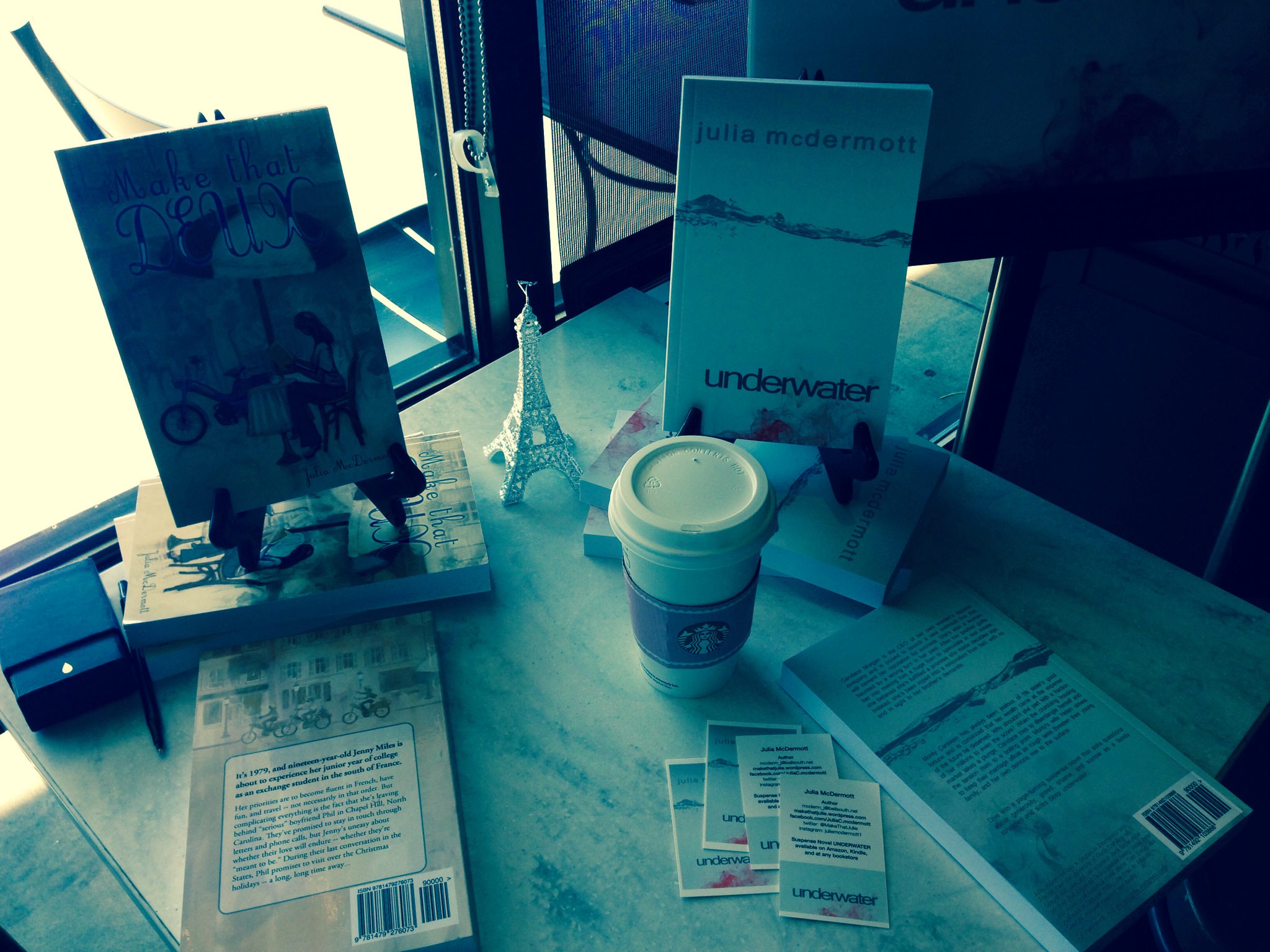
Today I’m at my neighborhood Starbucks signing copies of my Suspense novel, UNDERWATER and my romance novel MAKE THAT DEUX !

photo 3

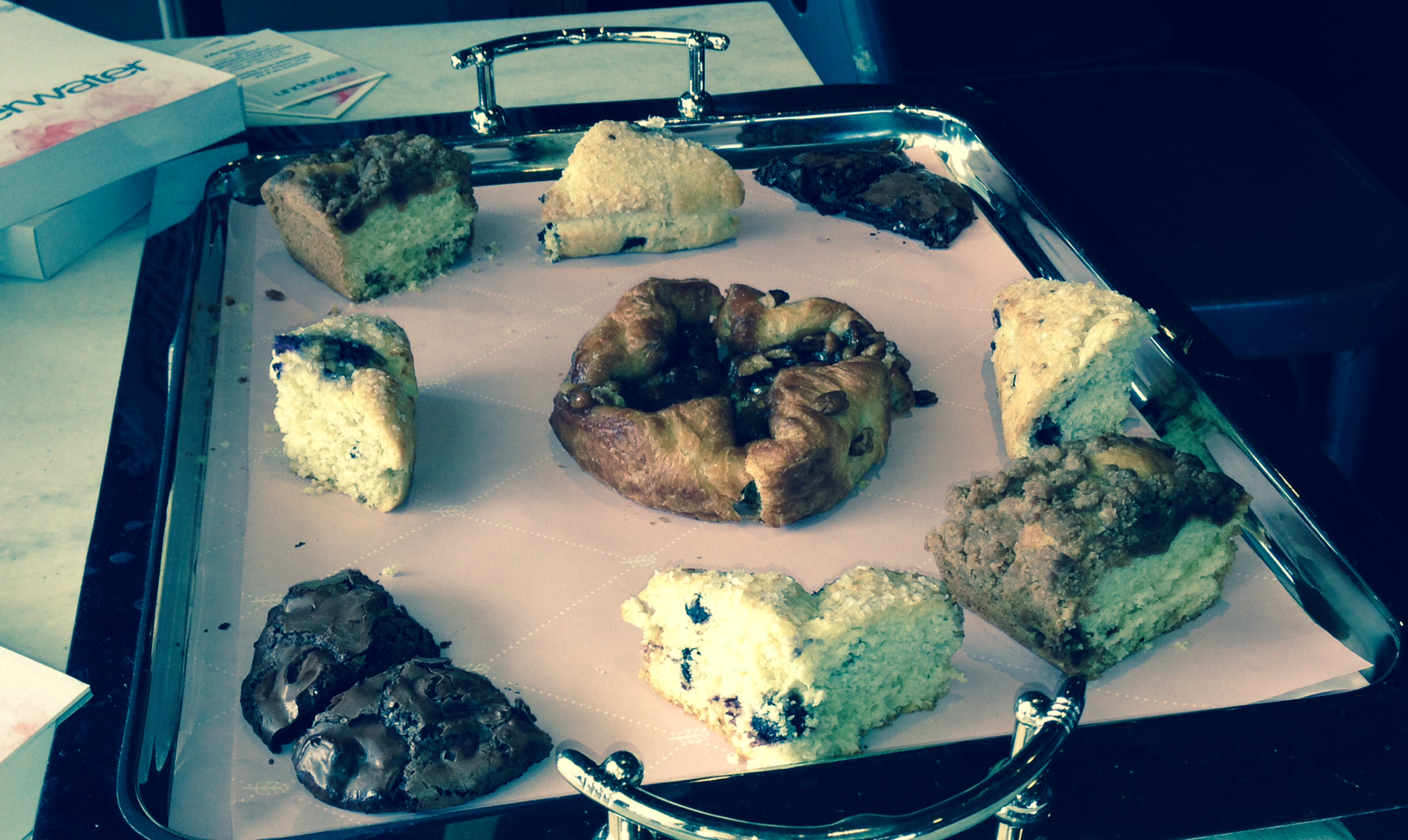
Come sample the new pastries, have a cup of coffee or tea and pick up your signed copy! Valentine’s Day is only 5 days away!

photo

Rendez-vous at a French Café!

I’ll be signing copies of UNDERWATER on JAN 20, 2014 (MLK Holiday) from 3:00 to 5:00 pm at LA MADELEINE Country French Café in Dunwoody, Georgia (Perimeter Center West)!

Come enjoy a pastry or two, have un verre de vin and pick up your copy!

McKinneyInterior-5

The cost of forgiveness

During 2013, I read some good books, one of which was A TREE GROWS IN BROOKLYN by Betty Smith. Being so attached to Chapel Hill, NC, where I went to college, you’d think I would have read it a long time ago – or least known that the famous author lived in the town for many years. I didn’t even know about the Betty Smith house, though I’m sure I’ve walked by it before.

photo 2

I knew about the novel, though, and last summer, when my daughter (soon to be a freshman at UNC) was looking for something good to read, I suggested it to her. She read it, and then I did and immediately added it to my list of all-time favorite books. One of the story’s most memorable lines is spoken by the main character’s grandmother:

“‘Forgiveness is a gift of high value. Yet its cost is nothing.'”

Two characters in my latest novel, UNDERWATER, struggle with forgiveness. One of them faces the difficult task of forgiving someone who refuses to express remorse for a past wrong. The other deals with her own internal feelings of sorrow and shame. For both, the decision to focus on gratitude instead of hurt makes forgiveness not only possible, but much easier.

Like love, gratefulness may seem just to happen, but it’s really a choice. Another idea the story examines is the responsibilities – and limits – of generosity. When someone gives us a gift expecting nothing in return, we feel grateful, we want to reciprocate, and we want to be around them more. When the “gift” has strings attached though, we feel indebted, and we want to create distance from the giver.

While it’s good manners to reciprocate a gift, it’s not always possible to do so at the same level. Gratitude is possible, however. When a gift has strings attached, the giver doesn’t want a gift in return, or even just true gratitude. Instead, (s)he wants the recipient to feel indebted, and then to do something or to behave a certain way.

Forgiveness is a gift for which we should expect nothing back, however. No strings attached.

And its cost is nothing.


Get Underwater FREE – for a limited time!

“How did it get so late so soon?”

– Dr. Seuss

It’s time to start your holiday shopping, and if you’re like me, you have some Readers on your List.

But if you’re (also) like me, first, you insist on reading/prefer to read like to read any book that you give as a gift.

However, you don’t want to buy yourself a gift  spend money on yourself ahead of time simultaneously, so…

Voici la solution:

From Monday, November 11 through Friday, November 15, you can download UNDERWATER on your Kindle absolutely FREE!

photo

So, next week, go to Amazon and download UNDERWATER on your Kindle. (You need a good book to read next week anyway, before the holidays kick into full gear.) It’s a page-turner, so you’ll finish it in a couple of days.

Then, order the Paperback and wrap it up – or Gift a Kindle version!

Buy a copy for all the Readers on your List!

Then, voilà! You’ll have a head start on the holidays! And it won’t be as late you think it is, as soon as you think!

paragongangCover11

Keeping it simple

One of my family’s favorite sayings* is just one word, and it comes from the movie We Are Marshall: 

“Simplify!”

Unlike the movie It’s Complicated,** simplify is not just a sentence, but a verb (and often, a solution). When we repeat that line, it’s obligatoire to speak slowly and adopt a southern accent. And when I worked on the final edit of my latest novel, UNDERWATER, I tried to simplify: I cut some (unnecessary) backstory, clarified the timeline, and streamlined the plot.

photo

But – très important – I also added some depth.

It wasn’t a simple process. It took a lot of reflection, and some trial and error. It’s part of the work of a work-in-progress that can be difficult, for me. But it’s worth it – ça vaut la peine. 

So, under the surface, there were some currents of struggle. For a few days, I resisted diving into the edit. Just like when I go to the pool, I had to test the water – with my toes. I fixed the easy stuff first, then broke my editor’s feedback down into managable tasks. I stayed in the shallow end of the pool for a few days. Then I started swimming, and soon – happily, and mercifully – I got into a rhythm.

[That rhythm thing must be what football players experience when they drive down the field – when they’re “in the zone.”]

Since publication, I’ve gotten some good reviews (Yay!) and many compliments from readers. I’ve also answered many questions, trying not to reveal too much. Lots of people have told me that the ending took them by surprise, and that the story was not a predictable one. Some have asked how I came to know about some of the specifics and story details, and write about them. Others have been intrigued by the novel’s theme, and how I developed the plot.

Was it a simple process? Mais non. But when I was treading water in the writing, when I was sinking into the mind of the villain, and when I plunged into the final edit, I remembered one thing above all:

Simplify!

* Here are some other family sayings taken from movie lines (guess which):
1. “I’ve made my decision. Pull the plug!”
2. “Who ya gonna call?”
3. “These aren’t the droids you’re looking for.”
4. “What we’ve got here is a failure to communicate.”
 
** We also like the “It’s Not Complicated” commercials, with those adorable first graders answering simple questions…

Part Deux: 2 Literally-Asked Questions, and More

Here’s a few more of the questions asked at the Book Launch Party for my novel UNDERWATER, and the answers (and announcements) I wish that I’d should have given (and made):

En premier (first):

The novel is dedicated to my mother, Sally, who was a guest at the party. She knew how nervous I was speaking in front of the large group, and fortunately, she reminded me to announce the book’s dedication to her. I did, but here’s what else I should have said…

I dedicated the book to her because she’s been so supportive of my writing. Years ago, when I mentioned my idea of writing a book, I told her that I was thinking about writing a novel based on my year in France.

“Do it!” she said. “It’s not too late!” When MAKE THAT DEUX was published, no one was more proud of me than she was – and no one’s asked me more about the details of  UNDERWATER, and when it would be released! Thanks, Mom.

En second:

Several people named in the book’s Acknowledgments were in attendance at the party. But who (besides other authors) reads the Acknowledgments page?* So I wished I had recognized them, and explained how much they helped. From pacing and plot to the smallest story details, their input was invaluable!

Enfin (finally), les questions:

Where did you draw your inspiration from for this story?

I drew on some of my own life experiences when writing the story.

My husband and I were “underwater” on our first house in the late 1980s, before being underwater was cool. We moved across the country for a new job in the midst of a declining real estate market, a side effect of the Savings & Loan crisis. We had no choice but to (seriously) downsize and do our best – and to start all over again. No one came to our rescue, and one thing we learned was that it’s much easier to upsize than to downsize. Much easier.

But we did it. We lived not just within our means, but way below them, for several years. In short, we did “Dave Ramsey” before Dave Ramsey was cool.

More than a decade later, after building a new home in the Midwest, we left the area, again for a new job. We sold our house at a loss. Downsizing followed, but we recovered more quickly this time.

When I began writing UNDERWATER, I knew the premise, the protagonist, the villain, the storyline…and I knew the feelings of despair, desperation and stress connected with a house underwater.

I thought that I could write about those feelings through the eyes of fictional characters, and about the havoc that the situation wreaks in all of their lives.

What books have you read recently, and what do you like to read?

I read a range of fiction and some non-fiction, including biographies. I like everything from suspense to coming-of-age stories and romance. I also like historical fiction and classics. And I usually like anything set in France, which includes presque tout – almost everything – by Peter Mayle.

Earlier this year, I read Stephen King’s 11/22/63, and his book written for authors, On Writing (a bonus was an appendix of good books to read). Another great book I read was Unbroken by Laura Hillenbrand.

For the answers to some other questions about UNDERWATER, such as how I selected the title and characters’ names, see FAQ – UNDERWATER. 

* Take a look at my Acknowledgments page (it’s short!) to find out more.

Create a website or blog at WordPress.com

Up ↑