All things French: tout ce qui est français

What is it about the French? A joie de vivre, or just… a certain je ne sais quoi?

Je ne sais pas exactement, mais… for me (and millions of others), it’s an unmistakable something. For a country, ça me rappelle (it reminds me) of…that something, possessed by some girls (and women). Lisa, a character in my novel MAKE THAT DEUX, has it:

that something which is undeniably attractive, captivating and alluring.

En revanche (on the other hand), perhaps not everybody feels that way. Some people are not big fans of la politique en France, la culture, or even la cuisine (but two out of three isn’t bad). And some people are fans of all three.

I love all things French, or tout ce qui est français, including the language, the people, and the beauty. I even like their sense of humor,* and while I’m not crazy about existentialism, I get it, though some of their movie endings me rendent folle. De toute façon, mon sujet:

Here are a few of my favorite (French) things:

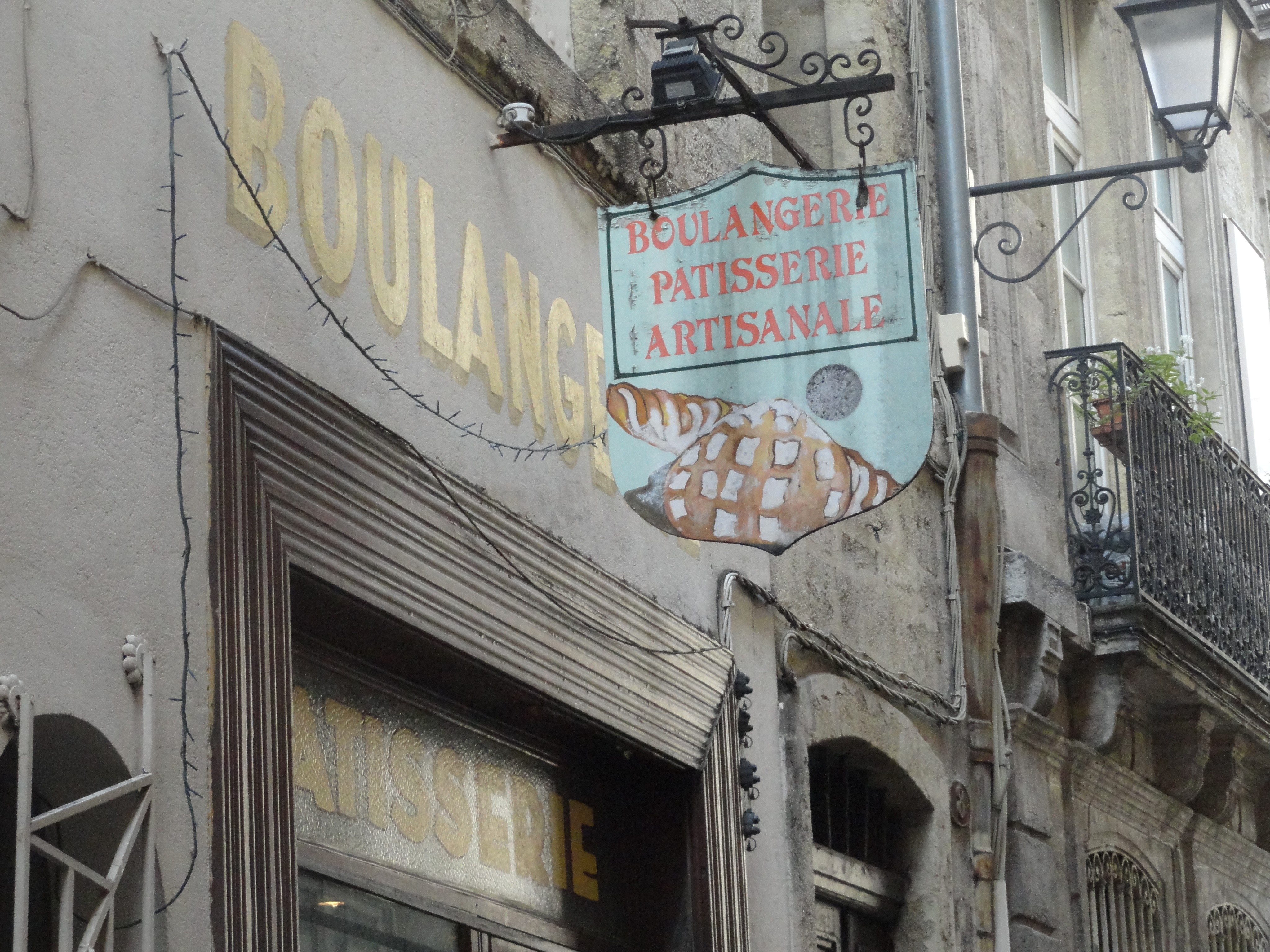
Champagne. Wine. Cheese. BoulangeriesPâté. Truffles. Baguettes

photo copy 4

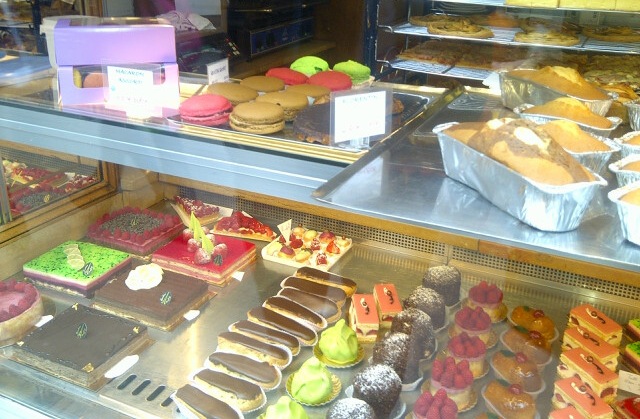
Cafés. Café au laitPâtisseries. Macaroons.

photo copy 3

Museums. Promenades, and parks. Monuments. Art. Palaces. Châteaux. Vineyards. Lavendar.
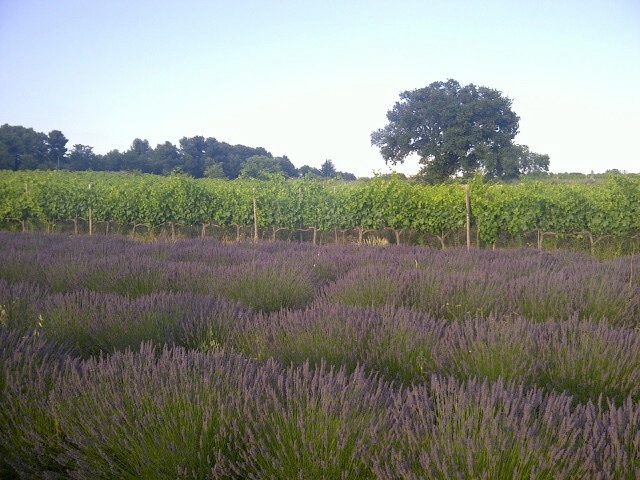
photo copy 6

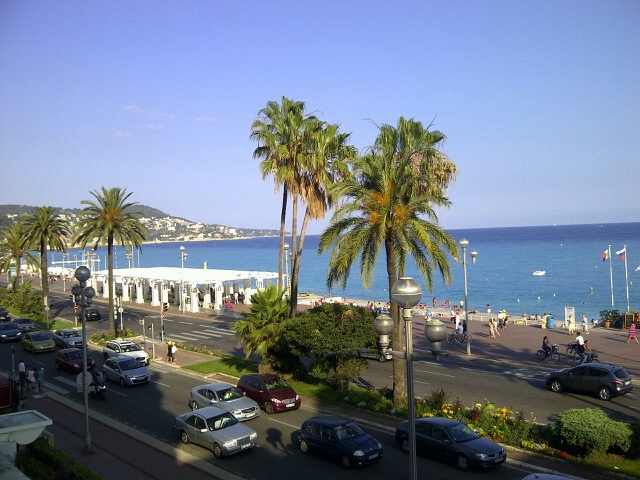
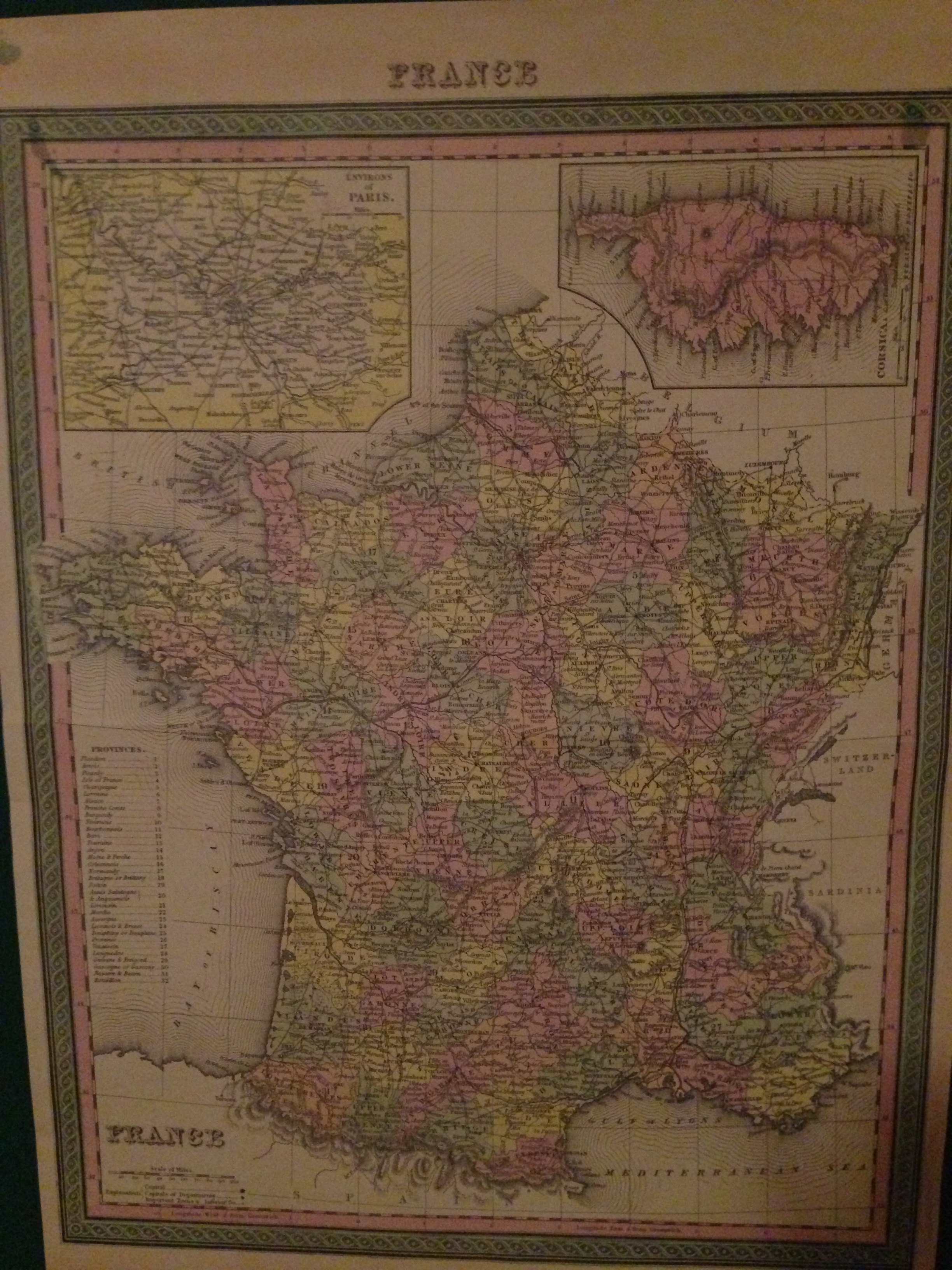
Nice. La plage. Les peitits villages de Provence. Aix. Avignon. Nîmes. Montpellier. Carcassonne. Lyon. Beaujolais.

photo

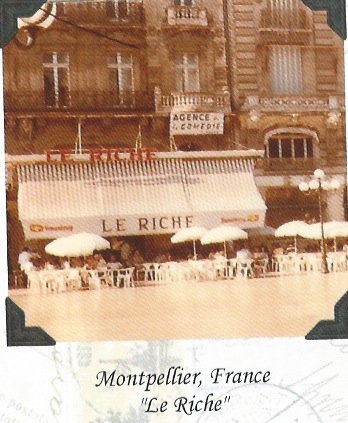
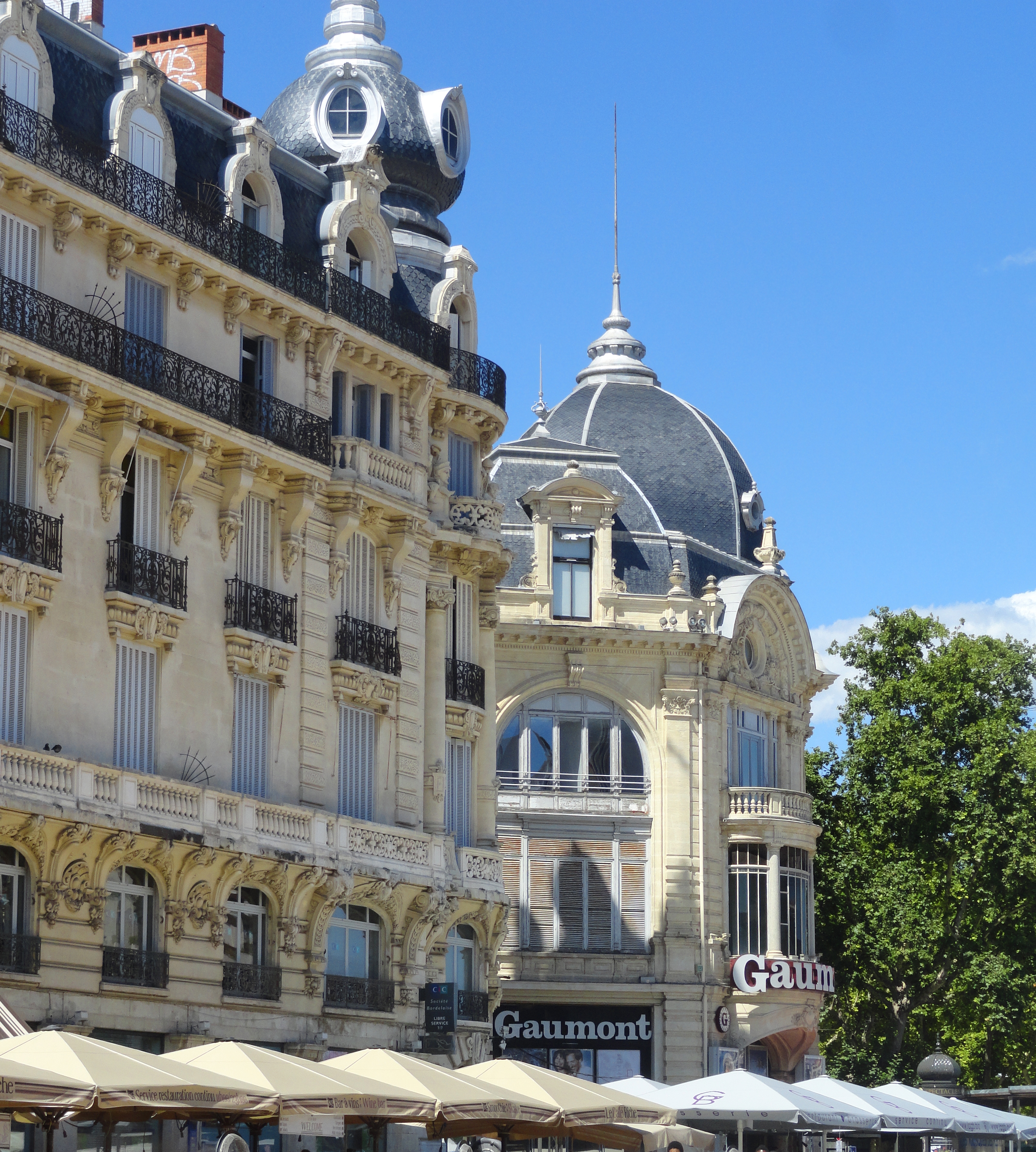
A street in Montpellier where I once motored on my mobylette, régulièrement

And…Paris.

photo copy 5A view of the Champs -Elysées

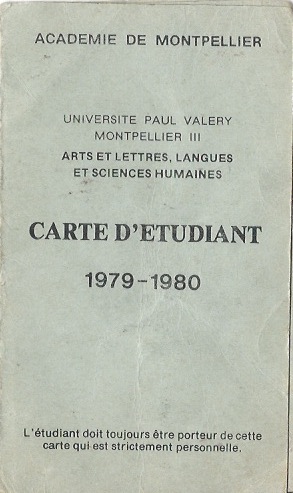
Jenny Miles (the main character in my novel) has her own favorite things about life in France, but some of them she simply can’t afford with her few extra French francs, back when no one had thought of (?) the Euro (!) . It’s not that she doesn’t have un rond (well, except for that second time in Paris), but she is glad to get free admittance to lots of museums with her Carte d’Etudiant (student ID):
carte

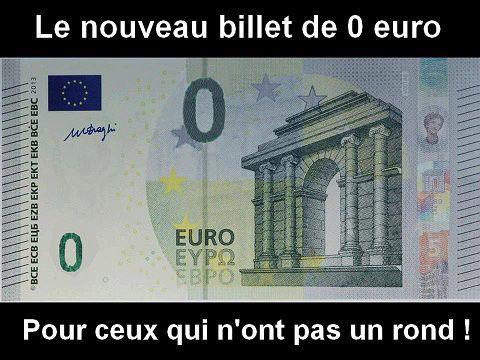
*Below, une blague, courtesy of mon prof, Madame Marie-Hélène:  “Si vous n’avez pas ‘un rond,’ ca veut dire que vous n’avez pas d’argent !! ( penniless! )”
480157_567084509976956_1110185922_n

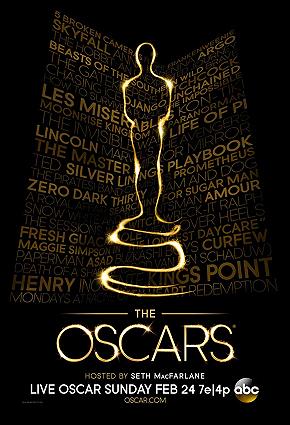
Les Oscars ’13 and ’80, et une connexion

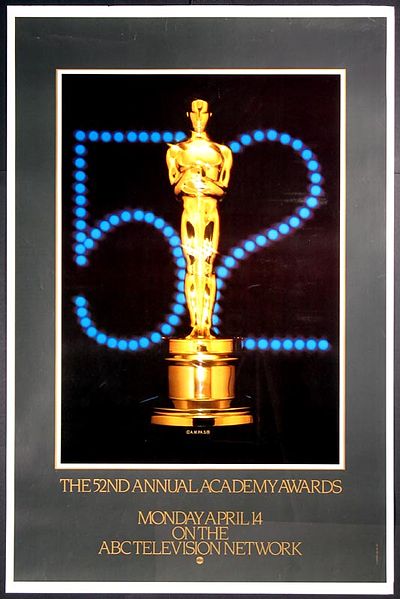
Some people who attended the 85th Academy Awards last Sunday night also attended the 52nd Academy Awards in 1980: Dustin Hoffman, Meryl Streep, Sally Field, Jane Fonda, Steven Spielberg, and William Shatner (cette fois, sur la vidéo).

Thirty-three years ago, Johnny Carson was the host of the show, presented on Monday night, April 14, 1980. About six weeks earlier, Jenny, Lisa and Kim* go to the Cinéma Gaumont Montpellier to see the movie, just released in France, that would win 5 Oscars: Best Picture, Best Director, Best Actor, Best Supporting Actress, and Best Adapted Screenplay:

kramer_vs_kramer_frgrand

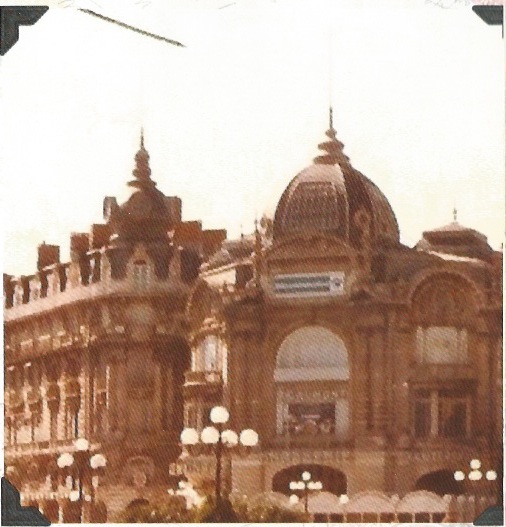
Cinéma Gaumont in 1979:

gaumont

The film Argo is set in 1979-80, the same year that Jenny and her friends spend studying abroad in the south of France, and the year that moviegoers flock to theatres to see Kramer vs. KramerArgo won this year’s Meilleur Film award and 2 other Oscars: Best Film Editing and Best Adapted Screenplay.

argo-UK-poster-405x600

I loved both movies, but for different reasons. Because my novel MAKE THAT DEUX takes place during 1979-80, the connections between the two films seem coincidental, and ironic. Kramer vs. Kramer was released in the U.S. in December 1979, not long after the American hostages (including the ones whose story is told in Argo) are seized. Both movies tell gripping stories that kept me on edge until the closing scenes. And though much is different in the world since 1980, some things haven’t changed that much, at least politically.

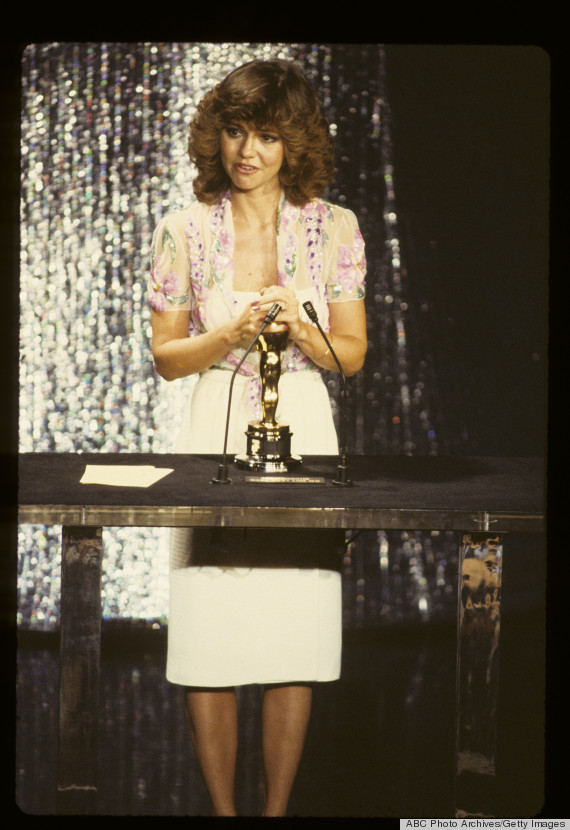
Back to Les Oscars. It’s changed in many ways, but not all. For example, the gowns: In 1980, Sally Field won Best Actress for her role in Norma Rae, beating Jane Fonda, Bette Midler, Jill Clayburgh and Marsha Mason. A much younger Ms. Field wore a fairly simple dress that night:

SALLY FIELD

Last Sunday night, she was nominated for her role in Lincoln, a part she was perfect for and played very well, à mon avis. But my favorite nominee, Jennifer Lawrence of Silver Linings Playbook, took home the Oscar.

Sally Field at this year’s Academy Awards:

slide_282842_2146056_freeLes robes have changed a lot over the years, and so have the hosts, but some things have stayed the same: The show is très long, and the speeches can be (too) long, too. But usually the show is entertaining and has its funny, unscripted (and weird) moments.

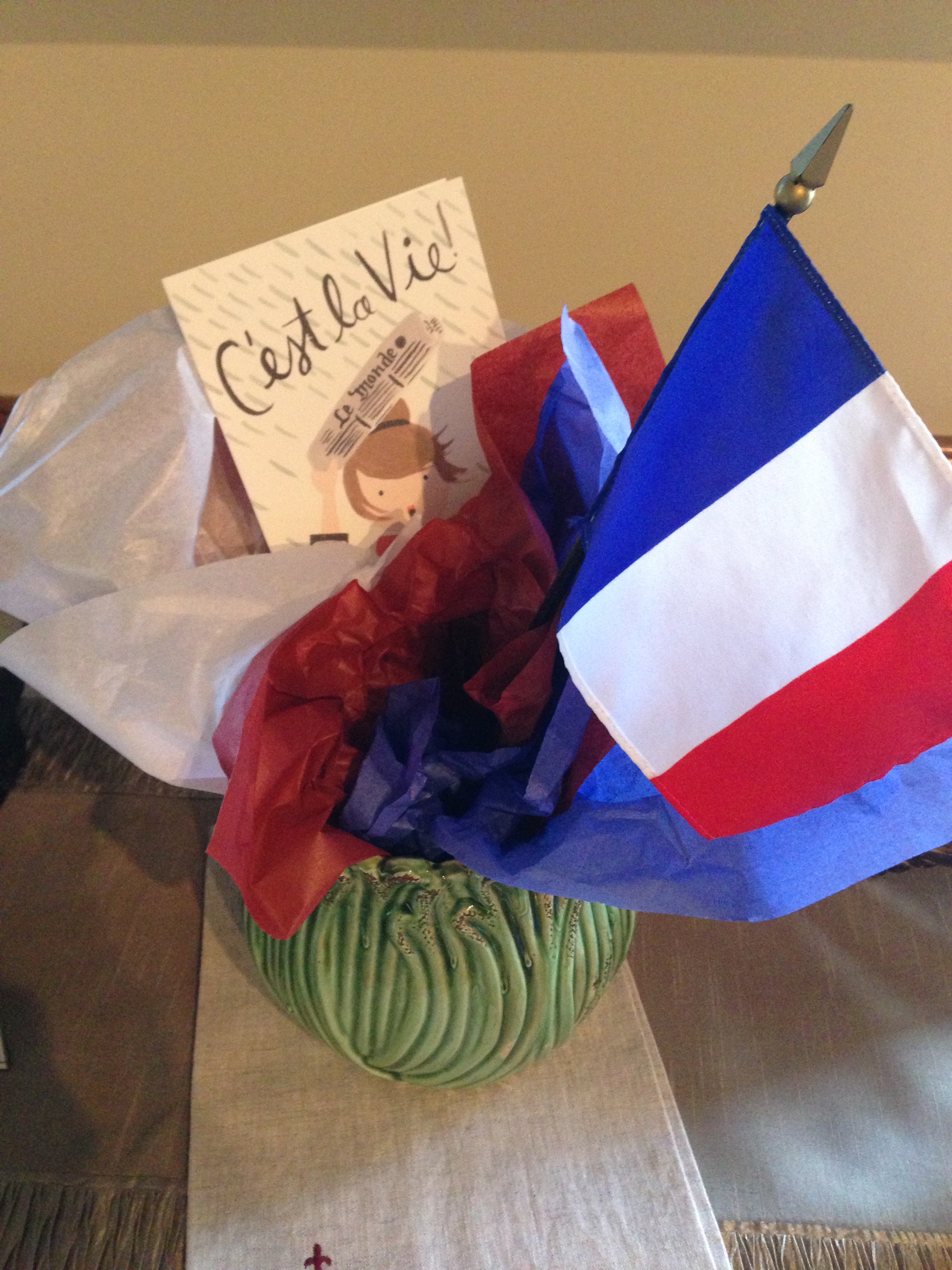
Just like life. C’est la vie!

* Three characters in my novel MAKE THAT DEUX....Kramer contre Kramer was released in February 1980 in France.

52nd_Academy_Awards

85th_Academy_Awards_Poster

My most FAQ: la question posée le plus fréquemment, and a diagram

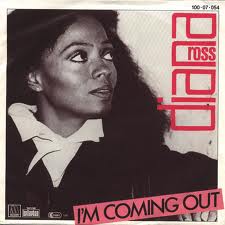
“I’m coming out, I want the world to know, Got to let it show…”

– Diana Ross

images

By far, the most frequently asked question I’m asked about my novel MAKE THAT DEUX is: “Is it autobiographical?”

If you go to the FAQ (Foire aux questions) tab above, you will see at the top:

“Is MAKE THAT DEUX a true story? No, but it is based (loosely!) on a true story.”

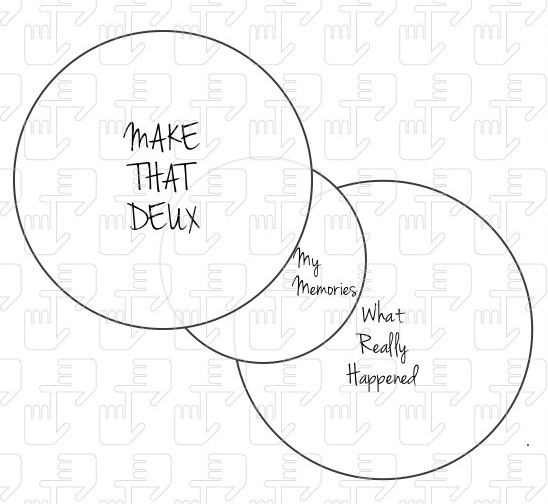
HOW loosely? Regardez: 

photo copy

Not drawn to scale

I must have a bit of French ancestry*, because I like mathematical concepts; quelquefois, my mind just prefers to look at things that way. The above diagram is an example of that, kind of.

Voici l’explication:

1. What Really Happened – Yes, I really spent the year 1979 – 1980 on UNC’s Junior Year Abroad in Montpellier, France. I arrived in August and came back to “the States” the following June. I left my college boyfriend, with whom I was madly in love, behind in Chapel Hill; we kept in touch with handwritten letters and a few very expensive phone calls. I have documents (and witnesses) to prove all of this.

leriche

2. My Memories – As you can see in the diagram, some of What Really Happened is entrenched in My Memories, but not all. And some of My Memories did not really, well, happen (probably).

Pourquoi? Parce que…hmm.  A., “Studies have shown” that memories tend to center around emotional events. Though I’ve always been a pretty emotional person (hopefully, in a good way), fortunately obviously, not all of my experiences during my year in France were full of drama and emotion. Some of them were though, and those were the only ones I remember.

I think.

Because, B., according to some scientists, “the very act of remembering can change our memories;” for us humans, it may even “be impossible.. to bring a memory to mind without altering it in some way.”

In other words, some of My Memories did NOT really happen (difficult for me to believe, but okay, because that fact was helpful when I wrote my fictional story),

photo copy 2

3. MAKE THAT DEUX – Many of My Memories made it into my novel, but not 100% of them. Simply put, my story was somewhat different than Jenny’s.

And to answer that “autobiographical” question: Look closely at the diagram above and you see that, although My Memories overlap What Really Happened, and MAKE THAT DEUX overlaps My Memories, only a small portion intersects all three areas.

And I’m not “coming out” telling what that portion is…I guess we could say, see #1. above.

Or we could say, qui sait? (who knows?)

Finally, you may be wondering, “So then, what IS that part of MAKE THAT DEUX in the diagram that’s outside of My Memories (and, necessarily, What Really Happened)?”

C’est la FICTION!

“My book’s coming out, I want the world to know, Got to let it show…”

* My mother’s maiden name is Bellamy: Belle Amie?

Paris, Versailles and the Louvre


One of the most fun things about being an author is having to do research.

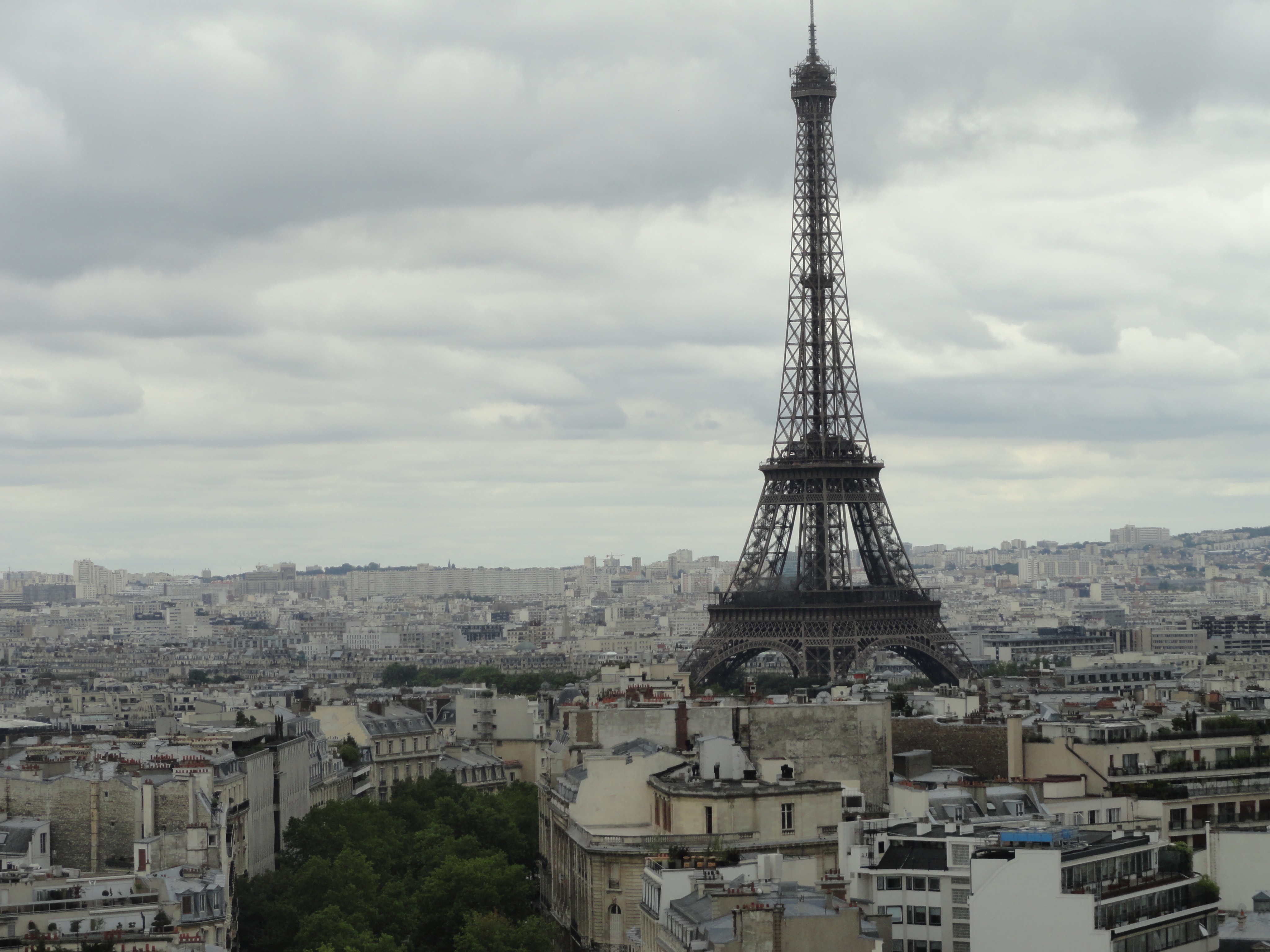
photo copy 3A view of La Tour Eiffel from the top of the Arc de Triomphe de l’Étoile

My novel MAKE THAT DEUX takes place (mostly) in the south of France, where the protagonist, Jenny Miles, spends a year of college. Before the school year begins though, she visits Paris with the other American students on her Year-Abroad Program.

Last summer, my husband and I spent four days there at the end of our two-week, adventure-filled vacances in Portugal and France. Our time in Paris wasn’t long enough – we weren’t able do as many things as I wanted to do, or to see as much. Cependant (however), maybe it was long enough, because after staying in five other lovely spots (the Algarve, Nice, Aix, Montpellier and Lyon), we were getting tired of traveling. (Oui, we had built too many stops into our itinerary….but we were all alone, sans les enfants, et plein d’énergie!)

We arrived in Paris on a Monday, and we made the most of our time, though the city was crowded with tourists just before the London Olympics. We stayed in a friend’s spacious appartement, conveniently located near the Eiffel Tower and close to a Métro station.

Cathédrale Notre-Dame

photo copy 5

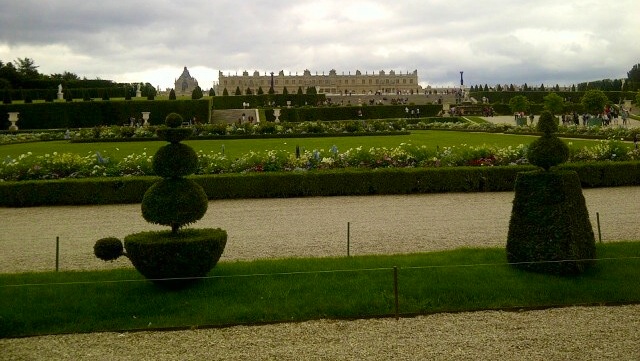
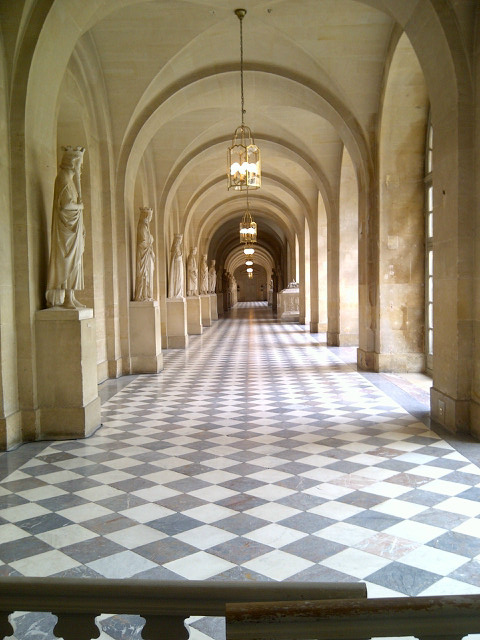
We chose a few things to do, and quickly decided we’d have to plan another trip, stay longer and see more. One day, we ventured to Versailles. I had been there once before, il y a longtemps, with a group of other students on a guided tour. That day, the palace wasn’t very crowded, unlike the day we visited it last summer (though these photos don’t include tout le monde):

photo copy 2

Versailles

photo copy 8

photo copy

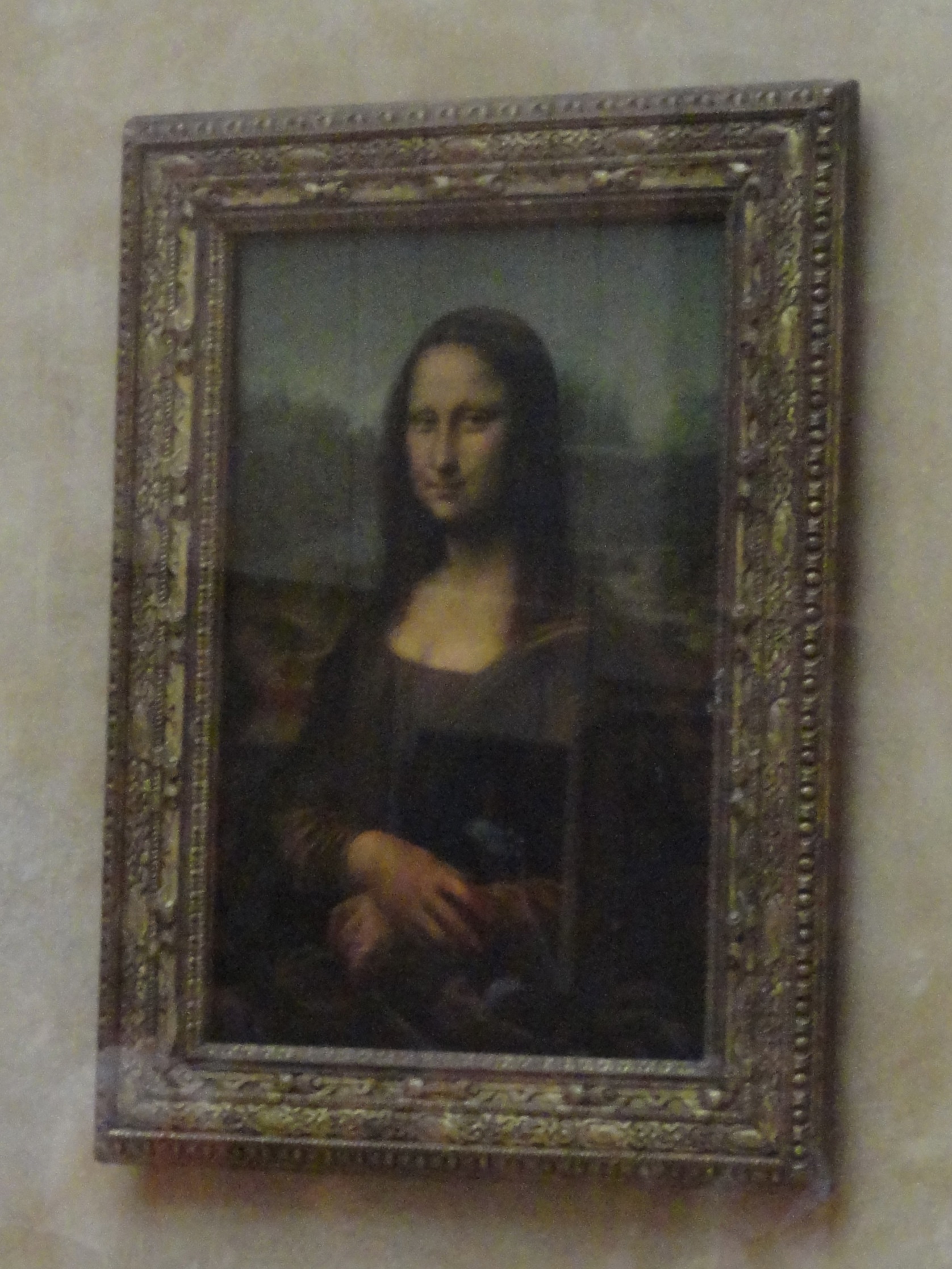
We visited several art and history museums in Nice, Lyon and Paris, and my favorite was the Musée d’Orsay in Paris, parce que j’aime bien les objets d’art impressionistes…But we couldn’t leave France without a visit to the Louvre. It was the first European museum I had visited as a student, way back when, and it had changed. On ce jour-là, I walked right up to the Mona Lisa; now, malheureusement, the Louvre’s most famous work of art must stay well-protected. C’est dommage.

photo copy 4

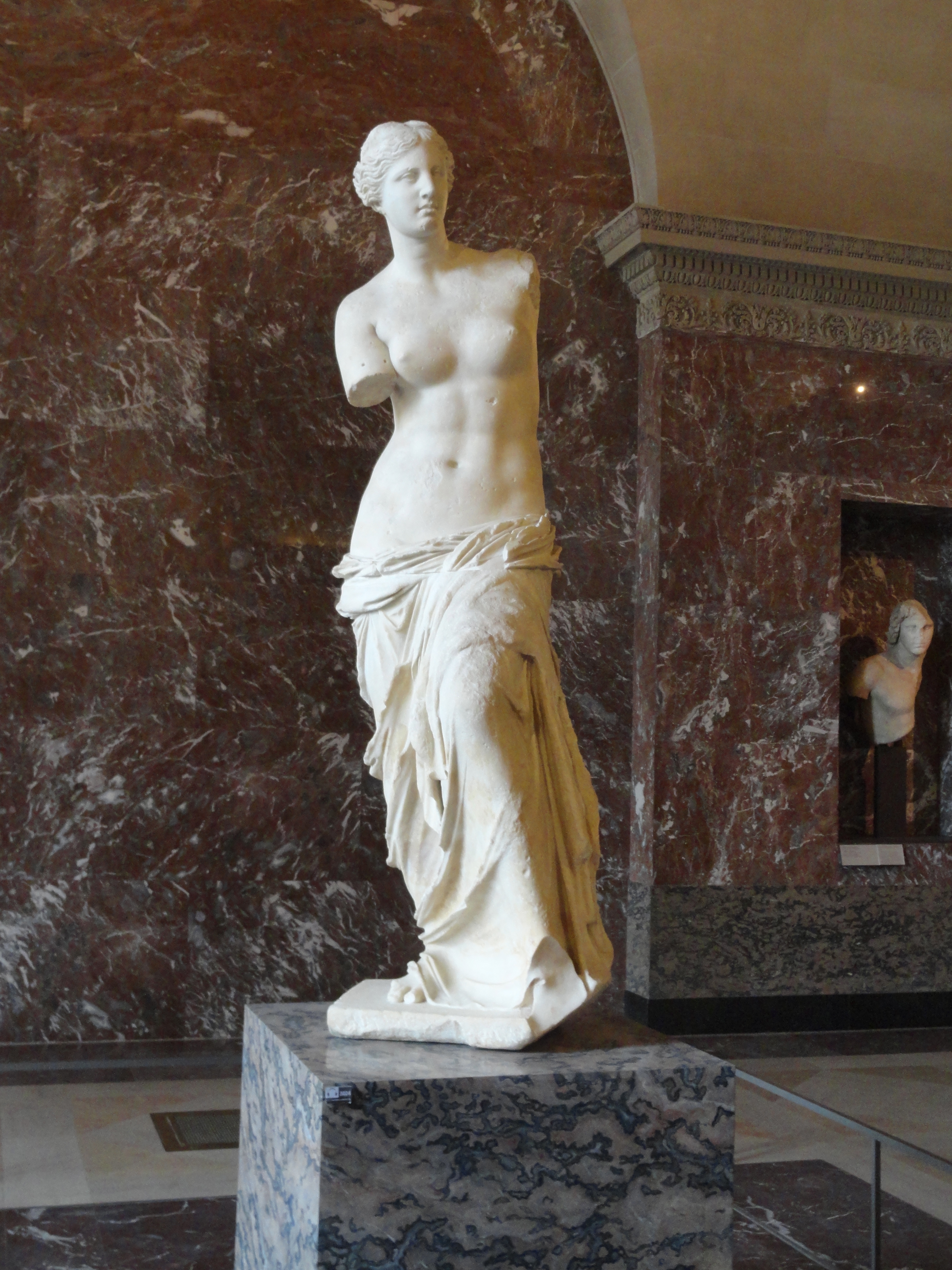
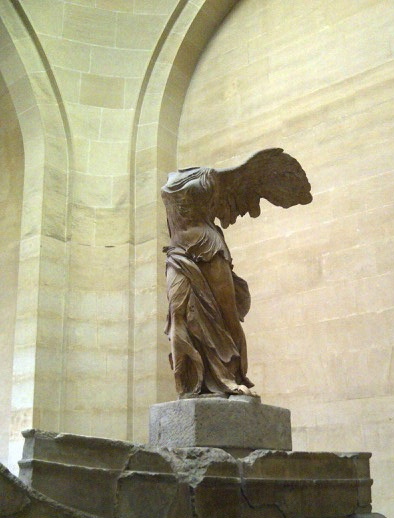
However, we were able to walk right up to two very famous ancient Greek statues housed in the Louvre: Venus de Milo and the Winged Victory of Samothrace, pictured below. We also saw many other less bien connu (and amazing) works of art there, much more than Jenny did in MAKE THAT DEUX.

venusdemilo

Image 17

Our trip to France wasn’t just for la recherche, but “research” was an element très amusant et agréable in our tour de France et de Paris. Mais pour un auteur, toutes les expériences de la vie sont la recherche…

Traditions: My Charlie Brown Christmas tree, en français

It’s been almost a month since les fêtes de Noël, and as we settle into the new year, the holiday season — and its traditions — are now memories.

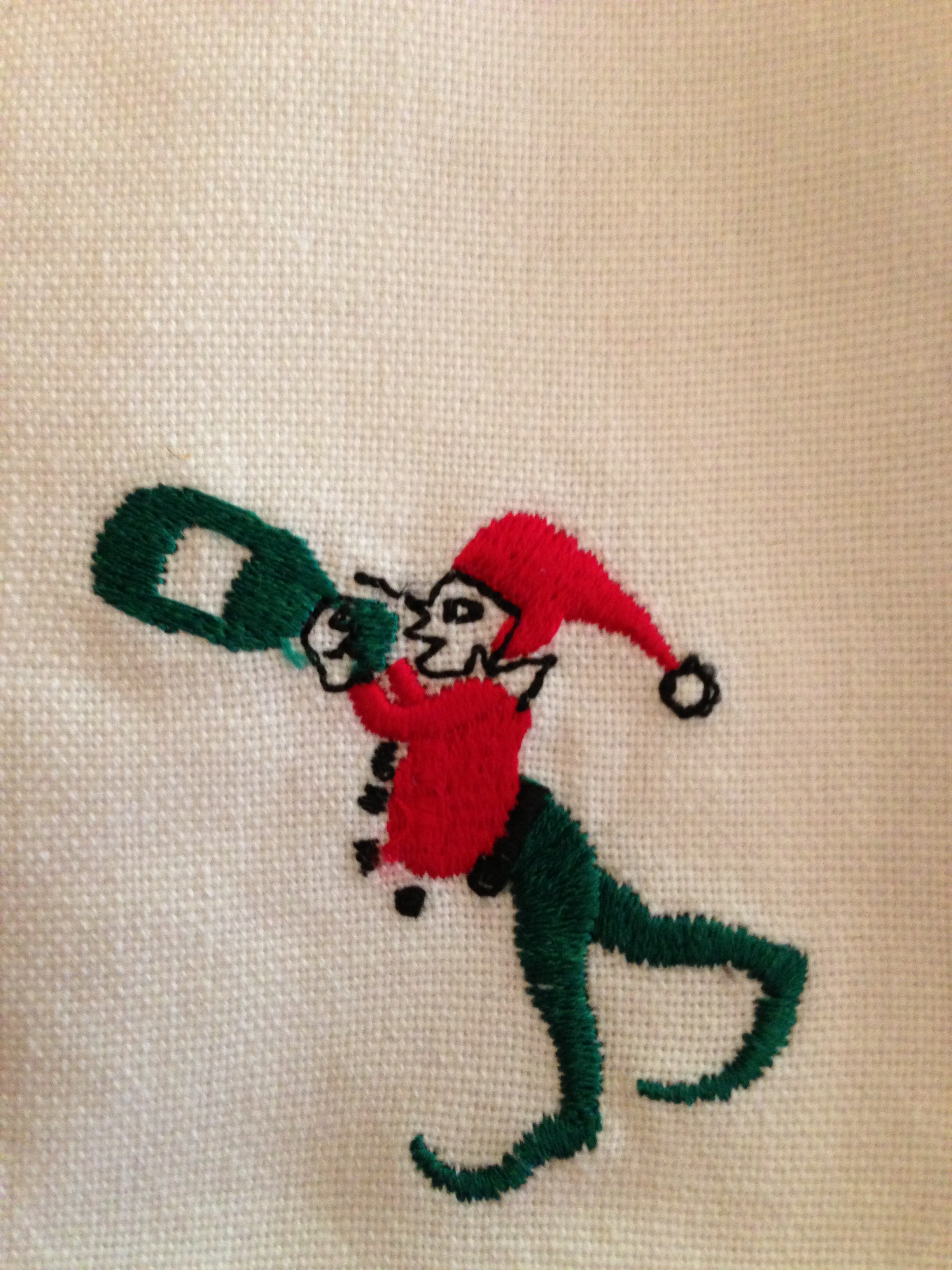
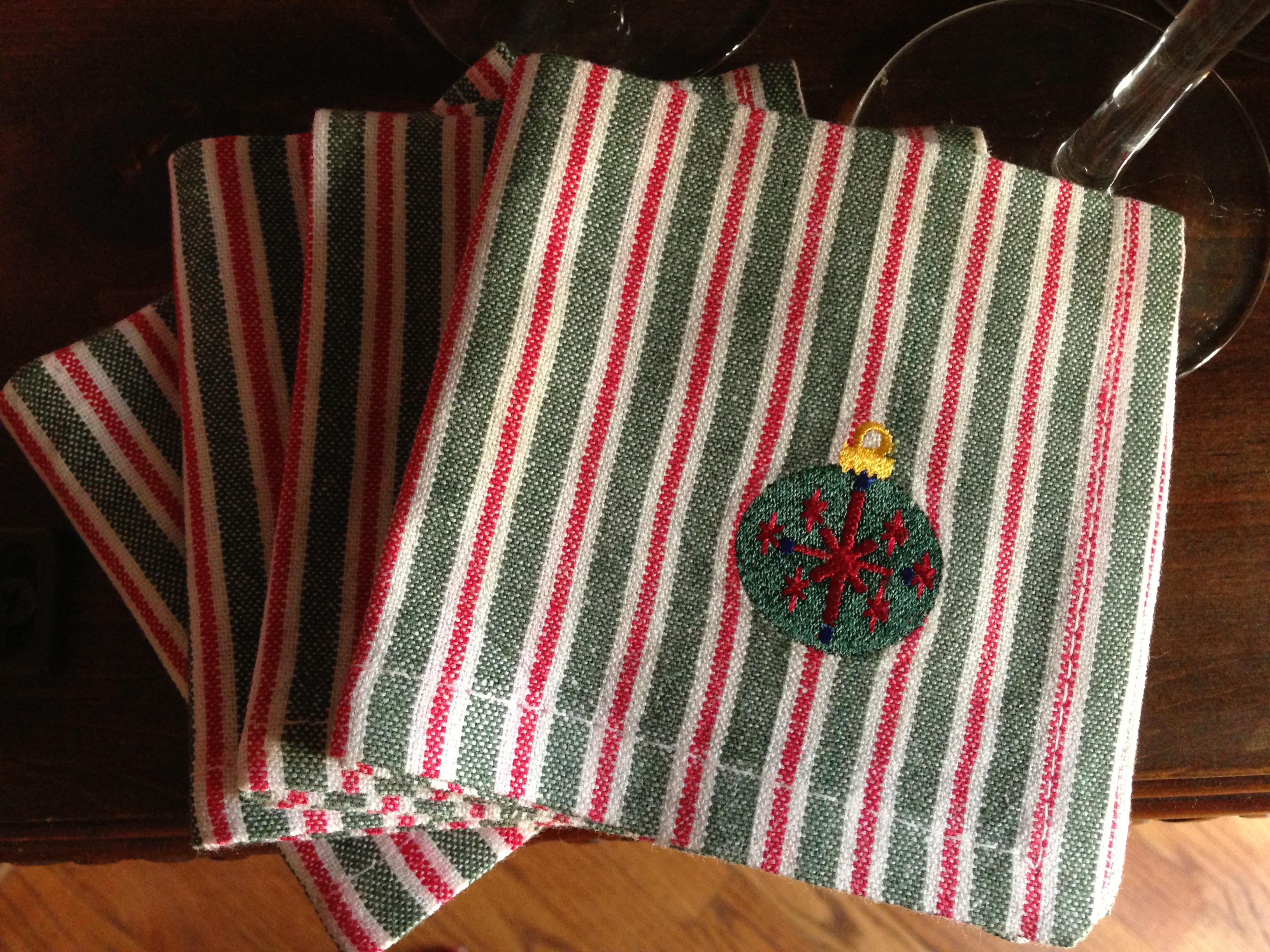
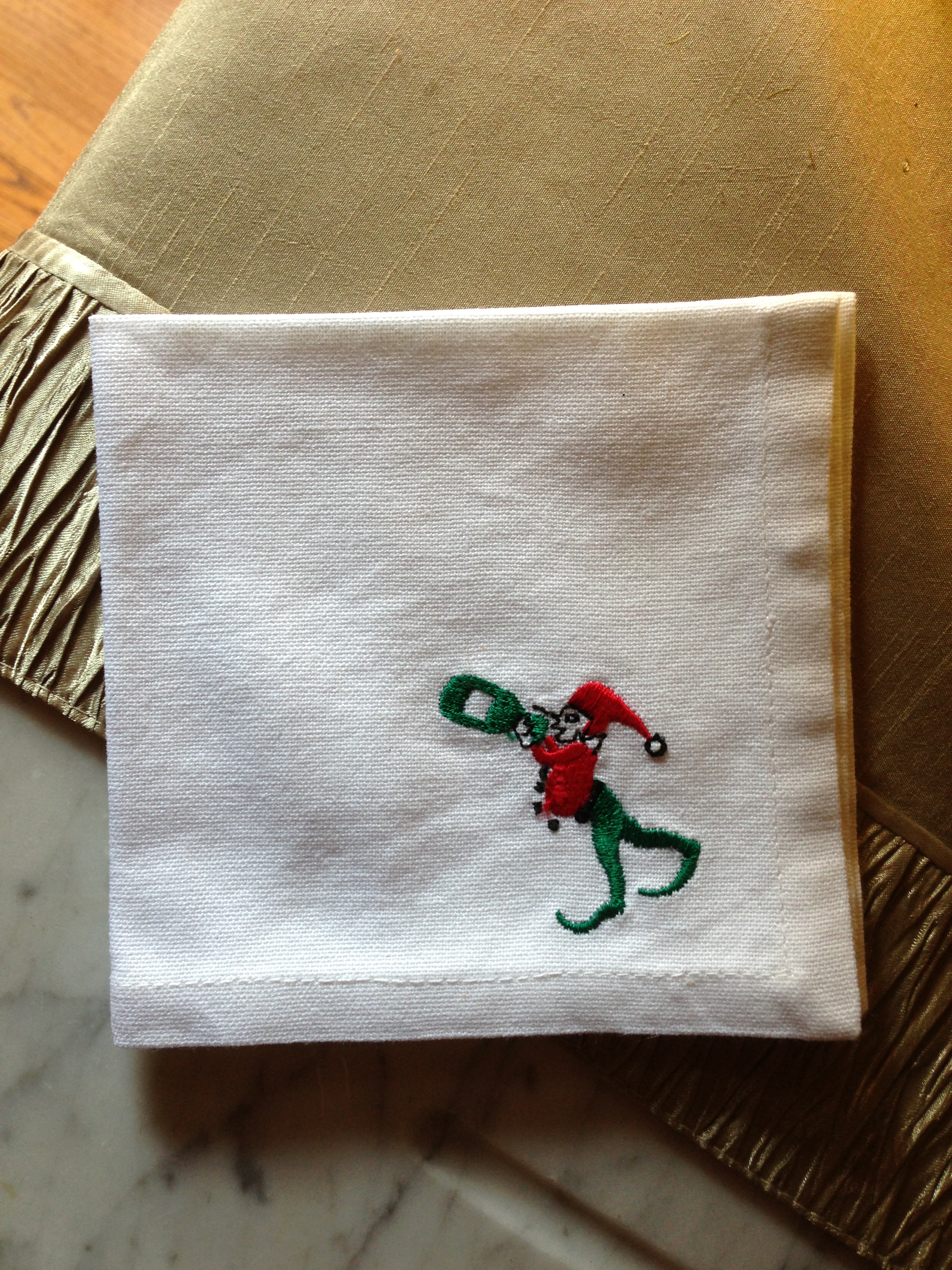
One of my holiday traditions — at least, for the last few years — is to keep something Christmas-y out and on display all year ’round. I try to select a small and unobtrusive item, like an interesting new ornament that I judge shouldn’t be hidden in a box for eleven months. So, as I was packing up our Christmas decorations a few weeks ago, I left two sets of holiday cloth cocktail napkins on view in our china cabinet. One set is decorated with red and green Christmas ball ornaments; the other features a tiny elf drinking from a large green flask.

photo copy

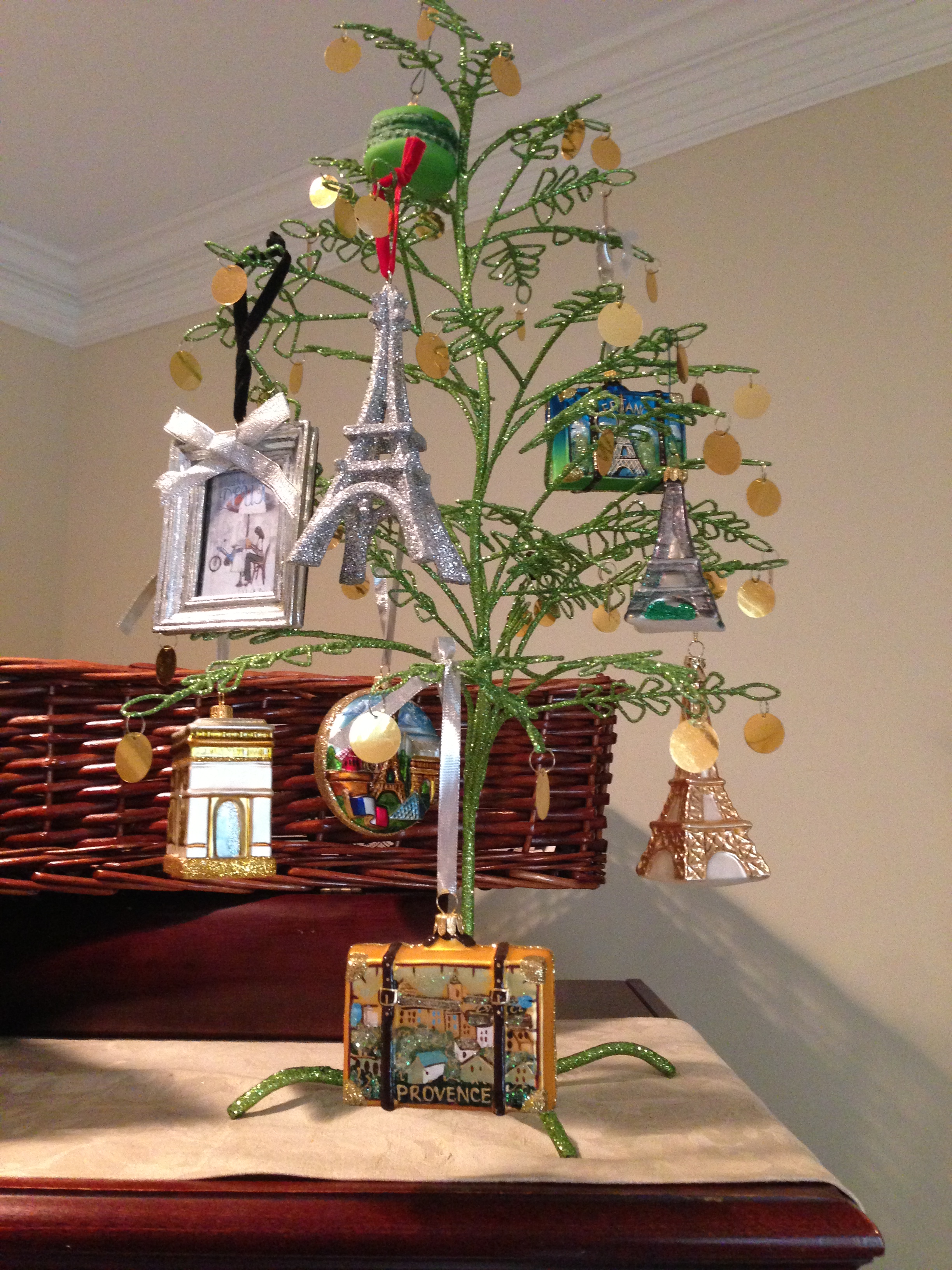
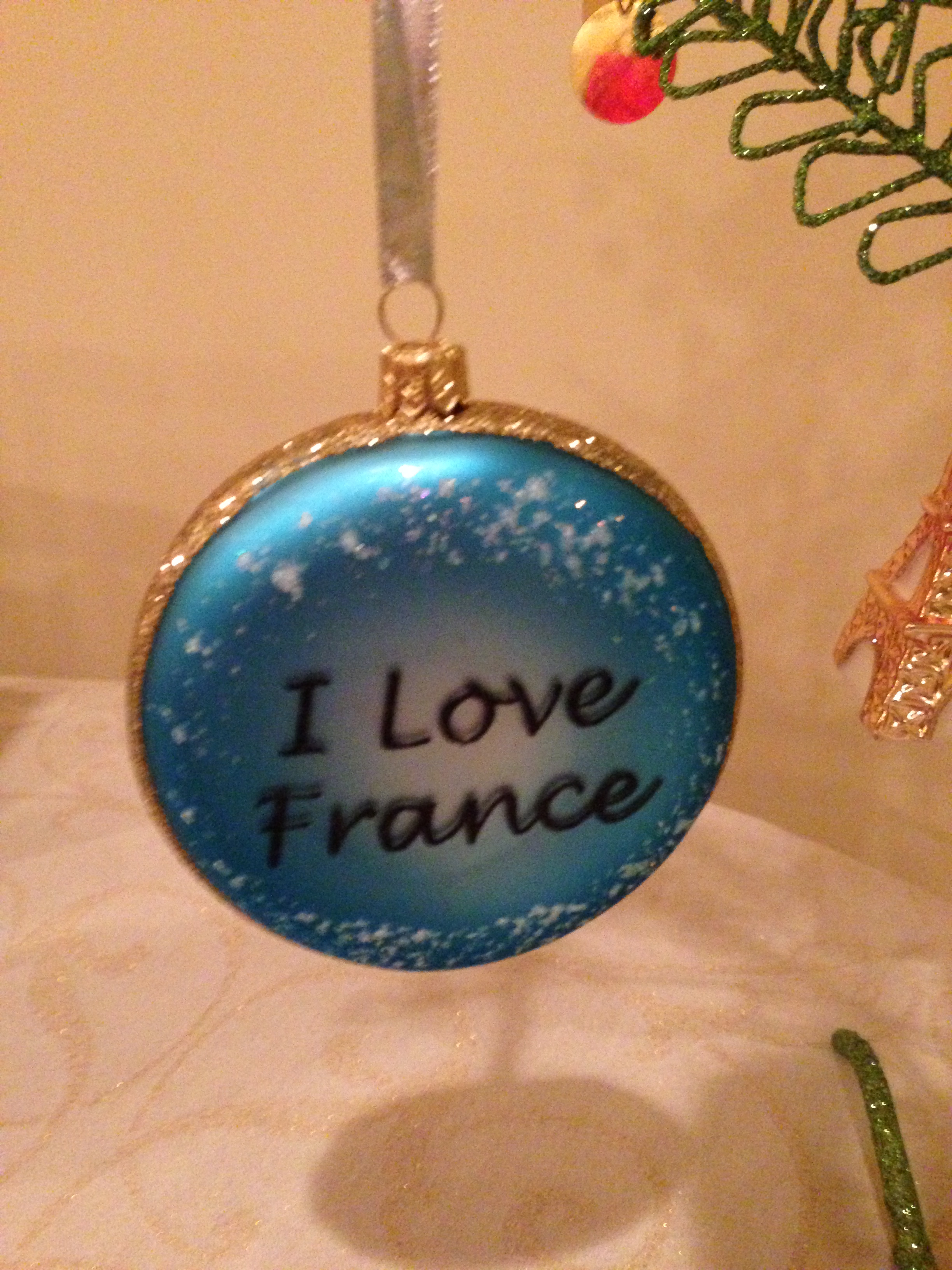
This Noël, I celebrated the fall publication of my novel MAKE THAT DEUX with its own special Christmas tree, complete with “French” ornaments, some of which I didn’t find ’til the 26th:

photo copy

It’s not really a “Charlie Brown” Christmas tree (alas, something unfamiliar to my teenager) — it’s sturdier, prettier, and fake, of course. But it reminds me of one, in a way. Inspired by growing my girls blog post of late January 2012, I decided not to pack it away, but to keep it out and decorated throughout the year.

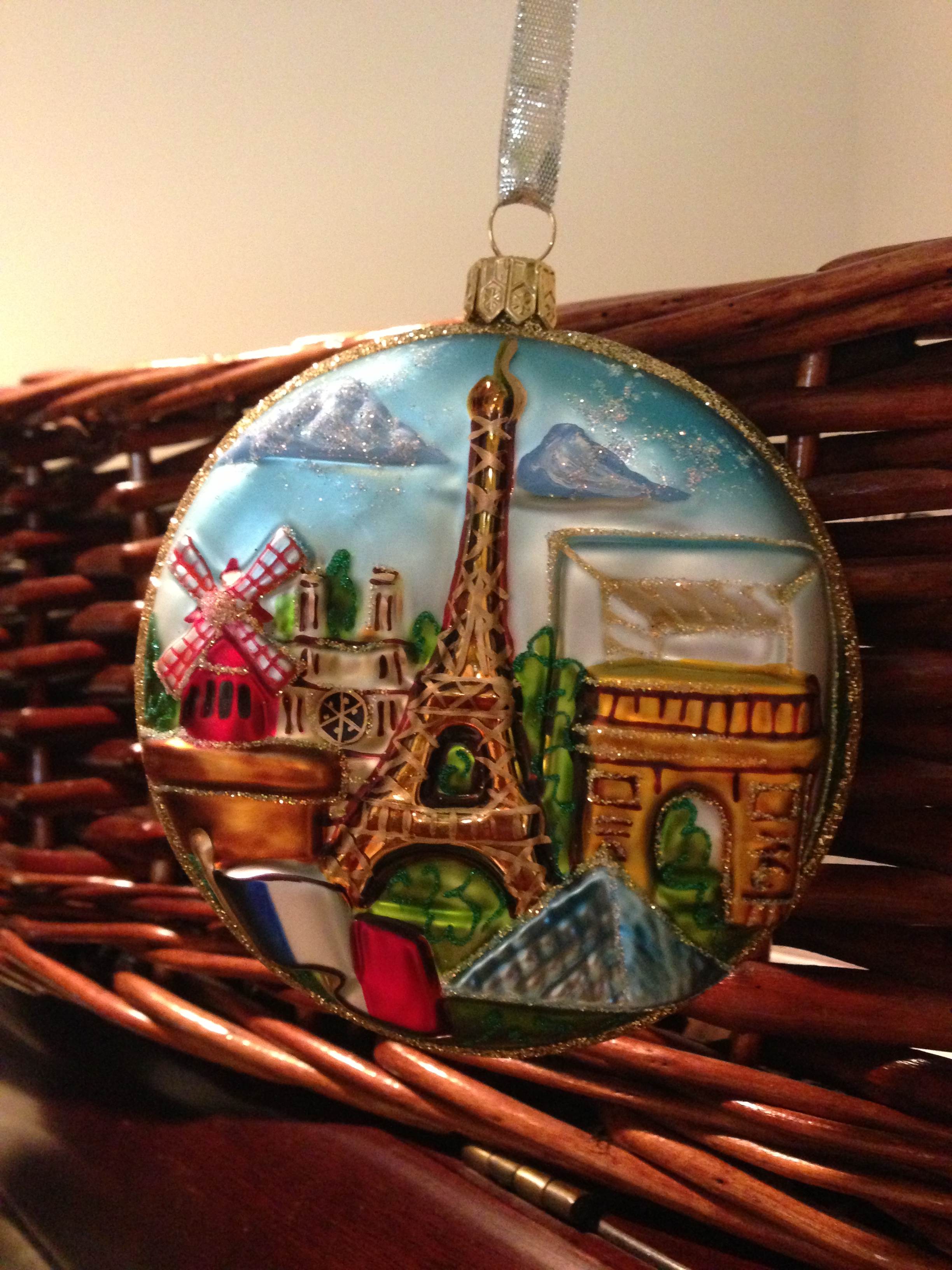
photo copy 3

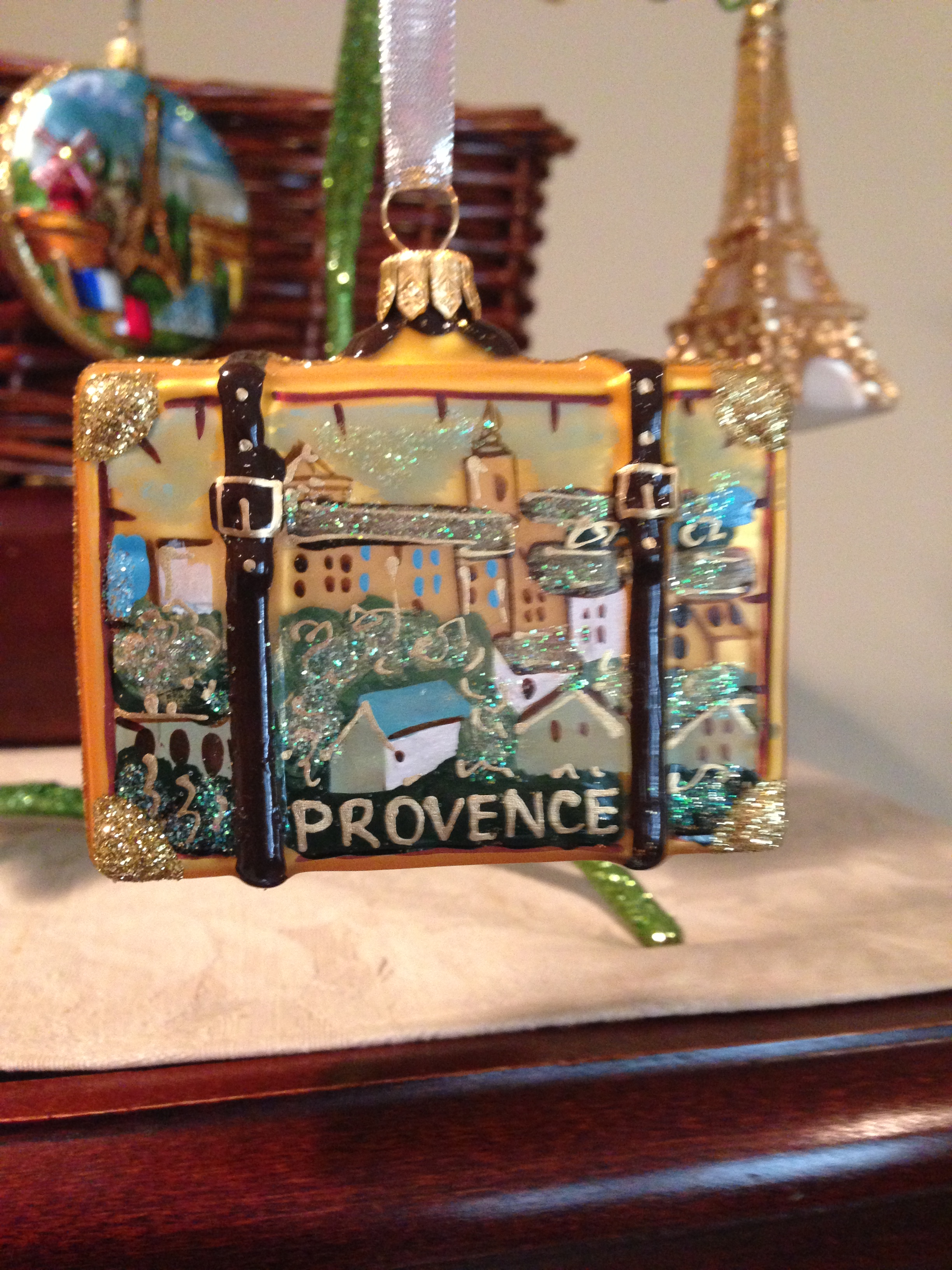
Aren’t these lovely? Merci, Nordstrom’s after-Christmas sale!

photo copy 2

I love Christmas and hate to see it go, and I also aime tout ce qui est français…all things French, as you can see in my “auteur bio” on amazon.fr. Like Jenny, the main character in MAKE THAT DEUX, I spent a year in the South of France, in Languedoc, a côté de Provence. Jenny doesn’t see much of Provence, but last summer, I saw a little of it with mon mari between our stays in Nice and Montpellier, and before we traveled north to Lyon and Paris on our own tour de France. Until we return for another one, someday* — or at least, until next Christmas — I’ll display my French Charlie Brown Christmas tree.

Traditions can change over time; some continue year after year, some spring up from a new idea and evolve (“From now on, we’ll…”), and some traditions come to an end, or prennent fin. When I was growing up, I looked forward to our family tradition of watching “A Charlie Brown Christmas” once a year (and it was once a year). One of the Christmas traditions my own family has adopted is watching Christmas movies and television shows together during the holidays. “A Charlie Brown Christmas” isn’t in our DVD library, but I think I will have to cherche (search) for it in about ten months. (I wonder if I can find it en français…)

photo copy 2

Cocktail, anyone?

photo copy

* Sometime in the future, we hope to visit our son in Italy, and then jaunt over to Nice and Aix-en-Provence (and stay a little longer this time…)

photo

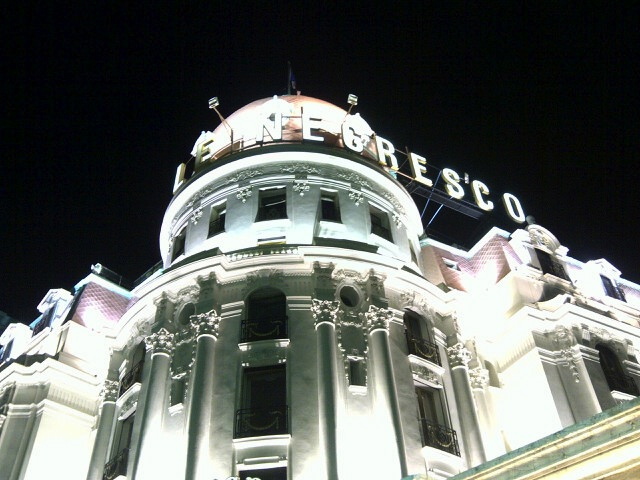
The Negresco: a very nice hotel in Nice — for deux

It was the first hotel where my husband and I stayed in France, and it was the nicest.*

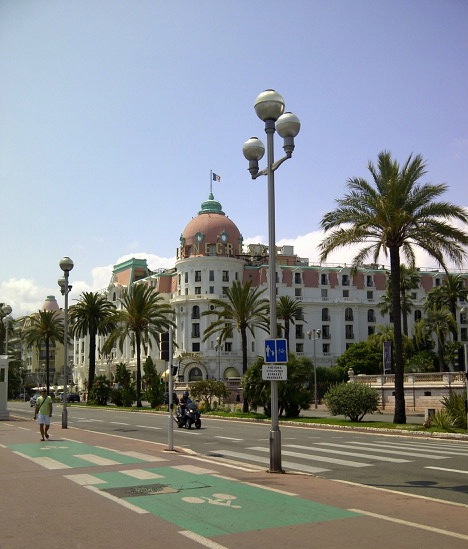
Image 77Our plane had arrived that morning from Lisbon. We took a taxi to the Hotel Negresco, a bit of a splurge but well worth it, we agreed. That evening, after strolling along the Promenade des Anglais and through the vieille ville, then visiting not one, but two smallish museums (Matisse and Chagall), we landed at the hotel bar, Le Relais.

Image 75

I didn’t know the history of the hotel, nor that 2012 was its 100th anniversaire until the other day when I read about it in an entry in The Provence Post titled  What Happens at Negresco…

Oh-la-la. Il faut que vous le lisiez! (You HAVE to read it!)

Unaware that it had been recently redone (but still appreciative of it), we had dinner that first evening at La Rotonde. We sat outside on the terrace, looking out on the Mediterranean Sea, both of us (well, mostly me) trying out our French as we sipped our wine. The following evening — our last one in Nice — we would have loved to dine at the Chantecler, the hotel’s two-star restaurant. But we hadn’t booked a reservation ahead of time. So we found a table at another nice restaurant just steps away.

Le temps (the weather) — though a bit warm during the day — was perfect at night. Walking back to our hotel, I took this photo:

Image 65

Before we left the next day to head west along the Riveria in our rented voiture (whose GPS ne marchait pas — even the extremely helpful valets at the Negresco couldn’t get it to work), I took this photo of the view from our room, just over La Rotonde (located at the far left side of the hotel in the first photo above):

Image 67

Staying at the Negresco, even for just two nights, was a very cool experience, and I want to go back someday avec mon mari. I had never seen the hotel when, during my year in France, I stopped for an afternoon in Nice on the way home from Italy. I won’t say what year it was, just that it was long after Richard Burton left Liz’s jewels at the bar by mistake, but way before Michael Jackson installed a dance floor in one of the rooms and rehearsed there…

Somehow, I think my husband and I sensed the history and eccentric personality of the Negresco during our forty-eight hours as guests there in July, and were awed by it. He’s more into history than me (he was reading Alistair Horne’s LA BELLE FRANCE during our vacances), and though he has his idiosyncrasies, I’m a bit more eccentric. You might even say I’m quirky, as a friend did** last month at a launch party for my new novel MAKE THAT DEUX. 

*But the two other hotels where we stayed in France were lovely, too: the Hotel St. Christophe in Aix-en-Provence and the Best Western Hotel Le Guilhem in Montpellier.

**In a very NICE way.

Letter to France

Dear France,

As someone tells Jenny in my new novel MAKE THAT DEUX,

“you ‘ave captured my heart.”

I’m not sure exactly when you did it. The first time I saw you, I was a little bleary-eyed, and I felt a little awkward. I had been looking forward to meeting you for so long — years — and I had started to believe it would never happen.

You were just so, well, distant.

When I started to feel comfortable with you (and you know it took weeks), it was almost like I’d always known you. I was so at home with you. It was like déjà vu. Sort of.

I didn’t know everything about your past…but what I did know, intrigued me. What I didn’t know didn’t seem to matter.

You understood me, even when I struggled to express myself. You encouraged me and seemed happy to have me. You shattered the stereotypes about les français — your people — when they politely welcomed me with a “Bonjour, Mademoiselle!”

They listened patiently as I spoke your language, learned its expressions and worked on my accent. They charmed me with their own accents when they practiced their anglais, particulièrement when your (good-looking) young men said “ze” for “the” and “zat” for “that.”

I know you had greeted millions of girls before me who studied traveled had a blast abroad for a year. Some of them loved you as much as I did, but, I dare say, not all. Some of them were just playing with you. Some just wanted to shop and drink wine, discovering but later forgetting about your certain, well,  je ne sais quoi.

Mais pour moi, c’était impossible.

I never forgot you, even as my French vocabulary dwindled and my memories of our time together faded. I kept my few pictures of you, not knowing that (or how) I would use them someday. For years, I dreamed I would come back to visit you with the man I love.

Then, un jour in the summer of 2012, I did.

I had spent months getting ready to see you again, studying your language —  listening, reading and practicing it weekly. I had written my novel (set in your south) and was getting ready to release it this fall. I had planned an itinerary for our visit en juillet, but our emploi du temps was flexible and open to spontaneity.

Which was fortunate, because our unplanned moments with you were the best ones.

I loved seeing my husband discover you: the Côte d’Azur, Provence, Languedoc, Beaujolais… Paris. I loved hearing him try out the French phrases he had learned. I loved going with him to see parts of you that I had never seen. I loved taking him to see other places that had once been very familiar to me, that I had been while thinking of him.

He already knew me well, but now he knows me  — and my heart — even better.

A la prochaine,

Julie


Exchange students: Les étudiants en échange

The Iranian hostage crisis began November 4, 1979, less than three months after I arrived in the south of France as a 19-year-old university exchange student.

I was part of a group from the University of North Carolina that attended a French university in Montpellier, France. We followed the crisis that gripped the world from the French perspective and read about it in Le Monde as we waited for it to end. But we went home to America long before it did.

I was a legal adult at the time, old enough to vote and drink alcohol, but much more concerned with my own life than with American security issues or the lives of the hostages. The crisis ended while I was still in college; a new president was elected, I graduated from UNC, found a job, married and raised a family. Then in 2006, I read Mark Bowden’s brilliant and suspenseful account of the story, Guests of the Ayatollah, told through the eyes of those who lived it.

The events of that year and the attitude of the time are relevant today, and the world is perhaps more dangerous. But more and more young people are choosing to spend time as exchange students in other countries, to experience another culture and learn a foreign language. Several colleges, including UNC, still offer a study-abroad program in Montpellier. In 2010, “Kim,” one of my American roommates in France,* sent me an article titled French Lessons by Aubrey Whelan, a Penn State student who attended the same French university that “Kim” and I had. As I read about Aubrey’s experience in Montpellier, I was amazed to learn that many things about life as an exhange student there hadn’t changed.

A month ago, my husband and I visited the city and Université Paul Valéry at the end of our week in the south of France. When I was a student there, costs were much lower, but still high, relatively speaking. Bureaucracy, a fact of life in France, was just as frustrating, and strikes just as frequent. The architecture of “Paul Val” was the same Soviet-chic, only a younger version, and class formats were the same. Like the students of today, my friends and I gathered at Place de la Comédie and at discos, and hung out at cafés and on the beach. Like Aubrey’s, our French skills fluctuated even as they improved.

And just like for Aubrey, my time in France was a life-changing experience.

In recent years, my family hosted two French high school students as part of a three week summer exchange program, and my teenage daughter was hosted by a French family on the same program. She hopes to study somewhere in France for a semester or a year during her time in college.

I think that’s une très bonne idée.

* “Kim” and I shared an apartment with “Lisa” during our year in France because there weren’t enough French host families for everyone in our UNC group of exchange students.

Create a website or blog at WordPress.com

Up ↑