BOOK Reviewer and Blogger Nicole McManus has featured me today in an interview on her website Ariesgrl Book Reviews. Thanks for your warm welcome, Nicole!
Read about me, my book UNDERWATER and how it came to be written on her HOME page today!
BOOK Reviewer and Blogger Nicole McManus has featured me today in an interview on her website Ariesgrl Book Reviews. Thanks for your warm welcome, Nicole!
Read about me, my book UNDERWATER and how it came to be written on her HOME page today!
One of my family’s favorite sayings* is just one word, and it comes from the movie We Are Marshall:
“Simplify!”
Unlike the movie It’s Complicated,** simplify is not just a sentence, but a verb (and often, a solution). When we repeat that line, it’s obligatoire to speak slowly and adopt a southern accent. And when I worked on the final edit of my latest novel, UNDERWATER, I tried to simplify: I cut some (unnecessary) backstory, clarified the timeline, and streamlined the plot.
But – très important – I also added some depth.
It wasn’t a simple process. It took a lot of reflection, and some trial and error. It’s part of the work of a work-in-progress that can be difficult, for me. But it’s worth it – ça vaut la peine.
So, under the surface, there were some currents of struggle. For a few days, I resisted diving into the edit. Just like when I go to the pool, I had to test the water – with my toes. I fixed the easy stuff first, then broke my editor’s feedback down into managable tasks. I stayed in the shallow end of the pool for a few days. Then I started swimming, and soon – happily, and mercifully – I got into a rhythm.
[That rhythm thing must be what football players experience when they drive down the field – when they’re “in the zone.”]
Since publication, I’ve gotten some good reviews (Yay!) and many compliments from readers. I’ve also answered many questions, trying not to reveal too much. Lots of people have told me that the ending took them by surprise, and that the story was not a predictable one. Some have asked how I came to know about some of the specifics and story details, and write about them. Others have been intrigued by the novel’s theme, and how I developed the plot.
Was it a simple process? Mais non. But when I was treading water in the writing, when I was sinking into the mind of the villain, and when I plunged into the final edit, I remembered one thing above all:
Simplify!
* Here are some other family sayings taken from movie lines (guess which): 1. “I’ve made my decision. Pull the plug!” 2. “Who ya gonna call?” 3. “These aren’t the droids you’re looking for.” 4. “What we’ve got here is a failure to communicate.” ** We also like the “It’s Not Complicated” commercials, with those adorable first graders answering simple questions…Here’s a few more of the questions asked at the Book Launch Party for my novel UNDERWATER, and the answers (and announcements) I wish that I’d should have given (and made):
En premier (first):
The novel is dedicated to my mother, Sally, who was a guest at the party. She knew how nervous I was speaking in front of the large group, and fortunately, she reminded me to announce the book’s dedication to her. I did, but here’s what else I should have said…
I dedicated the book to her because she’s been so supportive of my writing. Years ago, when I mentioned my idea of writing a book, I told her that I was thinking about writing a novel based on my year in France.
“Do it!” she said. “It’s not too late!” When MAKE THAT DEUX was published, no one was more proud of me than she was – and no one’s asked me more about the details of UNDERWATER, and when it would be released! Thanks, Mom.
En second:
Several people named in the book’s Acknowledgments were in attendance at the party. But who (besides other authors) reads the Acknowledgments page?* So I wished I had recognized them, and explained how much they helped. From pacing and plot to the smallest story details, their input was invaluable!
Enfin (finally), les questions:
Where did you draw your inspiration from for this story?
I drew on some of my own life experiences when writing the story.
My husband and I were “underwater” on our first house in the late 1980s, before being underwater was cool. We moved across the country for a new job in the midst of a declining real estate market, a side effect of the Savings & Loan crisis. We had no choice but to (seriously) downsize and do our best – and to start all over again. No one came to our rescue, and one thing we learned was that it’s much easier to upsize than to downsize. Much easier.
But we did it. We lived not just within our means, but way below them, for several years. In short, we did “Dave Ramsey” before Dave Ramsey was cool.
More than a decade later, after building a new home in the Midwest, we left the area, again for a new job. We sold our house at a loss. Downsizing followed, but we recovered more quickly this time.
When I began writing UNDERWATER, I knew the premise, the protagonist, the villain, the storyline…and I knew the feelings of despair, desperation and stress connected with a house underwater.
I thought that I could write about those feelings through the eyes of fictional characters, and about the havoc that the situation wreaks in all of their lives.
What books have you read recently, and what do you like to read?
I read a range of fiction and some non-fiction, including biographies. I like everything from suspense to coming-of-age stories and romance. I also like historical fiction and classics. And I usually like anything set in France, which includes presque tout – almost everything – by Peter Mayle.
Earlier this year, I read Stephen King’s 11/22/63, and his book written for authors, On Writing (a bonus was an appendix of good books to read). Another great book I read was Unbroken by Laura Hillenbrand.
For the answers to some other questions about UNDERWATER, such as how I selected the title and characters’ names, see FAQ – UNDERWATER.
* Take a look at my Acknowledgments page (it’s short!) to find out more.
At the book launch party for my latest novel, UNDERWATER, I read a short scene, then answered guests’ questions.

I was prepared for a Q & A, though (for some reason) not exactly expecting it. I enjoyed answering questions about my inspiration for the book and talking about my writing life, and, perhaps for that reason, my glossophobia (fear of public speaking) temporarily disappeared. But to one question, I gave a cryptic, sort of secretive response.
That question was, “What are you working on right now?”
I had already told my writers’ group and several other friends, but that night, I hesitated to answer. I wanted to tell them, yet I didn’t. My next book will be quite different from the either of the first two, and I didn’t want to talk about why. I didn’t want to detract from excitement about UNDERWATER and any other questions about it. And to date, I’ve only written about 14,000 words of the draft for “Book 3.”
I wanted to keep the details a (semi-)secret.
So I responded by identifying the genre (creative non-fiction), stating that it’s a true story, and saying, “And that’s all I’m going to say.”
Here’s the cliché that I should have added: “Because truth really is stranger than fiction.”
I hoped that, by not giving a direct answer, I would evoke some curiosity about Book 3 – but no more questions about it, at this early stage in my writing. That may be because I feel so connected to it right now, so involved in it and so hopeful about it. It’s kind of like a new baby that’s on the way. But I’m sure that later, once it’s finished, or at least getting close, you won’t be able to keep me from talking about it.
But I reflected later that some guests at the party – who have known me for some time – might have wondered what kind of a “true story” I would be telling. Something dark, resembling (fictional) events in my Suspense novel UNDERWATER? Something “strange” that I’ve never told anyone about, that I now feel compelled to reveal? Or something that would surprise my friends and even make them doubt its veracity?
So – here are a few hints, for those of you who don’t know:*
It’s not about something dark, strange or surprising. It is about something uncommon – very uncommon. The events themselves are unusual, but because they are also so important and so inspiring, I hope to tell the story in a way that engages you, makes you feel it, and even makes you live it.
And that’s what I’m working on.
(More to come…)
*And if you do know, please keep my secret, for now.
..the tension rises to a boiling point…rough seas threaten their young family…and her own demons rise to the surface.
Dive into a page-turning suspense novel that asks questions about generosity, greed, shame, and sorrow as a family struggles and sinks deep underwater…”

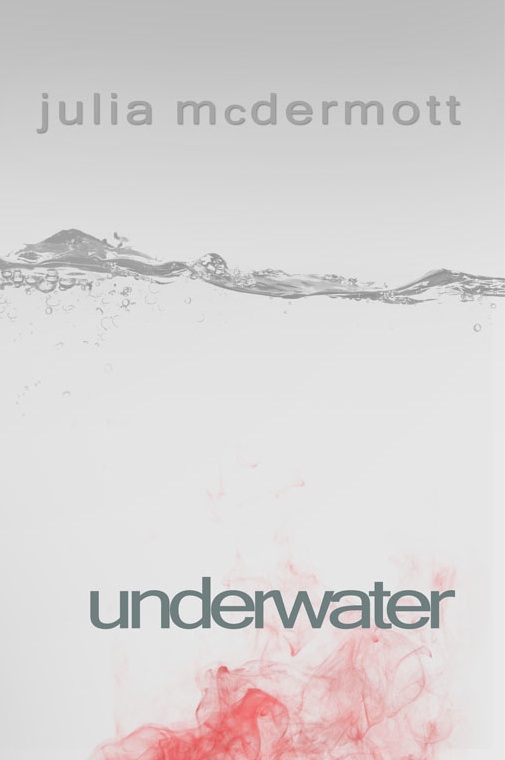
The cover for my new suspense novel has been chosen. Here’s a petit morsel of it:

The composition of this cover is simple in some ways, and complicated in others. The triangle effect, the size of the lettering and the font selection are important. So are the couleurs..
A few hints about the book (and cover):
– There’s a bit of français in this novel, but not near as much as in MAKE THAT DEUX.
– The title of the book has more than one meaning, and so do several chapter titles…
– The shades of color on the cover were difficult to decide
– One of the chapters in this book is entitled “Revelation” – I will reveal the title and full cover shortly!
Another petit morceau:

While writing my upcoming Suspense novel, this is what I kept in mind: Make the reader want to turn that page. Make them want to know what happens next. Keep them wondering, and guessing.
You’d think that, in action scenes at least, that would mean get to the point, and move it along. Cut to the chase.
Well…yes and no.
Sometimes it does mean that – but not just in action scenes. In dialogue scenes and descriptions, my primary and continual goal was to move the plot forward, and to leave out anything that didn’t. Sometimes things moved quickly. But in some places, the idea was to move things along steadily – or somewhere between steadily and quickly.
Advance readers told me that – Yay! – this novel* IS a page-turner! But in working with my editor, I realized that one of the many things I needed to accomplish in revisions was to cut out unnecessary content.
Oops!
Basically, to cut to the chase. So, I (painfully) cut some things: if it wasn’t intriguing and/or necessary, it had to go.
[On the other hand, I had to (also painfully) add some scenes, tweak others and make several changes, which I did. But it was only painful at first; once I decided to get going, I dove in and kept on swimming.**]
Having spent time last week with lots of people who seem to encourage cutting to the chase when telling stories, it seemed appropriate that that was one of the things I was doing during my final revision to the book, whenever I had the time to work on it.
A different kind of “cut to the chase”:
What to do with what I had so carefully written, that now had to be removed? When I talked to my editor, she suggested that I save them and use them in upcoming blogposts, to show what might have been, kind of like “deleted scenes” in movies.
Perhaps. If it makes you wonder, and guess.
* The (one-word) title of which will be revealed in an upcoming post ** This (necessary) paragraph provides two clues to the aforesaid title; your guesses are welcomeEn ce moment, I’m in between WIPs (works-in-progress). Make that, my WIP of the past two years has become a Completed Work – for now, I’ll call it CW – and is in the hands of my editor. My next WIP is not exactly “in progress” yet; I’ve only written two pages.
But I’ve chosen the title for it, have the plot outlined (très important, as you might imagine), and even know to whom it will be dedicated. All that remains is to write the dang thing.*
My CW will be released later this summer or early fall. It’s very different from my first novel, MAKE THAT DEUX, and my next work will be very different from my CW. N’ayez pas peur: I’ve begun writing the sequel to MAKE THAT DEUX, but some major changes to my draft are necessary, including the setting.
Because change is good.
The mathematical – and Greek – symbol for change
Which brings me to the title of today’s post: two expressions très bien connus – very well known, I dare say. Tout le monde knows what Vive la différence means; it seems as American as it does French. As for “And now for something completely different”….well (if you don’t know), that’s the title of the 1971 film spun from the television series Monty Python’s Flying Circus.

Actor John Cleese
It’s a great expression title, and it comes to mind when I compare my CW with MAKE THAT DEUX. The two novels are completely different, yet they share a few elements, such as scenes that take place in France (much fewer in my CW) and some lines in French…
Evidemment, I like doing, reading and writing different things, and I love memorable book and movie lines and titles. Perhaps ANFSCD was in my subconcious when I chose two characters’ names in my CW: Monty and John.
I also love French expressions, and I’ve learned some useful ones from my French prof. Here are a few that could describe some characters in my CW:
Elle a le coeur sur la main – She is very generous Elle a du pain sur la planche – She has a lot of work (and things) to do Elle est au bout du rouleau – She’s at the end of her rope Il a un poil dans la main – He’s lazy Il est timbré – He’s crazy!Au fait (by the way), there’s more than one “She” and more than one “He,” as I’m sure you’ve guessed…
* Because now, it’s time for something completely different.
 JULIA MCDERMOTT