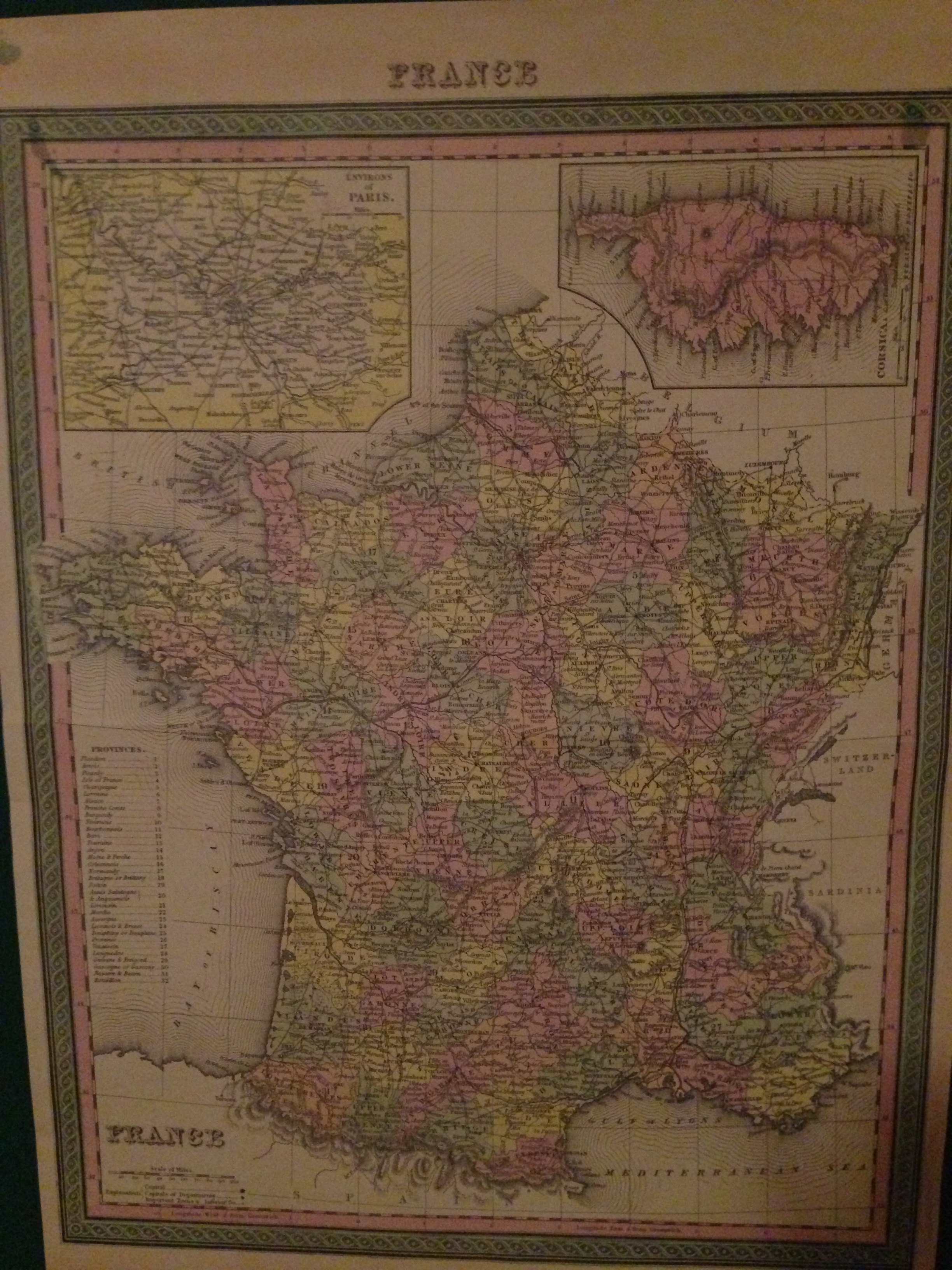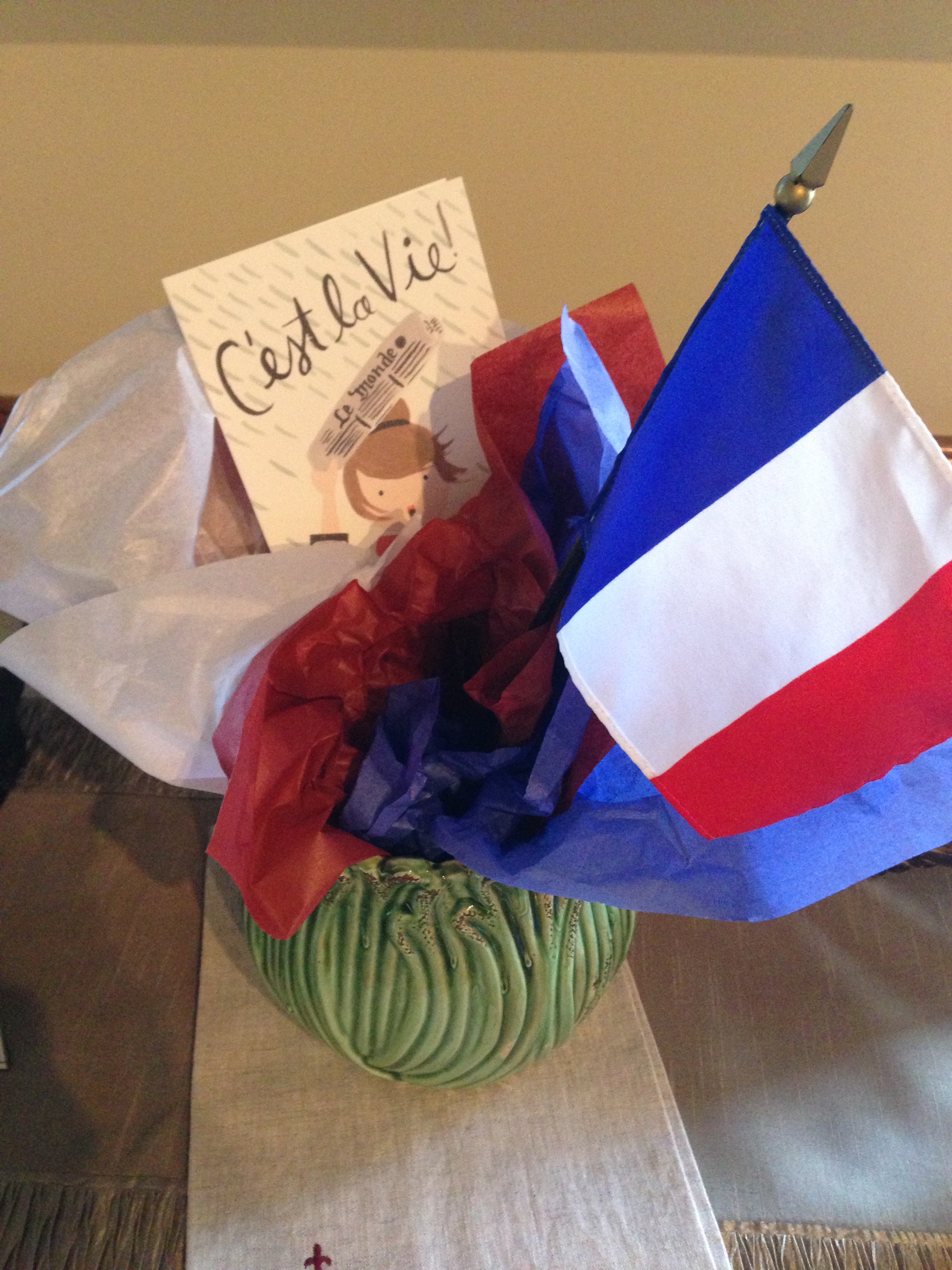
Par avion, with a kiss

“So kiss me and smile for me
Tell me that you’ll wait for me
Hold me like you’ll never let me go.photo copy 4
I’m leavin’ on a jet plane
I don’t know when I’ll be back again
Oh, babe, I hate to go.”
– John Denver
 

Every couple has certain songs they know by heart.*

Like Jenny, the protagonist in my novel MAKE THAT DEUX, I didn’t mind almost enjoyed flying when I was younger…unless I was leaving behind someone I loved.

What once was an event – for which you dressed up – has changed. It’s now just a method of transportation that’s full of hassles and short of comfort, with bags, meals, and even legroom charged à la carte.

But some changes have been positive. No more smoking (if you don’t remember that, watch Mad Men). Better security, if sometimes aggravating. Presumably, better made airplanes. Cheaper flights? I suppose so, in “real dollars.”

The estimated cost of my round trip ticket from New York to Paris in 1979 and 1980 (with UNC’s Study Abroad group) was $385. Sounds affordable, but according to a Consumer Price Index calculator, that’s equal to $1233 today. I recently booked a round trip ticket from Rome to Atlanta for a family member for $1268.

[I know it was $385 because I saved the Estimated Costs information for my Year-in-Montpellier Program (based on 15 students in the group). Academic fees were estimated at $1,646 for the year. Lodging was $450, and ten months of meals totaled $820.]

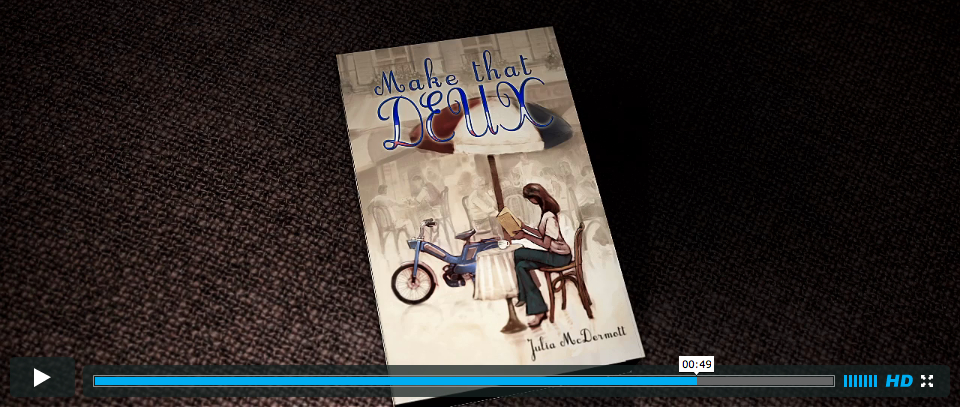
In MAKE THAT DEUX, Jenny travels en avion, en train, en voiture (by car) and en mobylette (moped). She doesn’t hate to go to France, but she does hate to leave someone behind. She does it though, with a kiss…

In my upcoming novel, to be released later this summer, the main character (“C”) travels here and there by plane with the man she loves. She’s older than Jenny, and, like me, she’s not fond of flying. But she gets to travel the way I wish I could: first class, and sometimes by private jet – with a kiss kisses.

I won’t say where she and her boyfriend (“R”) go, or what happens while they travel together. But in an instant, everything changes…

*What are some of “your” songs? Here’s a few more of ours: “Danny’s Song” by Loggins and Messina; “Chuck E.’s in Love” by Rickie Lee Jones; “Lean on Me” by Bill Withers; and “Rescue Me” by Linda Rondstadt
“Why can’t WE be friends?”

My husband and I have many things in common, but certainly not everything.*

It’s the same way with most of my friends, and yes, he’s one of them – en fait, he’s my best friend. We believe that being each other’s best friend is not only possible, for us it’s pretty much imperative. Despite our “Mars/Venus” natures, we talk to each other, listen to each other and do things together.

And – we laugh with each other.  Just like friends do.

Being each other’s best friend doesn’t mean we each don’t have other close friends. It also doesn’t mean we always communicate well, or that we always treat each other the way friends we should.

But we do keep trying.

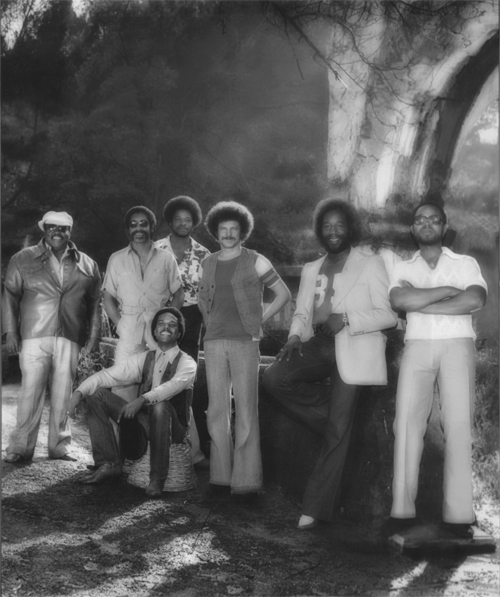
Way back before we knew what we were getting into, we became friends (I kept telling him, “We’re just friends,” but luckily he didn’t take me seriously.) It was the 1970s, and a popular song  was “Why Can’t We Be Friends?” by the group WAR. We’ve sung the chorus to each other many times since then:

Why can’t WE be friends?
Why can’t WE – EE be friends?
 
WarOriginalLineup_01

WAR


And we laugh when we do.

We became more than friends, but friendship is still a solid basis for our relationship. We like to hang out with each other. We encourage each other’s interests, whether we share them or not. Yes, we sometimes take each other for granted, criticize and even hurt one another – but we always forgive. We count on each other, and together we’ve faced more than one crisis.

What about other friends? And other family? Friends are people I met, got to know, and with whom I somehow connected – we accepted each other as friends. We talk, we listen, we do things, and we laugh. We don’t criticize, we don’t boss each other around, and we don’t (normally) offer unsolicited advice.

Family members (besides mon mari) can be, well, not exactly like friends. Yes, we met and got to know each other, but we may not have connected as friends. Because we’re related, we’re sometimes together. Hopefully, we accept each other, talk and listen to each other, and maybe we share some laughs. We probably interrupt each other more than friends do, though. Ideally, we don’t criticize or tell each other what to do.

But when things aren’t exactly ideal, I often wonder why we can’t be friends. Why we can’t just treat each other the way friends do.

The answer is, we could if we wanted to – it would be much more fun than WAR.

* Another one of our oft-repeated song lines is from Bob Dylan: “We like the same things. We wear the same clothes.” Well, we don’t anymore…

Encore: “From the Author, and Behind the Scenes”

My friend Rachelle Ayala featured me and MAKE THAT DEUX in her BookChat post of April 9, 2013 in Rachelle’s Window

Two sections in particular offer some insight about why I wrote the novel, and what was going on in my life while I did…

From the Author:

A new world of adventure and romance opened up to me during my junior year of college when I was an exchange student in the south of France. Instead of living with a French family, however, I shared a beach apartment on the Mediterranean Sea with two other American girls, and I left my boyfriend behind in the U.S., unsure of whether our relationship would survive the time apart.

We three girls bought mopeds (mobylettes) to drive to and from our college campus in Montpellier, France, and we spent the year learning French, traveling and doing everything else that college girls do…

terrace

The year we shared made a big impact on me, and the three of us have stayed in touch since, even as our lives have taken different turns. When my children began growing up and moving out, I considered my long-held dream to become a writer. I decided to draw on my memories of my experience in France and write a novel set in the time I was there.

I felt that Jenny – with her innocence, naiveté and idealism (and that of her two roommates) – could be a fresh character in a literary world sometimes crowded with cynicism. While not everyone would identify with the girls’ belief in “The One,” many would relate to Jenny’s feelings dealing with a long-distance relationship, especially when other appealing men enter her life.

Through Jenny’s story, I wanted to show that even (and maybe, especially) for young people on the threshold of adulthood…

…love is possible and important, and that it’s okay not to want to “do life” alone, and to want to go through life with – and to love – another.

Behind the Scenes:

Lots of things happened while I wrote the book…

I got lots of feedback on different drafts of the story from my Writers Critique Group, several beta-readers, and some interested literary agents. I took all their advice to heart and revised the novel many, many times. I connected with one of the readers, who turned out to be the most helpful, through the friend of a friend.

Before I finished the novel, though, I took a break from writing/revising because one of my sons, age 19, was diagnosed with a brain tumor in May 2010. He had two surgeries and 5 weeks of radiation therapy and was able to go back to college as a sophomore that fall. His second surgery was performed at Duke University Hospital by the renowned neurosurgeon Dr. Allan H. Friedman.

My son faced his illness with courage, strength and hope, and cheered me on in my writing. He is now cancer-free and involved with raising funds for cancer research at his university, and he will graduate later this year.

216225_10150163754899800_58832214799_6473968_7027300_n-1 copy

Just before I published MAKE THAT DEUX, I traveled to France to celebrate a milestone anniversary with my husband. 

DSC00313

We did a tour of the south of France, visiting Montpellier and Palavas, where I had studied and lived, as well as other lovely spots, then spent several days in Paris. I was thrilled to go back to visit the place where I had spent my year in France and to show it to him.

DSC00307

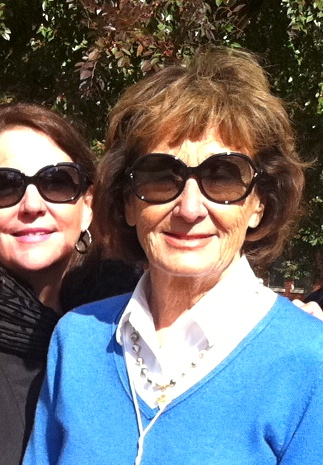
When we returned, my mother was diagnosed with non-hodgkins lymphoma. She moved in with us and had chemotherapy and radiation last fall, and she shared my excitement about publishing my book. Her cancer responded to treatment and she moved back home (a few miles away). She is now cancer-free.”

photo 2Mom and me at her college reunion in fall 2011

Letting Go of Fear

Life is unpredictable, and sometimes scary.

My family and I usually attend Relay for Life at the University of Georgia with my son, a brain cancer survivor, Relay volunteer and UGA student. One year, greeters gave us purple and white balloons and markers, and asked us to write on them something that we wanted to let go of.

After months of worry and anxiety about lots of post-treatment MRIs – all of which were “clean” – I knew exactly what to write on my balloon:

photo

Later, after the event’s kickoff, we were all asked to let them go:

photo copy

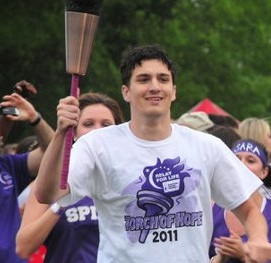
At our first UGA Relay event, my son had been cancer-free for only six months. As the final leg of the actual relay to kick off the event, he ran in the torch:

216225_10150163754899800_58832214799_6473968_7027300_n-1

In a few days, we will attend this year’s Relay for Life at UGA. My son got involved with Relay in the fall of 2010, weeks after he recovered from brain surgery at Duke and finished radiation therapy at Emory. He has told his story numerous times and helped raise funds for cancer research, serving on the executive board this year to help with corporate donations.

Just three years ago, I had no idea what was in store for my son and for our family. I’m a worrier by nature, a trait that sometimes went into overdrive while I was raising my children. I worried about things that might happen to them…but I never feared that any of them would get cancer.

Then one day, one of them did.

Before it happened, I began writing my novel, MAKE THAT DEUX. The protagonist, Jenny Miles, is 19 years old, the same age that my son was when he was diagnosed; he learned he had a brain tumor on his 19th birthday in May 2010.

After two surgeries, setbacks, despair, pain, suffering, and recovery, he started back to school as a sophomore at the University of Georgia in August 2010. In October of that year, he learned that he was cancer-free.

I know that at times, he was afraid. But he didn’t let fear overtake him. He lived through his illness with courage, strength and hope, and through his journey, he inspired me to let go of fear.

One of my favorite authors is Charles Dickens. Here’ a quote from his novel David Copperfield:

“We must meet reverses boldly, and not suffer them to frighten us, my dear. We must learn to act the play out. We must live misfortune down, Trot!”

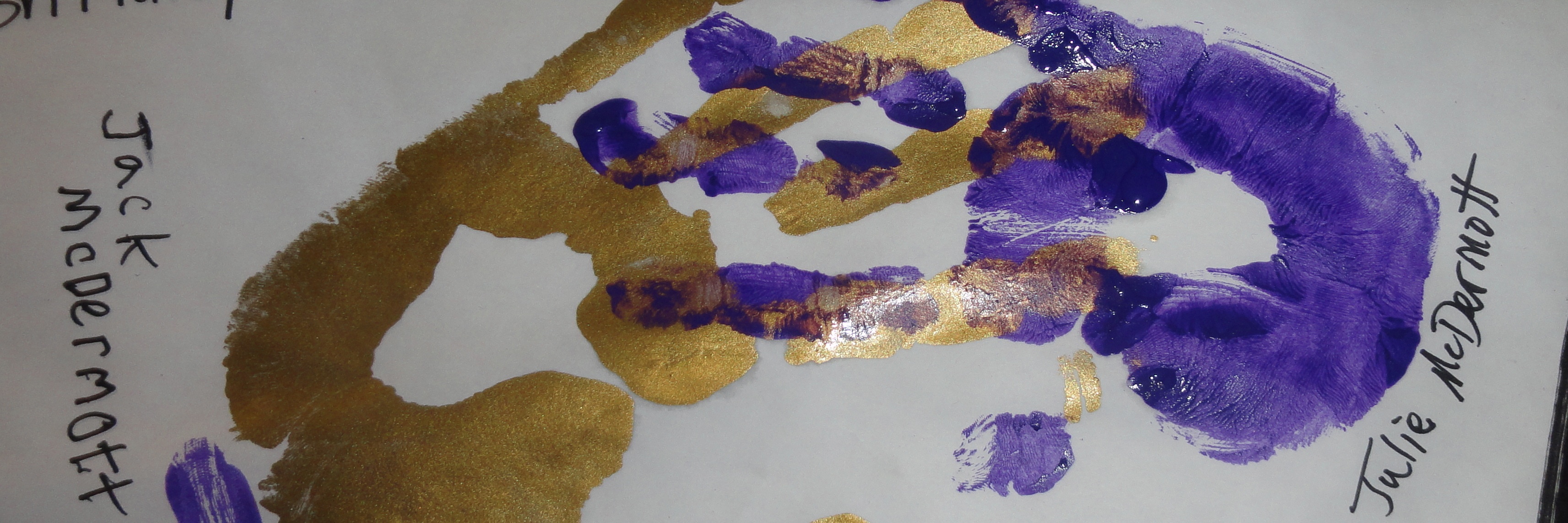
photo copy 3My son’s gold survivor handprint and my purple caregiver one at UGA Relay for Life 2012

Relationships: être ensemble – “to be together”

An article published today in the Wall Street JournalFind a Man Today, Graduate Tomorrow by Emily Esfahani Smith is sure to spark some discussion.

The author (a member of Generation iY, or maybe just Y – and married) quotes her mother as telling her a few years ago: “You’re in college…There will never be a better time to meet someone…so start looking.”

Like Jenny, the main character in my novel MAKE THAT DEUX, I tend to like people who are direct – as long as they aren’t unkind or insensitive. I also happen to agree with that mom, who’s a member of my generation.

DSC00281

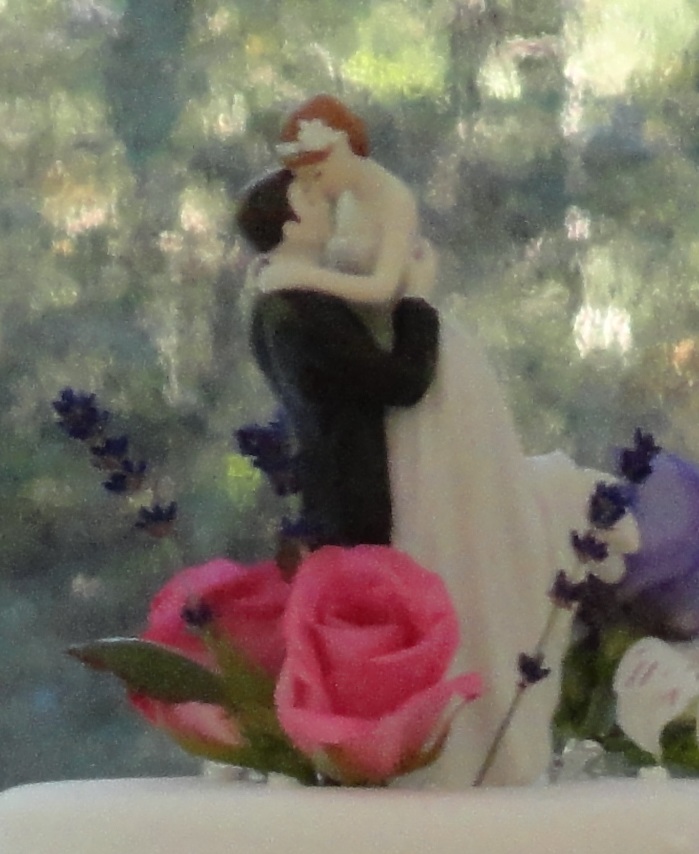
The Wedding Cake of a bride and groom
who met in college and got married last year
 

I know – declaring that I agree with her may not be wise. I’m sure that there are plenty of people who disagree – or, at least, who find that mom’s instruction advice distasteful  offensive somewhat objectionable. I’m not fond of confrontation…but I think there’s more to college life than academics, and more to life afterward than career, for women – and for men.

In a word, relationships.

I suppose I’m biased, because I met my husband when we were in college. Many of my friends met their husbands years later, either at work or through friends. Some married after going to graduate school, after beginning their careers, or both. I wonder sometimes how difficult it was for them to find the right man.

A few of my friends met their husbands (and got married) younger than I did; I found “The One” – my One – in college. It was (and I’m sure still is) a great place to meet guys, and to get to know them. When your biggest stress is writing a paper or studying for an exam (or both), well, it’s not like having the responsibilities of adult life, even single adult life. Normally, when you’re in college, you have a lot more time available for friendships, fun and dating.

I didn’t set out “looking” for someone when I arrived at college, but I did look for relationships with friends – male and female – and I can’t imagine why young people today would not. You can have your cake and eat it, too relationships and achieve your academic and career goals, too. And sometimes, male friends can develop into something more…one of mine did.

I don’t apologize for finding the love of my life – or for him finding me – in college. Yes, we were both immature, but we matured together. I wanted company, and so did he. Turns out, initially, you’re going to be a rookie at adulthood. You can either do it alone, or do it with someone you love.

Perhaps because I did it with him, ça me fait en colère (it makes me mad) when I sometimes hear others say (self-righteously?) that it isn’t smart to do so… or that (since they did not?) no one should. Jenny in MAKE THAT DEUX (and her friends, and basically, her whole generation) believes that it’s just fine to find that special someone in college.

Pourquoi pas?

DSC00281 copy

My most FAQ: la question posée le plus fréquemment, and a diagram

“I’m coming out, I want the world to know, Got to let it show…”

– Diana Ross

images

By far, the most frequently asked question I’m asked about my novel MAKE THAT DEUX is: “Is it autobiographical?”

If you go to the FAQ (Foire aux questions) tab above, you will see at the top:

“Is MAKE THAT DEUX a true story? No, but it is based (loosely!) on a true story.”

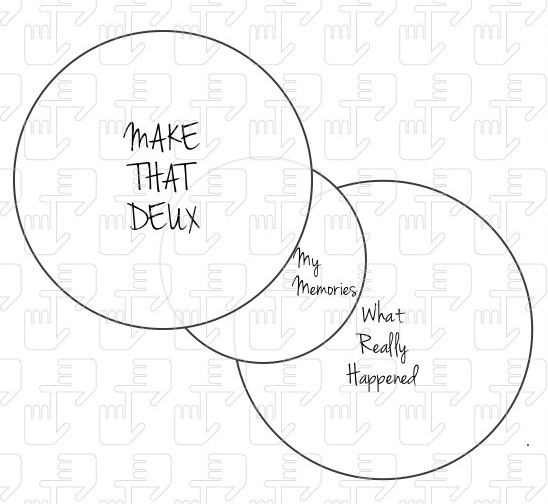
HOW loosely? Regardez: 

photo copy

Not drawn to scale

I must have a bit of French ancestry*, because I like mathematical concepts; quelquefois, my mind just prefers to look at things that way. The above diagram is an example of that, kind of.

Voici l’explication:

1. What Really Happened – Yes, I really spent the year 1979 – 1980 on UNC’s Junior Year Abroad in Montpellier, France. I arrived in August and came back to “the States” the following June. I left my college boyfriend, with whom I was madly in love, behind in Chapel Hill; we kept in touch with handwritten letters and a few very expensive phone calls. I have documents (and witnesses) to prove all of this.

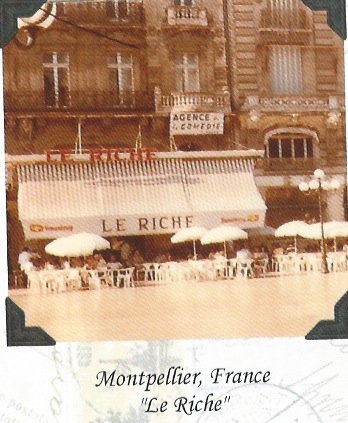
leriche

2. My Memories – As you can see in the diagram, some of What Really Happened is entrenched in My Memories, but not all. And some of My Memories did not really, well, happen (probably).

Pourquoi? Parce que…hmm.  A., “Studies have shown” that memories tend to center around emotional events. Though I’ve always been a pretty emotional person (hopefully, in a good way), fortunately obviously, not all of my experiences during my year in France were full of drama and emotion. Some of them were though, and those were the only ones I remember.

I think.

Because, B., according to some scientists, “the very act of remembering can change our memories;” for us humans, it may even “be impossible.. to bring a memory to mind without altering it in some way.”

In other words, some of My Memories did NOT really happen (difficult for me to believe, but okay, because that fact was helpful when I wrote my fictional story),

photo copy 2

3. MAKE THAT DEUX – Many of My Memories made it into my novel, but not 100% of them. Simply put, my story was somewhat different than Jenny’s.

And to answer that “autobiographical” question: Look closely at the diagram above and you see that, although My Memories overlap What Really Happened, and MAKE THAT DEUX overlaps My Memories, only a small portion intersects all three areas.

And I’m not “coming out” telling what that portion is…I guess we could say, see #1. above.

Or we could say, qui sait? (who knows?)

Finally, you may be wondering, “So then, what IS that part of MAKE THAT DEUX in the diagram that’s outside of My Memories (and, necessarily, What Really Happened)?”

C’est la FICTION!

“My book’s coming out, I want the world to know, Got to let it show…”

* My mother’s maiden name is Bellamy: Belle Amie?

La Musique

“J’aime bien écouter de la musique quand je travaille.” – anonyme

(I love to listen to music while I work. — anonymous)

My teenage daughter could have said this; I certainly couldn’t have. No, when I write, I need prefer uninterrupted silence. (Or, at least, few distractions.)

However, many songs came to my mind when I was writing MAKE THAT DEUX, and one of them in particular. It was recorded in the 1970s, of course, and one of its lines is the name of Part 3 in my novel. But it’s a classic, a song that you should know; if you don’t, je me sens désolée pour vous (I feel sorry for you).

It’s the answer to the Monday one-question-interview question I did with the wonderful Susan Gottfried a few days ago. Click on this link for her Featured New Book to satisfy your curiosity and find out more about MAKE THAT DEUX.

For today’s blog posts: make that deux.

C’est tout!

The Negresco: a very nice hotel in Nice — for deux

It was the first hotel where my husband and I stayed in France, and it was the nicest.*

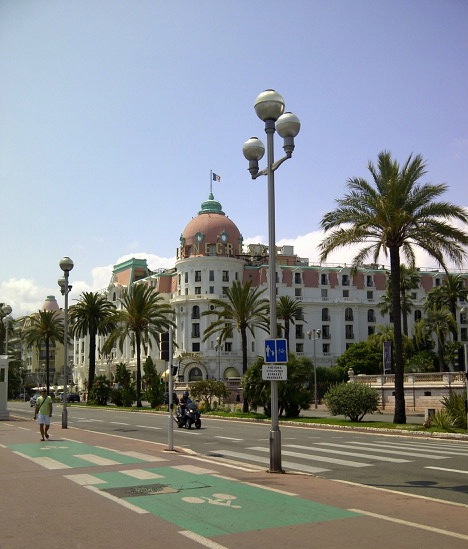
Image 77Our plane had arrived that morning from Lisbon. We took a taxi to the Hotel Negresco, a bit of a splurge but well worth it, we agreed. That evening, after strolling along the Promenade des Anglais and through the vieille ville, then visiting not one, but two smallish museums (Matisse and Chagall), we landed at the hotel bar, Le Relais.

Image 75

I didn’t know the history of the hotel, nor that 2012 was its 100th anniversaire until the other day when I read about it in an entry in The Provence Post titled  What Happens at Negresco…

Oh-la-la. Il faut que vous le lisiez! (You HAVE to read it!)

Unaware that it had been recently redone (but still appreciative of it), we had dinner that first evening at La Rotonde. We sat outside on the terrace, looking out on the Mediterranean Sea, both of us (well, mostly me) trying out our French as we sipped our wine. The following evening — our last one in Nice — we would have loved to dine at the Chantecler, the hotel’s two-star restaurant. But we hadn’t booked a reservation ahead of time. So we found a table at another nice restaurant just steps away.

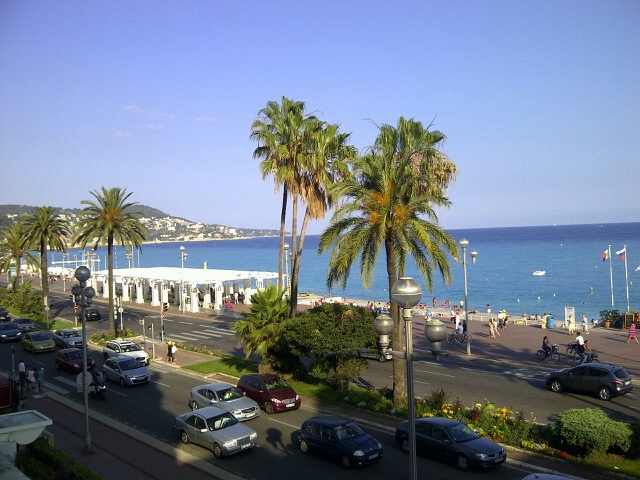
Le temps (the weather) — though a bit warm during the day — was perfect at night. Walking back to our hotel, I took this photo:

Image 65

Before we left the next day to head west along the Riveria in our rented voiture (whose GPS ne marchait pas — even the extremely helpful valets at the Negresco couldn’t get it to work), I took this photo of the view from our room, just over La Rotonde (located at the far left side of the hotel in the first photo above):

Image 67

Staying at the Negresco, even for just two nights, was a very cool experience, and I want to go back someday avec mon mari. I had never seen the hotel when, during my year in France, I stopped for an afternoon in Nice on the way home from Italy. I won’t say what year it was, just that it was long after Richard Burton left Liz’s jewels at the bar by mistake, but way before Michael Jackson installed a dance floor in one of the rooms and rehearsed there…

Somehow, I think my husband and I sensed the history and eccentric personality of the Negresco during our forty-eight hours as guests there in July, and were awed by it. He’s more into history than me (he was reading Alistair Horne’s LA BELLE FRANCE during our vacances), and though he has his idiosyncrasies, I’m a bit more eccentric. You might even say I’m quirky, as a friend did** last month at a launch party for my new novel MAKE THAT DEUX. 

*But the two other hotels where we stayed in France were lovely, too: the Hotel St. Christophe in Aix-en-Provence and the Best Western Hotel Le Guilhem in Montpellier.

**In a very NICE way.

Letter to France

Dear France,

As someone tells Jenny in my new novel MAKE THAT DEUX,

“you ‘ave captured my heart.”

I’m not sure exactly when you did it. The first time I saw you, I was a little bleary-eyed, and I felt a little awkward. I had been looking forward to meeting you for so long — years — and I had started to believe it would never happen.

You were just so, well, distant.

When I started to feel comfortable with you (and you know it took weeks), it was almost like I’d always known you. I was so at home with you. It was like déjà vu. Sort of.

I didn’t know everything about your past…but what I did know, intrigued me. What I didn’t know didn’t seem to matter.

You understood me, even when I struggled to express myself. You encouraged me and seemed happy to have me. You shattered the stereotypes about les français — your people — when they politely welcomed me with a “Bonjour, Mademoiselle!”

They listened patiently as I spoke your language, learned its expressions and worked on my accent. They charmed me with their own accents when they practiced their anglais, particulièrement when your (good-looking) young men said “ze” for “the” and “zat” for “that.”

I know you had greeted millions of girls before me who studied traveled had a blast abroad for a year. Some of them loved you as much as I did, but, I dare say, not all. Some of them were just playing with you. Some just wanted to shop and drink wine, discovering but later forgetting about your certain, well,  je ne sais quoi.

Mais pour moi, c’était impossible.

I never forgot you, even as my French vocabulary dwindled and my memories of our time together faded. I kept my few pictures of you, not knowing that (or how) I would use them someday. For years, I dreamed I would come back to visit you with the man I love.

Then, un jour in the summer of 2012, I did.

I had spent months getting ready to see you again, studying your language —  listening, reading and practicing it weekly. I had written my novel (set in your south) and was getting ready to release it this fall. I had planned an itinerary for our visit en juillet, but our emploi du temps was flexible and open to spontaneity.

Which was fortunate, because our unplanned moments with you were the best ones.

I loved seeing my husband discover you: the Côte d’Azur, Provence, Languedoc, Beaujolais… Paris. I loved hearing him try out the French phrases he had learned. I loved going with him to see parts of you that I had never seen. I loved taking him to see other places that had once been very familiar to me, that I had been while thinking of him.

He already knew me well, but now he knows me  — and my heart — even better.

A la prochaine,

Julie


Create a website or blog at WordPress.com

Up ↑