“Time Travel:” mon expérience

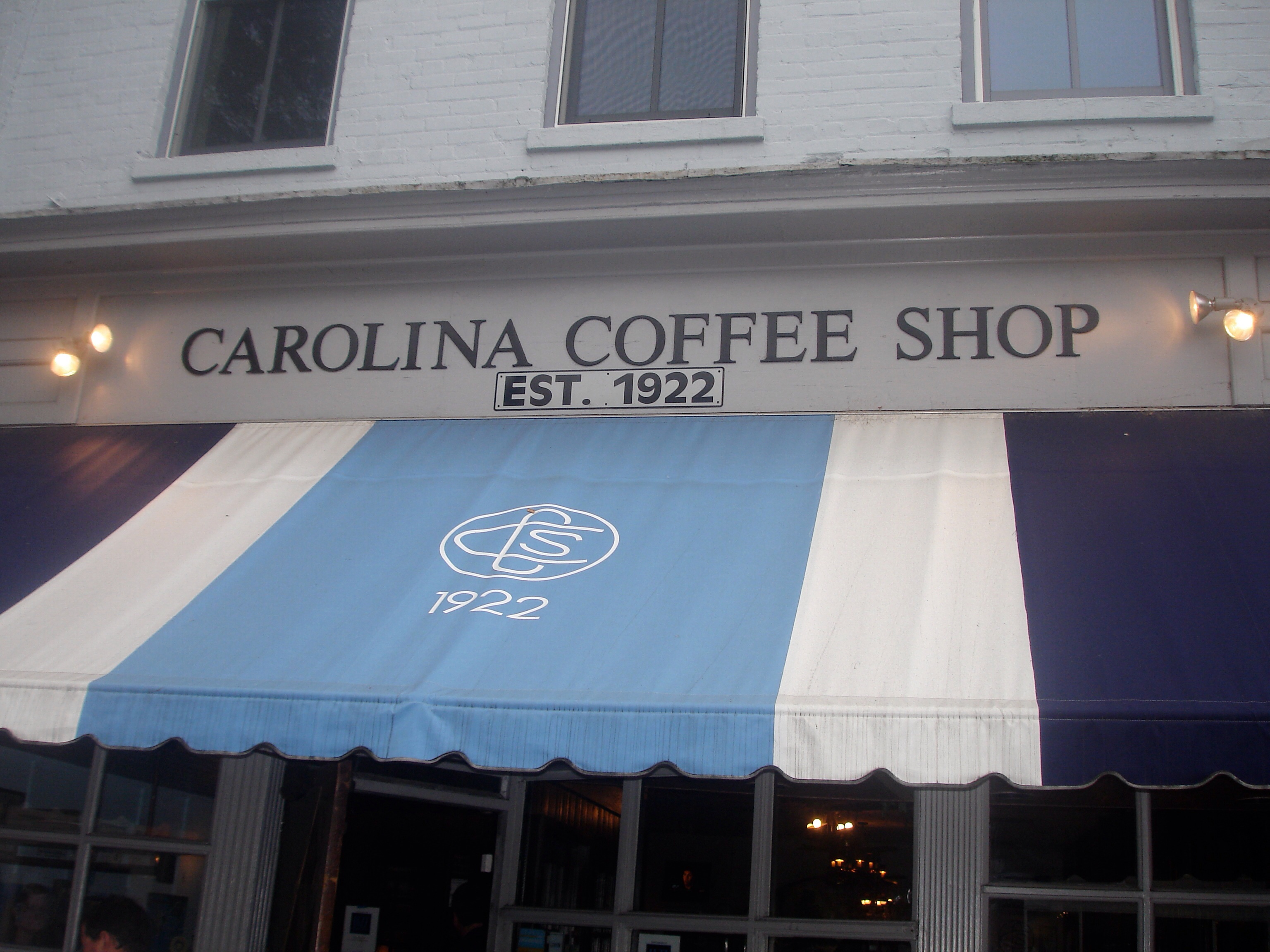
L’interview took place last August at the Carolina Coffee Shop in Chapel Hill, NC, right before UNDERWATER was released.I had just dropped off my daughter at college and was planning a Launch Party for my new Suspense novel. The interviewer was fellow Tar Heel Lucy Hood, who had studied in Spain just a few years after I returned from my year abroad in Montpellier, France on the UNC program there.
image

Fast forward to January 2014, and you have Lucy’s article, Time Travel, in the current edition of the Carolina Alumni Review!

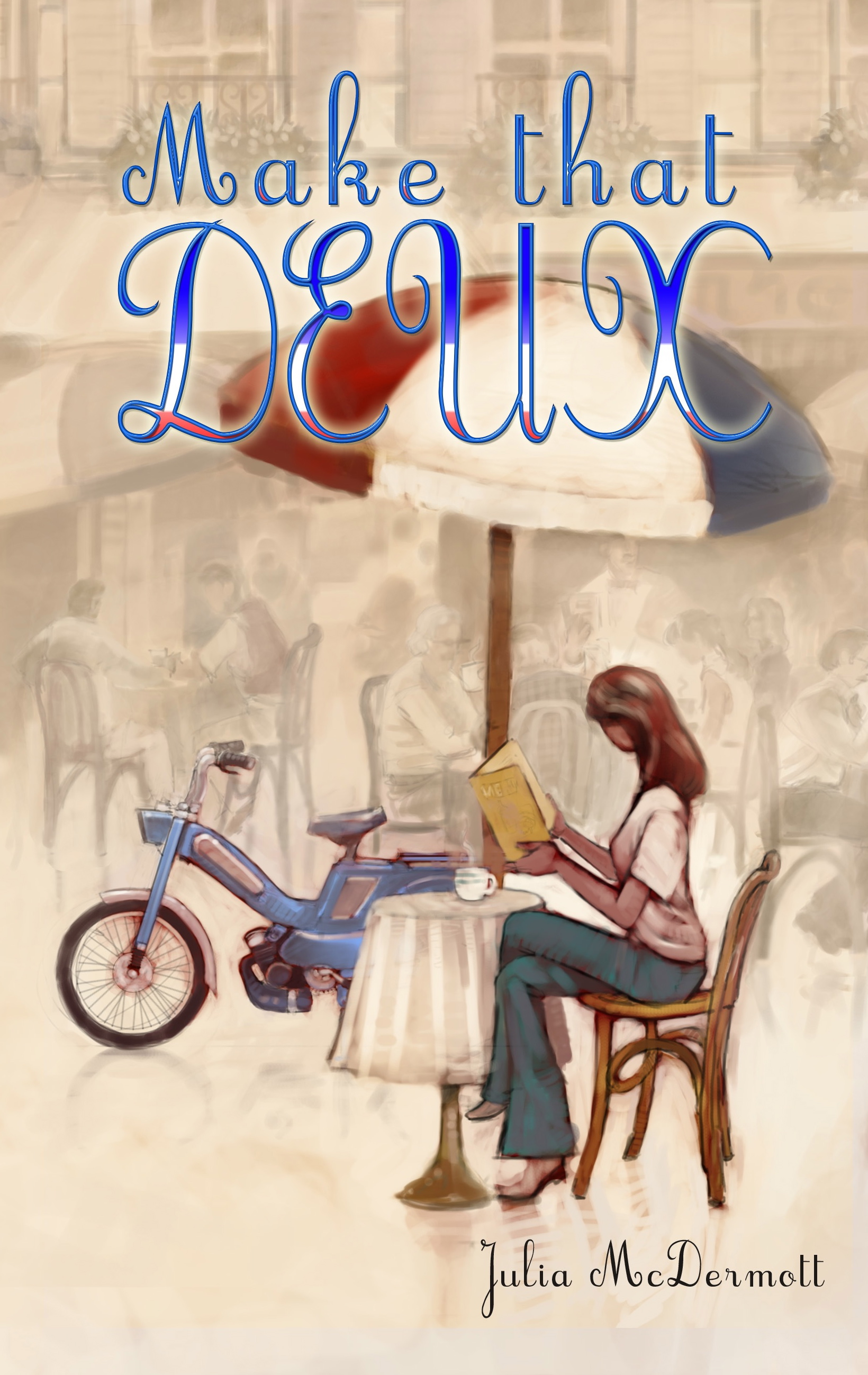
You’ll find a lot about my first novel MAKE THAT DEUX, which Lucy and I discussed that morning, a little about UNDERWATER, and a few things about me (including a recent photo).

While MAKE THAT DEUX takes you back to the 70s (think: American Hustle, Argo and the Bee Gees), UNDERWATER is set in current times. It takes place in Atlanta and New York, with a scene or two in France.

I’m not a big “time travel” person when it comes to the movies, when that means the characters can go back and forth in time and try to alter or fix things that happened, then deal with the ramifications. But one movie that does it well, in my opinion, is the not-so-famous film that came out in 2000, called The Family Man starring Nicolas Cage.

In the movie, there was a boyfriend and a girlfriend, and one of them was going to spend time in Europe for a great opportunity, and then they…

Well, it’s a romantic, sweet story, just like (but different from) MAKE THAT DEUX. But if you want to take a different journey, filled with conflict, betrayal, despair and deceit, go deeper and dive into UNDERWATER.

You may have a hard time coming up for air.

Chez le coiffeur: Bernard Dugaud atelier de beauté

On Saturday, February 1, 2014, I will be at the Bernard Dugaud Salon in Buckhead in Atlanta from 1:00 to 3:00 signing copies of my Suspense novel UNDERWATER !

Come by the salon on Roswell Road just where it meets Peachtree, park in the back lot and find the entrance there. I will be looking forward to seeing you, Mesdames et Messieurs!

L’interieur:

image

Rendez-vous at a French Café!

I’ll be signing copies of UNDERWATER on JAN 20, 2014 (MLK Holiday) from 3:00 to 5:00 pm at LA MADELEINE Country French Café in Dunwoody, Georgia (Perimeter Center West)!

Come enjoy a pastry or two, have un verre de vin and pick up your copy!

McKinneyInterior-5

L’anniversaire de my (French) “Charlie Brown” Christmas Tree

I(t) made it.

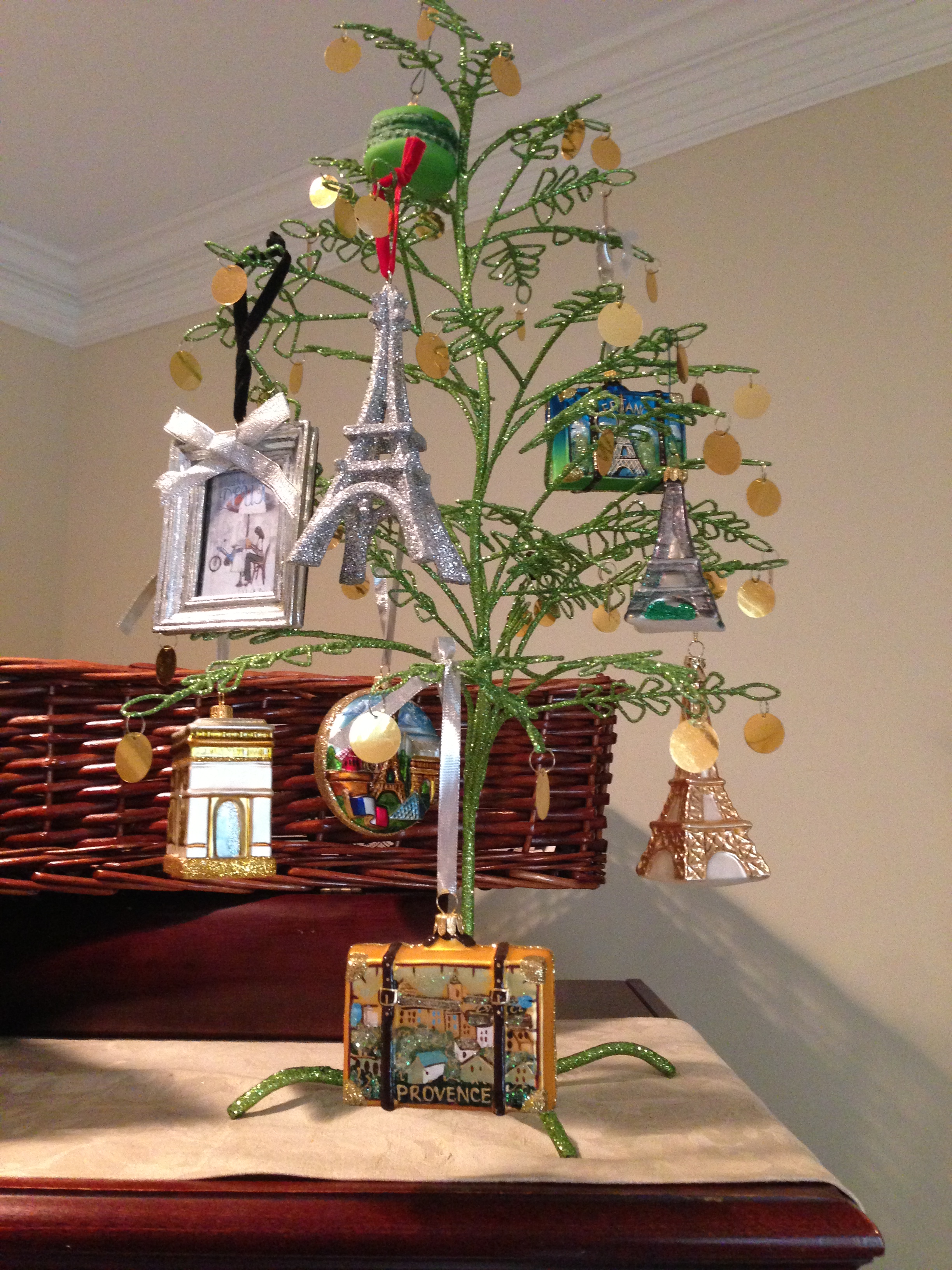
Since last Christmas, I’ve kept my  Charlie Brown Christmas tree out (in my bedroom) all year. When shopping for gifts at Sur La Table earlier this month, I found the rest of the ornaments it needed, including a Buche de Noel.

This year’s tree:

photo 4

To borrow a question from my husband, How many pair of black pants  pair of boots  purses  Eiffel Towers does a person need?

Answer: Beaucoup. For this tree: five, to be exact – though one was a gift from a friend.

Our (real) tree is still up, and it will be for a few more days. It’s nine feet tall and loaded down with ornaments that we’ve collected over the years. Perhaps next year, the ornaments pictured above will go on it – but it’s too early to know that now.

When it comes time to pack up the Christmas decorations, I’m not going to want to store this little tree away in the storage room. So it just might have to stay out for an encore (but not on the dining room table).

Since I like to keep a little bit of Christmas out all year.

Last year’s Tree:

photo copy

How Chapel Hill has changed, on the surface…and below

A few weeks ago, when I was in Chapel Hill, N.C., someone asked me what the town and university was like when I was a student at UNC (before and after my year in France). Was it very different? The answer is yes, and no.

photo copy 18

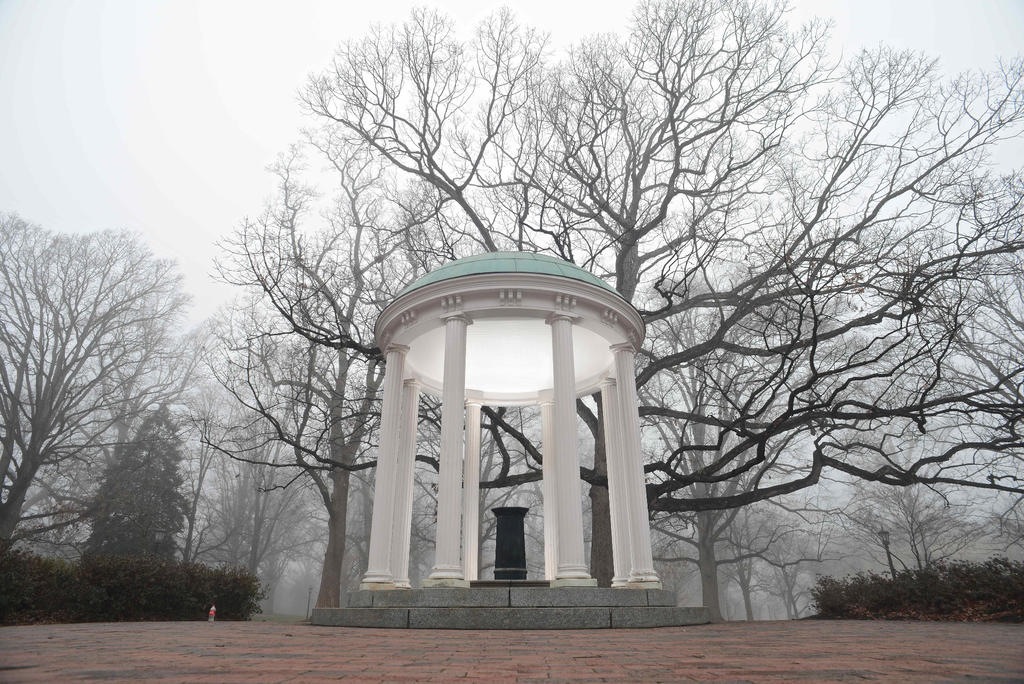
The Old Well on UNC campus

Back then, life was simpler, more private, and much more dependent on serendipity. On the other hand, some things are much simpler now, like “typing” a paper and doing research. It’s easier to arrange a rendez-vous (“date?”) now, but even easier to renege on one. *

Very few students studied abroad when I was at UNC, and those who did applied for the (young) program through the Romance Languages Department in Dey Hall. Now, there’s a Study Abroad Office and a wealth of information available on the UNC Global website. And when I was a student, college debt was much less, even in “real dollars,” and few students signed up for it – college tuition was much more affordable, and so was a year abroad.

The UNC campus hasn’t changed much, except for many new buildings and, of course, fewer parking lots. The town has changed a bit, though. The Franklin Hotel stands close to the spot where the Greyhound Bus Station used to be. Lots of restaurants have come and gone (see below). Now, you go to the Dean Dome for basketball games (if you can get tickets) instead of Carmicheal Arena.

But the Post Office on Franklin Street remains where it was, and so do the Carolina Inn and Granville Towers. The Graduate Library, Wilson, still stands of course, and so do Morehead Planetarium, Playmakers Theatre and the Paul Green Theatre. If you want to live near campus, you can still find rentals on McCauley Street and West Cameron Avenue. And it’s still a short walk to Carrboro.

photo copy 20

The house on West Cameron Avenue where I lived during my last year at UNC

photo copy 19

When I was a student, I worked during the year to help pay expenses. I was a waitress at Spanky’s, the Carolina Coffee Shop, and at the Country Squire, a steakhouse located on the bus line between Chapel Hill and Durham (important, because I didn’t have a car). Spanky’s and CCS are still in business, but the Country Squire was torn down after I graduated, to make room for I-40.

Like any college town, many establishments have disappeared:

 – Papagayo’s (new when I was a student)
 – the Rathskeller (I only went there once)
– Krissa, a favorite Greek place 
– the Yacht Club (fancy, but in a basement)
– Hector’s
– Sadlack’s (where my husband worked as a student)
– Roy Roger’s
– Harrison’s (another bar is there now, I think)
– the Mad Hatter
– the Shack 
– Troll’s 
– the Porthole, a restaurant in the alley next to CCS
 

But some remain:

– Four Corners
– La Residence
– Squid’s (in a different location now, I think)
– He’s Not Here
 – the Station in Carrboro
– Aurora (moved)
– Breadman’s (also moved, but only across the street, and a bit different now)
– Crook’s Corner (way different, and in a different place)
– Pyewacket (used to be vegetarian)
– Ye Olde Waffle Shop, a CCS competitor
– and of course, Sutton’s Drug Store.
 

Below the surface changes, I’m sure that life as a UNC student is different now, but still the same in many, many ways. Plus ça change, plus c’est la même chose…

Which is a very good thing.

* See my post of Sept. 19, 2012: Call me maybe, but don’t break my heart: Sortir avec quelqu’un

French leave, and a nouveau livre

I’m not sure if “French leave” is de rigueur en France, but if so, it would make sense – because the French seem to do so many things better.

Perhaps because I’m an introvert, leaving a party without bidding farewell to the host seems easier, less awkward, and more gracious – and even unselfish, in a way. You don’t have interrupt a conversation to announce your departure and your gratitude for having been invited. Since it’s socially acceptable, at times French leave is la solution parfaite, especially if you’re aren’t fond of goodbyes.

Jenny Miles, the protagonist in my novel MAKE THAT DEUX, is not particularly fond of them, but she’s not opposed to them, either. For Jenny, leaving someone she loves – or some place she loves – without saying goodbye is impossible. So, if her story had been titled FRENCH LEAVE – well, that would have just been wrong.

On the other hand, that title could have fit the story well. Pourquoi? Well, like me, Jenny’s an introvert. She also goes to parties. And she has some experience with being awkward…

My new book will be out shortly, and deciding its title was an easier process this time. I knew it needed to be in English (despite at least one scene in France), and I wanted it to be two words, at most. I wanted to simplify. I ended up with a title that has fewer words than MAKE THAT DEUX, but more syllables.

It was harder to decide on this one’s cover image,*  however. I’ll reveal it in a future post, but first I wanted to show you a few snippets of the ones I reluctantly rejected. They’re displayed below, not in order of preference:

photo copy 11

photo copy 6

_underwater_Ideas3

photo copy 10

photo copy 12

You may notice some things that these images have in common. Without revealing my new book’s title (yet), all I will say is that the cover image I chose is different from all the above in at least one important way – no, make that deux ways…

And it’s as fitting and apropos as French leave.

* My talented cover artist is Michael Faron; visit him at msfaron.com

“How is that romantic?” – 4 ways, and a comment

During a recent family vacances au Colorado, I was asked this question about Paris.

Imaginez! (Imagine!)

To be fair, I think the person who asked me has never been there. I joined in his conversation with another (male) family member about Italy and France, and I was probably the person who brought up the idea of romance. But when he asked the question, I was speechless at first. What was the answer, and how could he not know it?

I started to say something about the history, museums and art, and then he they quickly seemed to believe that it was that simple, and didn’t let me explique.* Non, messieurs! C’est pas vrai!

Because I’m an esprit de l’escalier**  kind of woman, and a list-maker, I thought about it later, and here is the réponse I might have given:

1. It’s not just the art and history; it’s their relationship – their connection – to the people, and to the city. It’s something tout à fait français  – absolutely French – and something you just feel. New York City and Washington D.C. have a lot of museums and history, but I don’t find either place particularly romantic. For other reasons, I really, really like them, though.

2. It’s the streets, the restaurants, the gardens and the neighborhoods of Paris…and it’s les français (the French) themselves. What (American) woman doesn’t know that Frenchmen are (normalement) très romantique?

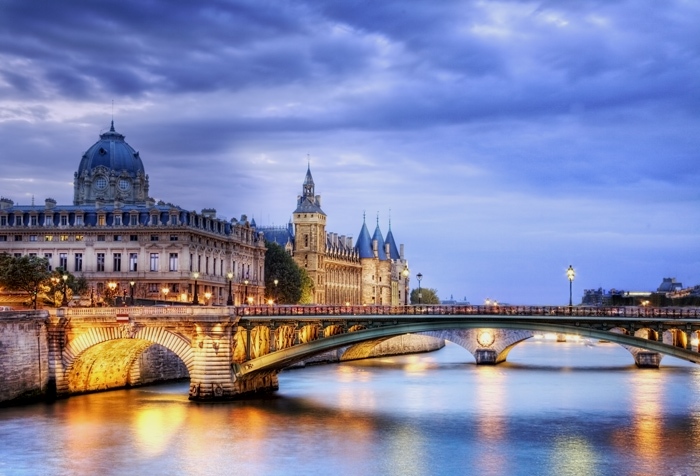
3. It’s La Seine, the river that runs through Paris! A body of water*** (whether sea or river) at sunset or later, makes everything more intimate. How? Je ne sais pas.

riverLa Seine

4. It’s l’amour – love. It’s in the air in Paris, whether you’ve just discovered one another, or are rediscovering…Trust me.

Enfin, the “comment:” Another (short) conversation came up about becoming fluent in French, and someone (who doesn’t speak a foreign language) asserted that “you have to live there.”

Hmm. I diligently studied the language, il y a longtemps et récemment, lived in France for a year as a student, and now I practice and speak it autant que possible. I’d love to live there again un jour, but in the meantime, I’m going to continue speaking it and improving my fluency. C’est possible, madame!

photo copy 5

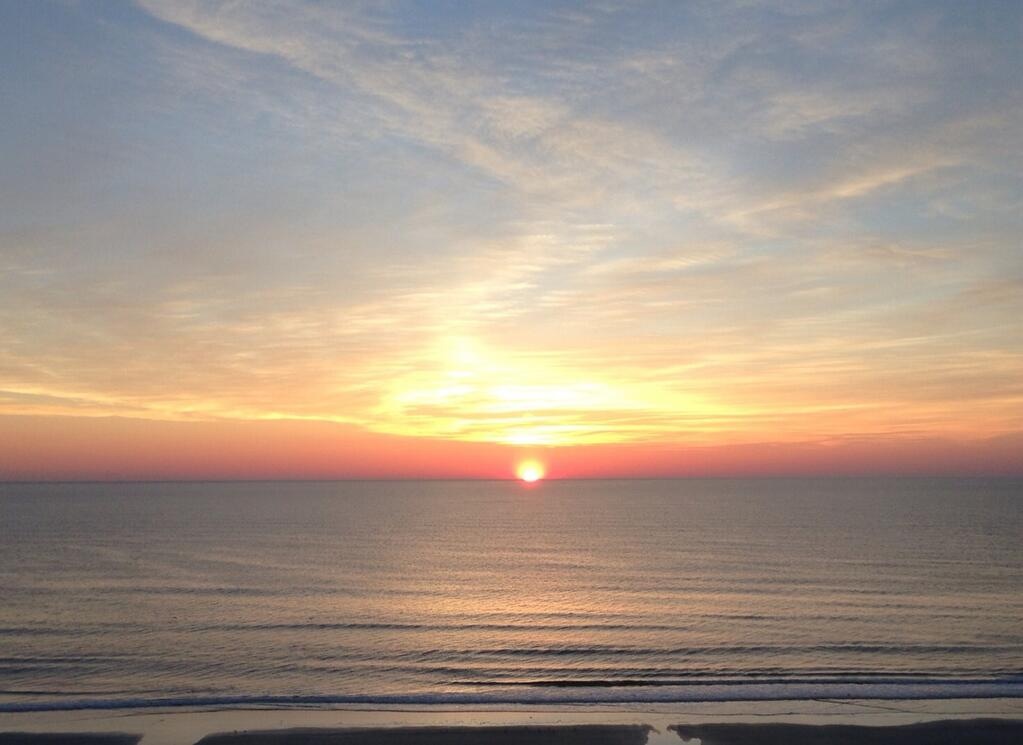
Sunrise at a beach on the Atlantic in Florida earlier this year

* With over thirty members of the famille converging in two cabins in the Rockies for a week, it was hard to finish your sentences without being interrupted (and I’m just a belle-fille et belle-soeur – much nicer sounding than  “outlaw”  daughter- and sister-in-law)

** See my post L’esprit de l’escalier, spiral staircases and faux-amis

*** While there’s romance in my novel MAKE THAT DEUX, there’s more water than romance in my upcoming Suspense novel…. More later!

Par avion, with a kiss

“So kiss me and smile for me
Tell me that you’ll wait for me
Hold me like you’ll never let me go.photo copy 4
I’m leavin’ on a jet plane
I don’t know when I’ll be back again
Oh, babe, I hate to go.”
– John Denver
 

Every couple has certain songs they know by heart.*

Like Jenny, the protagonist in my novel MAKE THAT DEUX, I didn’t mind almost enjoyed flying when I was younger…unless I was leaving behind someone I loved.

What once was an event – for which you dressed up – has changed. It’s now just a method of transportation that’s full of hassles and short of comfort, with bags, meals, and even legroom charged à la carte.

But some changes have been positive. No more smoking (if you don’t remember that, watch Mad Men). Better security, if sometimes aggravating. Presumably, better made airplanes. Cheaper flights? I suppose so, in “real dollars.”

The estimated cost of my round trip ticket from New York to Paris in 1979 and 1980 (with UNC’s Study Abroad group) was $385. Sounds affordable, but according to a Consumer Price Index calculator, that’s equal to $1233 today. I recently booked a round trip ticket from Rome to Atlanta for a family member for $1268.

[I know it was $385 because I saved the Estimated Costs information for my Year-in-Montpellier Program (based on 15 students in the group). Academic fees were estimated at $1,646 for the year. Lodging was $450, and ten months of meals totaled $820.]

In MAKE THAT DEUX, Jenny travels en avion, en train, en voiture (by car) and en mobylette (moped). She doesn’t hate to go to France, but she does hate to leave someone behind. She does it though, with a kiss…

In my upcoming novel, to be released later this summer, the main character (“C”) travels here and there by plane with the man she loves. She’s older than Jenny, and, like me, she’s not fond of flying. But she gets to travel the way I wish I could: first class, and sometimes by private jet – with a kiss kisses.

I won’t say where she and her boyfriend (“R”) go, or what happens while they travel together. But in an instant, everything changes…

*What are some of “your” songs? Here’s a few more of ours: “Danny’s Song” by Loggins and Messina; “Chuck E.’s in Love” by Rickie Lee Jones; “Lean on Me” by Bill Withers; and “Rescue Me” by Linda Rondstadt

May in France, and fluency

“Le joli mois de mai, où on ne travaille pas beaucoup!” – mon prof de français
photo

In my novel MAKE THAT DEUX, Jenny’s goal is to become fluent in French. She prepares for her final exams – often the only grade given in a course – by working hard in May, not noticing much about what happens in France that month. When she takes a (final) oral exam, she….

Well, you’ll have to read the book to find out.

During the month of May in France, due to several holidays in quick succession, almost every week-end is a long weekend (on fait le pont). Mais ici, we only have one of those (Memorial Day Weekend), and it happens after all of the French ones.

Yesterday May 1st was la fête du muguet, porte-bonheur et la fête du Travail (Labor Day). Next Wednesday the 8th is la fête historique armistice (WW II Victory in Europe Day). Thursday May 9 is a religious holiday (fête religieuse catholique), l’Ascension, though tout le monde celebrates it, même si they aren’t religious. Ditto for Monday May 20, which is Pentecôte (Pentecost).

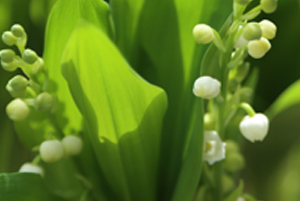
Le muguet (lily-of-the-valley) is la fleur du bonheur: in France, you give loved ones a little bouquet of it for good luck (porte-bonheur) and to celebrate the arrival of le printemps (spring). I suspect that today through Sunday, on fait le pont (everybody takes a long weekend), or maybe just tomorrow through Sunday.

muguet300x200

Le muguet

muguet

Next week, with the 8th and 9th falling on Wednesday and Thursday, I’m not sure what on fait/one does. Perhaps one takes a very long weekend, working only next Monday and Tuesday, in a kind of work-reversal week (2 days on, 5 days off). Sounds very French, I dare say.

The following weekend, one celebrates Pentecôte by taking a third long weekend.

Three long weekends in a row! Quelle bonne idée! On the other hand, could that be exhausting? Peut-être, Monsieur!

First, there’s only so much relaxing one can do; staying busy (working) may be less tiresome. Second, if one travels during a long weekend, it could cost more than staying at home. Even if one visits family (for free), one’s routine is interrupted. Third – well, my husband and I have a saying taken from a WSJ article dated some time ago: “Work is Home, and Home is Work.”

Yes, that’s right: we often feel “at home” when we’re at work (and since I actually work at home, it gets complicated; happily, I have a home office). But when we are at home, we may feel like we are working. Working on our house, our chores, our projects, our parenting (though we’re almost out of that business), our marriage…and beaucoup de choses! 

That doesn’t mean that being at home (and not at work) is hard – but it can be, whether that’s evident admissable to others or not. Which brings me to fluency: the ability to speak a language smoothly and with apparent ease.

Some people have a gift for languages; others claim to be truly fluent when they aren’t (quite). I speak French, though not as well (yet) as I speak English. Fluency in another language can be hard to achieve, unless you learn as a small child. But if you work at it – practice it until you feel at home, no matter how difficult or confusing it may be – at some point it doesn’t feel like work anymore; on ne travaille pas beaucoup!

At least, that’s ce qu’on me dit! (what I’m told!)


Une interview de 5 questions avec Rona. Merci, Madame!

My friend Rona Simmons has posted her recent interview with me about my novel MAKE THAT DEUX!

You can find mes reponses to her questions on the Review and Interviews page on her blog Write, Write, Write! Here’s part of Rona’s intro:

“As a member of the Atlanta Writers Club — purportedly the largest writer’s organization in the United States — I have had the opportunity to come to know a number of emerging and established writers and to read their works covering  every genre, voice, and style and providing a wealth of innovative, insightful, and interesting reading.
A few weeks ago, I read a novel by fellow member Julia McDermott.  A fun romp, the story follows the college age protagonist as she confronts a number of trials and tribulations during her Junior Year Abroad.  Having learned that Julia herself spent time abroad, I was interested in exploring how much Julia drew from her own circumstances.  I learned this and even more….”

Merci beaucoup, Madame! Voici les questions (cliquez sur son blog pour mes responses, s’il vous plaît): 

1. Describe your book and why you chose to write it

2. What is your favorite passage and why?

3. Can you share the evolution of a few sentences of your writing … one that you labored over, revised and revised, and revised until it was just right and one that flew off the keyboard in final form, why did you make the changes you made to the first one and why did you particularly like the latter as it was?

Image 2

4. How did you edit your manuscript, assuming you did at least some editing yourself?  Did you read it aloud?  What do you think, if you did, reading aloud does that reviewing on screen or in hard copy does not?

 5.   Would you share a favorite passage from one of your favorite authors? What makes this passage special to you?


Create a website or blog at WordPress.com

Up ↑