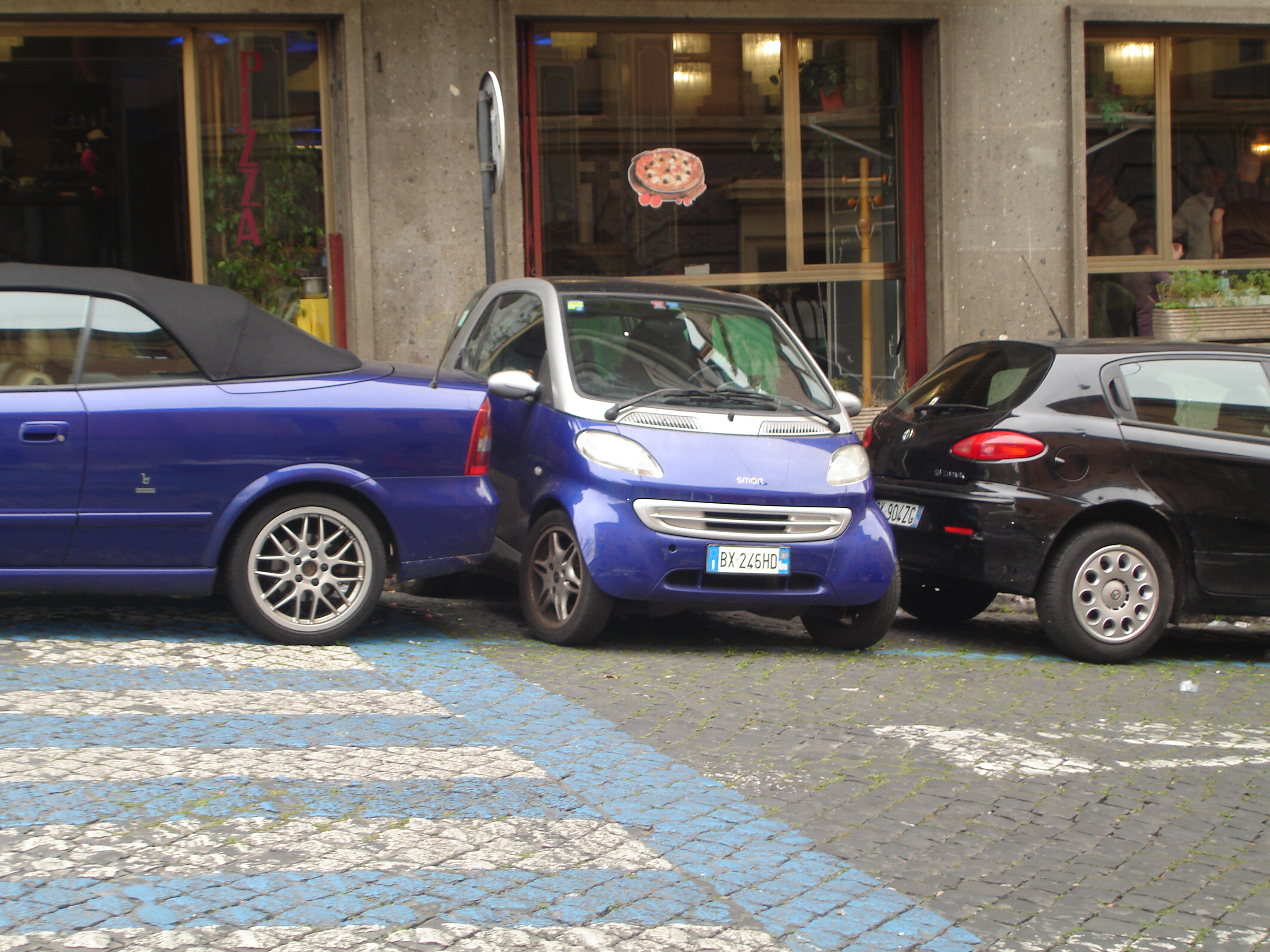
Le football américain, and good calls

“Je sais que tu adores ce sport…”

        — mon prof de français

Football. Fundamentally, I don’t think it’s changed all that much. But many of the rules have changed over time, adapting to better technology, increased risks and just smarter ways to play the game. Two other ingredients of what makes up the NFL have also changed, in my girl-opinion: uniforms, and the players’ personal styles. I’m not sure they’re better, but let’s just say I’ve noticed.
But what makes up a good call (and a bad one)  by the referees —  les arbitreshasn’t changed, no matter how much experience they lack have.

The Falcons are my team, and they’re undefeated right now. They’ve got a great quarterback, a talented offense and a strong defense. There are other good teams in the league, including the Green Bay Packers. I’m not really a Packers fan, and I was asleep last Monday night when the controversial touchdown call was made that resulted in a win for the opposing team. But like many other people, I watched the replay and I couldn’t believe the call. So on Thursday, I was ecstatic when the real experienced refs were back.

Yesterday, in an incredible match de foot between Atlanta and the Carolina Panthers, the Falcons won by two points after a final minute of terrific plays. Another close game followed: Green Bay against New Orleans. That game wasn’t without controversial calls, but despite that, the Packers won by a point.

Phew.

I just don’t think I could have handled them not winning again. I should probably like the Saints, I guess, with their French heritage and fleur de lis, but I just don’t — with their issues.

But hey, that could change.

I’ve changed about football. Mistakenly, I used to think (and I’m embarrassed to admit) that it was just a bunch of guys knocking each other down. But because:

1. a son of mine played it in high school

2. being a reader, I read How Football Explains America by Sal Paolantonio, The Blind Side by Michael Lewis and saw the movie (and because of Michael Oher, I love the Ravens)

3. and, we got a high-definition big-screen TV

my football conversion was born. I learned the rules and started to understand the game: Runners dodge, carry, break tackles and get yards. Passes are thrown and caught, sometimes by the opposing team. Kickers kick — and they have to do it well. Players protect the quarterback, who fakes, hands off or passes to a receiver. I’ve learned (most of) the penalty calls, though I still don’t always get what “holding” is, why “illegal motion” is bad and why we can’t have “forward laterals,” at least, occasionally.

Just kidding. I don’t really like any lateral passes.

Anything can happen in football, as the last sixty seconds of the Falcons-Panthers game demonstrated yesterday. In my view, each play is an un-choreographed dance (though I’m sure the coaches and players would say each one is quite well choreographed). But the truth is, it’s unpredictable.

Unfortunately, there’s no football in my novel (coming soon), but there is a very important hockey game. The French don’t have le foot, and I think they’re missing out.

Since I think they just might adore it. That would be a good call, n’est-ce pas?

Avignon and Montpellier encore

Some parts of these two French cities haven’t changed for centuries.

This summer, during our five days in le Midi (the south of France), my husband and I spent an afternoon in Avignon. Arriving after lunch, we spotted and entered a parking garage near la gare with only moderate difficulty (having to back out of an unmarked a wrong entrance, and, with embarrassment, forcing the car behind us to do the same). Heureusement, I was driving.

It was a hot day and, during its July festival, the town was crowded with visitors from France and elsewhere. But perhaps because, as a student, though I’d lived just over ninety kilometers away for almost a year, I’d never ventured over to Avignon, I wanted to see le pont d’Avignon and look around — as a tourist.

We climbed les escaliers to this view of the pont, then saw the Palais des Papes on our way to Place de l’Horloge.

I wanted to visit another famous town in the region, Nîmes, but because we’re Americans (and therefore, had planned to do more than time would allow), we had to skip it and head over to Montpellier, happily* arriving there at cocktail hour.

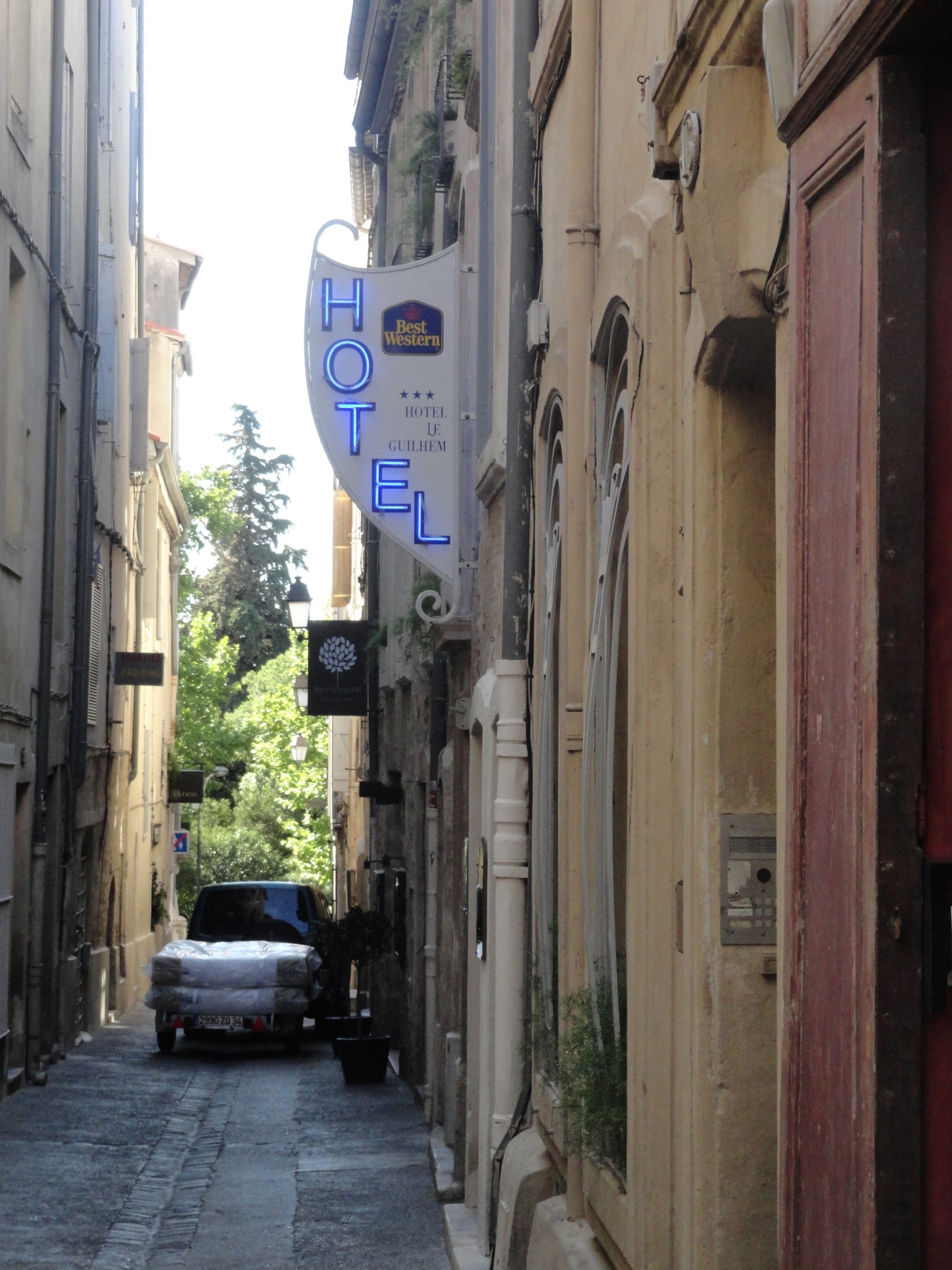
At my request, our agent de voyage had booked us at a mid-priced more-expensive-than-in-the-U.S. (but still perfect for our budget) Best Western hotel, Le Guilhem, which we loved once we found it.** However, with no hotel bar evident, we set out à pied to find some alcohol a nice restaurant.

As luck would have it, we found one right next to our hotel on Rue Jean Jacques Rousseau called Le Petit Jardin. Malheureusement, c’était complet (full — although it didn’t look that way). Undeterred (but unhappy that our agent hadn’t found and booked it, since we were celebrating our wedding anniversary), we got a table at another restaurant, Volodia, on the same rue, and ordered champagne.

The following day, a Friday, we did some exploring. Some parts of Montpellier were just as I recalled, and some parts of it were quite different. We walked through the campus where I had attended classes and had studied at la bibliothèque. We visited nearby Palavas-les-flots and found my old (and only slightly changed) apartment building. We toured Montpellier some more (mais pas en voiture) and learned a little of its historyIt was a strange but wonderful feeling to be in a place where I had missed mon ami.

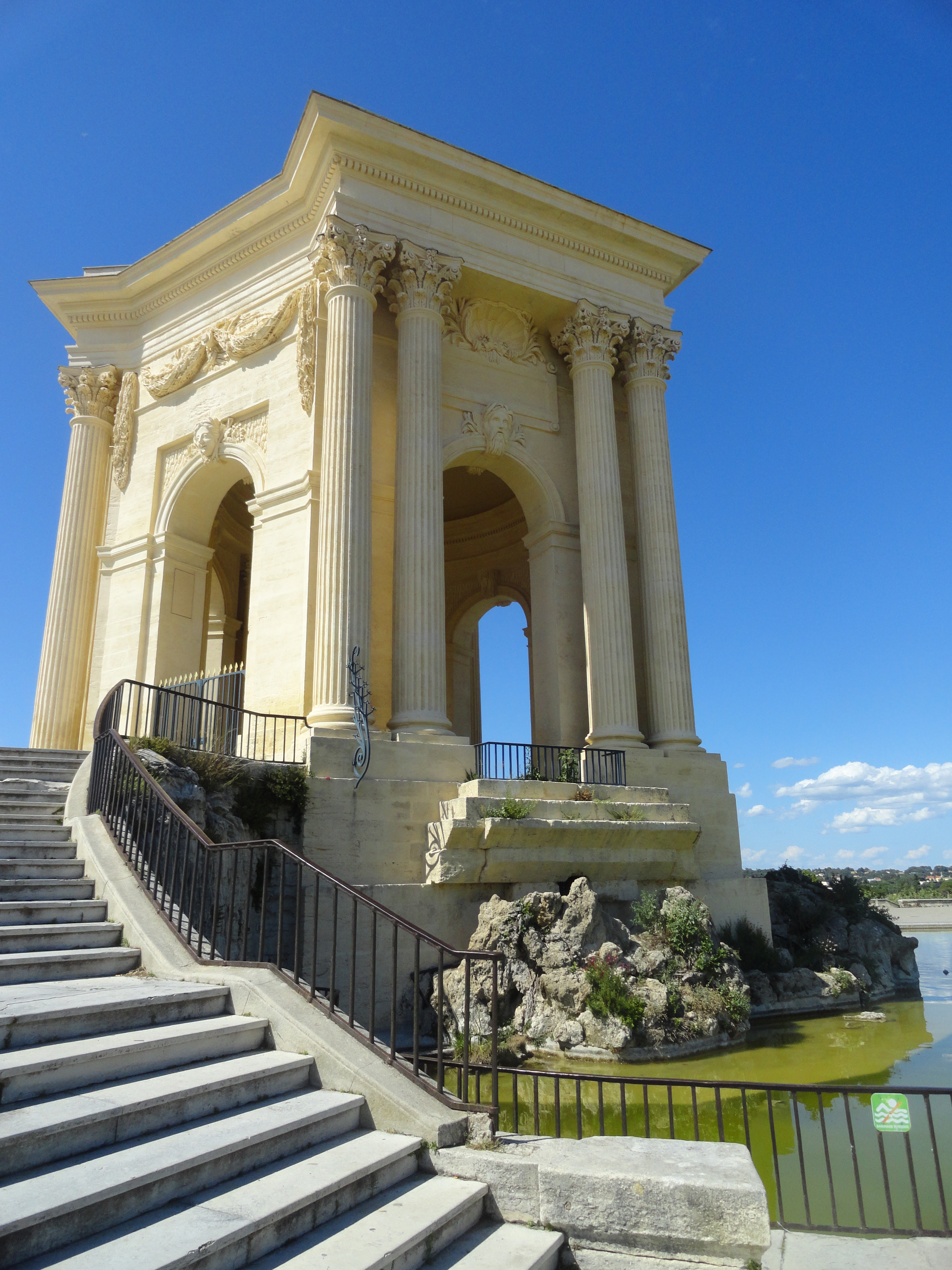
Château d’eau du Peyrou

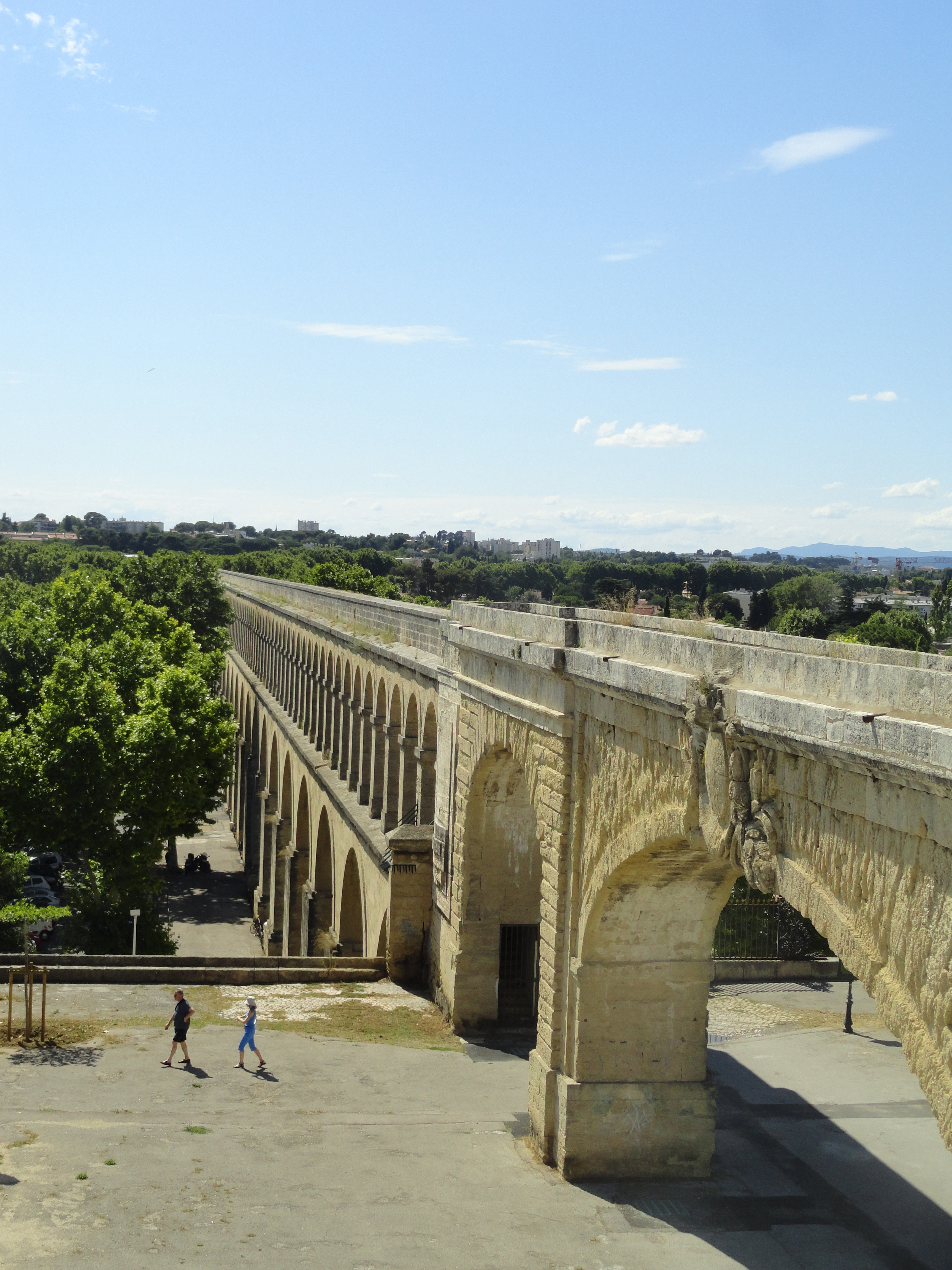
Aqueduc Saint Clément

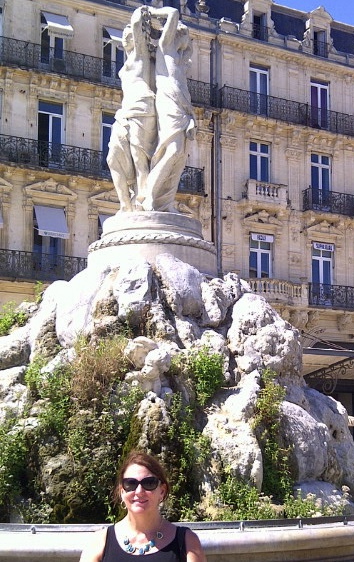
In my upcoming novel, the protagonist and her girlfriends get around Montpellier and its environs very well. They often meet at a café in the centrally located Place de la Comédie, or at the statue of Les Trois Grâces in front of the Opéra National de Montpellier.

Les Trois Grâces in Place de la Comédie

All of which are still there — though somewhat changed.

* at heure de pointe (rush hour)! As we inched along in a traffic jam from the autoroute, a siren-blasting emergency vehicle passed us and several other vehicles with difficulty, due to a complete lack of room.

**See the post Le Tour de (Montpellier) France

L’esprit de l’escalier, spiral staircases and faux-amis

As I have asked mon prof Marie-Hélène many times, Qu’est-ce que ça veut dire?

The answer: literally, “wit of the staircase” — I’m picturing a spiral one —  or, a repartee thought of only too late, such as (often, for me) on the way home. Unlike my quick-witted husband, who has a talent for the perfect comebacks and quips, I get caught up in over-thinking and am slow unable to respond, normalement. That is, until the moment has passed, l’individu is gone and verbal victory is impossible. The stairs have already been climbed.

Like my fear of heights, my tendency toward l’esprit de l’escalier has never changed. Naturellement, when I came across l’expression quite by accident (par hasard) — in a tweet — it caught my attention, I duly noted it and added it to mon vocabulaire français.  

Which brings me to the French term for spiral staircase: escalier en colimaçon, one of my all-time favorite things. In the Parisian home that my husband and I visited this summer, a beautiful wood spiral staircase, slimmer than the miniature one in the above photo, stood in a corner of the living room, le salon. I’ve always wanted a spiral staircase in my house and lobbied to get it when we added on some rooms a few years ago. Alas, the combination of architecture and budget wouldn’t permit it, so I had to settle for a small, decorative one.

Enfin, another recent addition to my French vocabulary, thanks to Marie-Hélène: faux-amis.

Ça veut dire: French and English words that look similar, but have different meanings. Par contre (on the other hand), vrais-amis are words that look similar and do have the same (or similar) meanings. Évidemment,I just used some of the latter, above. Since many words in the two languages have the same roots, it’s not that suprenant (unusual).

Voici some examples of faux-amis that I have learned in class (or en France) and their meanings in French — pour moi, il faut les apprendre:

Car: bus (coach)

Cave: cellar

Confidence: secret

*Distraction: amusement

Figure: face

Grand: tall

Grave: serious

Habit: clothes

Pain: bread

Sensible: sensitive

In my novel, out soon, the main character climbs many an escalier en colimaçon, including a famous one en Italie and a very old one (of course) in Montpellier, France — even though she’s not fond of crumbling ones and also suffers from acrophobia.

But she does know her faux-amis, and her (very witty) amis, aussi.

*This week’s faux-ami 

Anticipating Paris

I just read (and believe) that one of the top ten constant determiners of happiness is our ability to imagine the future and look forward to it.

I’ve always done this, and I enjoy anticipating fun future events. But I’ve learned to avoid feeling disappointed when my pre-conceived notions don’t match reality when it happens. And, that sometimes (quite often), reality surpasses my imaginings, so it pays to be flexible.*

Last spring, as my husband and I planned our two week summer vacation in Europe, I enjoyed imagining the places we would go and what it would be like. We had some good ideas about things to do during the first ten days, in Portugal, the south of France and Lyon. For our last three and a half, to be spent in Paris, we made a list of sights to see. But we knew we might not have time to see them all, or visit all les lieux touristiques.

And we didn’t. Despite the fact that we had “fast passes” to the museums,  there were just too many people — tourists! — crowding the streets and the places to see in the City of Light — La Ville Lumière.

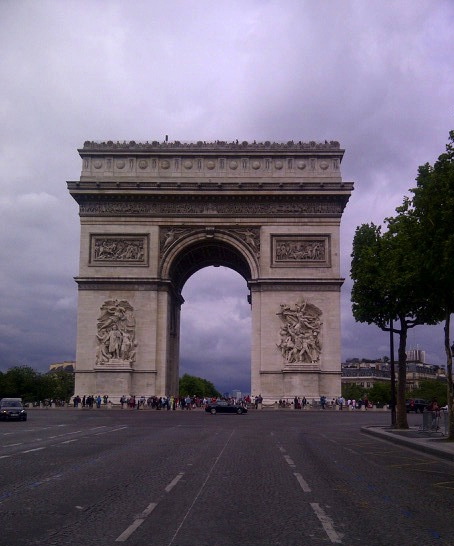
The Champs Élysées as seen from the top of the Arc de Triomphe

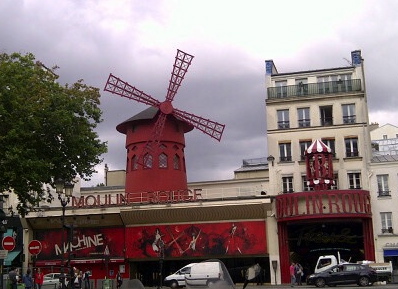
On our first afternoon, we walked to the Eiffel Tower (but didn’t climb it), then took a touristy boat ride over to Notre Dame and Ile de la Cité. The next day we climbed to the top of the Arc de Triomphe, then made our way to Montmartre and Sacré-Coeur. We found the Moulin Rouge, spent a few hours inside the Impressionists’ Museum, the Musée d’Orsay, then met a friend for a drink on the Champs Elysées. We took a whole day away from Paris to tour Versailles (at my husband’s wish, not mine, though I was willing).

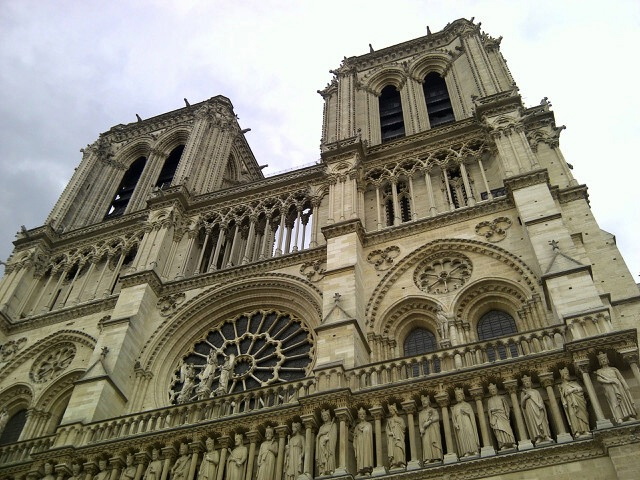
Notre Dame Cathèdrale

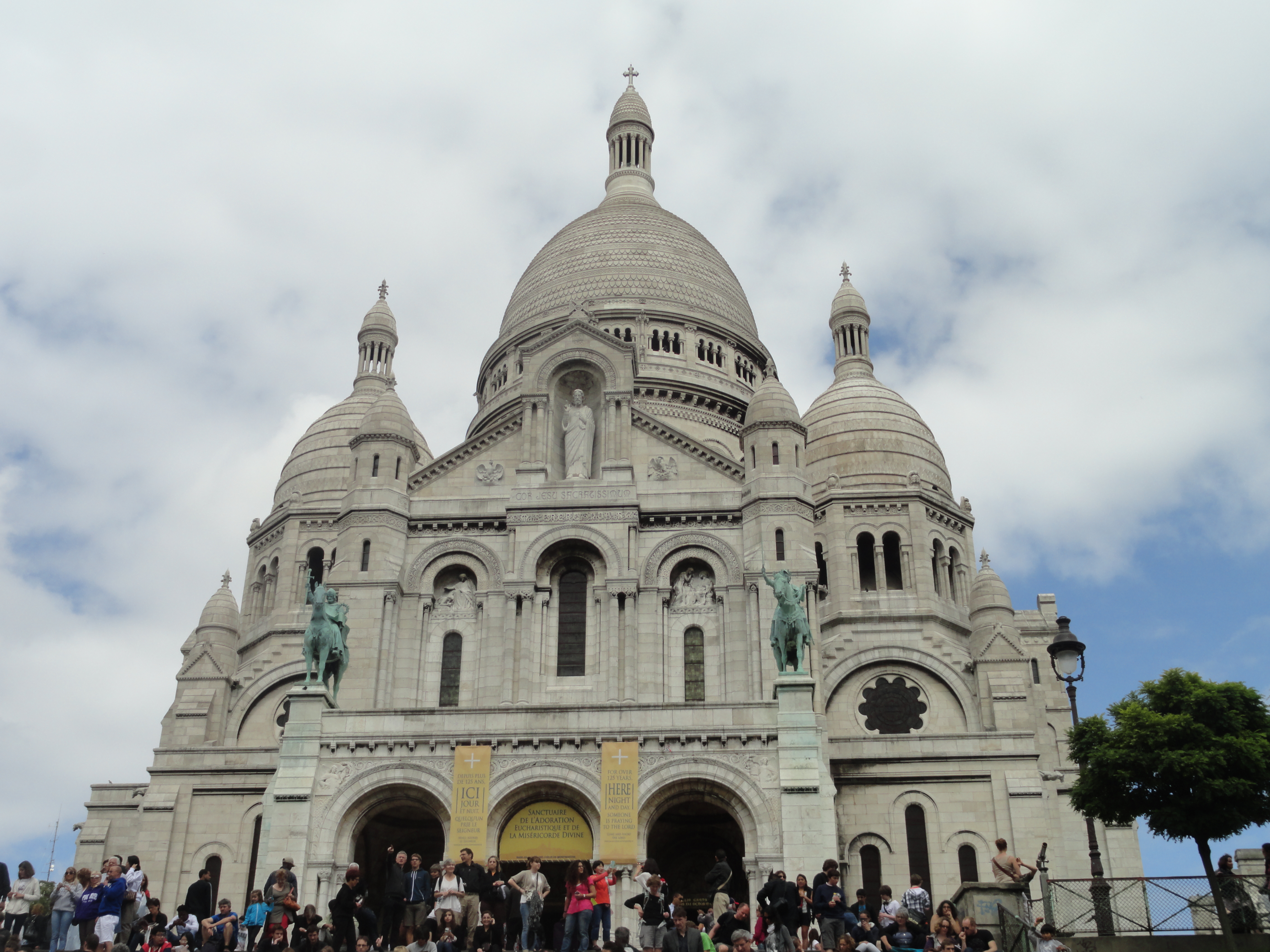
Sacré-Coeur

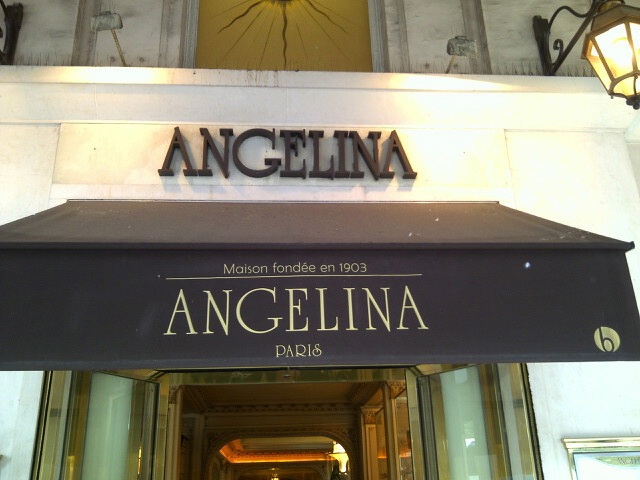
Our last day in Paris was a rainy one, and we spent the morning at the Louvre. Then we wandered through the streets of the Marais district, had lunch and went to the Musée Carnavalet (Musée Picasso was closed). Afterward, we found our way back to Rue de Rivoli and located the famous Angelina Tea Room, known for its hot chocolate and delicious Mont Blanc dessert. But there was a queue, and since we were tired, we decided to pass, call it a day and go have a drink before dinner.

I had a long list of places to see and things to do in Paris that we missed, including the Musée Rodin, Saint-Germain-des-Près and the Jardin du Luxembourg. Though we had dinner one night at a wonderful restaurant in Montparnasse, we didn’t have time to explore the area. Due to lack of planning, we never dined at a 1-, 2- or 3-étoile restaurant — something we would have enjoyed very much, despite the price.

Next time, we’ll plan to stay in Paris much longer, make our dinner reservations ahead, and avoid many of les lieux touristiques. 

I’m already happy just anticipating it.

*For more about those unexpected moments that are more fun than those we plan, see the post Américaine in Paris.

La Compétition: Bravo!

Les jeux olympiques have changed over time, but la compétition hasn’t.

This year’s summer olympics took place right after my trip to France; as we were leaving Europe, tout le monde was arriving. Watching the olympics on television, I was amazed by the athletes’ physical abilities, their strength, courage and determination — and their sheer competitiveness.

I’m not competitive by nature, though my husband might disagree. In fact, my recurring statement, “If I can’t win, I’m not playing,” has become a sort of household inside joke, since it really means I am competitive.

I want to win — just like all the athletes who competed in London this summer. But I suspect they all believed that they could win in their sport. They wanted to win. Otherwise, why train? Why even compete? Though I exercise, I don’t try to beat others in races or sports. I’m not a big game- or card-player either, but I like to compete in some mental matchups. I’ve gotten very good at Scrabble, for example, thanks to a desire to beat a certain sister-in-law, and no one in my house will even play me in Mastermind (see above quote).

I want my teams to win, too. Since I’m a Tar Heel, I love to watch UNC win at play basketball, especially against arch-rival Duke (though I’ve developed a soft spot in my heart for the Duke Medical Center). I’m also a big UGA Bulldawg fan, and I love the Atlanta Falcons.

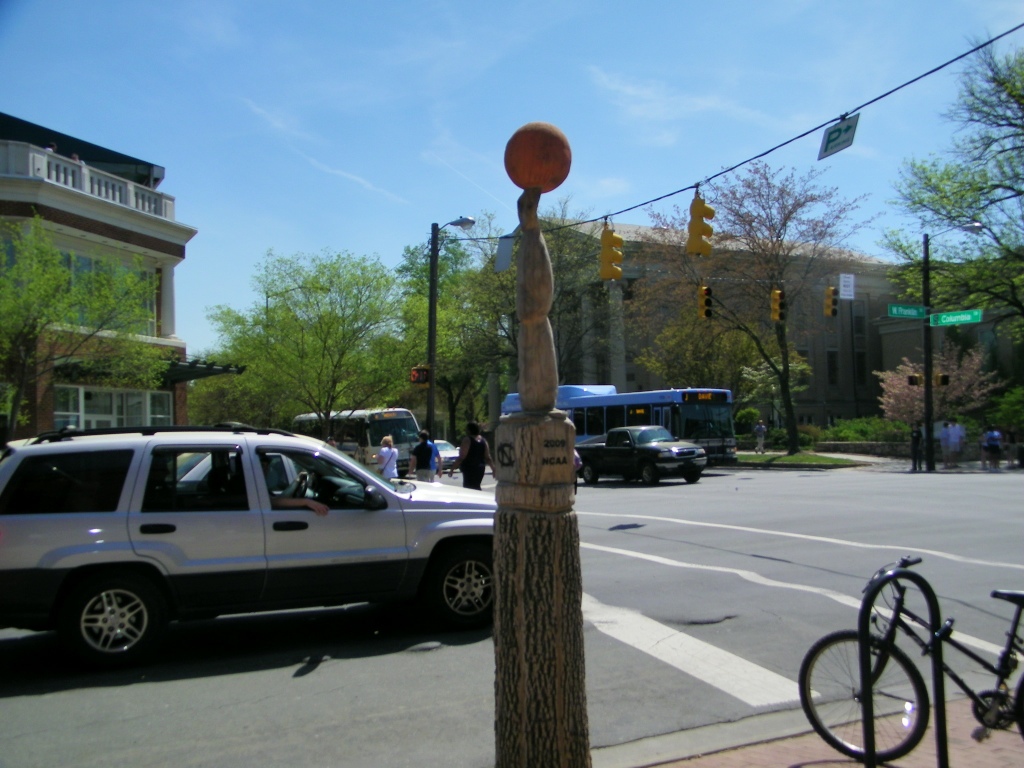
UNC 2009 Basketball Championship sculpture, until recently located in front of Spanky’s restaurant on Franklin Street in Chapel Hill, North Carolina

But back to personal bests and achievements. In this age of social media, I find it a bit troubling weird that so many people post not just those, but all their personal (only good) news, big and small.  Many also share updates about their fabulous trips* as part of a carefully shaped and managed narrative. What are friends and followers to think but “Good for you?” Or, Bravo!

A recent WSJ article by Elizabeth Bernstein titled Are We All Braggarts Now? examined this fairly new phenomenon. Though I’m active on Twitter and (finally) about to create a Facebook page, aside from writerly and the odd motivational (and sometimes cryptic) tweets, I’m endeavoring to keep personal business personal. But that’s just me.*  And, well, marketing is…marketing.

The protagonist of my novel, coming out soon, gets to watch an historic and exciting olympic game, and, though she’s only twenty, reflects on its significance.

But she quickly reverts her attention back to her own life, as any normal twenty-year-old would.

*Oops, I guess I’ve been doing that whole look-at-the-photos-from-my-fab-vacay-in-France thing in recent blog posts. Desolee!

Le Tour de (Montpellier) France

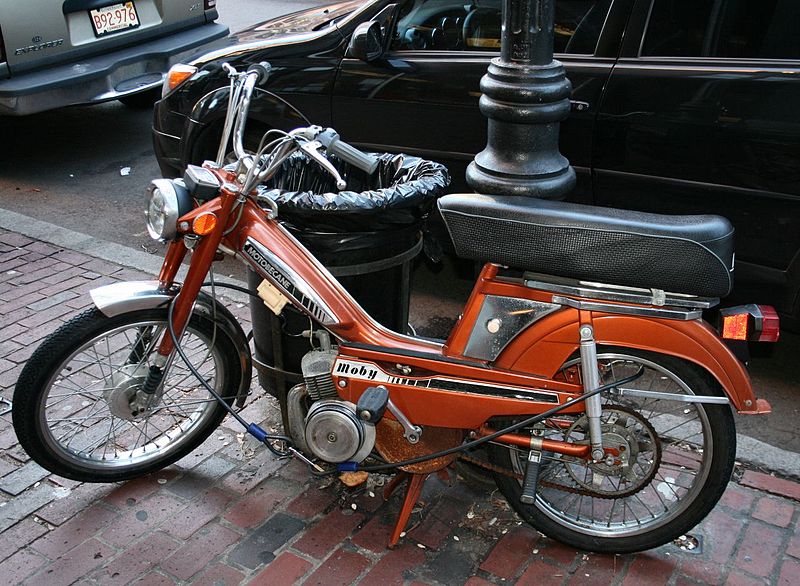
I’ve never cycled in France. But a long time ago, I drove a moped there, and earlier this month, a car. My mobylette was blue, like this one:

I knew my way around Montpellier, the city in the south of France where I studied for a year, and I knew how to get to the closest village, Palavas-les-flots, where I lived in an apartment on the beach. My “bike” didn’t go over about forty miles an hour, but it only took about twenty minutes to get to school. In town, getting around through the narrow, winding streets was easy. When I wanted to call “the States,” I drove to the International Calling Center in the Post Office and waited for a booth.

During our trip to France earlier this month, my husband and I arrived in Montpellier one evening en voiture – by car – after visiting Nice and Monaco, Aix-en Provence and Avignon (with a side trip through the Luberon valley). Though our vehicle’s GPS was confusing at best, after three tries, we navigated the narrow streets to our hotel, located in the vieille ville, close to the Promenade du Peyrou and not far from Place de la Comédie:

We pulled up to the entrance and opened our car doors with difficulty — the voiture in the photo is much smaller than the one we rented. We unloaded our valises and were politely instructed to park in an underground parking garage about a quarter mile away. Le Guilhelm was a former 17th century coach inn and conveniently located just steps away from wonderful restaurants and cafés. 

The next day, we tooled around the city, visiting the university I had attended and the village where I lived. I thought I’d be able to figure out how to get to both, using our quirky built-in GPS and drawing on memories over three decades old…since I’ve always been good at directions.

Wrong!

We chose la mauvaise route – the wrong way – many times. Without meaning to, we saw more of the city and its environs en voiture than I ever had en mobylette. Guessing at each turn, we made sure not to enter streets with the red and white interdit sign (“do not enter” or more literally, “forbidden”) and finally found a road I recognized (faintly) called Route de Mende. When we found the university, I was struck by how different it was from what I remembered. It was older, of course, and had changed quite a bit.

Following signs out of the city, we made it to Palavas using the road I had traveled many times; it seemed much wider. We had lunch at a café on the beach, close to the apartment I shared with two other American girls. Later that afternoon we returned to Montpellier, parked our car in the garage and set out to explore the centre ville, à pied – on foot. Much that we saw was just as I remembered.

The following morning, it was time to drop off our car. We were taking a train to Lyon, and fortunately the car rental drop lot was located at la gare – the train station – not far from our hotel. I had driven to la gare, or by it, through town on my mobylette many times, but by car, it was necessary to take a roundabout route. We gave ourselves an hour to get there.

Which turned out to be a smart decision. We had decent directions, but, malheureusement, when we approached la gare, we couldn’t find the entrance. We circled around and around the station, always keeping it in view but never able to approach it. Finally, I asked a Frenchwoman for help, and her instructions (given en français) provided our solution.

Comme toujours: Montpellier, en mobylette ou à pied, ça va, mais en voiture, c’est impossible!

Les Ados vs. Young (independent) Adults


The French word for teenagers is les adolescents. For short, les ados. No matter what country you live in, Plus ça change, plus c’est la même chose.

The years between childhood and adulthood can be difficult, not only for les ados, but also for les parents. (Make that, ARE difficult. Sans doute.)

But they can also be rewarding, and even fun. And then one day they’re over. No more moodiness, drama, or driving lessons. C’est fini.

While my four kids were teenagers (and one still is), I read books about raising teens, novels about teens, and even the books my own teens were reading. Just recently I read Generation iY: Our Last Chance to Save Their Future by Tim Elmore and Dan Cathy. I found it enlightening if troubling. And then I worried — some more.

But back to my topic: teens vs. Young (independent) Adults, or YiAs, I’ll call them. (A small “i” seems appropriate, and trendy.) YiAs ARE adults, even if young and inexperienced independent. They’re not teens wishing to be adults, with all the independence that adults enjoy. So why do teens read “Young Adult” novels? More important, given that real young adults (and old ones) read them as well, why must the protagonists of YA novels be teens (in high school)?

I wrote my first novel (to be released later this year) not specifically for the “Young Adult” audience, but for readers of any age — it was a story that was “in me” to write. Like Jessica Park, author of Flat-Out Love, I was told by publishing industry professionals that the (college) age of my protagonist (19) was too old for YA, and therefore my book wouldn’t sell. [See her recent terrific blog post, How Amazon Changed My Life]. Well, the professionals were wrong about Jessica’s book. I hope the same will be true for mine.

Ironically, my best beta-reader was a true young, independent adult. In her early twenties, she had spent a year of college in Europe; she related to my characters and gave me a ton of wonderful feedback. She has a “real” job, and though she is close to them, she lives far away from her parents. I’m old enough to be her mom (!), but it’s amazing how much she and I have in common.

If you’re a young adult, you can be independent, but if you’re an ado, alas, you can’t be, yet. (However, at age eighteen you can — almost. But that’s another topic.) Over two years ago, on my son’s nineteenth birthday, I stood by his side at the hospital as a doctor explained that he had a brain tumor. Treated as a legal adult by the medical staff, my son signed the paperwork for emergency surgery that was necessary to save his sight. Later that summer, he had to sign papers authorizing brain surgery at Duke. He survived cancer, something a great many adults never have to face.

That son of mine has changed a lot. I’m grateful he can read whatever he wants to read.

Bonne Chance

As I searched for inspiration for today’s post, out of the blue, my husband (who believes in serendipity) forwarded WSJ article You Call That Lucky? Actually, Yes by author Anne Kreamer.

Kreamer writes that, although she’s been reluctant in the past to attribute successes to luck  (“circumstances beyond my control”), she recently reexamined the idea: perhaps luck played a part. Looking back at her professional journey, she describes “lucky moments” that presented themselves, and when opportunity knocked, she was prepared: she had worked hard. Her conclusion: Reasonable success = [good] luck + preparedness.

But we all know that luck isn’t always good. Kreamer provides an example of a situation that “looked like” bad luck, but wasn’t: it led to a better position and good fortune.

I believe in fate, in serendipity — in luck, whether good or bad — but I prefer the French word, chance. Why is it that, when circumstances beyond our control lend themselves to aid us in achieving our goals, we don’t want to call it (good) luck, but choose instead to claim all the credit? And why, when different, uncontrollable circumstances lead to the opposite, we’re so inclined to blame bad luck rather than ourselves?

I’ve had some professional and personal good luck, but I’ve also had my share of the opposite. But as I dealt with those unfavorable, unfortunate events in the past, I did the best I could. I survived. I worked, as Kreamer says one must, believing that my luck would change. When my husband and I faced a financial crisis in our twenties, we felt alone and snake-bitten. Blaming bad luck (at least, partially) then, rather than ourselves, or worse, each other, helped us get through it. But we also took responsibility for our situation and came together as a couple, learning from our mistakes.

Since then, we’ve faced many other challenges and trials professionally and personally. Just in the last few years, we’ve lost both our fathers and have watched our youngest son survive brain cancer. But my husband and I have also had a lot of (good) luck, and sometimes the difficulties we have faced together have turned into blessings. We’ve stayed together long enough — thirty years, today — to see a lot of things change. Luck can change, fortunately.

If you just give it a chance, and work hard.

’til death do us part: Le mariage

During my lifetime, marriage has changed a lot.

At the time my father passed away on October 31, 2010, my parents had been married for over 58 years. On Memorial Day, Mom and I drove to the Georgia National Cemetery and said a prayer together, thanking God for the gift that Dad was to her and our family, and asking for strength and courage as we learn to live without him, one day at a time.

The eighth of nine children, my father enlisted in the Navy in January 1945, two weeks prior to his eighteenth birthday and unknowing that the war would end before he saw action. He was honorably discharged in July 1946, the same year that he met my mother; he was nineteen and she was fifteen. When they married six years later, there was no money for a reception or even a wedding dress. They said their vows in church before family and friends who sprinkled them with rice as they departed to begin their life together.

Ten years ago, my siblings and I hosted a golden anniversary party for them. It was the most fun evening of my life — and that includes my own wedding day and my silver anniversary party a few years ago. Young and old attended, including my parents’ college roommates, work colleagues, neighbors, friends from church and extended family who came from long distances. My parents finally got to cut their wedding cake, toasts were made, and all who could still walk danced the night away.

Growing up, I never doubted their love for each other and for their children. They were always affectionate, relying on each other for support as they faced many trials together. They were grateful for all the joy they experienced in one another and in their family. Forgiveness and a sense of humor were two very important ingredients in their life as husband and wife.

When mom and I arrived at the cemetery last Monday, she wanted to show me the short handwritten note she had written to Dad to leave with the bouquet of red, white and blue flowers she had brought. I felt surprised and honored that she wanted me to read it. Of the two of them, Dad was the writer, and he was even more sentimental than she is. But in her note, in just a few sentences, she expressed the essence of her lifelong love for him, her devotion and her pain at losing him. She even mentioned the shorthand symbol for “I love you” that she and Dad had used when they were young — the texting emoticon of an earlier time — and that they had had made into matching pendants.

I was overcome with emotion as we placed her note in the envelope and in the bouquet and as we stood together remembering Dad. Marriage is not always easy, but two people who share a lifetime of love and laughter can still find joy and happiness.

Under the Radar: the middle child

With so many more families choosing to have just one or two kids, we middle children are getting squeezed out of the picture.

Despite the current assertion that “three is the new two,” the middle child is an anomaly these days. When I was growing up, a big family was five kids or more; three or four children was normal, and two or less was, well, small. When I got married, I wanted an even number of children (but more than two), and I’m grateful for my four. However, with twins on the first try, our third became the middle, despite my “plan.” And like his middle-child mom, he thrived in his own way, often flying under the radar.

What hasn’t changed about those of us who are neither the oldest nor the youngest child in a family? We usually leave home first, and we might even get married first (I did both). We don’t mind solitude (sometimes preferring it), and we both want and don’t want attention. We’re usually the “smart” different ones, and we like to do things our own way. While the oldest child parks lives according to the rules and the youngest seeks the spotlight (which might irritate us), we carve our own spot and make it work. We’re often the family’s peacemaker. When we choose our friends, we can be flexible; an oldest or a youngest works, but we also don’t mind one of our own — someone whom we understand completely. Ditto on choosing our mate.

It worries me (see earlier post on my glass-half-empty, worrier self) that there are so many fewer of us middle children today — at least in America and the West. What will it be like someday soon when everyone is either an oldest, youngest, or an only child? How will they all get along without us in their midst? And. . . will they miss us?

My middle child son and I are much alike, but of course we are also quite different. A few years ago he introduced me to the television comedy Modern Family, now a favorite of mine and his. We both recognized how much I was like the middle child, Alex. My older sister was like her older sister Haley, and my little brother was like Luke. It was almost uncanny. I’ve watched the show only on DVD and haven’t seen Season 3 yet, but I will soon.

Enfin, of course I can’t close without mentioning France. In July, we’ll visit deux familles français we have met through a student exchange program my daughter (the youngest) participated in during high school. Very unusual for the French, one family has five kids and the other has eight!

Vive la France!

Create a website or blog at WordPress.com

Up ↑