The Road Not Taken: Part One

“Two roads diverged in a wood, and I –
I took the one less traveled by..”
– Robert Frost, The Road Not Taken
 

As the rest of the country – make that, world – knows, snow fell here in Atlanta on Tuesday, and we didn’t deal with it very well. A lot has already been written about why, including the following:

1. We don’t have enough equipment to clear snow and lay down salt on the roads. But snow- and ice-storms are rare down here, so that makes economic sense, even if it’s sometimes maddening.

2. Schools weren’t closed ahead of time for the day (though usually, this is done at the hint of a snowflake, tiny patch of ice, or even just very cold weather). When classes were finally canceled, parents (and buses) got on the road.

3. Everybody panicked, and left work at the same time to go home.

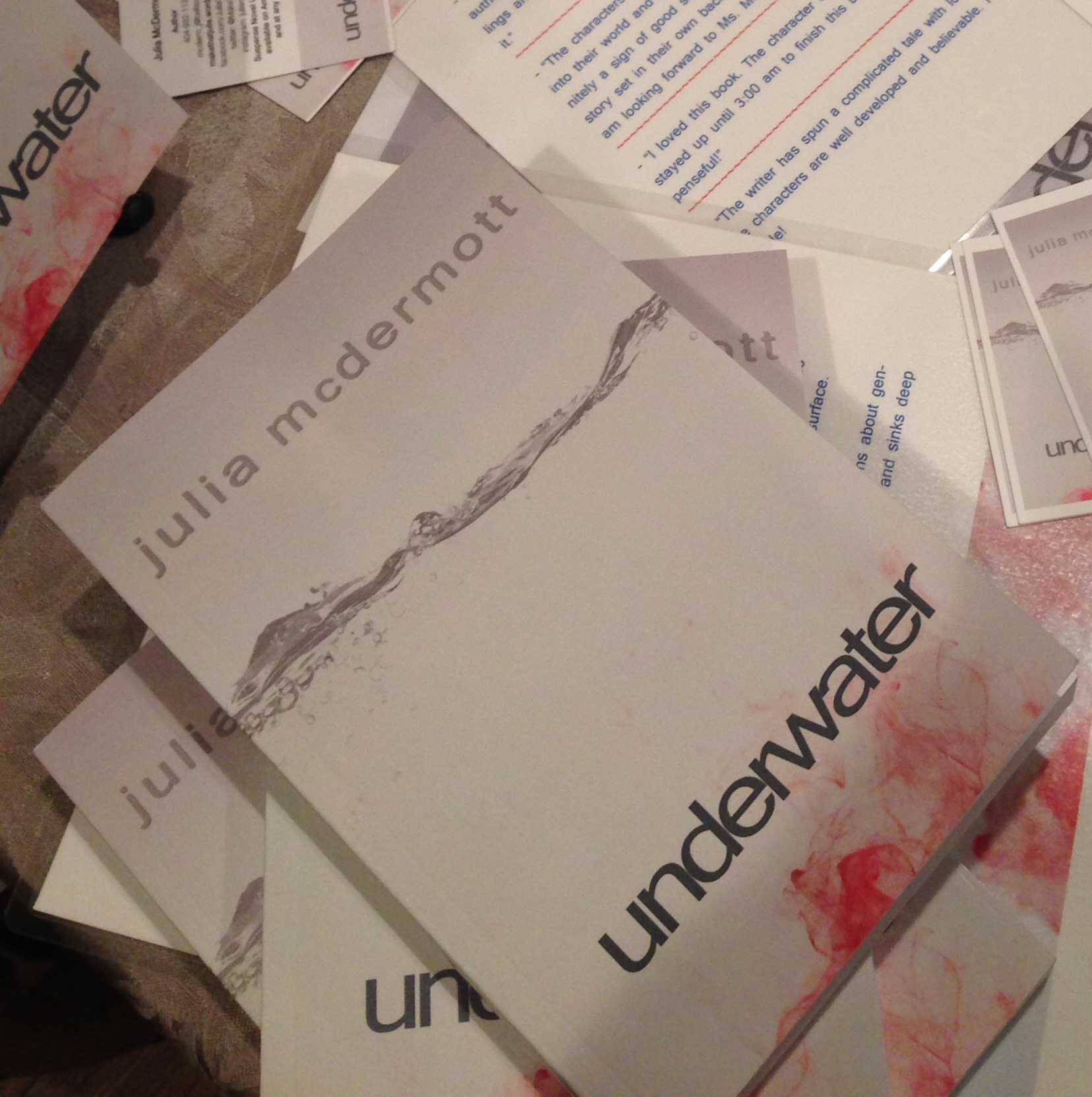
Normally, I would have been at home writing, able to watch the snow fall outside my window. But that morning, I was in a town twenty miles away, signing copies of my novel, UNDERWATER. At noon, I headed home as flurries began, [luckily] stopping for gas first.

I didn’t panic, but I drove cautiously as the flurries turned into flakes, the roads became treacherous, and more and more cars appeared. I wound my way using surface streets I know well, instead of highways often congested in the best of conditions.

(Side note: I survived six winters up north, all of them while driving my kids around: one in Michigan and five in Kansas – where it’s flat. But Atlanta is a city built within a forest, at the foothills of the Appalachian Mountains; it’s hilly here.)

De toute façon, I did pretty well until I was 3 miles from la maison. The streets weren’t yet icy, and though traffic was becoming heavy, cars were moving. Then I got caught in a bottleneck of vehicles at a light, almost all of us turning right. After a frustrating period (I don’t know how long), I ducked into a neighborhood and came out of it a mile further along my journey.

Then, I came to a fork in the road, and had a decision to make. Both routes were equidistant from home, and both were hilly. My usual choice was the road on the left. I could see nothing but stationary red taillights on the right. I saw some on the left, too, but my iPad’s traffic app assured me that it was only for a short distance. So I took that road.

It looked like the road less traveled by.

Wrong. It was gridlock all the way, but as I inched along – literally – down a big hill, and then up the other side, I kept thinking, “It’ll get better!” *

At a certain point, I considered abandoning my car and walking. But that point was after I’d passed all side streets into which I could have turned to park. There was nowhere to ditch my car now (other than a real ditch), and I didn’t want to walk uphill in the cold, carrying my heavy bags. Inside the car was warm. I was making progress toward home at a turtle’s pace, but I was still making progress. And it wasn’t dark – yet – though it was getting colder.

My husband, who had taken the train home from his office hours earlier, kept checking on me. I knew he was considering walking over to rescue me, but what could he do? What I needed was for him to somehow remove the cars in front of me – or at least, get the one right in front of me to move forward. But where could that car go?

Nowhere, because the one ahead of him was barely moving. But that was better than nothing, and as I approached the turnoff for my neighborhood, I braced myself for its snow-caked and potentially icy streets. Without sliding, I made it up and down the steep hills and arrived at my destination just before six p.m.

I was grateful to be home, even though I’d taken a road well heavily traveled.

My view on Tuesday, for quite some time:
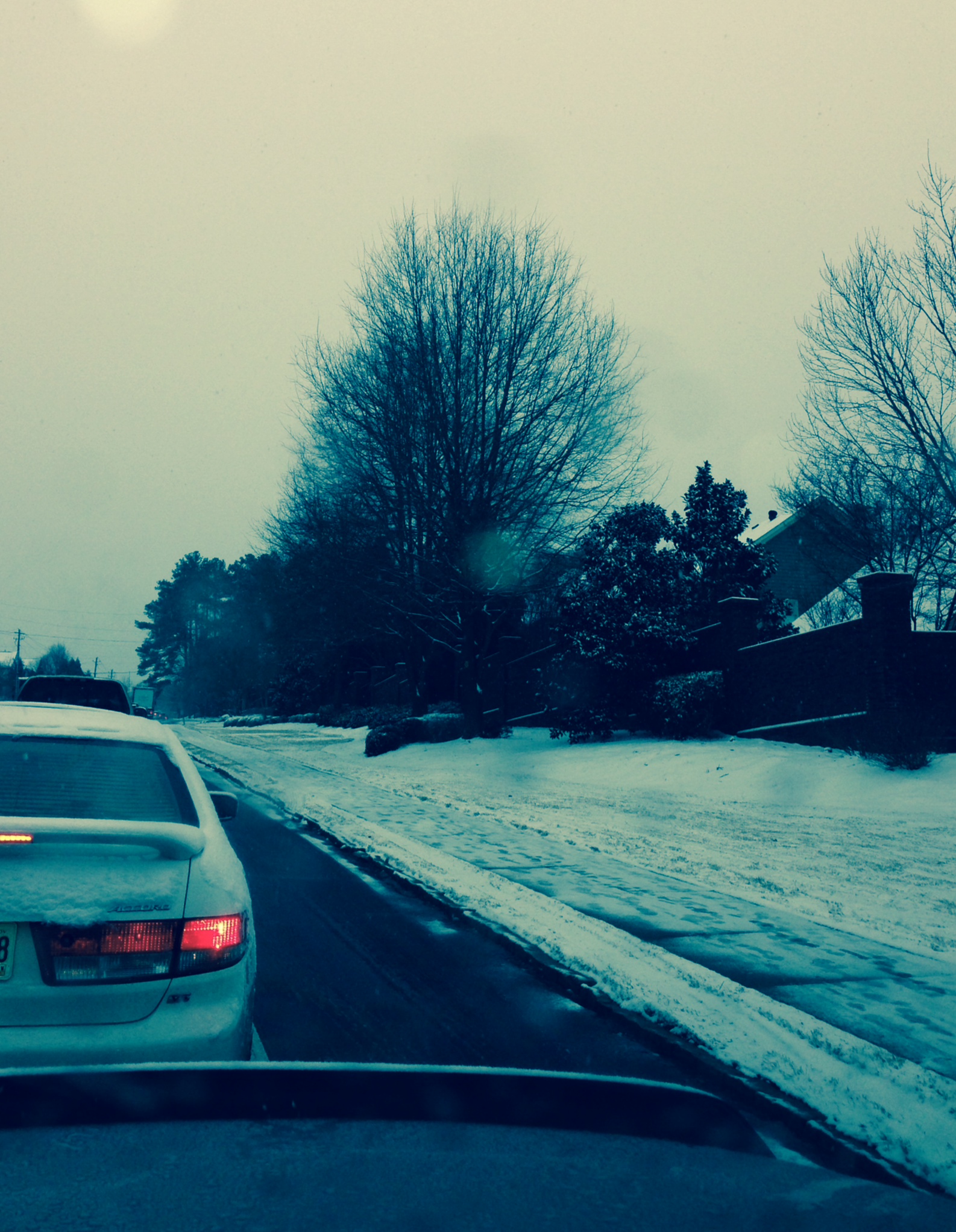
photo 5

Next Post: The Road Not Taken, Part Two (A different kind of road, but honestly, the one less traveled.)

* Indeed, my iPad app (incorrectly) showed that it would.
Rendez-vous in the Big Apple

My husband and I spent a few days in New York City earlier this month, in between two bouts of record low temperatures up there, and (fortunately) days before snow fell in Manhattan.

As we walked from our hotel to the Metropolitan Museum of Art (the “Met”) one day, I tried to picture Candace Morgan’s apartment. Candace is the main character in my Suspense novel UNDERWATER, and she lives in Atlanta and New York. Undoubtedly, her place in the Upper East Side is tiny compared to the luxury penthouse condominium she owns down south. But it works, because she’s a minimalist – sort of.

In UNDERWATER, Candace spends most of her time in the city I know better, Atlanta (though she jets off to two exotic locations, only one of which I’ve visited).  Relatively few of the story’s scenes take place up north, none during the winter; however, unlike me, Candace knows her way around “the City.”

So, why did my husband and I schedule a trip there, with no thought to the January weather possibilities? Parce que we recently reconnected with an old friend from our college days in Chapel Hill, whom we hadn’t seen in decades. That friend and we decided to rendez-vous in New York (she lives in Boston), and she and we contacted three other UNC friends who live in and around New York and asked them to join us.

photo

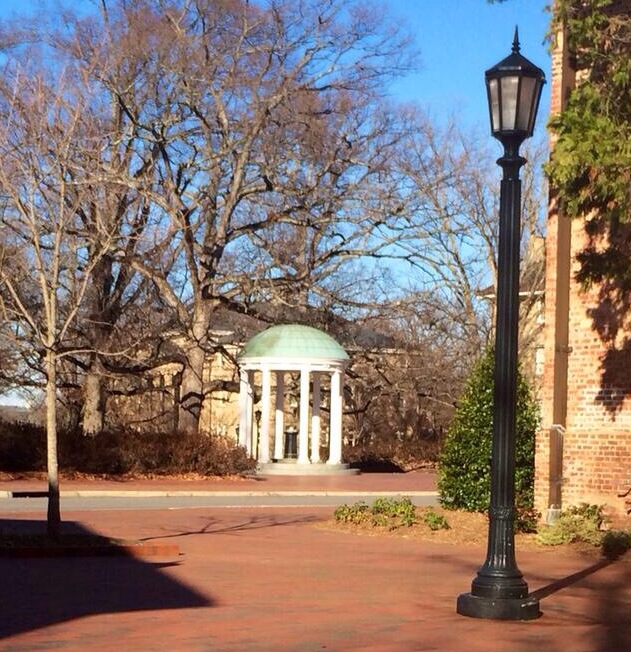
The Old Well on the campus of UNC in Chapel Hill, North Carolina:

We’d seen one of these friends a few times in recent years (although she, the Boston woman, hadn’t seen him since college), but we hadn’t seen or talked to the rest in over thirty years. Pourquoi? Because we had moved to Texas right after graduation and had simply lost contact. We hadn’t known their parents’ addresses or phone numbers  – pretty much the only way, back then, to find each other.

But now, thanks to technology, social networks and just plain serendipity – well, I’m going to credit serendipity too, because it just felt like it was a factor – all but one of us met on a Saturday at a Greek restaurant on 7th Avenue. We caught up over lunch at a round table, then continued to share memories and news at a nearby Irish Pub. That night, it was a smaller group at dinner at an Italian restaurant on 51st Street.

The one who couldn’t attend that Saturday had previously scheduled a weekend trip. But – serendipitously – we had arrived on Thursday, and she happened to be free for dinner that night, so we met at a fabulous midtown restaurant. It was a wonderful kickoff to a great weekend.

It was a  little weird to see each other again after so long and compare memories. On the other hand, it was somehow comfortable. We had all become friends without the benefit of instant and easy communication, and with the aid of serendipity. (Perhaps because we never did anything like it in college, exchanging emails and texts before and after our “reunion” in NYC felt a little odd – but only a little.)

I was glad the weather cooperated while we were there, and I’m thankful we dodged the snow and freezing temperatures (though ours down south have been pareil, lately). Next weekend, as I watch the Super Bowl, if it’s extremely cold (or worse) up there, I’ll be thinking of my northern friends.

With warm thoughts.

L’anniversaire de my (French) “Charlie Brown” Christmas Tree

I(t) made it.

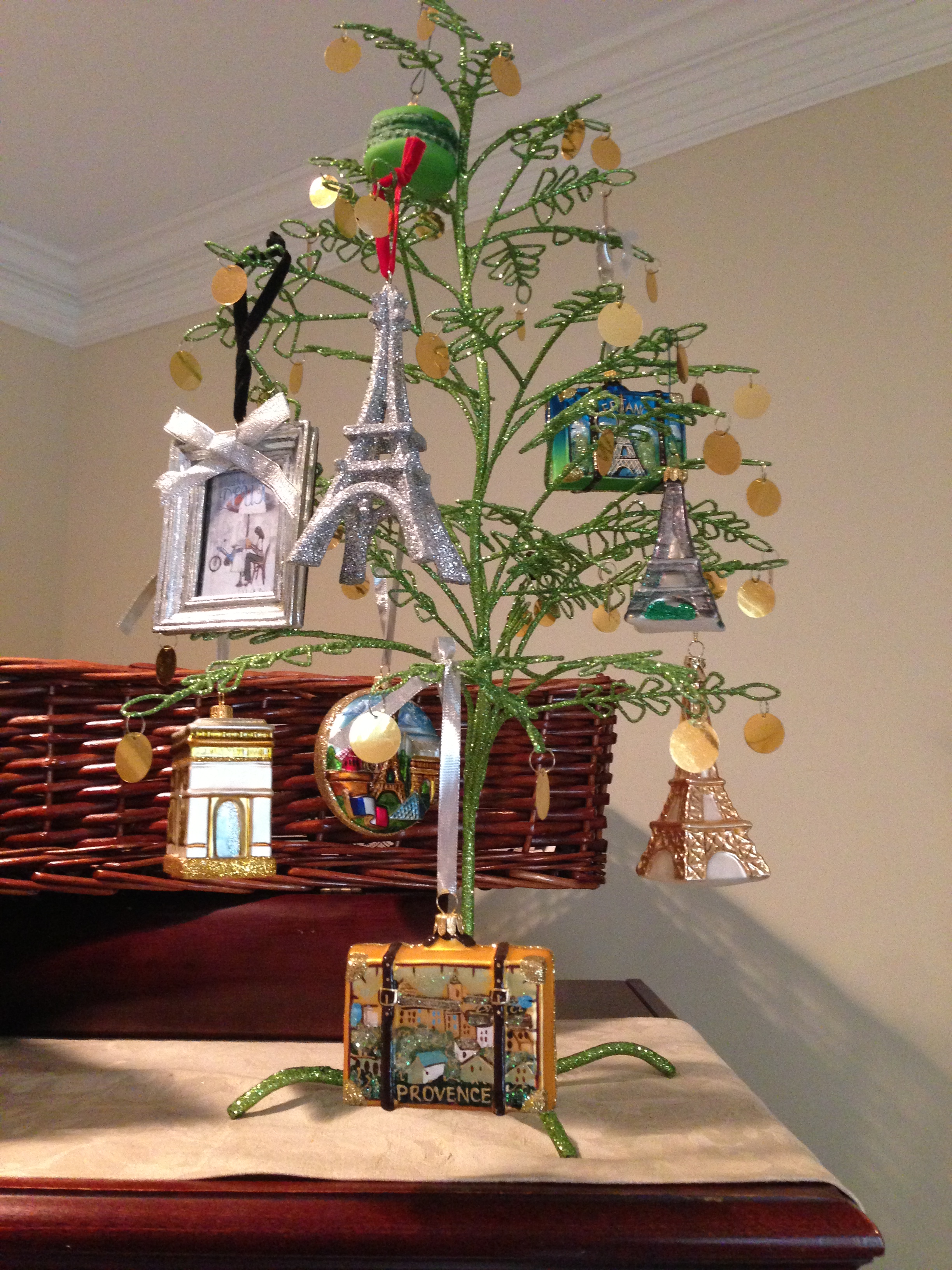
Since last Christmas, I’ve kept my  Charlie Brown Christmas tree out (in my bedroom) all year. When shopping for gifts at Sur La Table earlier this month, I found the rest of the ornaments it needed, including a Buche de Noel.

This year’s tree:

photo 4

To borrow a question from my husband, How many pair of black pants  pair of boots  purses  Eiffel Towers does a person need?

Answer: Beaucoup. For this tree: five, to be exact – though one was a gift from a friend.

Our (real) tree is still up, and it will be for a few more days. It’s nine feet tall and loaded down with ornaments that we’ve collected over the years. Perhaps next year, the ornaments pictured above will go on it – but it’s too early to know that now.

When it comes time to pack up the Christmas decorations, I’m not going to want to store this little tree away in the storage room. So it just might have to stay out for an encore (but not on the dining room table).

Since I like to keep a little bit of Christmas out all year.

Last year’s Tree:

photo copy

The cost of forgiveness

During 2013, I read some good books, one of which was A TREE GROWS IN BROOKLYN by Betty Smith. Being so attached to Chapel Hill, NC, where I went to college, you’d think I would have read it a long time ago – or least known that the famous author lived in the town for many years. I didn’t even know about the Betty Smith house, though I’m sure I’ve walked by it before.

photo 2

I knew about the novel, though, and last summer, when my daughter (soon to be a freshman at UNC) was looking for something good to read, I suggested it to her. She read it, and then I did and immediately added it to my list of all-time favorite books. One of the story’s most memorable lines is spoken by the main character’s grandmother:

“‘Forgiveness is a gift of high value. Yet its cost is nothing.'”

Two characters in my latest novel, UNDERWATER, struggle with forgiveness. One of them faces the difficult task of forgiving someone who refuses to express remorse for a past wrong. The other deals with her own internal feelings of sorrow and shame. For both, the decision to focus on gratitude instead of hurt makes forgiveness not only possible, but much easier.

Like love, gratefulness may seem just to happen, but it’s really a choice. Another idea the story examines is the responsibilities – and limits – of generosity. When someone gives us a gift expecting nothing in return, we feel grateful, we want to reciprocate, and we want to be around them more. When the “gift” has strings attached though, we feel indebted, and we want to create distance from the giver.

While it’s good manners to reciprocate a gift, it’s not always possible to do so at the same level. Gratitude is possible, however. When a gift has strings attached, the giver doesn’t want a gift in return, or even just true gratitude. Instead, (s)he wants the recipient to feel indebted, and then to do something or to behave a certain way.

Forgiveness is a gift for which we should expect nothing back, however. No strings attached.

And its cost is nothing.


My Christmas Poem, y’all

“I want to know everything about you, so I tell you everything about myself.”

– Amy Hempel

Until I realized that almost no one read it (see recent WSJ article Bring on the Holiday Letters), I used to write and send out a Christmas poem every year, and I (rather) miss* doing it.

So, inspired by the Journal author’s words that holiday letters (for me, poems) have a of “seasonal warmth,” and her reminders that they

“…bring us together in a way that our relentless digital connections cannot…represent tradition in a world that discards traditions too quickly…and they require real effort and thought: Somebody took the time to write them.” (emphasis mine)

…here’s my latest:

The kids are all grown; the house, empty, almost –
No more lunches to make, no more bagels to toast.
They’re all doing their thing; my job raising them’s done –
And for me and my husband, the fun’s just begun.
 
Around les enfants, my world used to revolve.
When ma fille was twelve, I found a nouvelle resolve:
I sat down to write books, and I ceased to write verse
For my “holiday letter” – of it, I would disperse.
 
“Who would miss it?” I thought. Just a relative**  few.
All the others would not; from them, I took my cue.
So I focused my brain on a lofty ambition:
“Why not write a whole novel?” That was my admonition.
 
“You can do it!” I said to myself. “You have time;
For a break, you can always come up with a rhyme.
When you hear and see things, you are constantly thinking:
‘That would be a good scene! Or way, with them, for linking.’
 
“Yes, I know it takes months – sometimes YEARS – but, once finished,
You can start a new project, no right-brain cells diminished.
And then, hopefully, readers will love what you’ve written.
Those at home, and in places like France and Great Britain!”
 
So, not knowing if I would succeed or would fail,
I began to create, it became my travail. 
It’s ‘ton boulot,’ a French friend expressed, when I asked.
(That means ‘job.’) And with that, it’s what I am self-tasked.
 
Au même temps, I chose, fluency, to re-attain
in French, la langue stored somewhere inside of my brain.
I commenced with a course that I’m still taking now
And I’ve risen in level, and at times, I know how
 
To think en français; it occurs more and more
When I don’t think about it – then, my “puzzler” gets sore.
I have much more to learn, and to write. But I’m glad
That two books, I have published, and that they can be had
 
On your tablet or, if you’re old-fashioned, in hand.
You can give them as gifts, put them on your nightstand.
I am writing “Book Three” – it will be out next year;
And to you, I wish holidays full of good cheer! 
 
* I just like to smile write. Smiling’s Writing’s my favorite.
** One relative in particular did…
 photo 2

Get Underwater FREE – for a limited time!

“How did it get so late so soon?”

– Dr. Seuss

It’s time to start your holiday shopping, and if you’re like me, you have some Readers on your List.

But if you’re (also) like me, first, you insist on reading/prefer to read like to read any book that you give as a gift.

However, you don’t want to buy yourself a gift  spend money on yourself ahead of time simultaneously, so…

Voici la solution:

From Monday, November 11 through Friday, November 15, you can download UNDERWATER on your Kindle absolutely FREE!

photo

So, next week, go to Amazon and download UNDERWATER on your Kindle. (You need a good book to read next week anyway, before the holidays kick into full gear.) It’s a page-turner, so you’ll finish it in a couple of days.

Then, order the Paperback and wrap it up – or Gift a Kindle version!

Buy a copy for all the Readers on your List!

Then, voilà! You’ll have a head start on the holidays! And it won’t be as late you think it is, as soon as you think!

paragongangCover11

Julie or Julia?

It’s a question I am asked a lot – and have been asked, for most of my life.

Not by friends or family, though  – everyone calls me Julie (and sometimes, Jule or Jules). So, when asked, even though Julia is my real name, I say “Julie.”

It’s just, well, simpler that way.

“Julia” never quite stuck (except for that brief * period in the 80s, when it did, with everyone at the office; after I quit my job to stay home and raise kids, it got unstuck again).

I don’t mind that it didn’t stick – I’m happy with either. However, I sign my name Julia (usually), and once I began writing books, after fleeting thoughts of adopting a pen name, I decided to sign use Julia.

First, Julia is more popular now than Julie. My evidence: my daughter knew several girls in high school named Julia, yet no one named called Julie.

Second – and this is the more important reason – Julia is my real name,  just like a Cathy might have the real name Catherine, or a Jim be a James.  (Then again, I imagine that most people named Julia are called Julia, the way a Maria is called Maria, not Marie.)

But my parents named me Julia, so there you have it.

There are some famous Julia’s (Julia Child, Julia Louis-Dreyfus, Julia Roberts, and even a Saint Julia, I’ve learned), and some famous Julie’s (Julie Andrews, Julie Christie, Julie Newmar). Perhaps, like me, some Julia’s are also, or always, called Julie. Does the last letter really matter that much?

Not really. Make that Julie.

220px-Julie_and_julia

“It ain’t what they call you, it’s what you answer to.”
– W. C. Fields


* Actually, about six years…

Keeping it simple

One of my family’s favorite sayings* is just one word, and it comes from the movie We Are Marshall: 

“Simplify!”

Unlike the movie It’s Complicated,** simplify is not just a sentence, but a verb (and often, a solution). When we repeat that line, it’s obligatoire to speak slowly and adopt a southern accent. And when I worked on the final edit of my latest novel, UNDERWATER, I tried to simplify: I cut some (unnecessary) backstory, clarified the timeline, and streamlined the plot.

photo

But – très important – I also added some depth.

It wasn’t a simple process. It took a lot of reflection, and some trial and error. It’s part of the work of a work-in-progress that can be difficult, for me. But it’s worth it – ça vaut la peine. 

So, under the surface, there were some currents of struggle. For a few days, I resisted diving into the edit. Just like when I go to the pool, I had to test the water – with my toes. I fixed the easy stuff first, then broke my editor’s feedback down into managable tasks. I stayed in the shallow end of the pool for a few days. Then I started swimming, and soon – happily, and mercifully – I got into a rhythm.

[That rhythm thing must be what football players experience when they drive down the field – when they’re “in the zone.”]

Since publication, I’ve gotten some good reviews (Yay!) and many compliments from readers. I’ve also answered many questions, trying not to reveal too much. Lots of people have told me that the ending took them by surprise, and that the story was not a predictable one. Some have asked how I came to know about some of the specifics and story details, and write about them. Others have been intrigued by the novel’s theme, and how I developed the plot.

Was it a simple process? Mais non. But when I was treading water in the writing, when I was sinking into the mind of the villain, and when I plunged into the final edit, I remembered one thing above all:

Simplify!

* Here are some other family sayings taken from movie lines (guess which):
1. “I’ve made my decision. Pull the plug!”
2. “Who ya gonna call?”
3. “These aren’t the droids you’re looking for.”
4. “What we’ve got here is a failure to communicate.”
 
** We also like the “It’s Not Complicated” commercials, with those adorable first graders answering simple questions…

Part Deux: 2 Literally-Asked Questions, and More

Here’s a few more of the questions asked at the Book Launch Party for my novel UNDERWATER, and the answers (and announcements) I wish that I’d should have given (and made):

En premier (first):

The novel is dedicated to my mother, Sally, who was a guest at the party. She knew how nervous I was speaking in front of the large group, and fortunately, she reminded me to announce the book’s dedication to her. I did, but here’s what else I should have said…

I dedicated the book to her because she’s been so supportive of my writing. Years ago, when I mentioned my idea of writing a book, I told her that I was thinking about writing a novel based on my year in France.

“Do it!” she said. “It’s not too late!” When MAKE THAT DEUX was published, no one was more proud of me than she was – and no one’s asked me more about the details of  UNDERWATER, and when it would be released! Thanks, Mom.

En second:

Several people named in the book’s Acknowledgments were in attendance at the party. But who (besides other authors) reads the Acknowledgments page?* So I wished I had recognized them, and explained how much they helped. From pacing and plot to the smallest story details, their input was invaluable!

Enfin (finally), les questions:

Where did you draw your inspiration from for this story?

I drew on some of my own life experiences when writing the story.

My husband and I were “underwater” on our first house in the late 1980s, before being underwater was cool. We moved across the country for a new job in the midst of a declining real estate market, a side effect of the Savings & Loan crisis. We had no choice but to (seriously) downsize and do our best – and to start all over again. No one came to our rescue, and one thing we learned was that it’s much easier to upsize than to downsize. Much easier.

But we did it. We lived not just within our means, but way below them, for several years. In short, we did “Dave Ramsey” before Dave Ramsey was cool.

More than a decade later, after building a new home in the Midwest, we left the area, again for a new job. We sold our house at a loss. Downsizing followed, but we recovered more quickly this time.

When I began writing UNDERWATER, I knew the premise, the protagonist, the villain, the storyline…and I knew the feelings of despair, desperation and stress connected with a house underwater.

I thought that I could write about those feelings through the eyes of fictional characters, and about the havoc that the situation wreaks in all of their lives.

What books have you read recently, and what do you like to read?

I read a range of fiction and some non-fiction, including biographies. I like everything from suspense to coming-of-age stories and romance. I also like historical fiction and classics. And I usually like anything set in France, which includes presque tout – almost everything – by Peter Mayle.

Earlier this year, I read Stephen King’s 11/22/63, and his book written for authors, On Writing (a bonus was an appendix of good books to read). Another great book I read was Unbroken by Laura Hillenbrand.

For the answers to some other questions about UNDERWATER, such as how I selected the title and characters’ names, see FAQ – UNDERWATER. 

* Take a look at my Acknowledgments page (it’s short!) to find out more.

“How is that romantic?” – 4 ways, and a comment

During a recent family vacances au Colorado, I was asked this question about Paris.

Imaginez! (Imagine!)

To be fair, I think the person who asked me has never been there. I joined in his conversation with another (male) family member about Italy and France, and I was probably the person who brought up the idea of romance. But when he asked the question, I was speechless at first. What was the answer, and how could he not know it?

I started to say something about the history, museums and art, and then he they quickly seemed to believe that it was that simple, and didn’t let me explique.* Non, messieurs! C’est pas vrai!

Because I’m an esprit de l’escalier**  kind of woman, and a list-maker, I thought about it later, and here is the réponse I might have given:

1. It’s not just the art and history; it’s their relationship – their connection – to the people, and to the city. It’s something tout à fait français  – absolutely French – and something you just feel. New York City and Washington D.C. have a lot of museums and history, but I don’t find either place particularly romantic. For other reasons, I really, really like them, though.

2. It’s the streets, the restaurants, the gardens and the neighborhoods of Paris…and it’s les français (the French) themselves. What (American) woman doesn’t know that Frenchmen are (normalement) très romantique?

3. It’s La Seine, the river that runs through Paris! A body of water*** (whether sea or river) at sunset or later, makes everything more intimate. How? Je ne sais pas.

riverLa Seine

4. It’s l’amour – love. It’s in the air in Paris, whether you’ve just discovered one another, or are rediscovering…Trust me.

Enfin, the “comment:” Another (short) conversation came up about becoming fluent in French, and someone (who doesn’t speak a foreign language) asserted that “you have to live there.”

Hmm. I diligently studied the language, il y a longtemps et récemment, lived in France for a year as a student, and now I practice and speak it autant que possible. I’d love to live there again un jour, but in the meantime, I’m going to continue speaking it and improving my fluency. C’est possible, madame!

photo copy 5

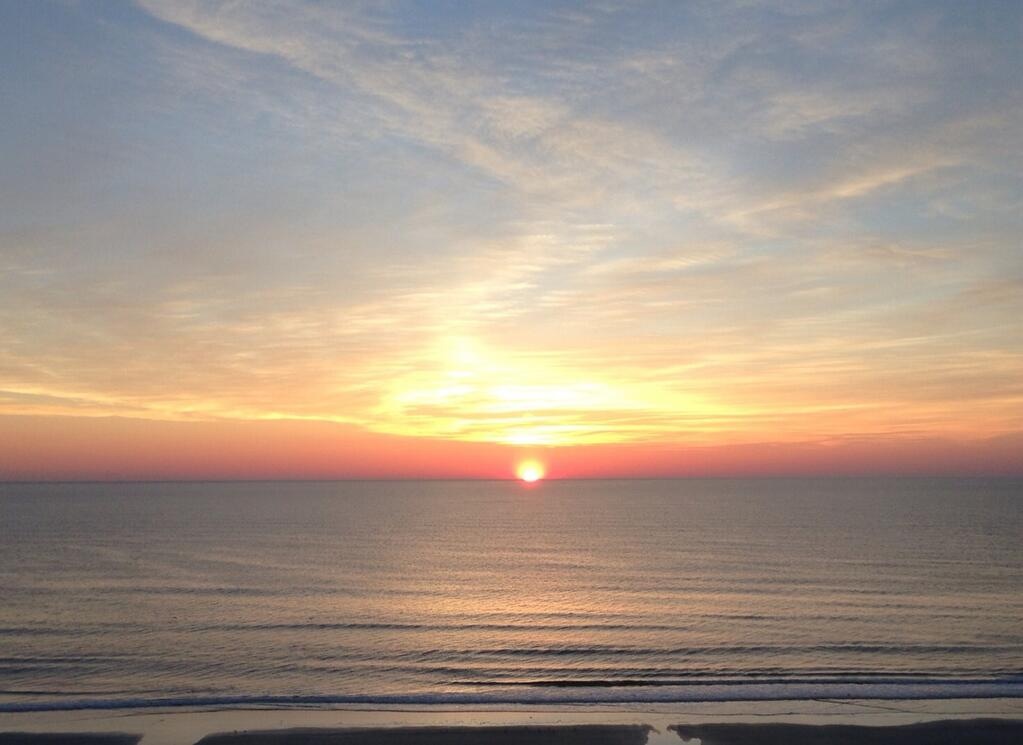
Sunrise at a beach on the Atlantic in Florida earlier this year

* With over thirty members of the famille converging in two cabins in the Rockies for a week, it was hard to finish your sentences without being interrupted (and I’m just a belle-fille et belle-soeur – much nicer sounding than  “outlaw”  daughter- and sister-in-law)

** See my post L’esprit de l’escalier, spiral staircases and faux-amis

*** While there’s romance in my novel MAKE THAT DEUX, there’s more water than romance in my upcoming Suspense novel…. More later!

Create a website or blog at WordPress.com

Up ↑