Call me, maybe, but don’t break my heart: Sortir avec quelqu’un

From what I’ve seen, dating has changed since mon époque.* But I wonder why les jeunes filles gens of today sometimes make going out with someone more difficult than it used to be.

It’s been years decades since I’ve sorti avec mon copain — gone out with, or dated, my boyfriend (or any other guy – but not au même temps, of course). And though my husband and I have gone out on many a “date night” during our marriage, well, once you’re married, you’re not dating anymore.

But way back when, we were dating. Normalement, he would call me, ask me out, I would say “Yes,” and we would set up a rendez-vous (date). He would call me from a “land line” or even a pay-phone similar to the one in the photo, and I would answer the phone. If he called and I didn’t answer, it meant I wasn’t there, and he would call again. When the time for our date came, I would be almost ready, and we would go to a movie or out to dinner.

I’m not one to changer d’avis (change my mind) very often, so it worked.

But back then, when a guy called and asked you out, if you said “Yes,” you didn’t cancel on him at the last minute (or even before that), unless you got sick, someone died, or you had an accident. Yes meant yes, and it didn’t mean maybe. There was no easy way to cancel, anyway, like there is today. So you just went out — and had fun.

Like lots of people, I’ve enjoyed listening to a popular song recently that demonstrates (I think) how different dating is now:

““““““““`

Hey, I just met you,

And this is crazy,

But here’s my number,

So call me, maybe?

““““““““`

Hmm. Is she going to answer the call, I wonder? When I first heard those lines, it reminded me of a song that mon copain at UNC and I liked, featuring these lines:

““““““““““““““““““““““““`

Why do you build me up (build me up) Buttercup, baby 

Just to let me down (let me down) and mess me around 

And then worst of all (worst of all) you never call, baby 

When you say you will (say you will) but I love you still 

I need you (I need you) more than anyone, darlin’ 

You know that I have from the start 

So build me up (build me up) Buttercup, don’t break my heart 

“““““““““““““““““““““““““““

In my novel — about to be released — characters go on dates, and (because they live in a time before cell phones, or even answering machines) they don’t stand up their dates. They live up to their commitments, even if they’ve only committed to Saturday night. “Oui” means “Yes.”  

And like today, no one wants a broken heart.

* Autrefois, or back in MY day

Avignon and Montpellier encore

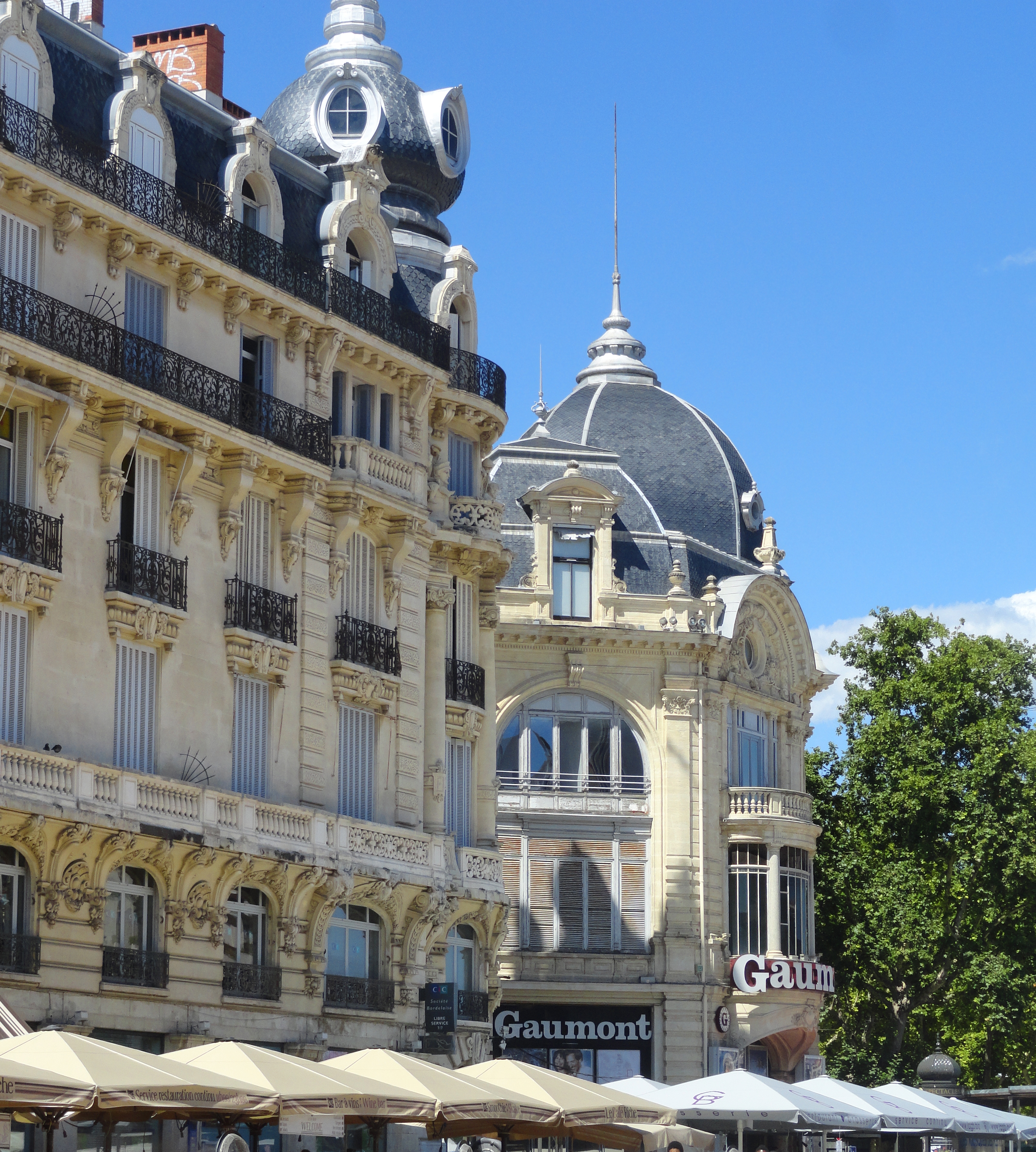
Some parts of these two French cities haven’t changed for centuries.

This summer, during our five days in le Midi (the south of France), my husband and I spent an afternoon in Avignon. Arriving after lunch, we spotted and entered a parking garage near la gare with only moderate difficulty (having to back out of an unmarked a wrong entrance, and, with embarrassment, forcing the car behind us to do the same). Heureusement, I was driving.

It was a hot day and, during its July festival, the town was crowded with visitors from France and elsewhere. But perhaps because, as a student, though I’d lived just over ninety kilometers away for almost a year, I’d never ventured over to Avignon, I wanted to see le pont d’Avignon and look around — as a tourist.

We climbed les escaliers to this view of the pont, then saw the Palais des Papes on our way to Place de l’Horloge.

I wanted to visit another famous town in the region, Nîmes, but because we’re Americans (and therefore, had planned to do more than time would allow), we had to skip it and head over to Montpellier, happily* arriving there at cocktail hour.

At my request, our agent de voyage had booked us at a mid-priced more-expensive-than-in-the-U.S. (but still perfect for our budget) Best Western hotel, Le Guilhem, which we loved once we found it.** However, with no hotel bar evident, we set out à pied to find some alcohol a nice restaurant.

As luck would have it, we found one right next to our hotel on Rue Jean Jacques Rousseau called Le Petit Jardin. Malheureusement, c’était complet (full — although it didn’t look that way). Undeterred (but unhappy that our agent hadn’t found and booked it, since we were celebrating our wedding anniversary), we got a table at another restaurant, Volodia, on the same rue, and ordered champagne.

The following day, a Friday, we did some exploring. Some parts of Montpellier were just as I recalled, and some parts of it were quite different. We walked through the campus where I had attended classes and had studied at la bibliothèque. We visited nearby Palavas-les-flots and found my old (and only slightly changed) apartment building. We toured Montpellier some more (mais pas en voiture) and learned a little of its historyIt was a strange but wonderful feeling to be in a place where I had missed mon ami.

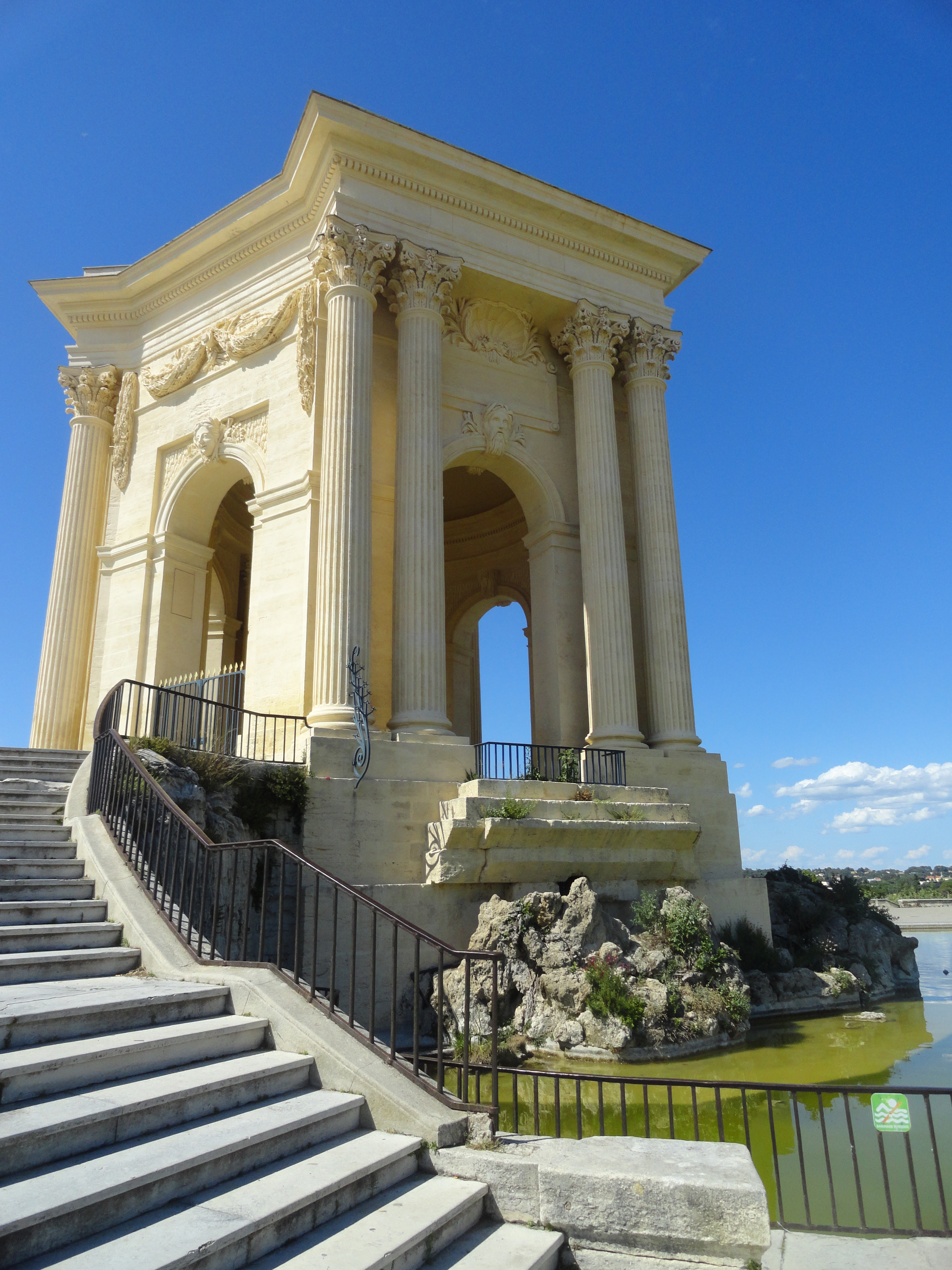
Château d’eau du Peyrou

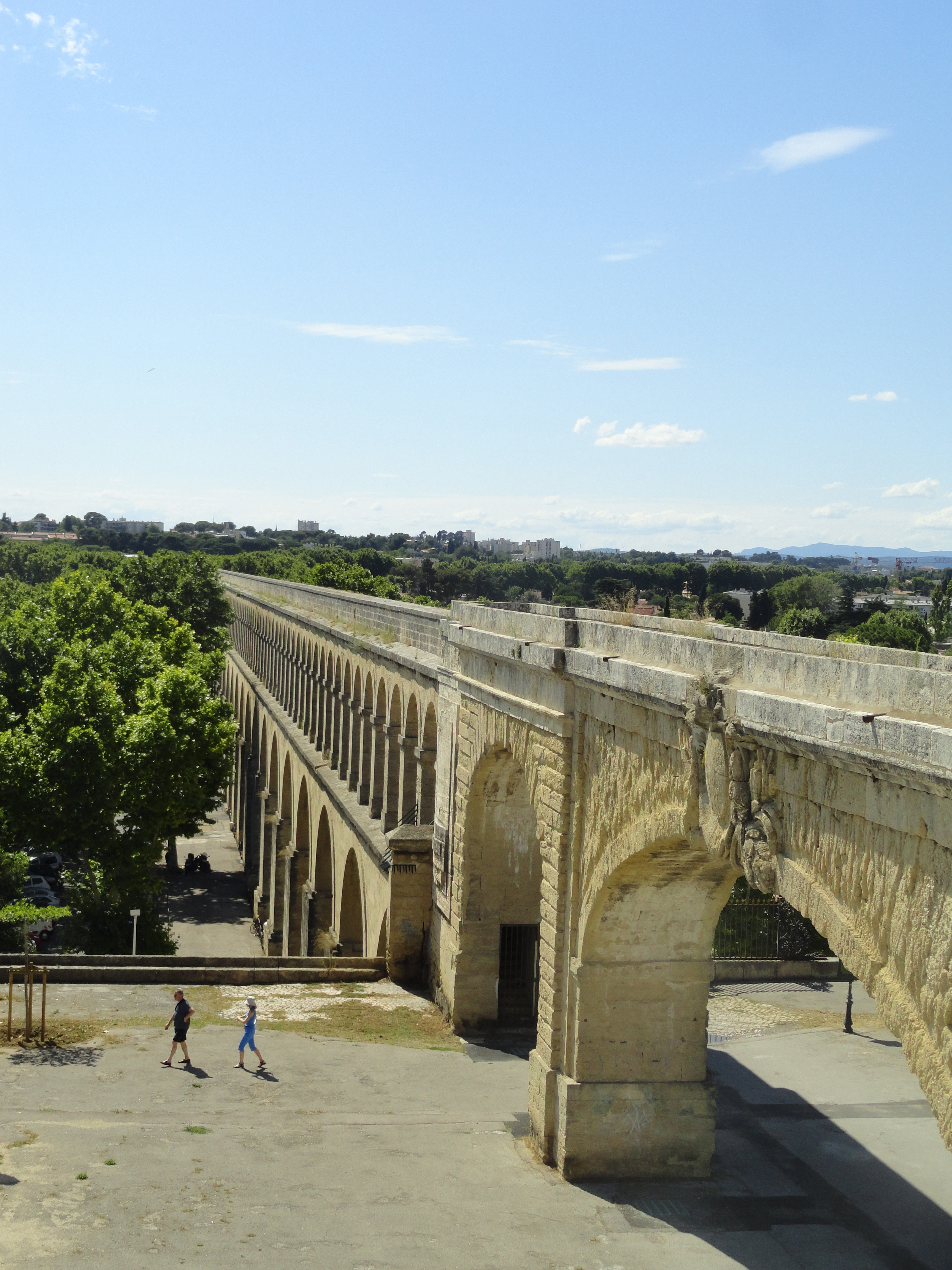
Aqueduc Saint Clément

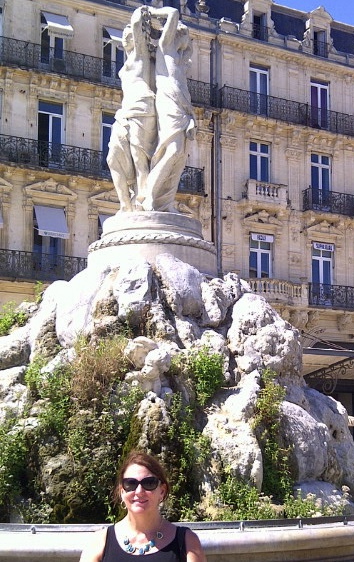
In my upcoming novel, the protagonist and her girlfriends get around Montpellier and its environs very well. They often meet at a café in the centrally located Place de la Comédie, or at the statue of Les Trois Grâces in front of the Opéra National de Montpellier.

Les Trois Grâces in Place de la Comédie

All of which are still there — though somewhat changed.

* at heure de pointe (rush hour)! As we inched along in a traffic jam from the autoroute, a siren-blasting emergency vehicle passed us and several other vehicles with difficulty, due to a complete lack of room.

**See the post Le Tour de (Montpellier) France

Bonjour! L’etiquette française

The French are a very polite group, à mon avis.

First of all (and this has been true pendant longtemps), everywhere in France, one always greets another — n’importe qui (anyone) — with a Bonjour (or, among friends, Salut). Bonjour, Madame. Bonjour, Monsieur. 

It’s de rigueur (en anglais et en français), if not obligatoire, as we used to say when I was a student in Montpellier, France many years ago. It’s part of French etiquette: one doesn’t ask another person for assistance, or begin speaking at all, before the polite French greeting.

Les français teach their children good manners, la politesse, and from what I observed when I was in France this summer, they do a very good job.* Polite French children grow up to be polite French adults. Taxi drivers, hotel staff, museum workers, merchants, wine makers, teachers, lawyers, accountants, actors, and yes, even waiters treated me and my husband with courtesy and good manners.

Maybe it helped that I speak French, and my husband speaks un peu — he learned some key words and phrases, and when to use them.

Par exemple: Bonjour, Bonsoir et Bon week-end.

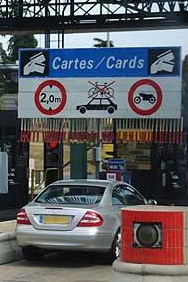
Even French toll booth machines on the autoroute are polite. As we drove from city to city in the south of France, we encountered many of them unexpectedly, panicking only the first time, when I was driving (“Do we need exact Euro change? Are we in the right lane? Does it take credit cards?”) The answers were no, yes and yes. Upon the successful completion of our payment, the machine replied in a cheery French female voice: “Merci! Bon voyage!” 

The French equivalent of ‘ave a nice day, “Thank you! Have a good trip!” just seemed more, well, personal. And it made me laugh.

Back before our vacation, I heard many an American complain that the French — in particular, French Parisian waiters

1. get annoyed when tourists don’t speak any French (and don’t even try)

2. don’t linger, hover, try to strike up a conversation, learn English or read their minds, and

3. take (unnecessary?) long breaks, leaving their customers to sit leisurely and enjoy a drink and a good meal.

Hmm. Though we have much in common with the French, we live in different cultures and have different customs. And perhaps we demanding Americans just misunderstand French etiquette.

Back in my day,** I worked as a waitress (as opposed to a “server”) when waiters did not share tables, work or tips. Then, a waiter/waitress could get “up a tree” (or just, “tree’d” in North Carolina restaurant lingo) when several groups were seated at his or her tables within seconds of each other. When I was working to put myself through college, it helped that my customers not only spoke the native language, but also didn’t expect not to speak it. I didn’t linger or hover at my tables, and I didn’t tell the diners my name (why?). I did take breaks, but only when I had time — it’s the American way.

But I always politely greeted my customers and thanked them for their business (in English) —  and I made a lot of money.

* see the post L’éducation des enfants français

** à mon époque, or autrefois… More on this in an upcoming post.

L’esprit de l’escalier, spiral staircases and faux-amis

As I have asked mon prof Marie-Hélène many times, Qu’est-ce que ça veut dire?

The answer: literally, “wit of the staircase” — I’m picturing a spiral one —  or, a repartee thought of only too late, such as (often, for me) on the way home. Unlike my quick-witted husband, who has a talent for the perfect comebacks and quips, I get caught up in over-thinking and am slow unable to respond, normalement. That is, until the moment has passed, l’individu is gone and verbal victory is impossible. The stairs have already been climbed.

Like my fear of heights, my tendency toward l’esprit de l’escalier has never changed. Naturellement, when I came across l’expression quite by accident (par hasard) — in a tweet — it caught my attention, I duly noted it and added it to mon vocabulaire français.  

Which brings me to the French term for spiral staircase: escalier en colimaçon, one of my all-time favorite things. In the Parisian home that my husband and I visited this summer, a beautiful wood spiral staircase, slimmer than the miniature one in the above photo, stood in a corner of the living room, le salon. I’ve always wanted a spiral staircase in my house and lobbied to get it when we added on some rooms a few years ago. Alas, the combination of architecture and budget wouldn’t permit it, so I had to settle for a small, decorative one.

Enfin, another recent addition to my French vocabulary, thanks to Marie-Hélène: faux-amis.

Ça veut dire: French and English words that look similar, but have different meanings. Par contre (on the other hand), vrais-amis are words that look similar and do have the same (or similar) meanings. Évidemment,I just used some of the latter, above. Since many words in the two languages have the same roots, it’s not that suprenant (unusual).

Voici some examples of faux-amis that I have learned in class (or en France) and their meanings in French — pour moi, il faut les apprendre:

Car: bus (coach)

Cave: cellar

Confidence: secret

*Distraction: amusement

Figure: face

Grand: tall

Grave: serious

Habit: clothes

Pain: bread

Sensible: sensitive

In my novel, out soon, the main character climbs many an escalier en colimaçon, including a famous one en Italie and a very old one (of course) in Montpellier, France — even though she’s not fond of crumbling ones and also suffers from acrophobia.

But she does know her faux-amis, and her (very witty) amis, aussi.

*This week’s faux-ami 

Anticipating Paris

I just read (and believe) that one of the top ten constant determiners of happiness is our ability to imagine the future and look forward to it.

I’ve always done this, and I enjoy anticipating fun future events. But I’ve learned to avoid feeling disappointed when my pre-conceived notions don’t match reality when it happens. And, that sometimes (quite often), reality surpasses my imaginings, so it pays to be flexible.*

Last spring, as my husband and I planned our two week summer vacation in Europe, I enjoyed imagining the places we would go and what it would be like. We had some good ideas about things to do during the first ten days, in Portugal, the south of France and Lyon. For our last three and a half, to be spent in Paris, we made a list of sights to see. But we knew we might not have time to see them all, or visit all les lieux touristiques.

And we didn’t. Despite the fact that we had “fast passes” to the museums,  there were just too many people — tourists! — crowding the streets and the places to see in the City of Light — La Ville Lumière.

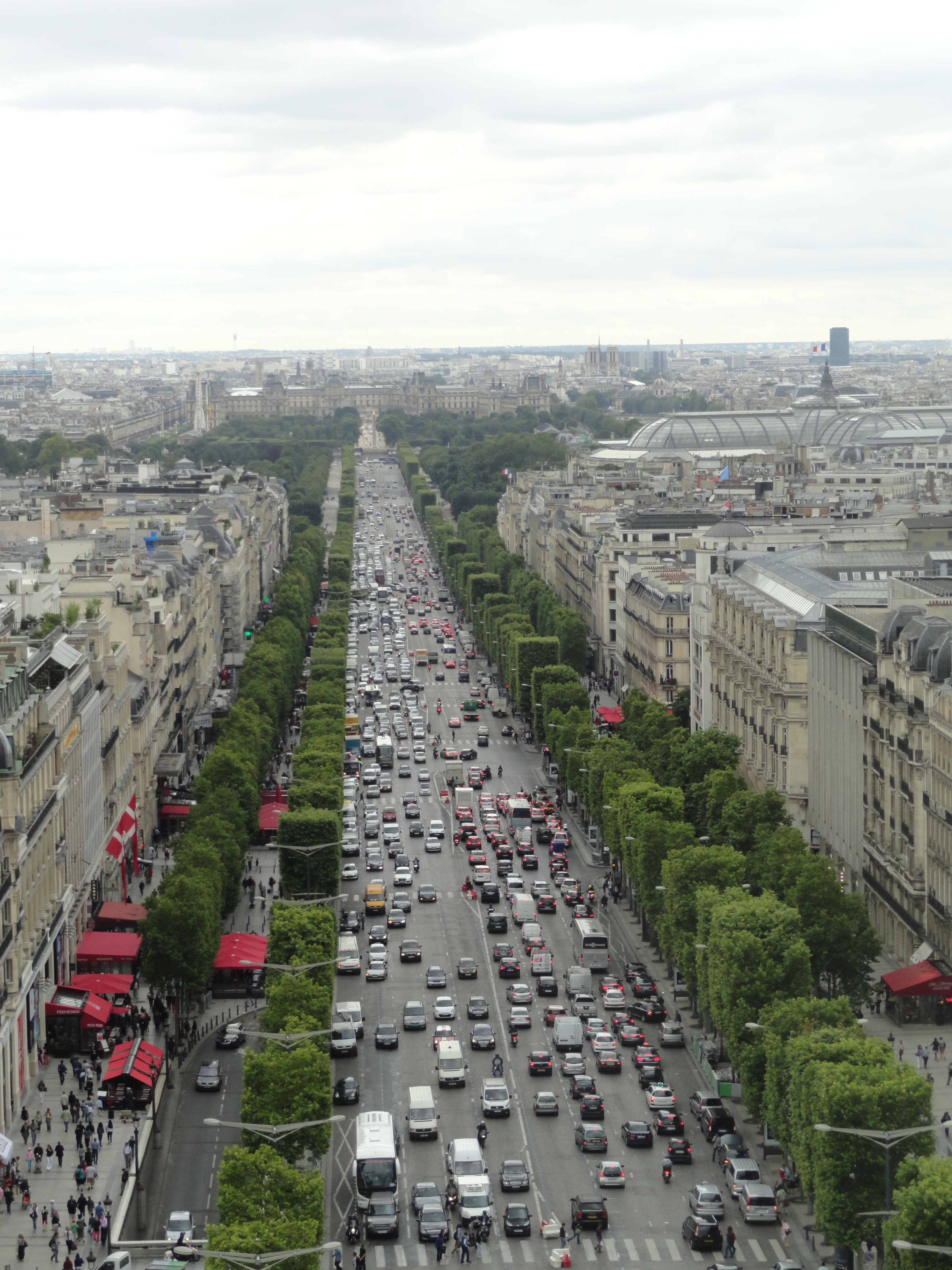
The Champs Élysées as seen from the top of the Arc de Triomphe

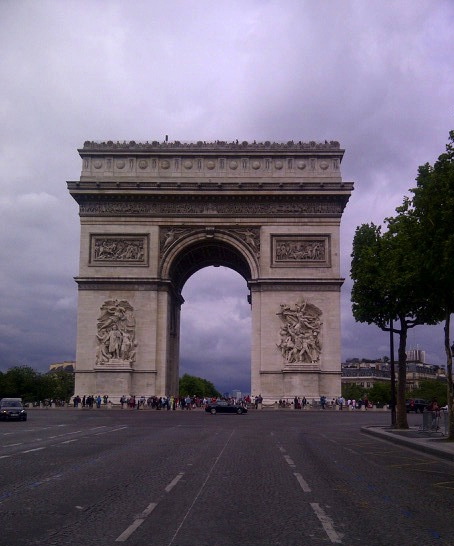
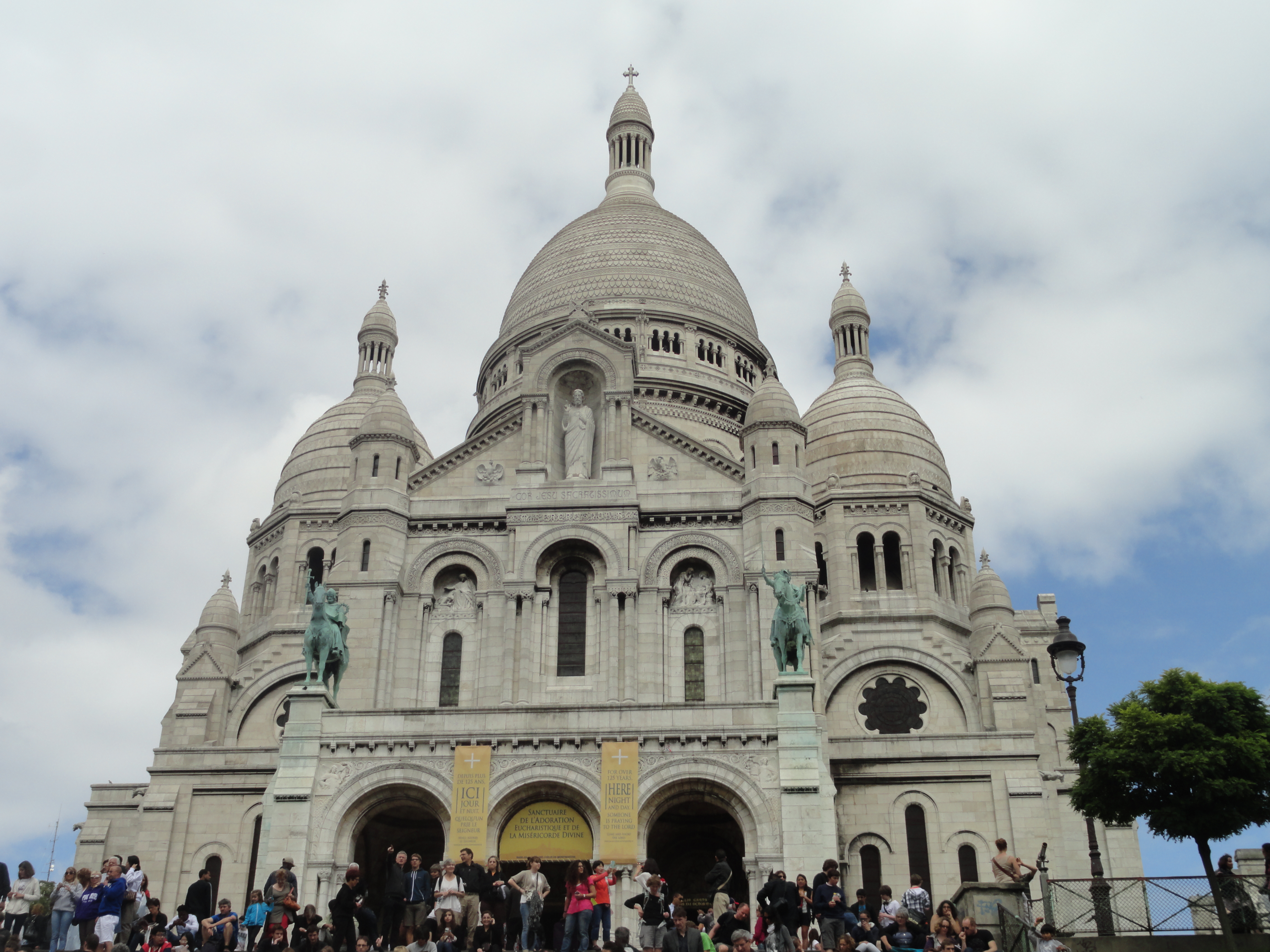
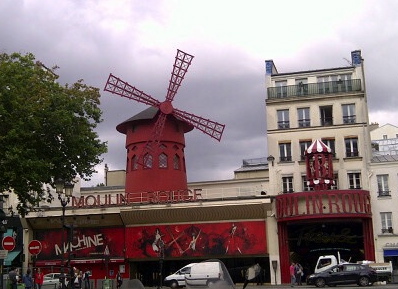
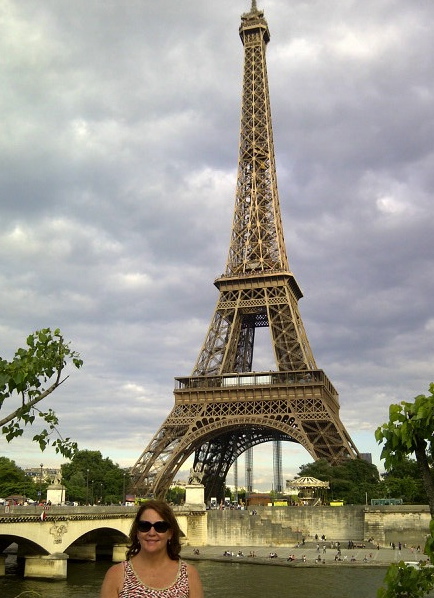
On our first afternoon, we walked to the Eiffel Tower (but didn’t climb it), then took a touristy boat ride over to Notre Dame and Ile de la Cité. The next day we climbed to the top of the Arc de Triomphe, then made our way to Montmartre and Sacré-Coeur. We found the Moulin Rouge, spent a few hours inside the Impressionists’ Museum, the Musée d’Orsay, then met a friend for a drink on the Champs Elysées. We took a whole day away from Paris to tour Versailles (at my husband’s wish, not mine, though I was willing).

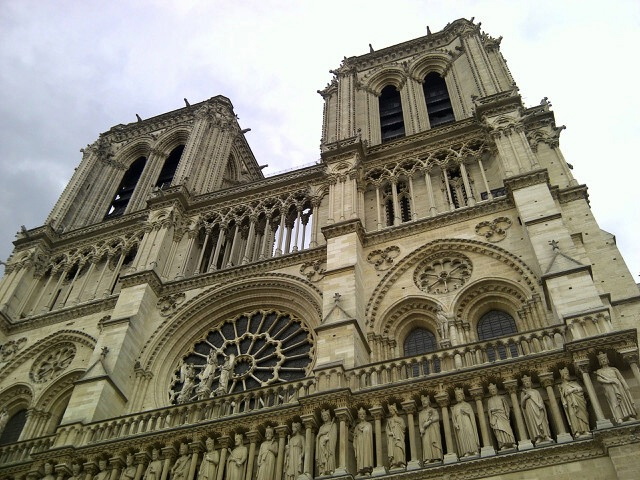
Notre Dame Cathèdrale

Sacré-Coeur

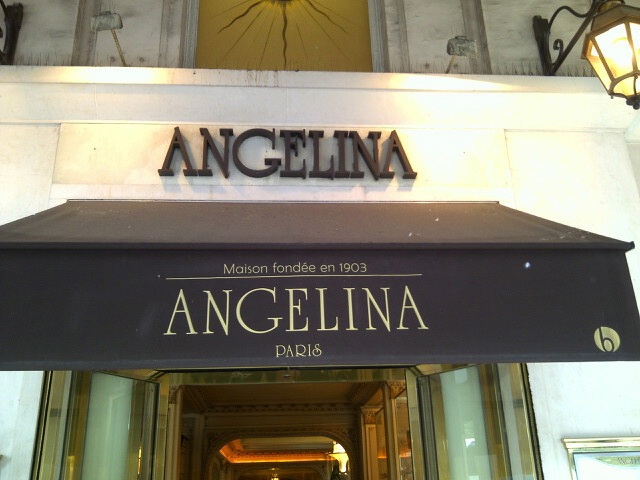
Our last day in Paris was a rainy one, and we spent the morning at the Louvre. Then we wandered through the streets of the Marais district, had lunch and went to the Musée Carnavalet (Musée Picasso was closed). Afterward, we found our way back to Rue de Rivoli and located the famous Angelina Tea Room, known for its hot chocolate and delicious Mont Blanc dessert. But there was a queue, and since we were tired, we decided to pass, call it a day and go have a drink before dinner.

I had a long list of places to see and things to do in Paris that we missed, including the Musée Rodin, Saint-Germain-des-Près and the Jardin du Luxembourg. Though we had dinner one night at a wonderful restaurant in Montparnasse, we didn’t have time to explore the area. Due to lack of planning, we never dined at a 1-, 2- or 3-étoile restaurant — something we would have enjoyed very much, despite the price.

Next time, we’ll plan to stay in Paris much longer, make our dinner reservations ahead, and avoid many of les lieux touristiques. 

I’m already happy just anticipating it.

*For more about those unexpected moments that are more fun than those we plan, see the post Américaine in Paris.

La Compétition: Bravo!

Les jeux olympiques have changed over time, but la compétition hasn’t.

This year’s summer olympics took place right after my trip to France; as we were leaving Europe, tout le monde was arriving. Watching the olympics on television, I was amazed by the athletes’ physical abilities, their strength, courage and determination — and their sheer competitiveness.

I’m not competitive by nature, though my husband might disagree. In fact, my recurring statement, “If I can’t win, I’m not playing,” has become a sort of household inside joke, since it really means I am competitive.

I want to win — just like all the athletes who competed in London this summer. But I suspect they all believed that they could win in their sport. They wanted to win. Otherwise, why train? Why even compete? Though I exercise, I don’t try to beat others in races or sports. I’m not a big game- or card-player either, but I like to compete in some mental matchups. I’ve gotten very good at Scrabble, for example, thanks to a desire to beat a certain sister-in-law, and no one in my house will even play me in Mastermind (see above quote).

I want my teams to win, too. Since I’m a Tar Heel, I love to watch UNC win at play basketball, especially against arch-rival Duke (though I’ve developed a soft spot in my heart for the Duke Medical Center). I’m also a big UGA Bulldawg fan, and I love the Atlanta Falcons.

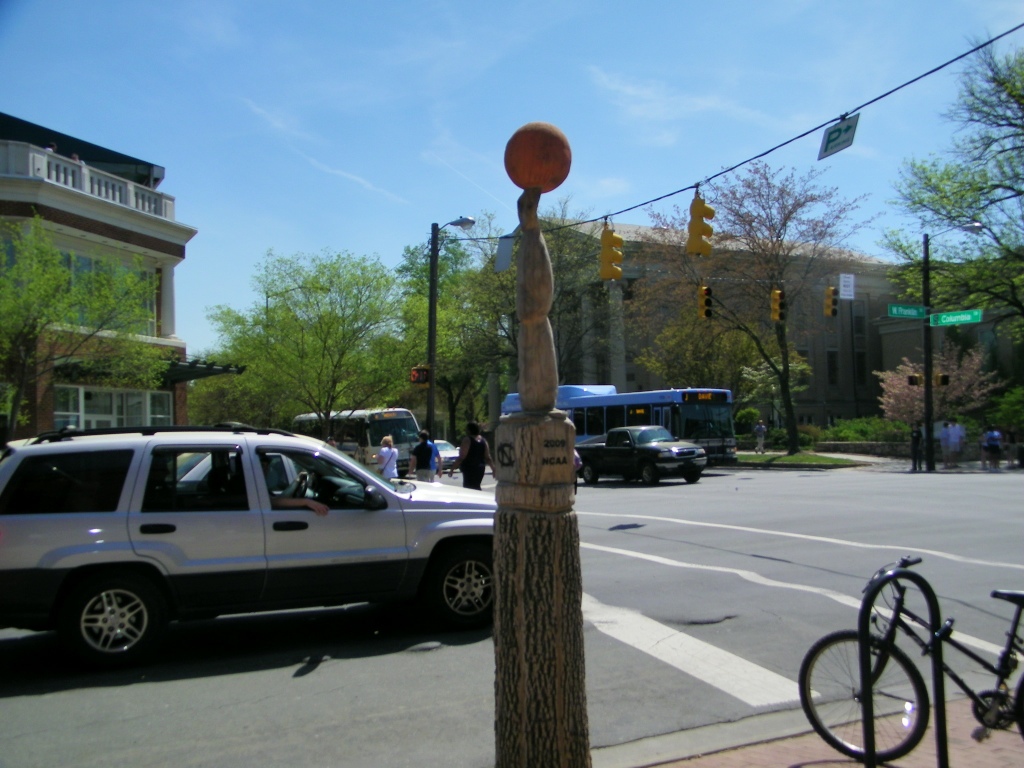
UNC 2009 Basketball Championship sculpture, until recently located in front of Spanky’s restaurant on Franklin Street in Chapel Hill, North Carolina

But back to personal bests and achievements. In this age of social media, I find it a bit troubling weird that so many people post not just those, but all their personal (only good) news, big and small.  Many also share updates about their fabulous trips* as part of a carefully shaped and managed narrative. What are friends and followers to think but “Good for you?” Or, Bravo!

A recent WSJ article by Elizabeth Bernstein titled Are We All Braggarts Now? examined this fairly new phenomenon. Though I’m active on Twitter and (finally) about to create a Facebook page, aside from writerly and the odd motivational (and sometimes cryptic) tweets, I’m endeavoring to keep personal business personal. But that’s just me.*  And, well, marketing is…marketing.

The protagonist of my novel, coming out soon, gets to watch an historic and exciting olympic game, and, though she’s only twenty, reflects on its significance.

But she quickly reverts her attention back to her own life, as any normal twenty-year-old would.

*Oops, I guess I’ve been doing that whole look-at-the-photos-from-my-fab-vacay-in-France thing in recent blog posts. Desolee!

Aix (and adventures) en Provence

Peter Mayle’s autobiographical novel A Year in Provence was published in 1989, ten years after I arrived in France to spend a year of college in Languedoc-Roussillon, the region à côté to the west.

During school holidays, carrying a backpack, my Eurail pass, little money and no credit cards, I traveled with friends to Spain, Italy, Greece, Switzerland, Holland and England. But aside from Paris, I didn’t travel much in France. I did visit Carcassonne and the beach villages of Carnon-Plage, La Grande Motte and Sête, but I never made it to nearby Avignon, Aix-en-Provence or the Luberon valley.

So when I read Mayle’s book (and later, the rest of his books) set in Provence, I was enthralled. Like so many others, and because I love the south of France anyway, I wanted to visit Provence. Someday.

That day turned out to be Thursday, July 5, 2012.

My husband and I arrived in Aix the evening of July 4th, after driving* west from Nice. That morning, I thought it would be fun to take the coastal route through Antibes, Cannes and St. Tropez. We would stop in some quaint spot for lunch, perhaps not until Hyères, and then drive on to Aix and arrive at our hotel in the centre ville in plenty of time to relax and have a cocktail. Then we would go to nearby Venelles for a dégustation (wine-tasting) and tour of a vignoble (vineyard)  to be conducted in French at Château l’Evesque. We would dine at La Flambée du Luberon, the Château’s restaurant.

We made it to Cannes on the congested coastal road, then decided to take the autoroute instead. We did have a wonderful lunch at a café in Hyères, then continued west and north to Aix. We arrived at Hotel Saint Christophe with no directions or help from our car’s GPS *, found the parking garage after two tries, wedged backed our car in a parking space in the garage and checked in. I called the Château to confirm our reservations for the evening and get directions (en français) from Jean Michel Escoffier (I had previously emailed Nathalie, his wife.) Then we decided to have that drink and take a taxi.

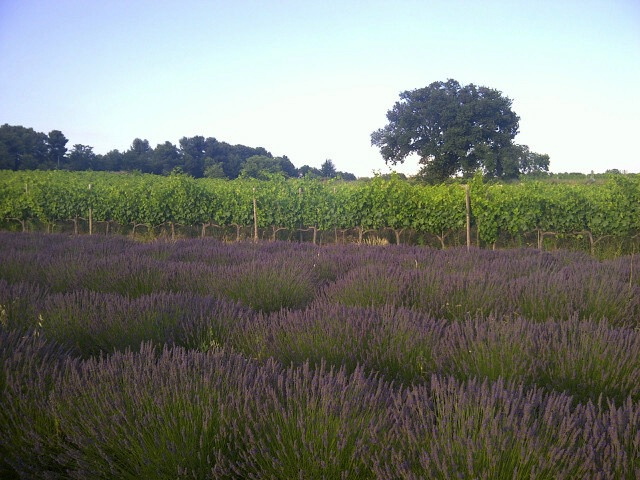
It was the right decision. We arrived on time and joined un petit groupe of ten French people for a tour of the vineyard and lavendar field, led by Jean Michel –speaking in rapid French and (fortunately for us) talking with his hands. Then it was time for the dégustation with Nathalie, who described the wines speaking almost as fast as her husband had. So far in France, I’d understood about 90% of what I heard, and had held my own communicating in the language that I’d been (re-)studying for a year. But comprehending the Escoffiers was a major challenge — and a highlight of mon voyage.

The following morning, on July 5th, we left Aix and ventured into the Luberon valley just to the north. We exited the autoroute at Cavaillon and drove to Apt, then followed a winding road through some beautiful petits villages médiévals made famous by Mayle (and that Madame Marie-Hélène**  had advised me not to miss): Bonnieux, Lacoste, Ménerbes and Oppède. There, we stopped for a leisurely lunch before heading to Avignon for the rest of the day and to Montpellier that night.

It was hard to leave the Luberon, and I kept thinking about Peter Mayle and his writing. A few years ago, when I was just beginning as a writer but after I had finished the first batch of revisions on my upcoming novel, I wrote a letter to Mayle asking for advice. I sent it to his publisher in New York, hoping that it would find its way to him somehow.

Mayle’s books and interviews reveal him to be a wonderful and kind man. In the spring of 2008, he wrote me back a three paragraph letter, typed on his personal stationery and signed in ink. His last line was:

“All I can say is courage, and don’t give up.”

* For more explanation about our adventures en voiture, see the post Le Tour de (Montpellier) France.

** mon prof de français

Les écharpes, le fromage et café crème (scarves, cheese and espresso with cream)


It’s the little things.

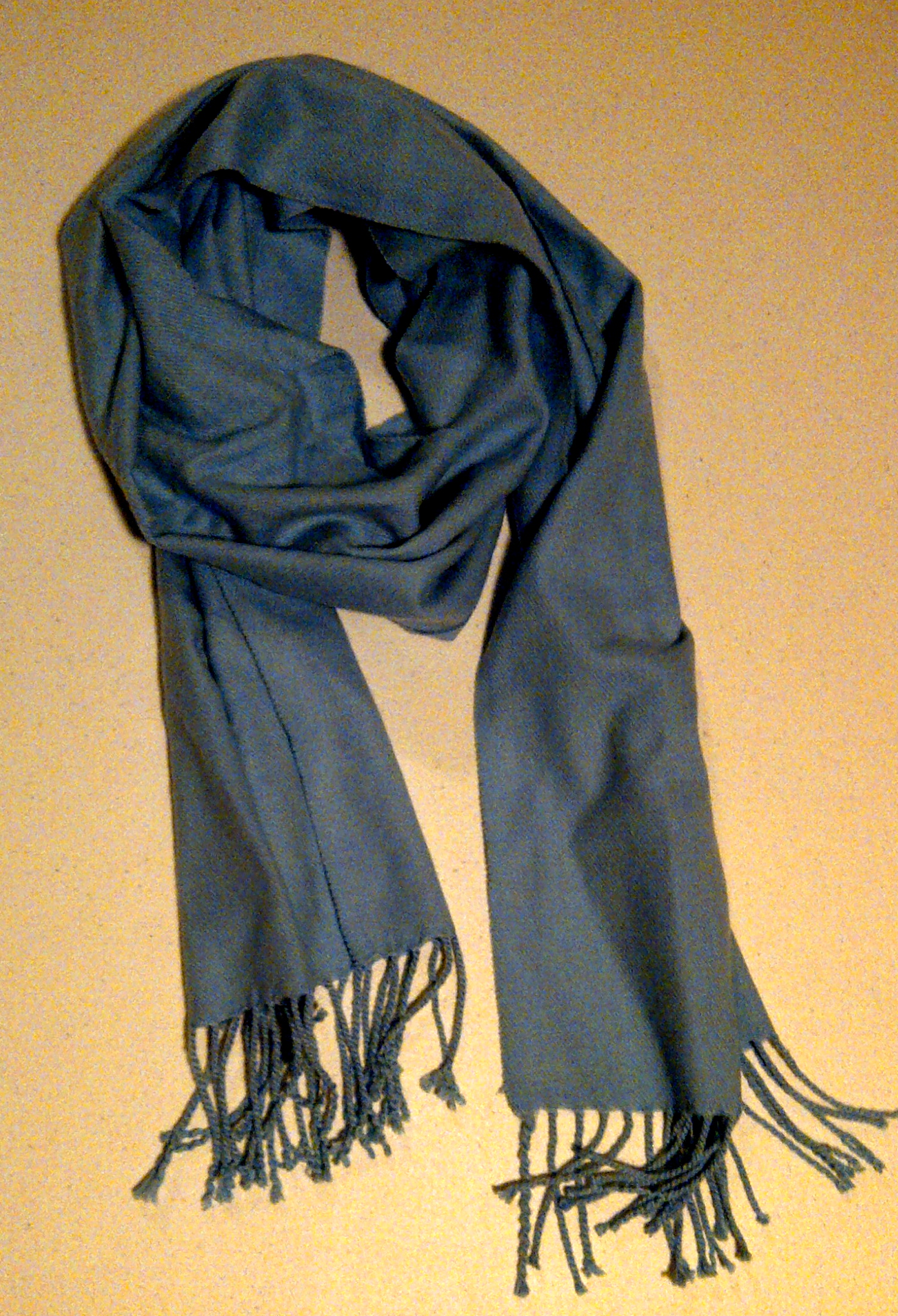
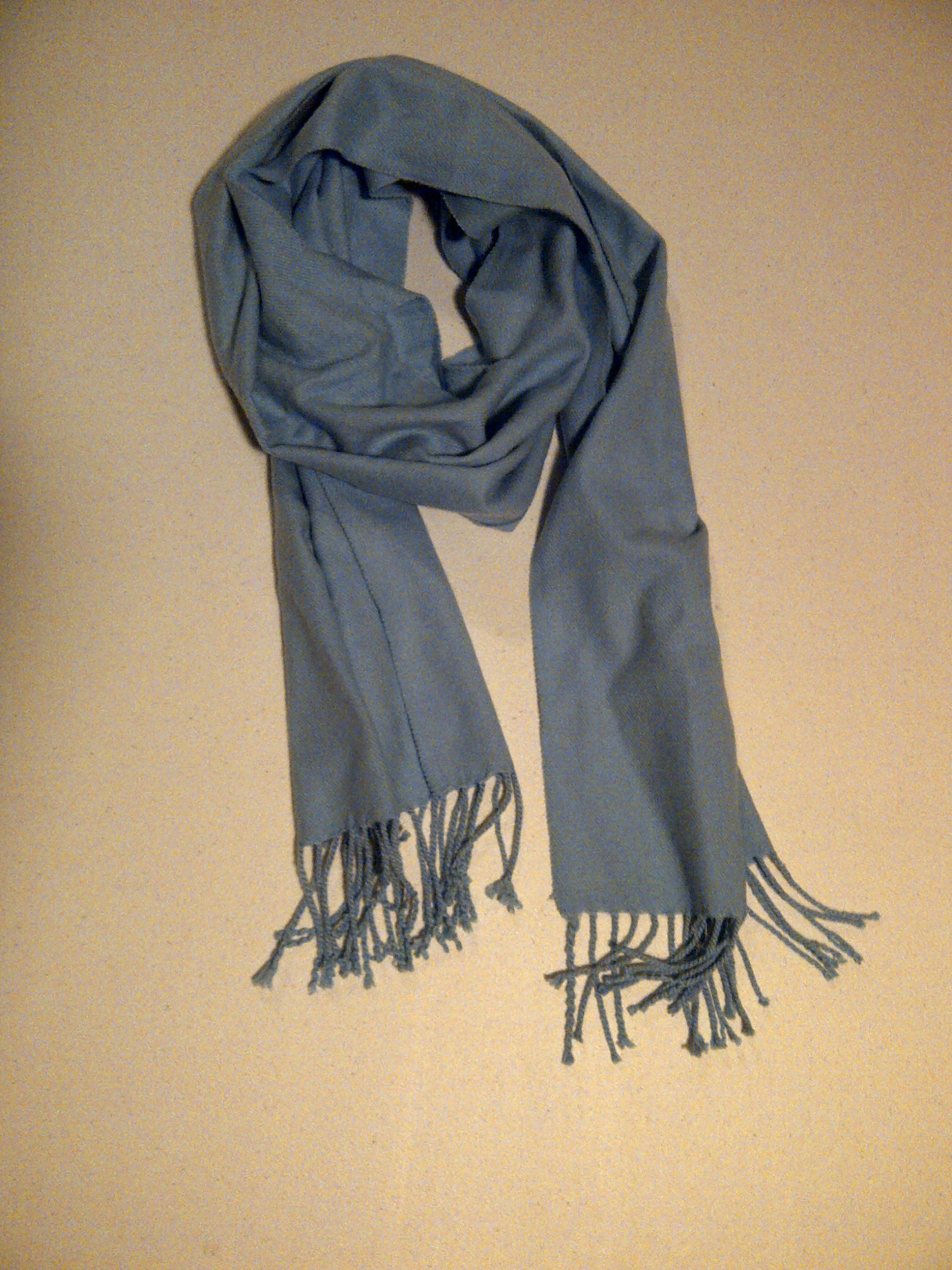
I noticed trois choses très français during my trip to France this summer. Number one: les écharpes. Everywhere I went with my husband, despite the warm temperatures of l’été, women (and men) of all ages and sizes wore them without effort and with no fuss, looking natural, cool and oh so French.

While the most common are a simple gray or brown, I saw a variety of colors, textures, and patterns. Here in the USA, Madame Marie-Helene, mon prof de français, has a collection. All are very pretty and look perfect on her. I have a collection, too, but rarely wear them, though I did when I was younger. Pourquoi? Je ne sais pas.

Number two: le fromage. One day, as guests of a family in Lyon, we visited Les Halles de Lyon, a huge indoor food market offering meats, poultry (with heads on), fish, foie gras, many prepared dishes and of course, incredible desserts like tarts, cakes and macarons. Also available are a zillion varieties of cheese, a staple in the French diet that is served after the main meal.

On our last evening in France, we were dinner guests in a Parisian home. After the appetizer, fish and salad, our hosts, a married couple, served a cheese plate and urged us to try a bit of everything. The cheeses were delicious and unlike any I had ever tasted in America. When we finished, they politely offered to pass the plate again; my husband and I thanked them but declined. Then Madame explained with satisfaction that we had passed the test: according to French etiquette, if one takes a second helping from the cheese plate, it means one has not been well fed at the meal (and we had been very well fed).

Number Three: café crème. Unlike café au lait, cream is used instead of milk. A must for petit déjeuner, along with yogurt or fruit and a croissant or pain au chocolat. C’est bon.

The protagonist of my novel (coming out soon) adapts well to France. She drinks café au lait instead of café crème, eats le fromage and wears écharpes.

Three little things that haven’t changed much in decades, and that make une grande différence.

Exchange students: Les étudiants en échange

The Iranian hostage crisis began November 4, 1979, less than three months after I arrived in the south of France as a 19-year-old university exchange student.

I was part of a group from the University of North Carolina that attended a French university in Montpellier, France. We followed the crisis that gripped the world from the French perspective and read about it in Le Monde as we waited for it to end. But we went home to America long before it did.

I was a legal adult at the time, old enough to vote and drink alcohol, but much more concerned with my own life than with American security issues or the lives of the hostages. The crisis ended while I was still in college; a new president was elected, I graduated from UNC, found a job, married and raised a family. Then in 2006, I read Mark Bowden’s brilliant and suspenseful account of the story, Guests of the Ayatollah, told through the eyes of those who lived it.

The events of that year and the attitude of the time are relevant today, and the world is perhaps more dangerous. But more and more young people are choosing to spend time as exchange students in other countries, to experience another culture and learn a foreign language. Several colleges, including UNC, still offer a study-abroad program in Montpellier. In 2010, “Kim,” one of my American roommates in France,* sent me an article titled French Lessons by Aubrey Whelan, a Penn State student who attended the same French university that “Kim” and I had. As I read about Aubrey’s experience in Montpellier, I was amazed to learn that many things about life as an exhange student there hadn’t changed.

A month ago, my husband and I visited the city and Université Paul Valéry at the end of our week in the south of France. When I was a student there, costs were much lower, but still high, relatively speaking. Bureaucracy, a fact of life in France, was just as frustrating, and strikes just as frequent. The architecture of “Paul Val” was the same Soviet-chic, only a younger version, and class formats were the same. Like the students of today, my friends and I gathered at Place de la Comédie and at discos, and hung out at cafés and on the beach. Like Aubrey’s, our French skills fluctuated even as they improved.

And just like for Aubrey, my time in France was a life-changing experience.

In recent years, my family hosted two French high school students as part of a three week summer exchange program, and my teenage daughter was hosted by a French family on the same program. She hopes to study somewhere in France for a semester or a year during her time in college.

I think that’s une très bonne idée.

* “Kim” and I shared an apartment with “Lisa” during our year in France because there weren’t enough French host families for everyone in our UNC group of exchange students.

The French Riviera: La Côte d’Azur


Doesn’t it just sound cooler in French?

My husband and I began our recent vacation in France here, in Nice. I’d never visited this beautiful spot, though I lived on a Mediterranean beach a few hours to the west many years ago, in Languedoc, à côté de the more famous Provence. Shortly after we arrived in Nice, we strolled down the palm tree lined Promenade des Anglais and climbed the Colline du Château (Castle Hill), where I took the above photo. Afterward, we wandered through Vieux Nice, the old part of the city (recognizable by the sienna-tiled roofs) on our way back to our hotel, across from the pebbled beach about a mile further down.

Like all of France, Nice is full of history. Much has changed here over the centuries, and even within the last thirty years. But its beauty is timeless and enduring.

The following day, after picking up our rental car* at la gare (the train station, where a taxi dropped us), we made our way east out of the city and over the side of a mountain toward Monaco. On the way, we stopped for a marvelous four course lunch at Chateau Eza (we both selected the Menu Prince) in Eze-le-Village, a gorgeous place I’d never known about until recently. Our table was on a private terrace jutting out from the Chateau, high over the sea, rocks and beaches below. Déjeuner began with an aperitif: champagne, of course. We shared a bottle of wine as we savored each of the small delicious dishes and practiced our French.

The view was breathtaking. Like “Elle” (what we’ll call the main character in my upcoming novel, for now), I have a fear of heights. I don’t know how I managed to enjoy such a leisurely lunch on a balcony perched high above land and water. Maybe it was the vin.


“Elle” doesn’t deal as well with her acrophobia (though, I dare say, if she had thought of handling it with wine, it may not have been an issue). Perhaps she doesn’t think of doing that because usually, when she has to face her fear, no alcohol is available, except for that time in Amsterdam — but I’m jumping ahead.

Back to Nice, Eze and the Côte d’Azur: another very romantic spot in the world, one I would love to visit again, and spend more time in, someday.

* For more about our adventures en voiture, see prior post, Le Tour de (Montpellier) France.

Create a website or blog at WordPress.com

Up ↑