La Musique

“J’aime bien écouter de la musique quand je travaille.” – anonyme

(I love to listen to music while I work. — anonymous)

My teenage daughter could have said this; I certainly couldn’t have. No, when I write, I need prefer uninterrupted silence. (Or, at least, few distractions.)

However, many songs came to my mind when I was writing MAKE THAT DEUX, and one of them in particular. It was recorded in the 1970s, of course, and one of its lines is the name of Part 3 in my novel. But it’s a classic, a song that you should know; if you don’t, je me sens désolée pour vous (I feel sorry for you).

It’s the answer to the Monday one-question-interview question I did with the wonderful Susan Gottfried a few days ago. Click on this link for her Featured New Book to satisfy your curiosity and find out more about MAKE THAT DEUX.

For today’s blog posts: make that deux.

C’est tout!

Books, Movies and Les Misérables

The movie Les Misérables (Les Mis, or “Lay-MIZ”) won ‘Best Comedy or Musical’ at last night’s Golden Globe Awards, a fact which made me très contente.

The ‘Best Drama’ award went to my other favorite movie of 2012: Argo.

I didn’t watch the Golden Globes — I was just too tired after watching the Atlanta Falcons come back to beat the Seattle Seahawks in the last 34 seconds of the NFL playoff game yesterday afternoon, but that’s another post. I love to know who wins the Globes (and the Oscars), but malheureusement, I don’t always hardly ever stay up to watch the award shows; pour moi, seeing the highlights (and the outfits) the next morning suffit.

I’d only seen 2 or 3 of the other films being considered (I just saw Les Mis last week), though I plan to watch most of the rest. Pourquoi? Parce que I LOVE movies, almost as much as I love books.

Les Mis has a special place in my heart and mind for many reasons. One reason, of course, is that the story is adapted from the French novel by Victor Hugo. Another reason is that it’s a musical, an opera really, and the songs are fantastique; I grew up in a household where musicals weren’t admired, so maybe that’s why my rebellious self loves them that much more.

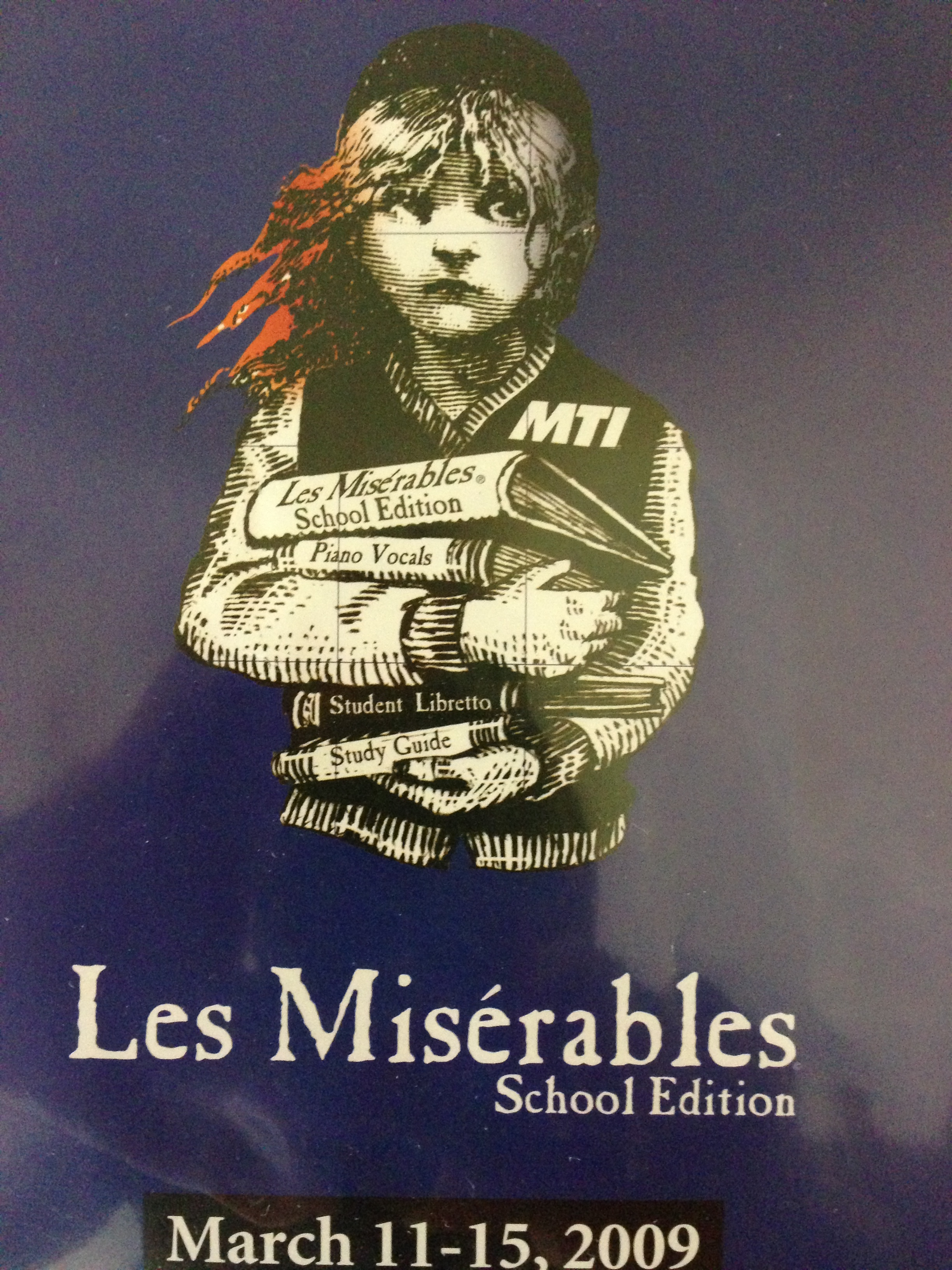
But the third reason I love Les Mis is that one of my sons acted in the play in high school a few years ago, playing the role of the innkeeper Thénardier, and he was amazing, funny, and terrific.

The Playbill

lesmis

This son (who had played basketball, baseball, soccer, football and had run cross country) began acting and singing in high school plays at the age of fifteen. Two years later he joined a wonderful cast to sold-out crowds; the production, now a legend at his school, was marvelous, and standing ovations were standard. It was a high school play, like unlike any other.

I saw the film Argo not long ago, and found it intriguing and fascinating. Based on real events,* it takes place in 1979-1980, the time setting of my new novel MAKE THAT DEUX. I was captivated not just by the story or the actors, but their clothes and hairstyles, since Jenny and her friends in MAKE THAT DEUX were in college during that era.

So it was a bit like seeing the Golden Globe “casual” outfits of my novel.

Which brings me to books. I love them, more than movies, and the best movies are those that are adapted from books: novels, non-fiction, even children’s books.

My favorite children’s books are those written by Dr. Seuss, and I believe one of them was made into a very entertaining movie a few years ago (“A Person’s a Person, no matter how small.”)

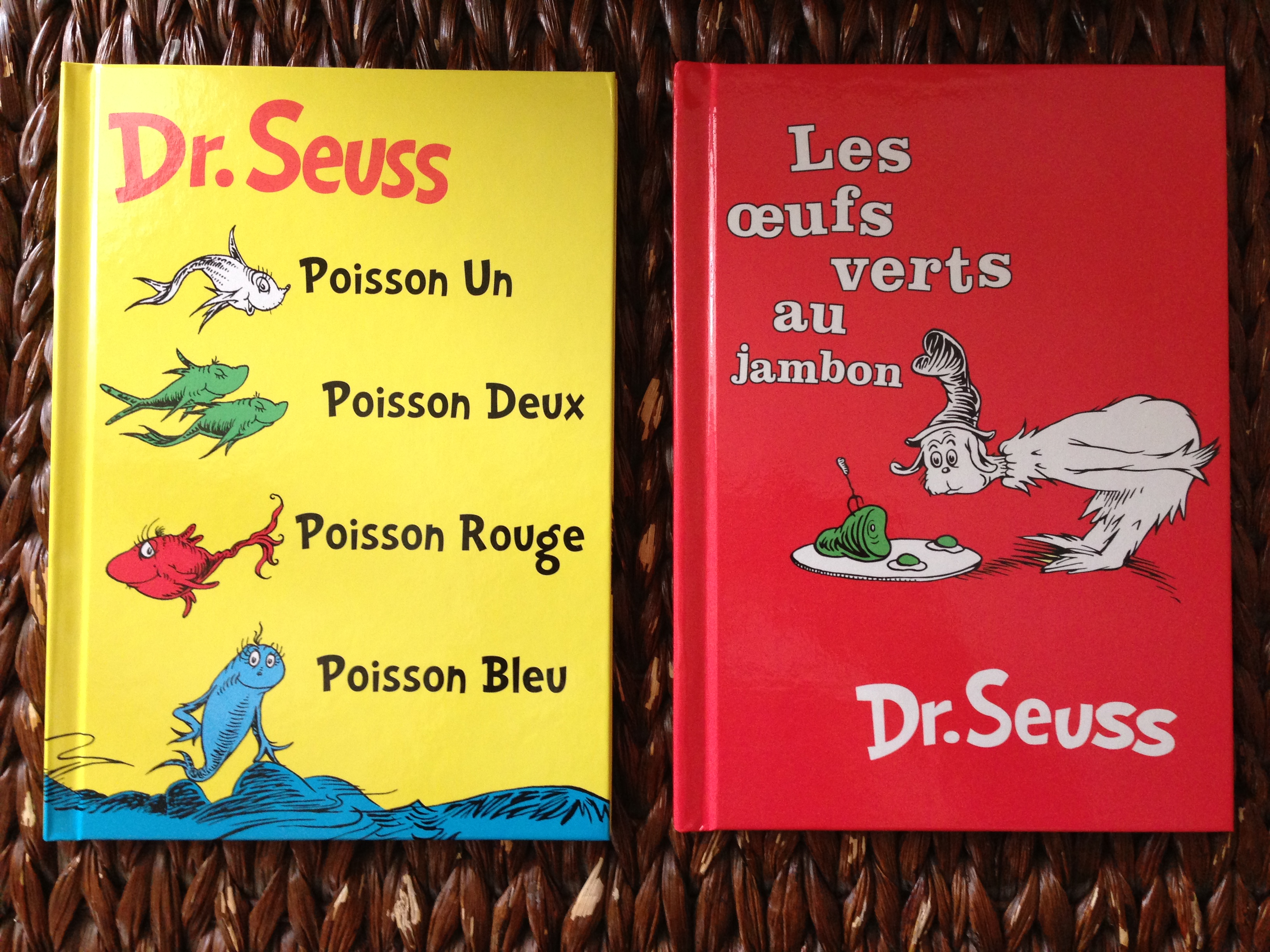
While browsing in a shop today, I came across these 2 Dr. Seuss editions that I just had to purchase (guess why?)

photo

Hmm…if only I’d had these when my kids were little. Then, they would might have learned to speak français as well as English…

* A captivating and compelling book about the Iranian Hostage Crisis of 1979 is Mark Bowden’s Guests of the Ayatollah. I highly recommend it.

La Sensibilité et la Thérapie

 The French word sensible means sensitive, not sensible; sensible/sensible and sensibilité/sensibility are examples of faux-amis (literally, “false friends”) — they look alike but mean very different things. On the other hand, thérapie/therapy are vrais-amis (“true friends”), or words spelled alike with the same or similar meanings.* As the year draws to a close, il est naturel to look back, to look ahead, and to reflect…a process that causes my own sensibilité (and my need for la thérapie) to surface.

First, la sensibilitéWhile others seldom accuse me of being too sensible, many feel the need to point out my (over-)sensitive nature. Through the years, I’ve worked hard to reduce the “over-” part, at the same time not wishing to lose the “sensible/sensitive” part, or to slide into insensitivity. I’m an emotional person, and while some in my family are, too, some aren’t. They’re the tough ones, the ones who find it easy easier to compartmentalize, to bypass the drama, to keep cool. To move on, confidently — or at least, to seem to.

By contrast, I’m more likely to live by these words in a song by Joan Armatrading**:

Show some emotion

Put expression in your life

Light up, if you’re feeling happy

But if it’s bad then let those tears roll down

Does emotion, and la sensibilité reside in the heart or the head? Jenny, le personnage principal in my new novel MAKE THAT DEUX, considers this question, and I won’t say what she decides. But two years ago, after an extremely talented neurosurgeon at Duke skillfully removed a tumor in the center of my son’s brain, I read that some doctors believe the area is connected with our ability to make decisions and experience feelings. Miraculously, my son survived his cancer and thrives in college, feeling, thinking and learning (I trust) every day.

Back to my sensitive nature. I take the kindness — and the unkindness — of others to heart (or maybe, head). With loss and tragedy happening all around in this world, perhaps it’s good not to focus on “the little things,” but to be tougher, stronger, more reserved. But sometimes it is the little things: if we really dislike someone, then every little thing they do is annoying. Maybe that’s when it’s time for sensitivity toward others, empathy and understanding.

Which brings me to la thérapie. No, not the kind you’re thinking; other than a massage therapist, a paid professional doesn’t work for me. Reading does, and talking to a close friend (ideally, my best friend, mon mari) works even better. But I find the best therapy to be (creative) writing. I don’t know why it works, but it does, heureusement.

Now back to my Work In Progress (WIP), my second novel…and la thérapie!

Bonne année 2013!

Un puzzle 3D de la Tour Eiffel: la thérapie pour quelqu’un d’autre dans la famille (pas moi; je n’aime pas les puzzles!):

skinny photo copy 3

* For more on faux-amis, see my post “L’esprit de l’escalier, spiral staircases and faux-amis”

** Another Joan Armatrading song is the title of Part 3 of MAKE THAT DEUX. Savez-vous pourquoi?
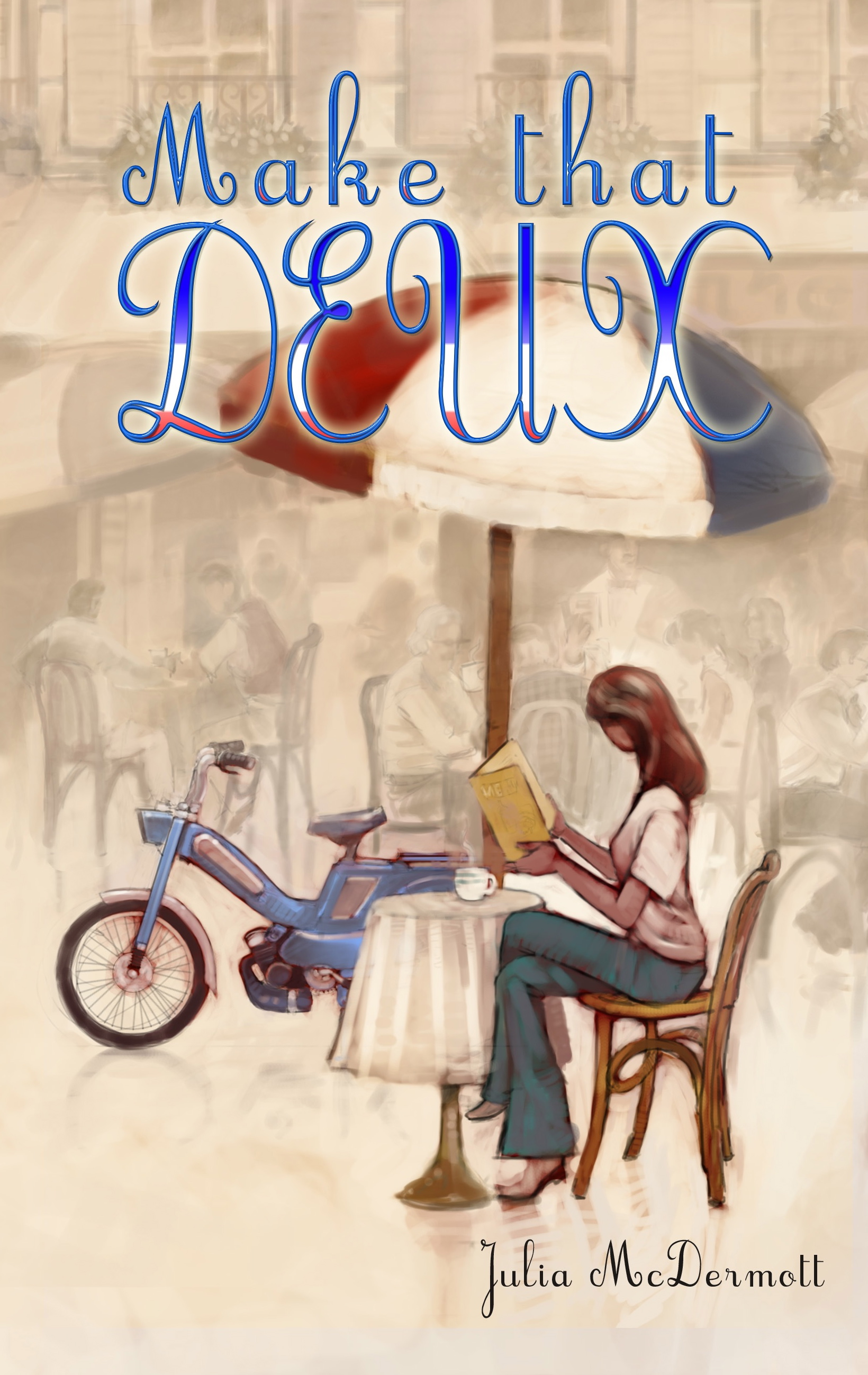
Make that…my book cover! — et son histoire

As promised…

Because the French are very good at mathématiques, here’s the story of the creation of my book cover, in an equation (une équation):

La serendipité L’artiste  *  [l’inspiration + le talent + la technologie]

MY BOOK COVER (La couverture de mon livre!):

Les détails:

Serendipity: Last spring — at long last — I finished the final edit of MAKE THAT DEUX, and began planning its publication. A top item on my to-d0 list was to find a cover artist. Then, just before Easter, my daughter and I visited beautiful Sarasota, Florida for several days during her spring break. “Kim” lives in Sarasota and she invited us to spend one afternoon with her and her husband at their beach cabana.

I told “Kim” about my plans for publication, and she mentioned a friend and cabana-neighbor, writer Peter McKenzie, author of THE PARAGON GANG. “Kim” suggested I look up Peter’s book on Amazon and give him a call. I found the book, downloaded it on my iPad, and called Peter. When I  complimented him on his book cover, he recommended the artist, Michael Faron of Sarasota. Back in Atlanta, I read through Michael’s website www.msfaron.com and sent him an email…

Et voilà! I had found my cover artist.

The Artist: First, Michael read MAKE THAT DEUX. Then we began discussing ideas and sketches that he sent me. We narrowed them down to one… and, aided by inspiration, talent and technology, Michael did the rest!*

As an added bonus, here’s the book description for MAKE THAT DEUX  that you will soon see on Amazon:

Three American college girls living in an apartment on the Mediterranean. Two boyfriends back home. “The One” (and only), if it’s “meant to be” — whatever that means! 
Jenny Miles has three goals: to speak French like a native, to travel all over Europe, and to have a blast. Meanwhile, two men compete for her attention and amour, ici et là. C’est compliqué! 
Take 10 months. Add 2 (surprise) transatlantic flights, 2 Greek isles, 1 moped (une mobylette) and beaucoup de lettres! Subtract 1 phone, 1 promise to be faithful, and 1 bikini top. La solution?  
Make that…a year that Jenny will never forget.

In the cover art that Michael created (and in the book description above), somehow I’m reminded that the more things change, the more they stay the same…

* Including the back cover, which I may reveal in the future…


Le menu, and making a choice

“Vous avez choisi?”  (Have you decided?)

— a French waiter

Choices can be difficult, and many of them haven’t changed (but they may have evolved over time):

Café américain or café au lait? Prix fixe or a la carte? Wine or cocktail? Skirt or pants? Flats or heels? One-piece or bikini? iPhone or BlackBerry? Paperback or e-book?

The list goes on, and making the right selection can sometimes be a daunting task — or at least, pretty stressful. Especially when it’s not possible to choose both alternatives, like buying two pair of the same shoes (or pants) in different colors. Something I’ve been known to do…

But back to restaurants and cafés. When one must make a choice, sometimes it’s best to study the menu (en français, “la carte”), and sometimes it’s better just to glance at it and look for something  appealing. The same could be true for art, and for fiction…and some people judge a book by its cover.

Which brings me to the image below: a small bit of of the cover of my novel, MAKE THAT DEUX. The full cover will be revealed next week…

What’s on the menu?

Beaucoup de choix:

Classes. Beaches. Museums. Wine, and pastis. Baguettes, croissants and mille feuilles. Windsurfers. The Alps. Love.

Bon appétit!

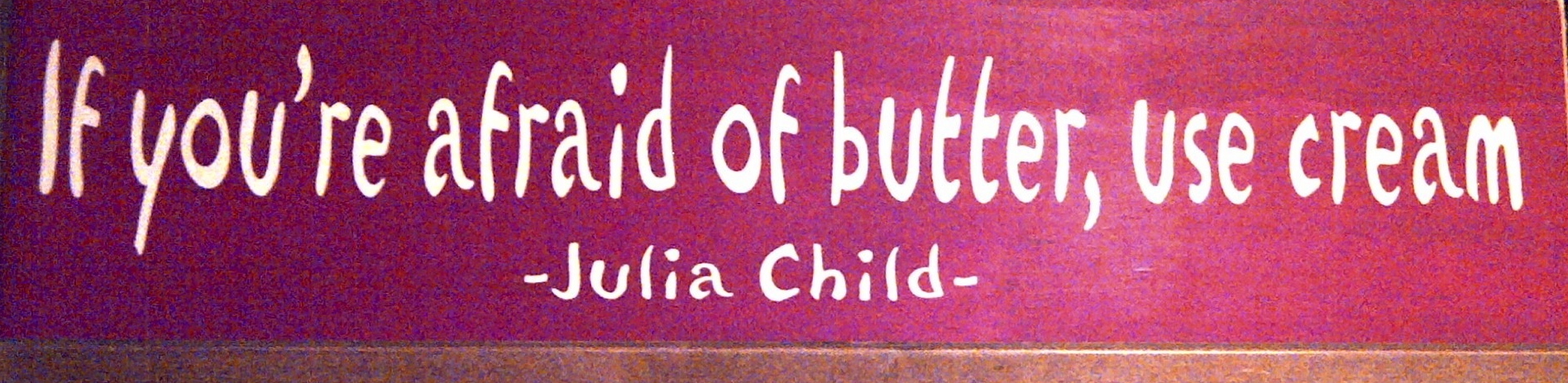
What would Julia do? Faire la cuisine française

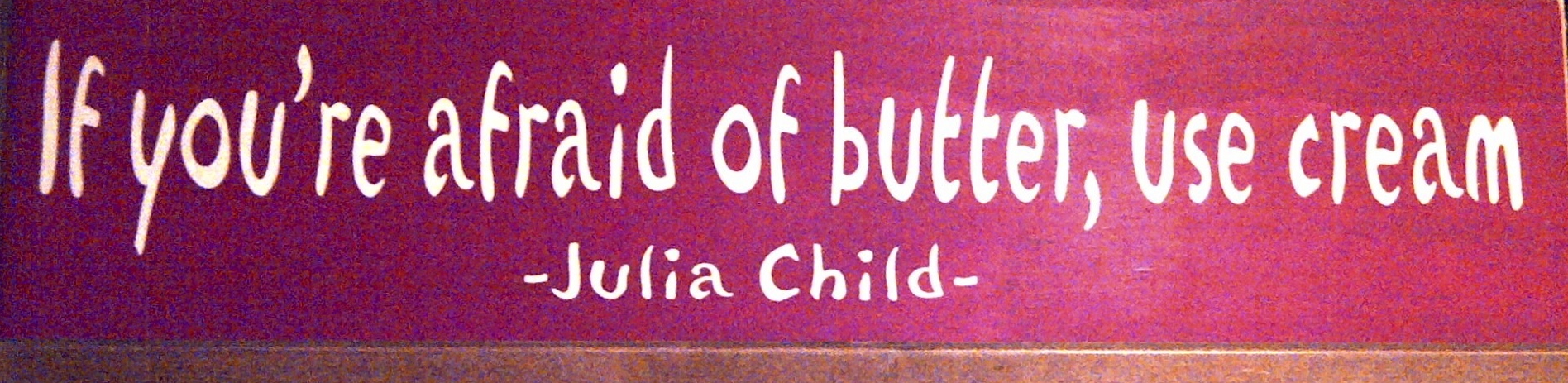
Anyone can cook, with butter.

– Anonymous

My husband and I heard that offhand comment a few years ago at a fête — and a new (ironic) family motto was born.

Because, not anyone (such as, well, me) can cook, even with butter — an ingredient that my husband doesn’t fear.* En fait, because he enjoys faire la cuisine (and since I don’t know how), he does the cooking in our home, toujours — every day — an arrangement that works for us, and one that’s never changed. 

(If he doesn’t feel like cooking, we order a pizza, eat leftovers, or go out.)

As you might imagine, some of our his favorite recipes are found in cookbooks written by Julia Child.

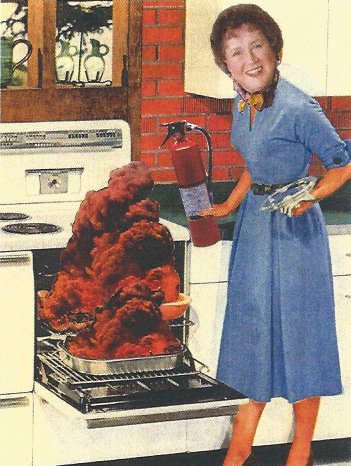
If I were Julia Child

So, whenever he tries a new and complicated recipe (which is often) — if it calls for butter (which is quite often) — someone in our family might remark to him that, well, “anyone” can cook with it.

Then, he laughs…and concocts something délicieux. 

I blame my inability to cook on my family growing up: my father did the cooking, so I thought that was normal. Evidemment, it was one of the qualities I looked for in a husband. That, and a sense of humor, patience, and optimism, among others.

But from what I’ve observed, cooking almost requires those three — at a minimum.

In my soon-to-be-available novel, the main character, Jenny, is a girl in college, and in one of my favorite scenes, her date cooks dinner for the two of them at his apartment. I’m not saying whether butter is involved, but wine is — c’est certain. But c’est la France, so c’est necessaire. The evening is a memorable one, but not because of the food. I won’t describe it further here, except in these words: guitar, bathroom, and (full) disclosure.

Jenny has her own list of qualities that the ideal man should possess, and I’m not sure they match my own. Let’s just say, she’s open to persuasion.

I don’t know what Julia would do. But – what will Jenny do? Il faut acheter le roman! (You have to buy the book!)

*


D’habitude: routine

I like (and don’t like) my routines and habits.

A few weeks ago, I read on my iPad The Power of Habit: Why We Do What We Do in Life and Business by Charles Duhigg. You may have heard of the book — published in late February, it has remained on the New York Times non-fiction best-seller list for months. I don’t always read best-sellers (and let’s don’t even talk about the current best-selling fiction books). But this book was appealing, not because so many other people found it so, but because I was ready to examine my own habits, to keep what worked and to change what didn’t.

I’m still working on some of the changes, but I’ve successfully adopted a few of the more basic (and very important) ones. I’ve cut out almost all (diet) Cokes from my diet — for those of you non-Atlantans, Cokes = all carbonated drinks. I’ve shifted my choices of what to eat for lunch at home from whatever we had in the fridge (like leftovers) to what I ate every day as a younger mom: albacore tuna fish or cottage cheese-and-fruit — and when eating out, I’ve made much healthier menu selections. I’ve increased my weekly cardio routines from three times a week to five or six.

I’ve been doing these things not quite long enough yet for them all to feel like habits; they still feel like choices, causing me to think (see book mentioned above). But with each day, I’m getting closer, and as my husband says, it can be all right to make a different choice occasionally, as long as you get right back on your routine afterward. That’s key for me. Aside from health-related issues, however, I’ve also tried to apply what I learned about routines to my work life as a writer.

In some ways that’s been difficult, but in other ways it hasn’t. When I sat down one August to write the first draft of my first novel, d’habitude I worked every weekday from 9 am to 1 pm straight; I was finished by May but didn’t realize that revisions would take just as much work and a lot longer. Much as I know what daily and weekly habits work well for me, and even though I feel comforted (less mentally stressed?) by them, I also feel rather constricted by them. There’s a part of me that’s figure-it-out-as-I-go and, well, more creative (which is essential when writing fiction). My spontaneous, imaginative, only-as-organized-as-I-have-to-be side has always battled against my productive, organized, good-habit-keeping side. This was even the case when my children were little and my occupation was stay-at-home mother — with four kids, I had to be organized. However, I fought and surrendered to that necessity. Hopefully, no one noticed.

Now that I’m writing full-time, I’ve found that I can balance creativity and productivity while making an effort to re-institute my working routines. Dialogue and scenes (the fun part) appear in my head and on the page more easily once I’ve got the story’s plot fine-tuned. My game plan can and does change along the way, but it keeps me focused when the words aren’t coming.  Aside from a two-week vacation with mon mari this summer, I’ll continue my work schedule even when life’s demands get in the way. And I’ll enjoy (more than he will, I fear) the break in routine. I’ll get to think more, I hope, while maintaining my healthier habits.

I’d better bring some paper, a pen, and my iPad!

Le verre est a moitié vide

I’m a glass-half-empty person, so no wonder I like the French.

France is a nation of pessimists, deux amies françaises averred to me this week. I asked both of them (who don’t know each other) just after I read the recent NYT piece by Jane E. Brody, A Richer Life by Seeing the Glass Half Full.

My husband, however, is a glass-half-full person– not surprising, since in many cases, opposites attract. I’ve always admired his persistence and motivation, two qualities Brody says that optimists usually exhibit. He tackles problems with a focus on solutions, looks for the good in stressful situations, and believes that somehow, everything will work out. Over the years we’ve been together, some of his positive attitudes have rubbed off on me — but not all.

I’m not always “No-we-can’t,” but of the two of us, he’s the idealist and I’m the realist (and, being me, I don’t mean that I’m a realist in a good way). I’m a worrier and always have been. Unlike Brody, I haven’t fretted over the social, political and societal issues that I couldn’t do very much about. I have fretted about family issues that I could do little or nothing to solve, plus all those other things that I could change or fix. And yes, rather than looking on the bright side, I have focused on the worst that can happen.

After reading the article, though, I decided to evaluate whether I’ve evolved from my natural negative tendencies — whether I’ve fait de progrès. As my children grow into adulthood, I think I have, at least as a mom. As a writer, I believe that I have, as well. It’s still sometimes a struggle. I’m not always inspired, but I keep trying, keep writing and keep reading. Developing habits and a routine has helped, which I’ll explain in a future post. Watching and trying to emulate my husband’s work ethic and attitudes has helped a lot, and so has stepping back to focus and re-focus on my goals.

Can I change into a glass-half-full person? I’m working on it. Optimistically, I googled the phrase and discovered a new restaurant to try the next time I’m visiting Chapel Hill: Glasshalfull located in Carrboro, N.C., the town next door. What a nice surprise — and maybe a way to pursue that richer life.

Create a website or blog at WordPress.com

Up ↑