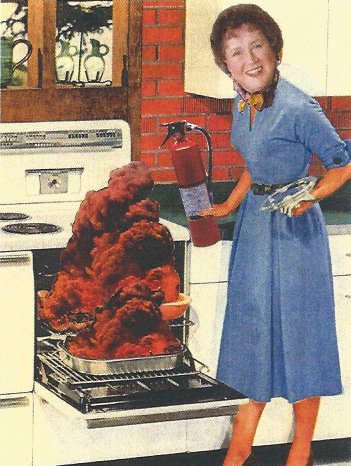
7 ways Football helps (me) avoid Writer’s Block

The Super Bowl is hours away, and although my beloved Atlanta Falcons aren’t in it (despite coming pretty close, after a FANTASTIC season), I can’t wait to watch le match (and, of course, les publicités – the ads). I haven’t decided whether I want the Ravens or the 49ers to win, and I’m sure both teams have been working very hard – physically and mentally – to prepare. I was also working hard – mentally – last week, adding over 3,000 words (about 12 pages), to my work-in-progress, a Suspense novel.

images

Writing a novel is nothing like playing football, but there are certain parallels. For example, as a writer, there are times when you might get stuck  not know what to write next  wonder if you should just toss the whole thing out  experience writer’s block. In football, I imagine, there are times when you aren’t sure what to do next  can’t get into the end zone  want to give up  are so far behind, coming back seems impossible.

I started to understand love the game of football about the same time I started writing my Romance novel, MAKE THAT DEUX. Though sometimes I’ve struggled to keep going as a writer, I don’t believe in writer’s block. At least, I try my best to avoid it. I think what I’ve learned about football has helped.

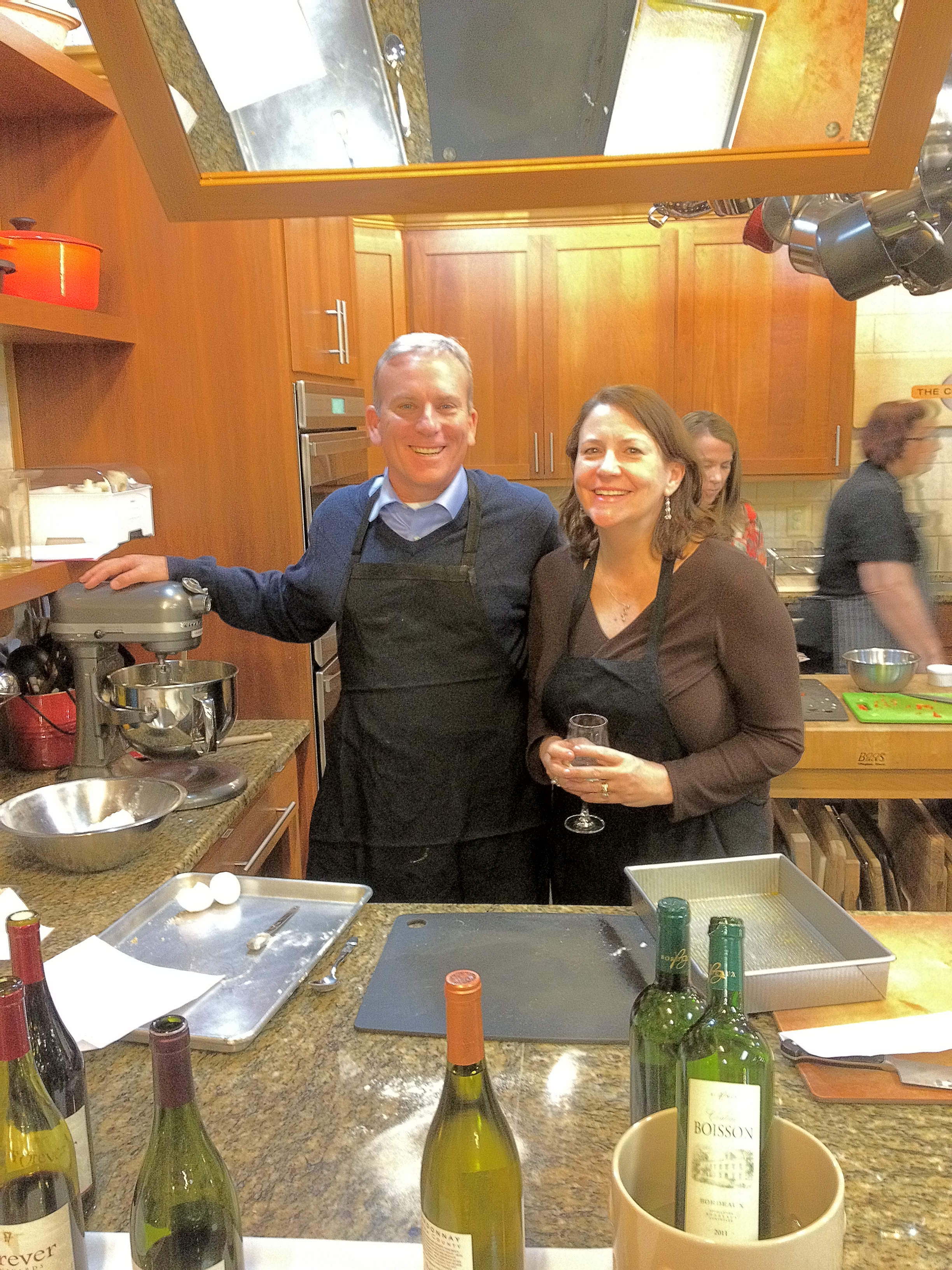
But before I tell you why, a (necessary) backstory. About a week ago, my husband and I were guests at a “hands-on” dinner party: The kind where each couple has gets to help with the cooking. As the evening began, five couples sat at the table drinking wine while Professional Chef Rosemary described the recipes and the process ahead. Each couple would choose a dish to prepare, and with the help of an assistant chef (and pre-measured ingredients), create a contribution to the meal.

Mon mari, being a wonderful cook and très intelligent, listened carefully. When the signal was given, he bolted over to the dessert station, pulling me along with whispered assurances that it would be the easiest dish. He also explained that it had the extra benefit of allowing the two of us time to relax and have another glass of vin while our his creation*  was in the oven.
photo

Initially, I helped hovered stressfully around him, and soon our assistant realized it was him that she would be teaching  guiding standing by to watch. As they were discussing the pros and cons of metal versus plastic lemon juicers (she liked plastic), I slipped away. Relieved of duty, I hung out closeby, talking to the other husbands as their wives stirred and sautéed.
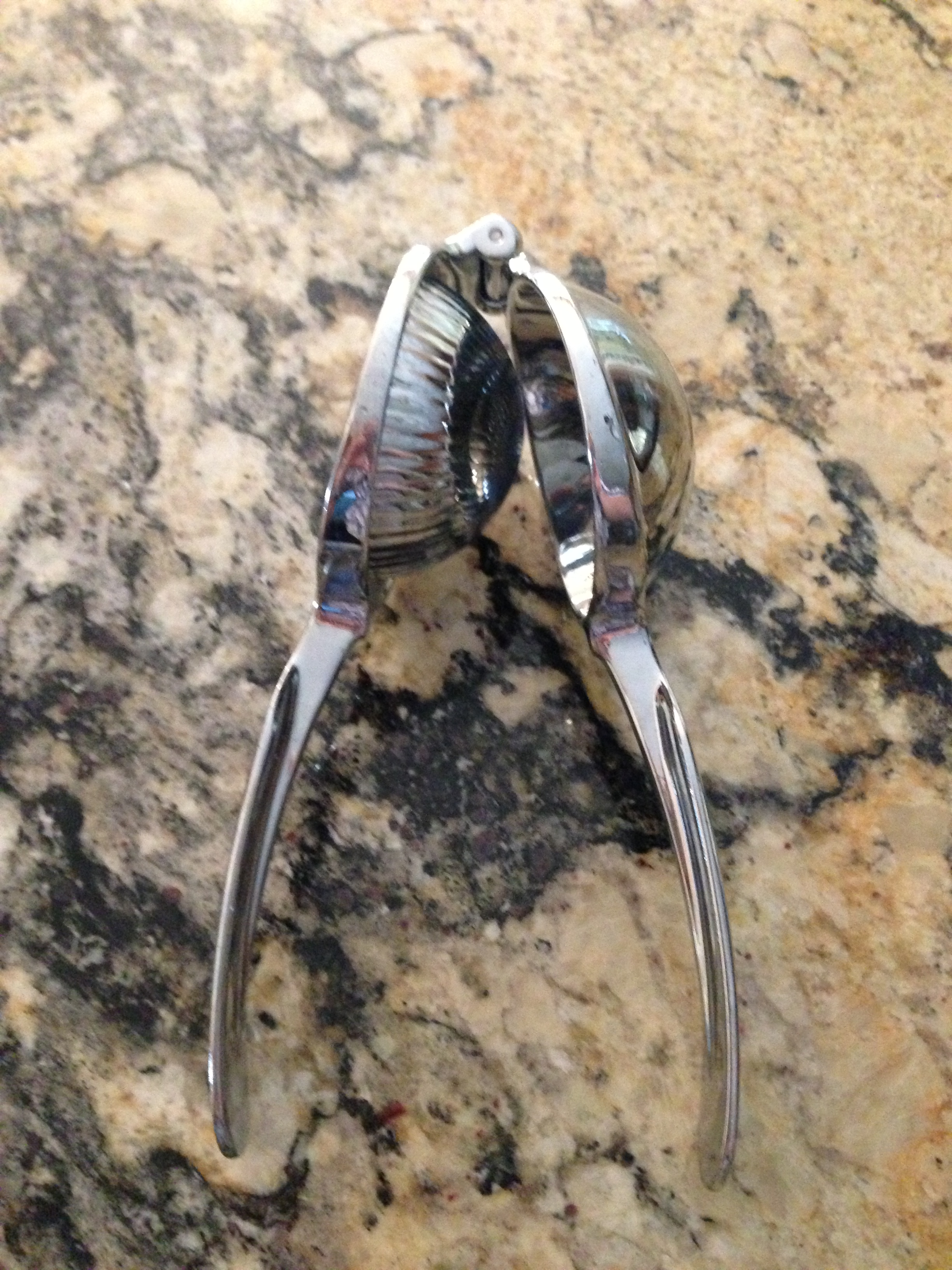
photo copy

The metal lemon juicer we have à la maison

We talked a little about football, and then one of the men told the others I was an author and had published a novel. We chatted about my book and then about the one I’m currently working on. When dinner was ready, we all sat down together to a delicious meal.

Afterward, I was asked to speak to the group for a few minutes about writing and answer some questions. One person said he would like to write a book too, and asked me how I overcome writer’s block. I said that if when I come to a point where I can’t continue a project, I work on something else: research, a blog post, marketing MAKE THAT DEUX, or just rereading (and revising) what I’ve written. Then, after a time (hopefully short), I know exactly what comes next in my novel.

Which brings me to football, and my list of ways that it helps me avoid writer’s block:

1. The objective is to advance the ball (or story). Sometimes you don’t get it very far, but if you can just keep making first downs, you’ll get there – and you don’t have to make a first down on every play. But if you give up, or if you’re three-and-out, you’ll have to punt. Not fun.

2. If you’re confused, take a time-out. Then get your head together and come back with a plan.

3. Be open to changing your strategy. Be flexible. What you thought would work may not. If something you’re doing doesn’t help advance the  ball  story, change it. There’s no reason to hold on to a plan that won’t work.

4. You have to work hard, and you can’t let up. You have to work at it, every day (and every play). Well, almost every day. You need some rest days.

5. Be ready to take advantage of opportunities. The unanticipated can happen. When it does, you have to be ready. If you work hard (see #4), you will be.

6. Be patient. Serendipity will find you. Sometimes you get an unexpected break. If you fumble, pick yourself up and keep trying.

7. Never lose sight of the goal. You want to succeed, no matter what is thrown at you (or away from you). Keep working, and it will happen. “Never, never, never give up!”

Go Falcons!

* “Gingerbread with Lemon Curd Cream” – it tasted much better than it sounds!

Le menu, and making a choice

“Vous avez choisi?”  (Have you decided?)

— a French waiter

Choices can be difficult, and many of them haven’t changed (but they may have evolved over time):

Café américain or café au lait? Prix fixe or a la carte? Wine or cocktail? Skirt or pants? Flats or heels? One-piece or bikini? iPhone or BlackBerry? Paperback or e-book?

The list goes on, and making the right selection can sometimes be a daunting task — or at least, pretty stressful. Especially when it’s not possible to choose both alternatives, like buying two pair of the same shoes (or pants) in different colors. Something I’ve been known to do…

But back to restaurants and cafés. When one must make a choice, sometimes it’s best to study the menu (en français, “la carte”), and sometimes it’s better just to glance at it and look for something  appealing. The same could be true for art, and for fiction…and some people judge a book by its cover.

Which brings me to the image below: a small bit of of the cover of my novel, MAKE THAT DEUX. The full cover will be revealed next week…

What’s on the menu?

Beaucoup de choix:

Classes. Beaches. Museums. Wine, and pastis. Baguettes, croissants and mille feuilles. Windsurfers. The Alps. Love.

Bon appétit!

What would Julia do? Faire la cuisine française

Anyone can cook, with butter.

– Anonymous

My husband and I heard that offhand comment a few years ago at a fête — and a new (ironic) family motto was born.

Because, not anyone (such as, well, me) can cook, even with butter — an ingredient that my husband doesn’t fear.* En fait, because he enjoys faire la cuisine (and since I don’t know how), he does the cooking in our home, toujours — every day — an arrangement that works for us, and one that’s never changed. 

(If he doesn’t feel like cooking, we order a pizza, eat leftovers, or go out.)

As you might imagine, some of our his favorite recipes are found in cookbooks written by Julia Child.

If I were Julia Child

So, whenever he tries a new and complicated recipe (which is often) — if it calls for butter (which is quite often) — someone in our family might remark to him that, well, “anyone” can cook with it.

Then, he laughs…and concocts something délicieux. 

I blame my inability to cook on my family growing up: my father did the cooking, so I thought that was normal. Evidemment, it was one of the qualities I looked for in a husband. That, and a sense of humor, patience, and optimism, among others.

But from what I’ve observed, cooking almost requires those three — at a minimum.

In my soon-to-be-available novel, the main character, Jenny, is a girl in college, and in one of my favorite scenes, her date cooks dinner for the two of them at his apartment. I’m not saying whether butter is involved, but wine is — c’est certain. But c’est la France, so c’est necessaire. The evening is a memorable one, but not because of the food. I won’t describe it further here, except in these words: guitar, bathroom, and (full) disclosure.

Jenny has her own list of qualities that the ideal man should possess, and I’m not sure they match my own. Let’s just say, she’s open to persuasion.

I don’t know what Julia would do. But – what will Jenny do? Il faut acheter le roman! (You have to buy the book!)

*


D’habitude: routine

I like (and don’t like) my routines and habits.

A few weeks ago, I read on my iPad The Power of Habit: Why We Do What We Do in Life and Business by Charles Duhigg. You may have heard of the book — published in late February, it has remained on the New York Times non-fiction best-seller list for months. I don’t always read best-sellers (and let’s don’t even talk about the current best-selling fiction books). But this book was appealing, not because so many other people found it so, but because I was ready to examine my own habits, to keep what worked and to change what didn’t.

I’m still working on some of the changes, but I’ve successfully adopted a few of the more basic (and very important) ones. I’ve cut out almost all (diet) Cokes from my diet — for those of you non-Atlantans, Cokes = all carbonated drinks. I’ve shifted my choices of what to eat for lunch at home from whatever we had in the fridge (like leftovers) to what I ate every day as a younger mom: albacore tuna fish or cottage cheese-and-fruit — and when eating out, I’ve made much healthier menu selections. I’ve increased my weekly cardio routines from three times a week to five or six.

I’ve been doing these things not quite long enough yet for them all to feel like habits; they still feel like choices, causing me to think (see book mentioned above). But with each day, I’m getting closer, and as my husband says, it can be all right to make a different choice occasionally, as long as you get right back on your routine afterward. That’s key for me. Aside from health-related issues, however, I’ve also tried to apply what I learned about routines to my work life as a writer.

In some ways that’s been difficult, but in other ways it hasn’t. When I sat down one August to write the first draft of my first novel, d’habitude I worked every weekday from 9 am to 1 pm straight; I was finished by May but didn’t realize that revisions would take just as much work and a lot longer. Much as I know what daily and weekly habits work well for me, and even though I feel comforted (less mentally stressed?) by them, I also feel rather constricted by them. There’s a part of me that’s figure-it-out-as-I-go and, well, more creative (which is essential when writing fiction). My spontaneous, imaginative, only-as-organized-as-I-have-to-be side has always battled against my productive, organized, good-habit-keeping side. This was even the case when my children were little and my occupation was stay-at-home mother — with four kids, I had to be organized. However, I fought and surrendered to that necessity. Hopefully, no one noticed.

Now that I’m writing full-time, I’ve found that I can balance creativity and productivity while making an effort to re-institute my working routines. Dialogue and scenes (the fun part) appear in my head and on the page more easily once I’ve got the story’s plot fine-tuned. My game plan can and does change along the way, but it keeps me focused when the words aren’t coming.  Aside from a two-week vacation with mon mari this summer, I’ll continue my work schedule even when life’s demands get in the way. And I’ll enjoy (more than he will, I fear) the break in routine. I’ll get to think more, I hope, while maintaining my healthier habits.

I’d better bring some paper, a pen, and my iPad!

Create a website or blog at WordPress.com

Up ↑