The French Riviera: La Côte d’Azur


Doesn’t it just sound cooler in French?

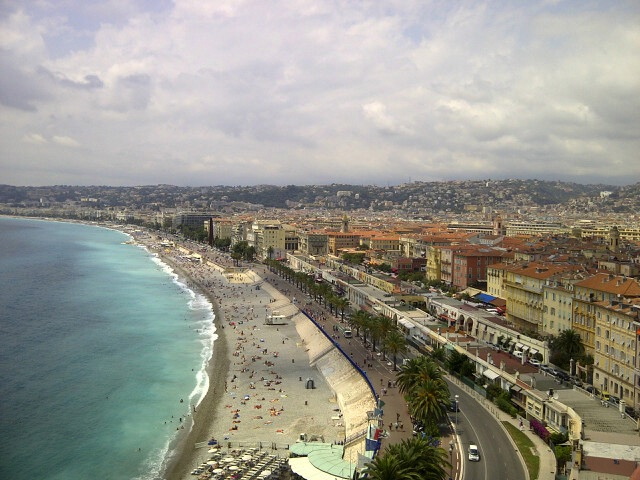
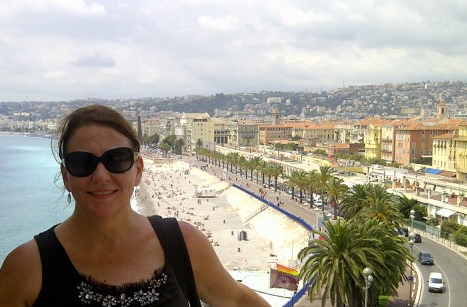
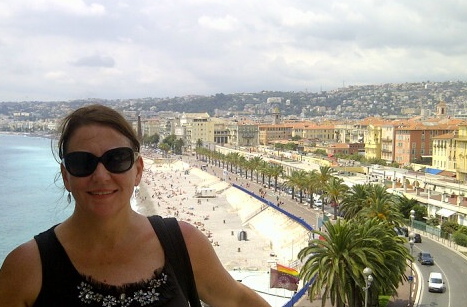
My husband and I began our recent vacation in France here, in Nice. I’d never visited this beautiful spot, though I lived on a Mediterranean beach a few hours to the west many years ago, in Languedoc, à côté de the more famous Provence. Shortly after we arrived in Nice, we strolled down the palm tree lined Promenade des Anglais and climbed the Colline du Château (Castle Hill), where I took the above photo. Afterward, we wandered through Vieux Nice, the old part of the city (recognizable by the sienna-tiled roofs) on our way back to our hotel, across from the pebbled beach about a mile further down.
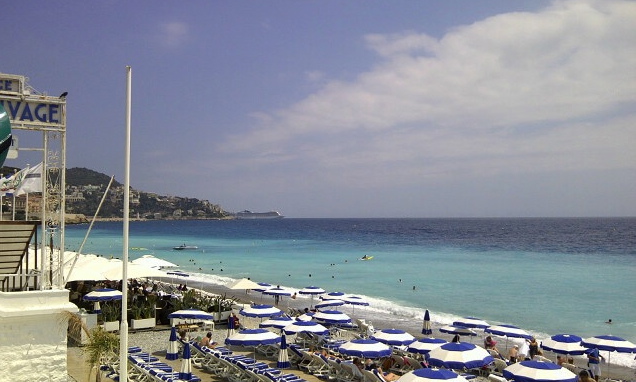
Like all of France, Nice is full of history. Much has changed here over the centuries, and even within the last thirty years. But its beauty is timeless and enduring.

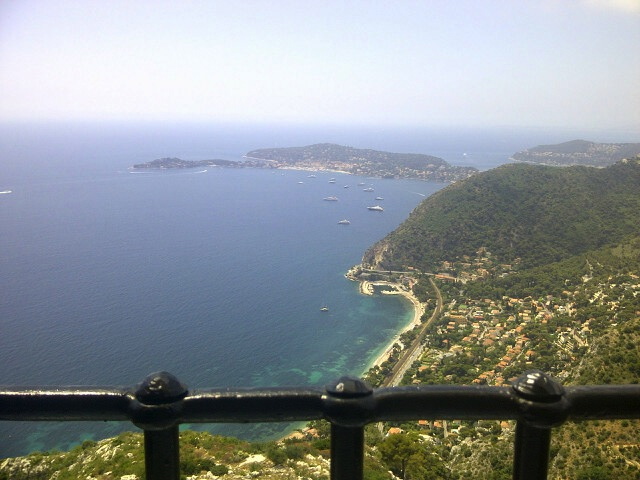
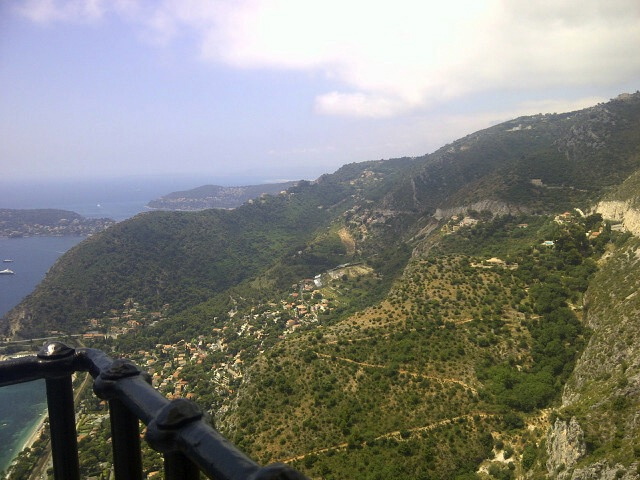
The following day, after picking up our rental car* at la gare (the train station, where a taxi dropped us), we made our way east out of the city and over the side of a mountain toward Monaco. On the way, we stopped for a marvelous four course lunch at Chateau Eza (we both selected the Menu Prince) in Eze-le-Village, a gorgeous place I’d never known about until recently. Our table was on a private terrace jutting out from the Chateau, high over the sea, rocks and beaches below. Déjeuner began with an aperitif: champagne, of course. We shared a bottle of wine as we savored each of the small delicious dishes and practiced our French.

The view was breathtaking. Like “Elle” (what we’ll call the main character in my upcoming novel, for now), I have a fear of heights. I don’t know how I managed to enjoy such a leisurely lunch on a balcony perched high above land and water. Maybe it was the vin.
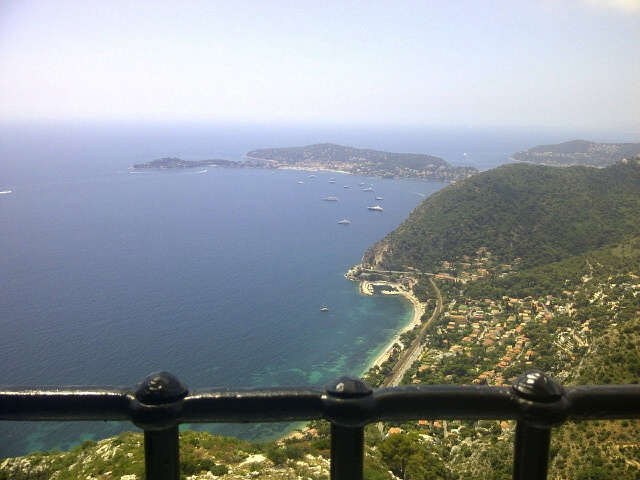
“Elle” doesn’t deal as well with her acrophobia (though, I dare say, if she had thought of handling it with wine, it may not have been an issue). Perhaps she doesn’t think of doing that because usually, when she has to face her fear, no alcohol is available, except for that time in Amsterdam — but I’m jumping ahead.

Back to Nice, Eze and the Côte d’Azur: another very romantic spot in the world, one I would love to visit again, and spend more time in, someday.
* For more about our adventures en voiture, see prior post, Le Tour de (Montpellier) France.

Américaine in Paris

A mon avis, it’s the most beautiful, most romantic city in the world.

Earlier this month, I marveled at la Tour Eiffel but didn’t climb to the top of it (though I did ascend the spiral stairs inside the Arc de Triomphe and the steps at Montmartre). Like the main character in my upcoming novel, I drank café crème ( café au lait) at petit déjeuner and, at times, beaucoup de vin at déjeuner andner. But unlike her, I only gazed at the pâtisseries.

If you follow me on Twitter (@MakeThatJulie), you may have seen other photos from my recent vacation in France, an anniversary trip for my husband and me. It was fun speaking français and teaching him some helpful phrases such as L’addition, s’il vous plaît  (Check, please). 

Though we enjoyed several lieux touristiques — monuments, museums and palaces — our most memorable moments occurred unexpectedly. Cocktails at the bar at Hotel Negresco in Nice. Lunch at a café in a petite village in the Luberon valley. Wine-tasting, explanations in French and a private dinner at a winery near Aix-en-Provence. Breakfast on the terrace at our hotel in the old section of Montpellier (and a nostalgic visit to the nearest beach). Exploring Lyon and nearby Beaujolais with French friends who hosted us for the weekend at their home. Laughing together as we figured out the Paris metro system (not that hard), and dinner at a tiny restaurant in Montparnasse that serves everyone the same (delicious) menu.

Our experiences were so different from those that I had as an exchange student in France, part of a small group from the University of North Carolina. I was on a tight budget and traveled by train all over western Europe (but not much in France) using my Eurail pass. Since then, university abroad programs have exploded – just about everyone goes somewhere to party study and experience life in another culture. My novel, to be released soon, is about a girl who spends a year of college in the south of France, her life filled with adventure, romance, and many unpredictable and memorable moments. Her story takes place in an earlier time, but her experiences are much like those of many of today’s young women.

And she dreams of going to Paris with the man she loves.

Le Tour de (Montpellier) France

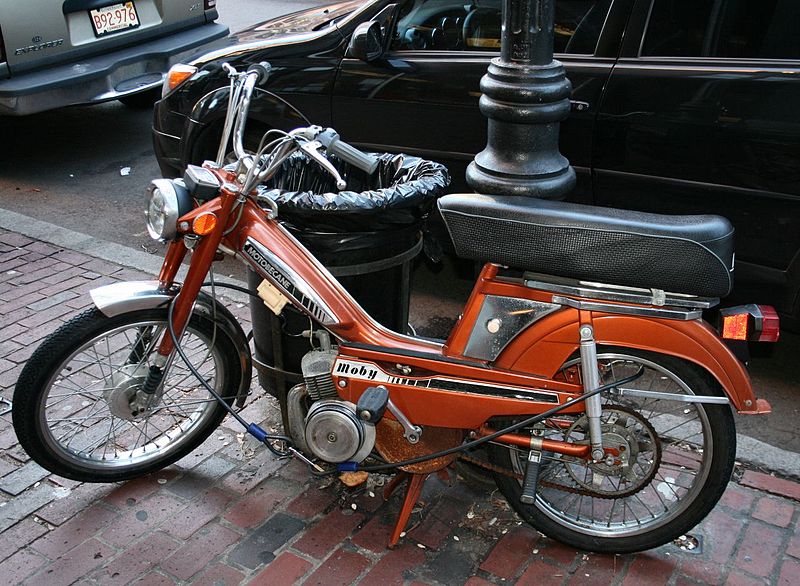
I’ve never cycled in France. But a long time ago, I drove a moped there, and earlier this month, a car. My mobylette was blue, like this one:

I knew my way around Montpellier, the city in the south of France where I studied for a year, and I knew how to get to the closest village, Palavas-les-flots, where I lived in an apartment on the beach. My “bike” didn’t go over about forty miles an hour, but it only took about twenty minutes to get to school. In town, getting around through the narrow, winding streets was easy. When I wanted to call “the States,” I drove to the International Calling Center in the Post Office and waited for a booth.

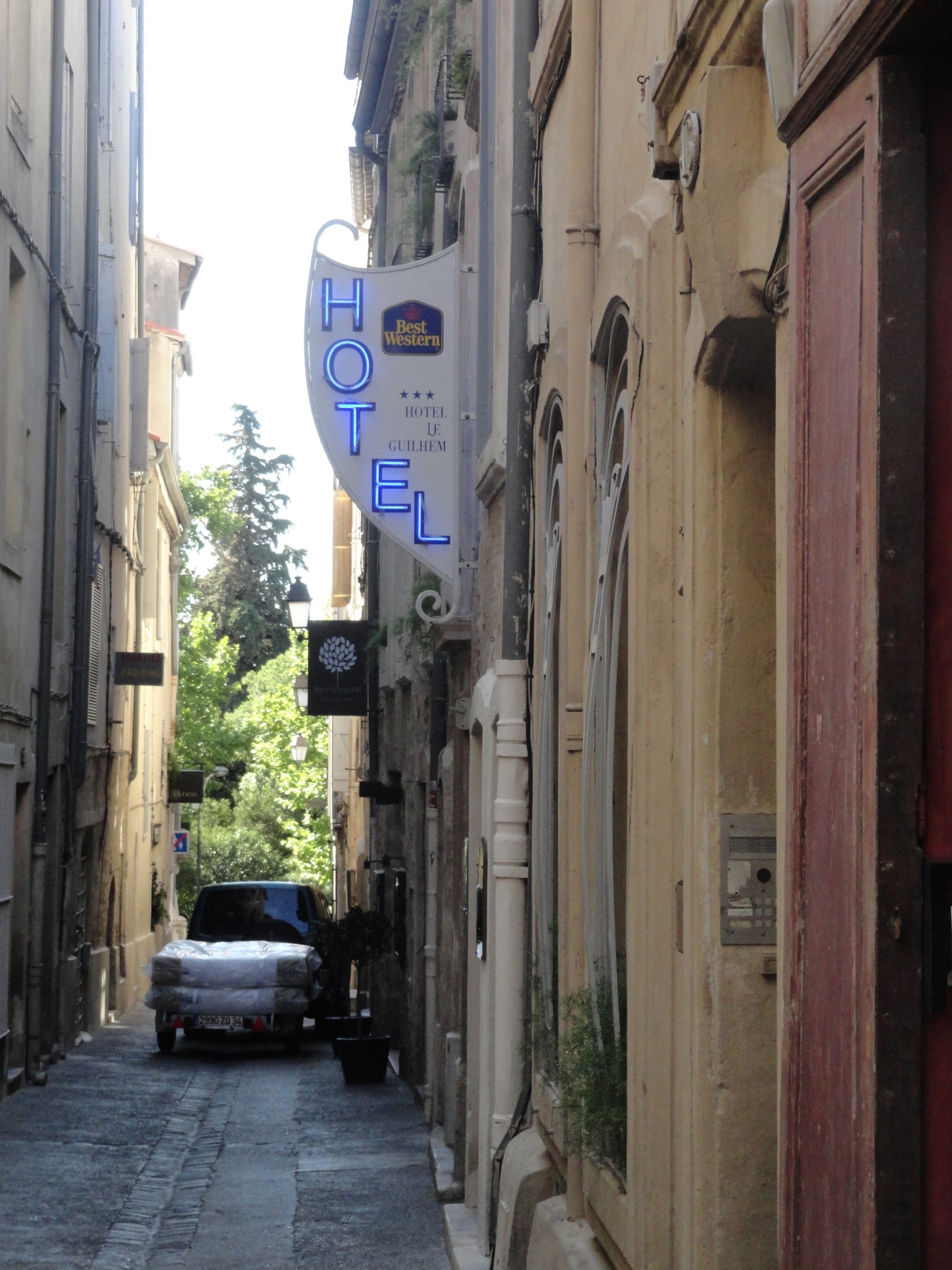
During our trip to France earlier this month, my husband and I arrived in Montpellier one evening en voiture – by car – after visiting Nice and Monaco, Aix-en Provence and Avignon (with a side trip through the Luberon valley). Though our vehicle’s GPS was confusing at best, after three tries, we navigated the narrow streets to our hotel, located in the vieille ville, close to the Promenade du Peyrou and not far from Place de la Comédie:

We pulled up to the entrance and opened our car doors with difficulty — the voiture in the photo is much smaller than the one we rented. We unloaded our valises and were politely instructed to park in an underground parking garage about a quarter mile away. Le Guilhelm was a former 17th century coach inn and conveniently located just steps away from wonderful restaurants and cafés. 

The next day, we tooled around the city, visiting the university I had attended and the village where I lived. I thought I’d be able to figure out how to get to both, using our quirky built-in GPS and drawing on memories over three decades old…since I’ve always been good at directions.

Wrong!

We chose la mauvaise route – the wrong way – many times. Without meaning to, we saw more of the city and its environs en voiture than I ever had en mobylette. Guessing at each turn, we made sure not to enter streets with the red and white interdit sign (“do not enter” or more literally, “forbidden”) and finally found a road I recognized (faintly) called Route de Mende. When we found the university, I was struck by how different it was from what I remembered. It was older, of course, and had changed quite a bit.

Following signs out of the city, we made it to Palavas using the road I had traveled many times; it seemed much wider. We had lunch at a café on the beach, close to the apartment I shared with two other American girls. Later that afternoon we returned to Montpellier, parked our car in the garage and set out to explore the centre ville, à pied – on foot. Much that we saw was just as I remembered.

The following morning, it was time to drop off our car. We were taking a train to Lyon, and fortunately the car rental drop lot was located at la gare – the train station – not far from our hotel. I had driven to la gare, or by it, through town on my mobylette many times, but by car, it was necessary to take a roundabout route. We gave ourselves an hour to get there.

Which turned out to be a smart decision. We had decent directions, but, malheureusement, when we approached la gare, we couldn’t find the entrance. We circled around and around the station, always keeping it in view but never able to approach it. Finally, I asked a Frenchwoman for help, and her instructions (given en français) provided our solution.

Comme toujours: Montpellier, en mobylette ou à pied, ça va, mais en voiture, c’est impossible!

When it’s out there, reader – le jugement


Now that I’m back from les vacances en France, it’s time to travailler – work – again. As the French say, Faire et refaire, c’est toujours travailler. 

The suitcases are unpacked, the clothes washed, the photos sorted, and the memories treasured. Talk of another future visit – someday – is happening, with a slightly different plan, and preferably, not during l’été – the summer. But it was a fabulous trip, a welcome break from routine and a wonderful time to share with the love of my life. We spent a lot of time together, spoke French (well, I did, and he did un peu), and saw sights both famous and little-known, the latter just as impressive.

We started in Nice and ended in Paris, visiting many other villes, villages and a chateau in between. With sporadic access to wi-fi (in French, it rhymes with leafy), we stayed “dark” for the most part – only a little frustrating, and actuellement quite liberating. And neither of us “worked.”

At the end of week one, we traveled to a city in the south, Montpellier, and had lunch at a nearby Mediterranean plage – beach – in a town called Palavas-les-flots. It was a nostalgic stop on our journey – the place where I spent a year as a college student, where my boyfriend (now my husband) sent me letters and flowers. Visiting it with him after so many years together was indescribably romantic. Since my novel takes place there in an earlier time, our voyage to Montpellier and Palavas doubled as research; when we got home, I did a final fact-check review of the story and tweaked just a few lines, as necessary. But even though much has changed there since 1979, much is also the same.

Now, chez nous, it’s time to blog again, tweet and work on my next book, as I prepare au meme temps to release the first. Which brings me to the subject of today’s post: the fact that once “it’s out there,” my novel will no longer really be my own. It will belong to the reader, who will judge it and its characters. Much of the story is based on true events, but much is not. Memories from my time in France long ago are imprecise in some ways, but clear in others. But it’s not the specifics or any incongruities that worry me.

It’s le jugement.

Because even though it’s popular to claim that we don’t judge – and even say, “don’t judge me,” in truth, we do make judgments all the time. We form opinions and justify our positions. When we read fiction, I think we almost feel we own it; we decide what’s good, bad and neutral; we judge the plot, the writing and the ending. All of this is fine and well, and it’s what we as authors know as we write.

But now when I read someone else’s work, I read not so much as a reader but as another writer. I think about what led the author to write the book. I think about the travaille, the brainstorming and the planning, the edits and revisions. I think about the author choosing the title. Having grown as a writer, I’ve changed as a reader. When my book is “out there,” of course I hope that judgments are good and reviews, positive.

A bientôt.

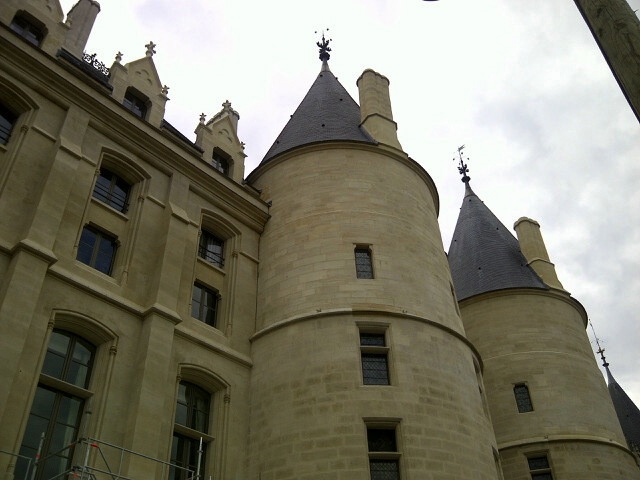
[Note: above photo is of The Conciergerie in Paris: once a palace, it was converted into a prison during the Revolution and became a symbol of terror. This was where Marie Antionette was imprisoned  before her execution.]

D’habitude: routine

I like (and don’t like) my routines and habits.

A few weeks ago, I read on my iPad The Power of Habit: Why We Do What We Do in Life and Business by Charles Duhigg. You may have heard of the book — published in late February, it has remained on the New York Times non-fiction best-seller list for months. I don’t always read best-sellers (and let’s don’t even talk about the current best-selling fiction books). But this book was appealing, not because so many other people found it so, but because I was ready to examine my own habits, to keep what worked and to change what didn’t.

I’m still working on some of the changes, but I’ve successfully adopted a few of the more basic (and very important) ones. I’ve cut out almost all (diet) Cokes from my diet — for those of you non-Atlantans, Cokes = all carbonated drinks. I’ve shifted my choices of what to eat for lunch at home from whatever we had in the fridge (like leftovers) to what I ate every day as a younger mom: albacore tuna fish or cottage cheese-and-fruit — and when eating out, I’ve made much healthier menu selections. I’ve increased my weekly cardio routines from three times a week to five or six.

I’ve been doing these things not quite long enough yet for them all to feel like habits; they still feel like choices, causing me to think (see book mentioned above). But with each day, I’m getting closer, and as my husband says, it can be all right to make a different choice occasionally, as long as you get right back on your routine afterward. That’s key for me. Aside from health-related issues, however, I’ve also tried to apply what I learned about routines to my work life as a writer.

In some ways that’s been difficult, but in other ways it hasn’t. When I sat down one August to write the first draft of my first novel, d’habitude I worked every weekday from 9 am to 1 pm straight; I was finished by May but didn’t realize that revisions would take just as much work and a lot longer. Much as I know what daily and weekly habits work well for me, and even though I feel comforted (less mentally stressed?) by them, I also feel rather constricted by them. There’s a part of me that’s figure-it-out-as-I-go and, well, more creative (which is essential when writing fiction). My spontaneous, imaginative, only-as-organized-as-I-have-to-be side has always battled against my productive, organized, good-habit-keeping side. This was even the case when my children were little and my occupation was stay-at-home mother — with four kids, I had to be organized. However, I fought and surrendered to that necessity. Hopefully, no one noticed.

Now that I’m writing full-time, I’ve found that I can balance creativity and productivity while making an effort to re-institute my working routines. Dialogue and scenes (the fun part) appear in my head and on the page more easily once I’ve got the story’s plot fine-tuned. My game plan can and does change along the way, but it keeps me focused when the words aren’t coming.  Aside from a two-week vacation with mon mari this summer, I’ll continue my work schedule even when life’s demands get in the way. And I’ll enjoy (more than he will, I fear) the break in routine. I’ll get to think more, I hope, while maintaining my healthier habits.

I’d better bring some paper, a pen, and my iPad!

Les lettres

In my novel, the protagonist and her boyfriend (for now, I’ll call them by les pronoms français, Elle and Il*) exchange a lot of letters.

Elle has to wait weeks before she receives her first letter from Il — even though he writes to her the day she leaves the U.S. for France, his letter takes that long to arrive. She answers it, but the two don’t wait for the next letter from the other in order to write. In fact, during the year, Il writes to Elle at least once a week, and she writes to him almost as often. They talk on the telephone less than once a month, because phone calls are very expensive, and difficult to make.

How things have changed!

Neither Elle nor Il could imagine writing letters (emails), texts, tweets or updates (let alone posting photos) that the other would be able to view immediately. And if they were able to Skype or Facetime, I dare say their story might have turned out quite a bit differently. Might have.

But they don’t even imagine doing those things. The fact that their handwritten letters have to travel over an ocean by U.S. airmail makes each piece of mail from the other treasured and special. That’s why Elle, at least, keeps all of Il’s letters. That, and also because Elle is the more sentimental.

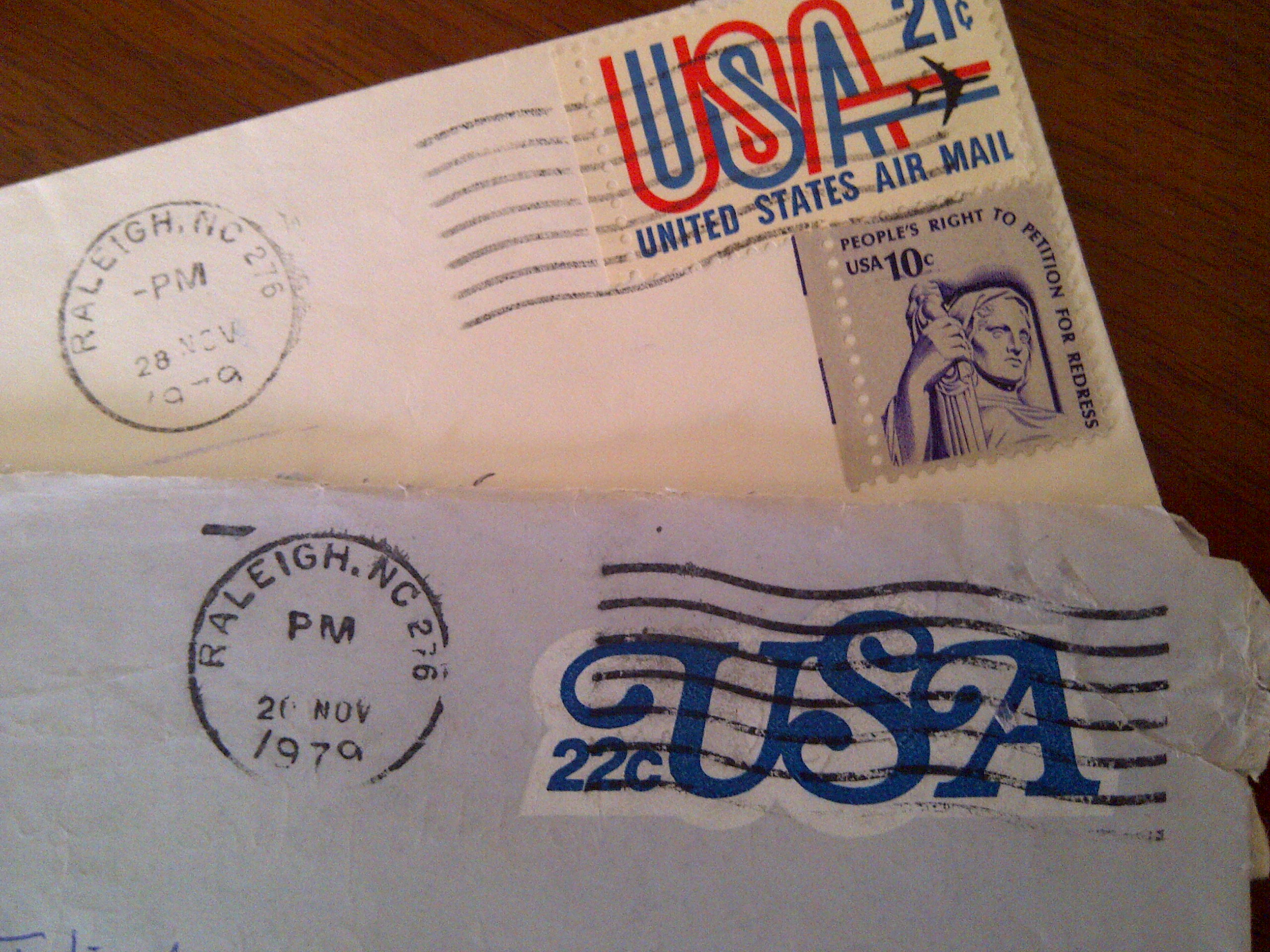
The fact is (or, the story is), Elle and Il deal with being apart while in love without the ease and speed of today’s communication methods. They wait, hope, and long to hear from each other. They think about what they write down on paper, in ink — especially when using those blue 22 cent aerogrammes. They read between the lines. They (at least, Elle) analyze. They pour their hearts out to each other. Their letters are private.

They do talk on the telephone occasionally: when drama arises, and on Christmas, of course. But their letters continue.

Today, most of us don’t write letters like theirs. We still send cards (though I believe that’s declining) and sometimes we write “formal” handwritten notes. When we write on a device or a computer, do we write differently? I think we do. When responding to an email, we may still read between the lines, but we almost have TMI — we even know the time it was written. We know our messages can be forwarded and shared and therefore, public. We are careful in what we say as a result.

Remember the letter that Elizabeth receives from Mr. Darcy in Pride and Prejudice, the one that he hand-delivers? Maybe the methods lovers use to express themselves in writing have changed. But I’m not sure that what they say has. . .

* names will be revealed later this year when the novel is released.

Chez Nous: Cameron Manor

“In my mind, I’m going to Carolina…”    — James Taylor

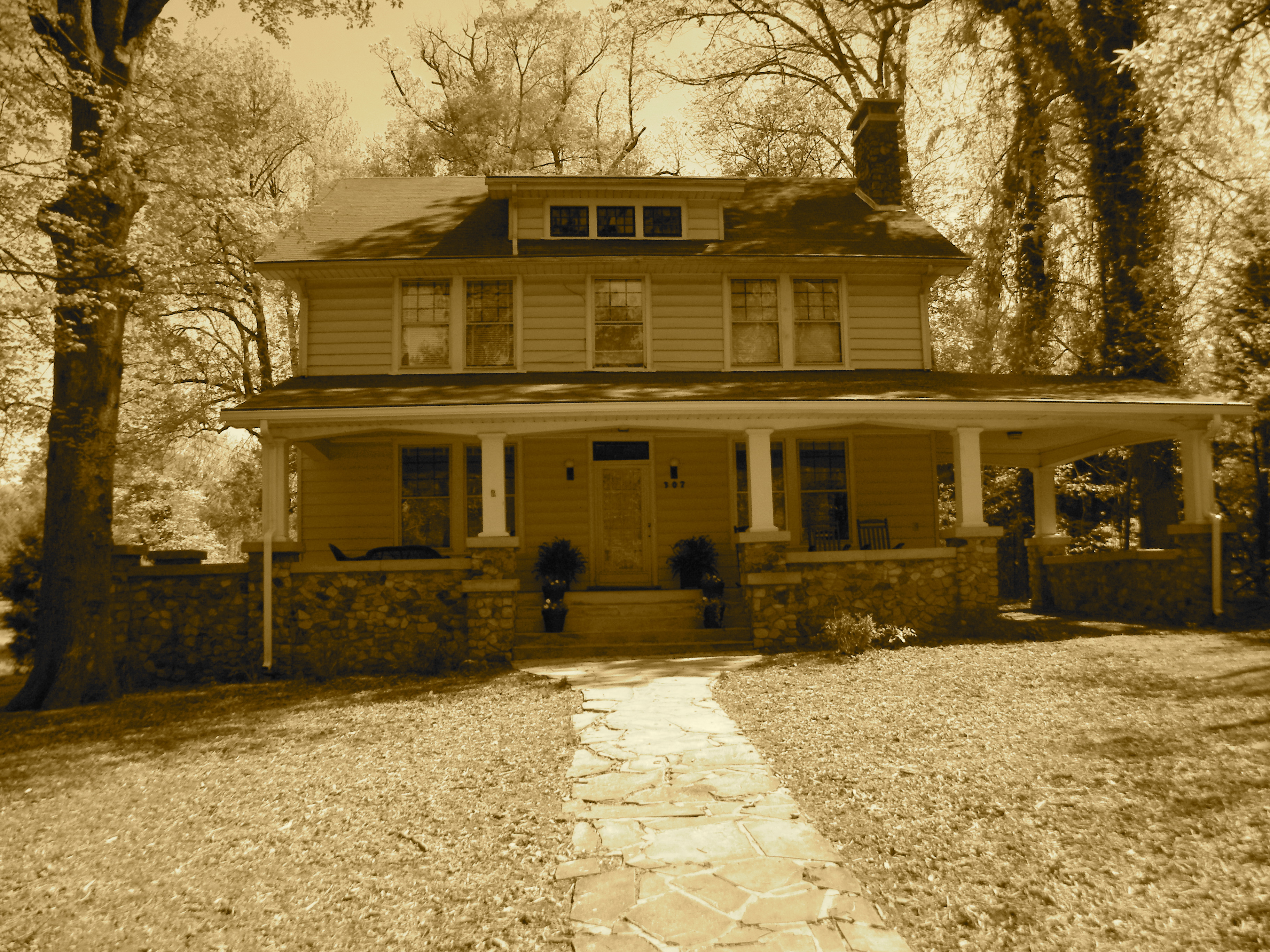
Located on West Cameron Avenue in Chapel Hill, North Carolina, this house was known as Cameron Manor when I lived there during my senior year at UNC, il y a longtemps. A short walk from campus and Franklin Street and next to the “smart” fraternity house (Chi Psi), the Manor was in an ideal location for me and five other girls, all students at the university. It was also close to the Carolina Inn, Granville Towers and UNC’s co-ed fraternity, St. Anthony Hall (St. A’s), a popular spot for parties.

This photo wasn’t taken in those days, but almost two years ago, when I was in the area with my husband and my 19-year-old son Jack, a student at UGA, who had just had surgery at Duke.

Has the Manor changed? You bet it has.

I know this because when I knocked on the door one morning in July 2010, a Carolina student named Stephanie greeted me and Jack, showed us in and gave us a tour.

It was the first time I’d been inside since the day I graduated. Since then, I had visited UNC many times for one reason or another (go Heels) and had walked or driven past the six-bedroom, two-bath house, wondering if the owner still rented it to girls.  When Stephanie opened the door, Jack and I introduced ourselves and I hurriedly explained my history with the Manor. One of her housemates was also home, and both the girls welcomed us in, telling us that, indeed, they had four roommates and attended UNC.

The living room looked smaller, but much, much nicer. So did the dining room, where I attended a Political Science seminar that met once a week. But the kitchen was incredible. A nook that used to contain a vinyl booth we never used had been converted into a big pantry. The rest of the kitchen had also undergone a transformation and seemed larger than I remembered. We had had a full-size refrigerator, cupboards and a sink, but no dishwasher. These girls had built-in modern applicances like the ones I have at home. For my housemates and me, a primary purpose of the room was to serve as a bar and a place for kegs when we hosted parties in the winter; during good weather, we’d put them just outside the back door. It looked to me like these girls actually cooked.

Then Stephanie showed us into her room, the same one I had lived in, one of the two ground floor bedrooms and located in the back. I was amazed. Her desk was in the same place mine had been, and so was her double bed. Her furniture was much nicer, however — I’d slept on a mattress on the floor. Her room was adorably decorated. When she took us upstairs, I pointed out the bedroom where my housemates and I had watched a famous presidential debate on television (it had been the only TV in the house). Across the hall was the bedroom where one of my roommates from my junior year in France had lived.

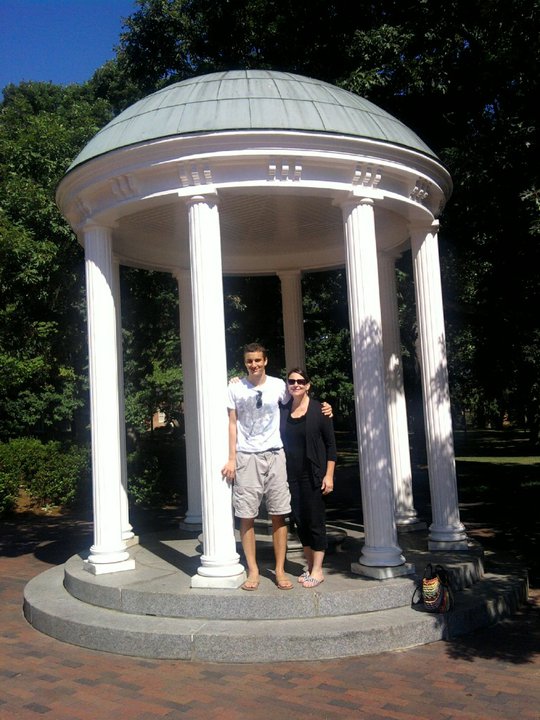
Overwhelmed with memories, it was hard to say goodbye a few minutes later and leave Cameron Manor again. As Jack and I walked to campus and stopped at the Old Well for a photo op, I was struck by what hadn’t changed: kids still went to class, wrote papers, studied for finals, went to parties and formed lifelong friendships. Jack loves it in Athens, but my favorite college town is still Chapel Hill. There’s just something about North Carolina…


La photographie


Now there’s something that has changed.

If you’re older than my teenage daughter, you may remember when taking photos was a very different process than it is today. Like so many people now, I enjoy the convenience of taking pictures with my phone or my camera (which has many features I haven’t taken the time to learn). I’m happy that I can view my photos immediately, delete the ones I don’t like, and crop lots of others. I love not having to print (or pay for) them unless they have a physical destination. And I’m grateful to be able to send pictures so easily to friends and family.

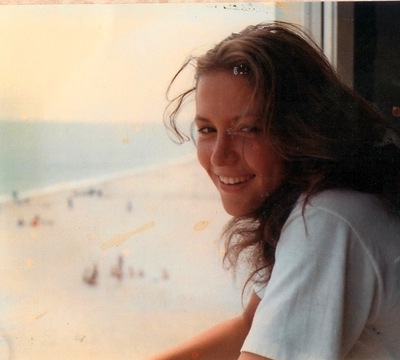
It wasn’t always this way. During my time in France many years ago, my girlfriends and I took very few photos, the main reason being that it was expensive. Taking pictures was reserved for important moments and unusual, beautiful scenes. Of course, the whole year was full of both, but, being young, we didn’t realize that. However, one day, Alison took a snapshot of me in a presque everyday moment, looking out over our  4e à droit (is it à droit, or just droit?) apartment terrace at the beach and the Mediterranean Sea.

“Look at me, Jules,” she might have said. “If this comes out, I’ll give it to you and you can send it to your boyfriend back home.”
Which I did — in an envelope, through the mail.

He kept it, and what you see above is a scan of that photo — something neither of us could imagine at the time.

Technology has changed the way we take pictures and our ability to share them, and I wonder if, in the process, it’s made them somewhat less important. A picture captures a moment in time. With so many pictures being taken now, are we mélanger-ing the moments into one big blur that might be better recorded in a video? Or are we losing those moments in a sea of other, less important ones?

What hasn’t changed about la photographie are the moments. I have boxes containing hundreds of photos of my family, the best ones preserved in scrapbooks and albums, chronicling the years and telling a story. Now I keep them on a “device” — able to be modified or deleted.

I’m glad the moments they record can never be lost or changed.

Create a website or blog at WordPress.com

Up ↑